
Home Cleansing for Toronto Homes: A Practical Guide for Local Housing

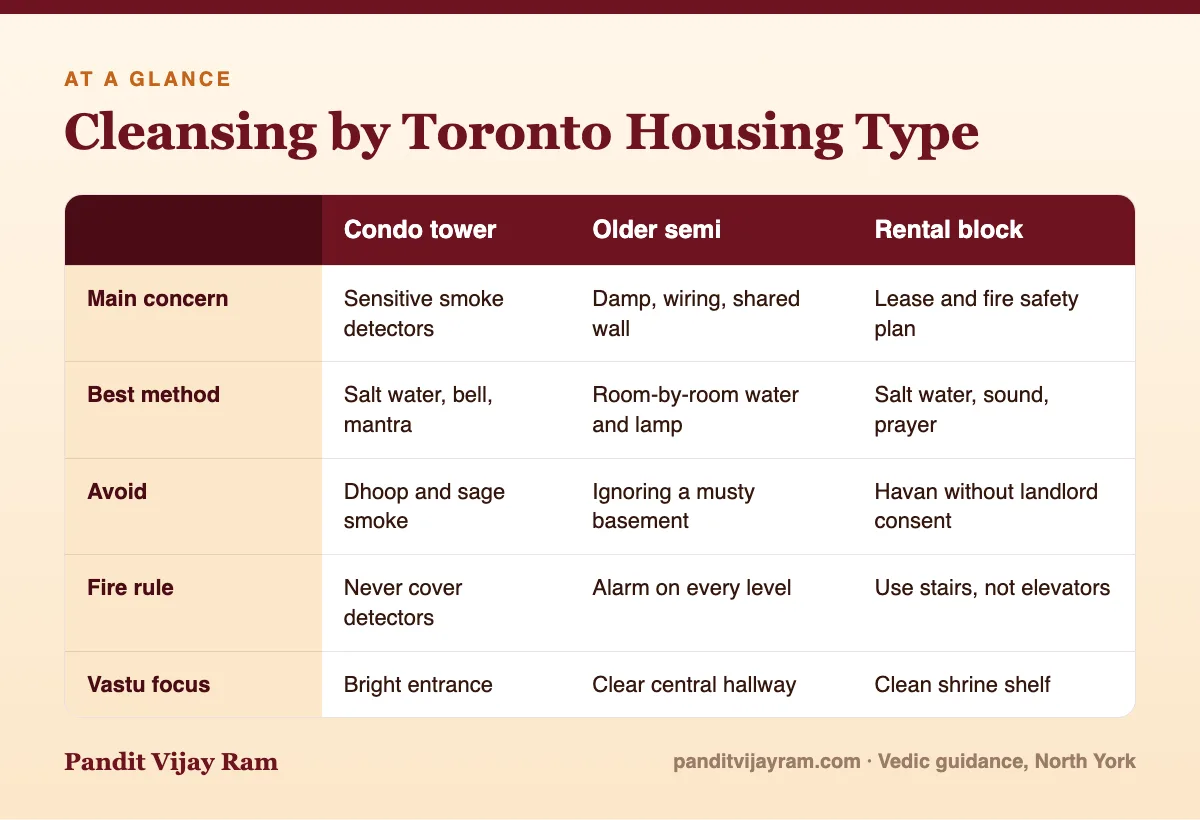
A cleansing method that suits a farmhouse in Punjab or a bungalow in Georgetown may be the wrong one for a forty-storey tower by the lake. Families tell me this after setting off a hallway alarm with guggul, or after a landlord's warning about burning sage. This guide to home cleansing in Toronto starts from the housing people actually live in. I am a Vedic astrologer based in North York, and in more than forty years of practice I have learned that the building shapes the ritual as much as the scripture does. You will read how to adapt cleansing to a downtown condo, to a narrow Victorian or Edwardian semi with a shared wall, and to an older rental block with a superintendent and a fire safety plan. You will also find what Toronto's smoke-alarm rules mean for incense, how to handle a basement that feels heavy, and a simple vastu checklist for homes where walls cannot be moved.
How do you cleanse a downtown Toronto condo without setting off alarms?
Use methods that make no smoke: salt-water mopping, a bell or conch, mantra, a quiet lamp prayer and fresh air. Toronto requires working smoke alarms on every level and outside sleeping areas, and tenants must never disable them. Keep any single diya at the shrine, away from the detector and curtains.
Condo suites are small, sealed and full of sensitive detectors. Corridors are pressurised, so smoke from one unit can drift where you do not expect it. A traditional dhoop session simply does not belong here.
What works instead:
- Water and salt. Add a handful of rock salt to a bucket and mop from the far corner towards the door. Our guide to salt-water mopping, namak pocha, explains the method.
- Sound. Ring a small bell or blow a conch in each room, finishing at the entrance. Sound carries well in a bare condo and creates no smoke.
- Air. Open the balcony door or window for ten minutes after cleaning, weather permitting.
- Mantra. Recite Gayatri or Hanuman Chalisa while walking clockwise through the suite.
Toronto's smoke-alarm page also reminds tenants to tell their landlord at once if an alarm is disconnected or faulty. Covering a detector "just for the puja" is how real fires go unnoticed. For more smoke-free ideas, see cleansing a condo or rental without smoke.

What should owners of older Toronto semis check before a spiritual cleansing?
Check the physical house first. Victorian and Edwardian semis often have damp basements, old wiring, creaking floors and draughts that make a home feel uneasy. Fix leaks, test smoke and carbon monoxide alarms, and clear clutter. Then cleanse room by room, giving the shared wall and the basement particular attention.
Older semis in neighbourhoods across Toronto carry a lot of history. They also carry a lot of noise. When someone tells me their house feels haunted, I first ask how old the furnace is and whether the basement smells musty. Our guide to haunted-house signs versus old-house noises explains why.
A practical order for an older house:
- Damp and mould. A heavy, airless basement is more often a ventilation problem than a spiritual one. Run a dehumidifier and fix leaks.
- Alarms. The City asks for working smoke alarms on every level, and the same rules apply to carbon monoxide alarms. Replace units older than ten years.
- Clutter. Clear stairs, the space under them and the narrow side passage. Stagnant corners feel stagnant.
- Cleansing. Light one diya at the shrine, then carry a bowl of Ganga jal or clean water mixed with a little turmeric through each floor, sprinkling corners.
Shared walls deserve kindness. If your neighbour's household is going through a hard season, their stress can be felt through the plaster. A short prayer for both homes is a gentle, neighbourly practice.
How do you cleanse an older Toronto apartment block rental?
Work within your lease and the building's fire safety plan. Ask the superintendent for a copy of the plan, keep flames to one supervised diya, and choose water, salt, sound and prayer over smoke. Speak to the landlord before any havan, and if an alarm fails, call 311 after informing them.
Mid-rise rental blocks from earlier decades are home to many newcomer families in Toronto. They tend to have older ventilation, shared laundry rooms and long corridors. A cleansing that ignores those realities can cause friction with neighbours and staff.
Some practical points from the City's high-rise safety guidance:
- Every building has an approved fire safety plan. Ask your landlord, superintendent or property manager for a copy and keep it with your emergency kit.
- Know the stairs. In a fire, use the nearest stairwell, not the elevator, and close doors behind you.
- Landlords must maintain alarms. If they do not, the City asks tenants to call 311, which refers the matter to Toronto Fire Services.
Within those limits, a satisfying cleansing is entirely possible. Mop with salt water, wipe door frames and windowsills, ring a bell through each room and finish with a prayer at the threshold. Our guide to puja and havan in a rented home in Ontario covers the landlord conversation if you hope to hold a larger ceremony. Many families in rental blocks simply arrange their havan at a temple hall instead.
Which vastu tips work in Toronto homes where you cannot move walls?
Focus on what you control: a clean, well-lit entrance, a shrine in the north-east or the calmest available corner, beds placed so you do not sleep with your feet towards the door, and a clutter-free centre of the home. Mirrors, colours and plants adjust energy without any renovation.
Most Toronto homes were not designed with vastu in mind. A condo's orientation is fixed by the tower, and a semi's layout by a builder generations ago. Rather than worry, work with the room you have.
- Entrance. Keep the main door clean, well lit and free of shoe piles. A simple toran or a swastika in kumkum on the frame marks the threshold.
- Shrine. North-east is traditional. If that corner is a bathroom or a closet, choose the quietest clean shelf facing east or north.
- Kitchen. You cannot move a condo stove, but you can keep it spotless and avoid storing medicines beside it.
- Bedroom. Avoid mirrors facing the bed, or cover them at night.
- Centre. The brahmasthan, the middle of the home, should stay open. In a narrow semi this is often the hallway, so keep it clear.
For deeper adjustments read vastu for apartments and condos. If a home still feels tense after the practical and vastu steps, the negative energy removal service explains what a consultation looks at.
When does a Toronto home need more than a self-cleansing?
Seek outside help when the unease continues after you have fixed physical problems, kept a steady routine for several weeks and looked after everyone's health. A doctor should see anyone with poor sleep, low mood or new symptoms. A consultation can then look at the household's charts, timing and any deeper remedy.
Most homes respond to a few weeks of steady care: a clean floor, a daily lamp and prayer at the same hour. When they do not, I suggest a clear order.
- Health first. Persistent insomnia, low mood or anxiety in any family member needs the family doctor. Spiritual practice can sit alongside medical care, never in place of it.
- Relationships second. Tension between people is often felt as tension in a house. Honest conversation helps more than any ritual.
- Then the spiritual layer. A reading of the main earner's chart, the home's entrance direction and recent events, such as a move or a death, can show whether a havan, a path or a protective practice would help.
Vijay Ram ji meets people for in-person consultations in North York and speaks with families across Toronto by phone, video or WhatsApp. The astrologer in Toronto page explains the process. Neighbouring guides, such as home cleansing in North York, cover the bungalows and towers further up Yonge Street.
The bottom line
Home cleansing in Toronto starts with the building in front of you. Condo towers call for smoke-free methods such as salt water, sound and mantra, older semis need damp, wiring and alarms checked first, and rental blocks work best within the fire safety plan and the lease. Simple vastu adjustments at the entrance, shrine and centre need no renovation. When unease persists after health and practical steps, a consultation can look deeper.
Key takeaways
- Toronto requires working smoke alarms on every level and outside sleeping areas; never disable one for a puja.
- Condo cleansing relies on salt-water mopping, bells, mantra and fresh air rather than smoke.
- In older semis, fix damp, draughts and alarms before any spiritual work.
- Rental-block tenants should ask for the building's fire safety plan and speak to the landlord before a havan.
- Vastu in a fixed layout focuses on the entrance, shrine corner, bed placement and a clear centre.