
Scattering Ashes and Asthi Visarjan in Ontario: What Is Allowed
After a cremation, many Hindu families feel a quiet urgency about the ashes. Tradition calls for asthi visarjan, the immersion of the remains in flowing water, and elders may ask whether it can be done here or must wait for a journey to the Ganga. Questions about scattering ashes Ontario law allows are among the most common I hear from grieving families in North York and the wider GTA. In more than forty years of practice I have performed and guided many final rites, and I have seen how much calmer a family becomes once the practical rules are clear. This article explains, in plain words, what the Government of Ontario and the Bereavement Authority of Ontario say about scattering on Crown land, water, parks, private property and cemeteries. It then describes respectful ways to perform visarjan locally, how families carry ashes to India, and how prayer for the departed continues long after the last handful of ash has gone into the water.
Is it legal to scatter ashes in Lake Ontario or a river?
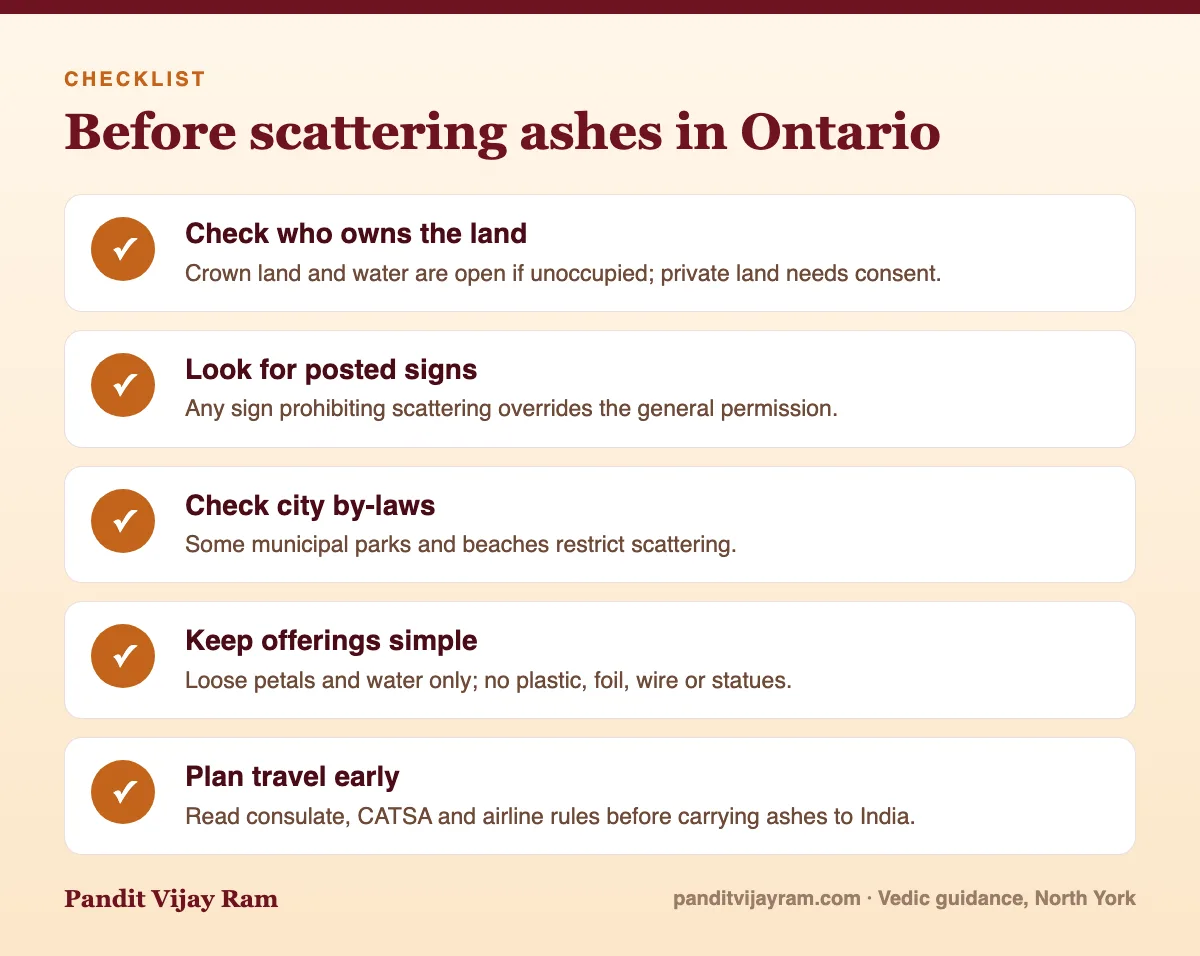
Yes, generally. Ontario allows cremated remains to be scattered on unoccupied Crown land, including land covered by water, as long as there are no signs or postings prohibiting it. The Bereavement Authority of Ontario says lakes, rivers and provincial parks are Crown land, while also warning that municipal restrictions may limit specific locations.
The Government of Ontario's page on arranging a funeral, cremation or scattering sets out the basic permission. You may scatter remains from cremation on Crown land, including land covered by water, if it is unoccupied and there are no signs prohibiting scattering.
The Bereavement Authority of Ontario, known as the BAO, is the provincial regulator for funeral homes, crematoria and cemeteries. Its consumer FAQ adds two important points:
- Lakes, rivers and provincial parks are Crown land. That is why many families choose a quiet stretch of the Lake Ontario shore or a river for visarjan.
- Municipal restrictions may apply. A waterfront park, beach or pier may be owned or managed by a city, so local by-laws can matter even beside Crown water.
In practice, choose a spot where you are not on private or posted land, check for signs, and contact the BAO or the city if you are unsure. The BAO can be reached toll-free at 1-844-493-6356.
Remember that the permission covers the ashes themselves. Leaving garlands with wire, plastic bags, foil trays, glass or statues in the water is a different matter, and it harms the water we are honouring.

Can you scatter ashes on private land, city parks or a cemetery?
On private property you need the landowner's consent, and repeated scatterings on the same land require it to become a licensed cemetery. On municipally owned land, check local by-laws because some parks prohibit scattering. Registered cemeteries can sell rights to scatter, and licensed providers can scatter on a family's behalf.
Ontario's rules depend on who owns the land:
- Private property. You may scatter with the owner's consent. The BAO notes that a landowner who wants to allow repeated scatterings must establish the land as a licensed cemetery.
- Municipal land. Scattering on city-owned land is possible, but the province advises checking the municipality's by-laws, as some parks prohibit it.
- Registered cemeteries. You can buy rights to bury or scatter remains in a registered cemetery. Some have dedicated scattering gardens, which give elders a fixed place to visit.
- A licensed provider. You can sign a contract with a licensed operator to scatter on your behalf.
For families who rent or live in condos, a cemetery scattering garden or a quiet spot on Crown water is usually simpler than asking a landlord.
Some families keep a small portion of ashes for later rites in India and immerse the rest locally. Talk it through together first, since elders and siblings may hold different views. If the home feels heavy afterwards, our guide to cleansing the home after a death in the family offers gentle routines.
How do Hindu families perform asthi visarjan in the GTA?
Families usually collect the ashes from the crematorium, keep them respectfully at home or in a temple for a short period, then immerse them in flowing or open water with prayers led by a priest or elder. Many GTA families use the Lake Ontario shoreline or a river, keeping offerings simple and biodegradable.
Asthi visarjan follows the cremation rite of antyesti. The word asthi refers to the bone remains, and visarjan means letting go. Customs vary by region and family, but a common shape is:
- Collecting the remains. The crematorium returns the ashes in a container. Some families wrap them in white or red cloth.
- Choosing a day. Many families follow the guidance of their priest or elders on timing. Others immerse soon after cremation for practical reasons.
- Simple prayers. A priest or senior family member recites mantras, and the eldest son or another chosen mourner offers the ashes to the water.
- Minimal offerings. Loose flower petals, a little milk or water, and sesame are traditional. Avoid plastic, foil, wire and anything that will not break down.
- Bathing and returning home. Many families bathe or wash hands and feet afterwards and light a lamp at home.
Choose a time when the shore is quiet, go with only close family, and keep the group small and respectful of other people using the space.
The rites that follow, including the thirteenth-day ceremony and annual shraddh, are covered in our practical guide to Hindu funeral and cremation rites in the GTA and our article on shraddh and pitru remedies.
Can you take ashes from Canada to India for immersion?
Yes, many families carry ashes to India for immersion in the Ganga or another sacred river. Check two things well ahead: the Consulate General of India in Toronto's current requirements for transporting ashes, and airport screening and airline rules. CATSA treats cremated remains under its powder rules, so ask your airline or funeral home early.
For many elders, immersion at Haridwar, Varanasi, Prayagraj, Gaya or a family's home river carries deep meaning. Taking the ashes there is a loving act, and it needs planning.
- Consulate requirements. The Consulate General of India in Toronto publishes information on transporting ashes to India. Requirements can change, so read its current page or contact it before you book travel.
- Airport screening. The Canadian Air Transport Security Authority lists cremated remains among items it screens. Its item page allows only small quantities in carry-on under its powder rules and says to check with the carrier about checked baggage, so the full amount may need another route.
- Your airline. Each carrier sets its own policy for checked bags and cargo. Ask in writing.
- The funeral home. Licensed funeral establishments can often advise on documents and containers, and on air cargo where needed.
Keep the cremation certificate and death documents together with the ashes, and use a sturdy, sealed, non-metal container if your airline advises it.
Families who cannot travel need not feel guilty. Local visarjan, or keeping a portion for a later pilgrimage, are accepted choices in many households.
What prayers continue after the ashes are immersed?
In Hindu practice, remembrance continues through the thirteenth-day rites, monthly or annual shraddh, tarpan with water and sesame, and charity in the person's name. Many families also light a lamp and recite a chosen mantra. These practices honour the departed and help the living grieve, without fear or pressure.
Visarjan is a letting go, not an ending of love. Families often continue with:
- Tarpan and shraddh. Offerings of water, sesame and food on the death anniversary and during Pitru Paksha.
- Daily remembrance. A small lamp and a photograph in a clean corner of the home.
- Mantra. Many households choose the Gayatri mantra or the Mahamrityunjaya mantra. Our guide to Mahamrityunjaya jaap explains its meaning.
- Charity. Feeding people, supporting a food bank or donating to a cause the person valued.
Grief can surface as dreams, a feeling of presence or trouble sleeping. These are usually natural parts of mourning. If sleep or mood stays poor, see your family doctor, and grief support groups can help too.
For families who want a priest to perform shraddh or a shanti puja on their behalf, the puja and anushthan service describes what Vijay Ram ji offers. Our guide to Hindu temples across the GTA can help you find a mandir that holds memorial prayers, and respectful disposal of puja items in Toronto covers what to do with leftover flowers and lamps.
The bottom line
Scattering ashes in Ontario is permitted on unoccupied Crown land and water, including lakes, rivers and provincial parks, when no sign forbids it. Private land needs consent, city land depends on by-laws, and cemeteries offer scattering rights. Hindu families can perform asthi visarjan locally with simple, biodegradable offerings or carry the ashes to India after checking consulate and airline rules. Remembrance then continues through shraddh, lamp and charity.
Key takeaways
- Ontario allows scattering on unoccupied Crown land and water when no sign prohibits it.
- The BAO says lakes, rivers and provincial parks are Crown land, but city by-laws may still apply.
- Private land needs the owner's consent, and cemeteries can sell scattering rights.
- Leave only ashes and loose petals in the water, never plastic, foil or statues.
- Check consulate, CATSA and airline rules well before carrying ashes to India.