
How to Get My Wife Back After She Left

A wife packing a bag and going to her parents' home is one of the most common crises in South-Asian families, in the GTA and back home. Some husbands feel anger first, then shame in front of relatives, then a deep fear that she will not return. If you are asking how to get my wife back, this article is for you. Husbands sit across from me in North York with exactly this worry, usually after the elders on both sides have already started making phone calls. Here you will learn why wives leave, what to do and not do in the first days, how to listen when she is ready to talk, which changes she may need to see, when family can help and when it hurts, and what to do if she feels unsafe or wants a divorce. In more than forty years of practice, I have seen marriages mend after a wife came home, but only when the husband changed something real, not when he simply waited for her parents to send her back.
Why do wives leave and go back to their parents' home?
Most wives leave after a long period of feeling unheard, overworked, disrespected or unsafe. Common reasons include anger, drinking, in-law conflict, money control, neglect or an affair. Going to her parents is often a way to be heard and protected, not just a punishment. Understanding her reason is the first step.
In many families, a married daughter returning to her maika has long been the signal that something serious is wrong. It can be a pause, a warning or a final step. Her parents' home is where she feels safe enough to think.
Reasons wives give often include:
- Feeling like a servant in a joint household, with no say in decisions.
- A husband who sides with his parents in every disagreement.
- Shouting, insults or a temper that frightens her or the children.
- Drinking, gambling or long absences.
- No access to money, or being questioned over every purchase.
- Loneliness after immigrating, with no friends or work of her own.
Notice how many of these are about how she was treated over time, not one argument. Our article on in-law problems and keeping the peace looks closely at joint-family tension, which is one of the most frequent triggers. If your situation is the reverse, with a husband who has moved out, read getting a husband back after separation.

What should I do in the first days after my wife leaves?
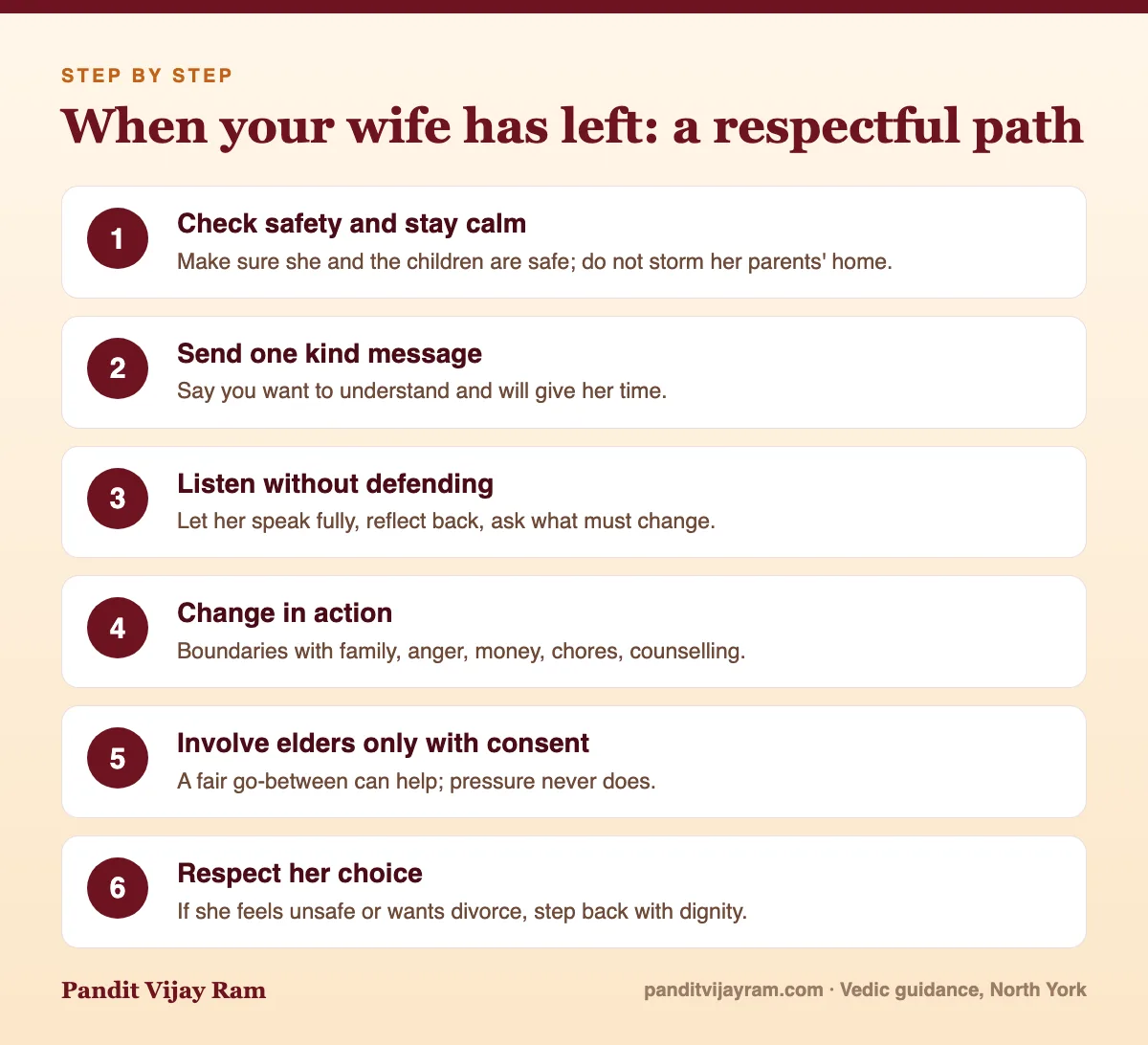
Stay calm and check that she and any children are safe. Do not go to her parents' home to demand her return, send relatives to pressure her or cut off money. Send one respectful message saying you want to understand and will give her time. Then use those days to reflect honestly.
The first days often decide the tone of everything that follows. Many husbands act from wounded pride: they phone her father angrily, post on family groups or threaten to keep the children. These moves confirm her fears.
Better first steps:
- If children are with you, keep their routine steady and let them speak to their mother freely.
- If children are with her, ask calmly how you can stay involved and help with costs.
- Keep paying shared bills and anything she depends on.
- Send one message: you are sorry things reached this point, you want to understand, and you will wait until she is ready.
- Keep the matter out of community chat groups and gossip.
Never use her immigration status, passport or documents as leverage. Withholding documents or threatening sponsorship is a form of abuse and can have legal consequences. If you feel overwhelming anger or despair, talk to a counsellor or your family doctor before you speak to her or her family.
How do I listen when my wife is ready to talk?
Listen to understand, not to defend. Let her speak without interrupting, repeat back what you heard, and ask what would need to change. Resist correcting her version of events in that first conversation. Feeling truly heard is often what she has been missing for a long time.
Active listening sounds simple and feels very hard when you are hurt. Here is a method to practise before the conversation:
- Choose the setting carefully. A quiet, neutral place, with no relatives in the room unless she asks for them.
- Open with a question. "Will you tell me what it has been like for you?" Then stop talking.
- Let silences sit. Do not rush to fill them with explanations.
- Reflect back. "So you felt alone when my mother criticised you and I said nothing."
- Ask about change. "What would need to be different for you to feel safe and respected at home?"
- Thank her. Even if what she said was painful, she trusted you with it.
You will have your own grievances, and they matter too. Raise them in a later conversation, ideally with a counsellor present. Our article on what you can still do when your wife wants a divorce covers listening at a later stage, when the decision feels firmer.
What changes might my wife need to see before coming back?
She will usually need to see change in action over time, not just hear promises. That may mean setting boundaries with your parents, controlling anger, stopping drinking, sharing money openly, dividing household work or starting counselling. A clear plan, followed consistently, says more than any apology.
Many wives have heard sincere promises before. The difference now has to be visible.
Changes that often matter:
- Boundaries with family. Talking to your parents yourself about how your wife is treated, rather than asking her to tolerate it.
- Anger. Joining an anger-management group or individual counselling, and walking away from rising arguments.
- Alcohol or gambling. Seeking real help through your doctor or a community programme.
- Money. Joint visibility of accounts, and her own money she does not need to explain.
- Home and children. Sharing cooking, cleaning and school duties as a matter of course.
- Her own life. Supporting her work, studies, friends and language classes if she wants them.
Couples counselling can turn these into a shared plan. If you would value chart-based insight alongside counselling, the marriage problem consultation looks at both charts where both partners agree, and the strains of the current period. It never replaces the changes themselves.
Can family elders help bring my wife back?
Sometimes, if your wife agrees and the elders are fair to both sides. A trusted elder can help both families calm down and listen. Elders who blame her, shame her parents or pressure her to return quickly usually make things worse. Her consent to their involvement matters most.
In South-Asian and Indo-Caribbean families, elders have traditionally played a peacemaking role in marriages. That role can still be valuable, but only when it serves both partners.
A go-between tends to help when:
- Your wife has said she is open to it.
- The elder is respected by both families and not known to take sides.
- The aim is to listen and plan, not to send her home by a certain date.
It tends to hurt when:
- Elders treat her leaving as a family insult to be corrected.
- Her parents are pressured socially or financially.
- Abuse is being minimised as an ordinary adjustment problem.
Our guide on reconciling through friends and family discusses when a go-between helps and when it harms. Spiritually, a family puja for peace can be a good shared step later, once both of you agree. It works best as a celebration of a decision already made together, not as a way to push her home.
What if my wife feels unsafe or wants a divorce?
Then respect her safety and her decision. If she has said she is afraid of you, step back completely and get help for yourself. If she wants a divorce, you can ask once for counselling, but you cannot force her to stay. Speak to a family lawyer about your responsibilities.
Some husbands discover, painfully, that their wife left because she was frightened. Hitting, pushing, threats, breaking things, constant monitoring and controlling money are all forms of abuse, even if they were normal in the house you grew up in. If any of this is part of your story, the most loving step is to stop pursuing her and start your own counselling or partner-assault programme.
If she or the children are in danger, they should contact the police or a shelter. The GTA domestic violence guide lists where help is available, and the federal government publishes information on recognising family violence.
If she wants a divorce, grief is natural. You may still ask, once and gently, whether she would try counselling first. Accept her answer. A family lawyer can explain support and parenting responsibilities.
Vijay Ram ji's get ex love back guidance is for reconnection that both people want. He does not offer rituals to force a wife home, and he will tell you plainly when the right path is to let go with dignity.
The bottom line
Learning how to get my wife back after she left begins with understanding why she went, usually after a long time of feeling unheard. Listen without defending, make lasting changes in action, and involve elders only with her consent. Above all, respect her safety and her right to choose, and let Vedic guidance support your growth rather than pressure her.
Key takeaways
- A wife leaving is usually the end of a long story, not one fight.
- Never use family pressure, money or documents as leverage.
- Listen to understand; save your side for later.
- Visible, lasting changes matter more than promises.
- If she feels unsafe, step back and get help yourself.