
Haunted House Signs vs Old-House Noises in Ontario Homes

A loud crack from the ceiling at two in the morning. Tapping inside a wall. Something that sounds like footsteps crossing the attic. Online lists of haunted house signs make these noises sound sinister, and families in North York, Don Mills and Etobicoke often call me after a frightening night. Many live in older homes or have just moved into a house built decades ago, and the first Ontario winter there can be a noisy one. In this guide I compare the common signs people read as hauntings with the building, heating, plumbing and wildlife sounds that usually explain them. You will learn which noises come with cold snaps, which point to animals that need removing, which signal a plumbing or heating issue a technician should see, and what traditional practitioners actually look for before calling a house troubled. You will also find calm steps for blessing a home once the practical work is done. In more than forty years of practice I have found that a curious ear and a flashlight explain most night noises before any ritual is needed.
Why does my house make loud cracking or popping noises at night?
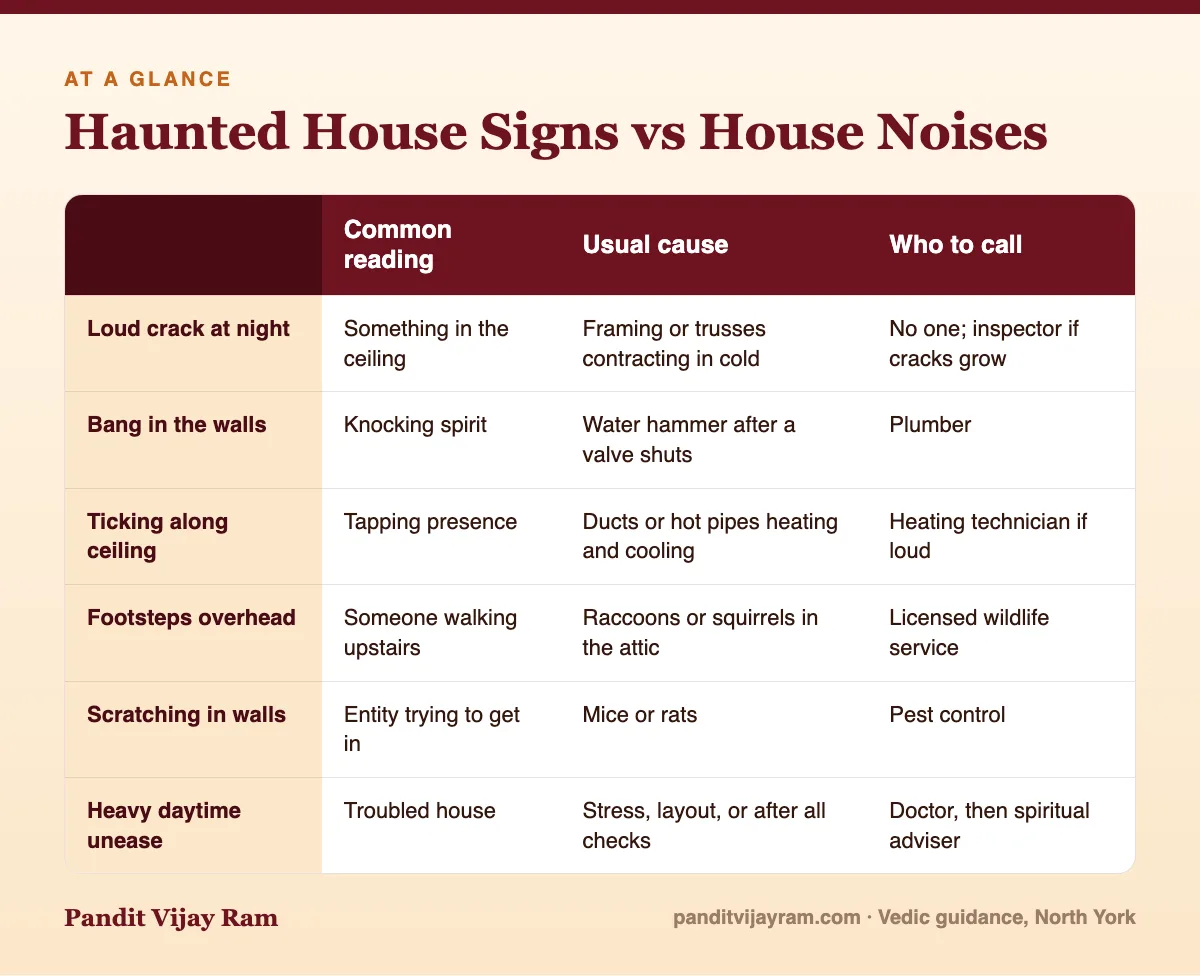
In Ontario winters, temperatures drop sharply at night, and wooden framing, roof trusses, siding and floors shrink as they cool. That movement releases with sharp cracks or pops, often loudest in the early hours. Older houses and newly built ones still drying out both do it. It is normal and not a sign of structural danger.
Wood, metal and concrete all expand when warm and contract when cold, but at different rates. When they rub or shift against nails and joints, the stored tension releases as a sound.
Typical cold-weather noises
- Ceiling cracks and bangs. Roof trusses can lift slightly in winter as the top members cool and the bottom stays warm, a known effect called truss uplift. It can make loud cracks and even small gaps where ceiling meets wall.
- Popping in walls. Nails and drywall screws shift as framing contracts, especially on outside walls.
- Creaking floors. Subfloors dry out in heated winter air, and boards squeak or tick as you walk or as temperatures change, even when no one is walking.
- Siding snaps. Vinyl siding moves a lot with temperature and can bang when the sun hits it in the morning or when it cools at dusk.
- Windows and doors. Frames shift and seals creak in strong wind or deep cold.
When to call a professional
Large new cracks in foundation walls, doors that suddenly will not close, sagging ceilings or water stains need a contractor or home inspector. Those are building issues, not omens.
A dehumidifier in summer and a humidifier in winter can reduce some movement. Mostly, though, these noises become familiar after your first full winter in a house.

What causes knocking or banging in walls and pipes?
Knocking in walls usually comes from plumbing or heating. Water hammer causes a bang when a tap, washing machine or dishwasher valve shuts suddenly. Hot water pipes and metal ducts tick as they heat and cool. Radiators and boilers gurgle with trapped air. A plumber or heating technician can quieten most of these sounds.
Heating and plumbing systems are some of the busiest sound-makers in a home, and many of them run on timers or thermostats in the middle of the night.
Match the sound to the source
- A single loud bang after water stops. Water hammer: moving water slams into a closed valve. Common after the washing machine fills or a toilet stops refilling. A plumber can fit arrestors or secure loose pipes.
- Ticking or tapping along a wall or ceiling. Metal ductwork and hot water pipes expanding and contracting as the furnace or boiler cycles.
- A boom when the furnace starts. Ducts flexing under air pressure, or a delayed burner ignition. The second needs a technician soon.
- Gurgling or knocking in radiators. Trapped air or water in steam or hot water systems. Bleeding radiators often helps.
- Humming or rhythmic thumps. The sump pump, well pump, water softener or a fridge ice maker.
- Dripping or trickling. A leak, a running toilet, or condensation from the furnace or air conditioner.
Note when each sound happens. Sounds that line up with the furnace cycle, a dishwasher programme or a neighbour's shower are mechanical.
Have the furnace and venting inspected each year by a licensed technician, and make sure carbon monoxide alarms are working. A noisy, poorly running furnace can also be an unsafe one. The checks are explained in feeling a presence in the house.
Are footsteps in the attic or ceiling caused by animals?
Very often. Squirrels scurry and roll nuts in attics around dawn and dusk. Raccoons make heavy, slow thumps at night and may sound like a person walking. Mice and rats scratch and scuttle inside walls and ceilings after dark. Bats rustle and chirp. Droppings, gnaw marks and roof damage confirm it. Call a licensed wildlife service.
Toronto and the GTA have healthy populations of raccoons, squirrels and mice, and cold weather pushes them towards warm attics and wall cavities. Their sounds can be startlingly loud through drywall.
How to tell them apart
- Squirrels: fast, light running and rolling sounds, mostly early morning and late afternoon.
- Raccoons: heavy, deliberate thumps and dragging at night; sometimes chattering or growling, especially in spring when young are born.
- Mice and rats: scratching, gnawing and scampering in walls, ceilings and under floors, mainly at night.
- Birds: fluttering and scratching in vents or chimneys at daybreak.
- Bats: faint rustling and squeaking at dusk near the roofline.
What to do
- Check outside for chewed soffits, lifted shingles, damaged vents or holes near the roof.
- Look in the attic from the hatch with a flashlight for droppings or nests, without crawling over insulation you cannot stand on.
- Call a licensed wildlife removal or pest control company. Ontario and city rules protect some wildlife, and mothers with young need humane handling.
- Seal entry points once animals are out.
Pets often react to these animals before people hear them, as explained in pets reacting to empty rooms. Voices and footsteps that seem to come from neighbours are covered in hearing footsteps or voices at night.
What are real signs a house may need spiritual cleansing?
In my practice, noises alone are not a sign. I look for a lasting heaviness felt in daylight by several family members, troubles that began with a move or a specific event, and unease that persists after repairs, pest control, medical checks and good sleep. Even then, a calm cleansing is the usual first step.
Traditional practitioners in many cultures speak of homes that hold heavy energy after conflict, illness, a death or long neglect. I take that idea seriously, but I am careful about what counts as evidence.
What I do not treat as a sign on its own
- creaks, cracks and knocks that match weather or heating cycles;
- animal sounds in walls or attics;
- a single strange night or a single dream;
- items lost and found, which happens in every busy home.
What makes me look more closely
- Several family members, independently, feel uneasy in the same room during the day.
- Arguments, illness or setbacks began soon after moving in and do not ease with time.
- Practical fixes have been made and the household is sleeping well, yet the feeling remains.
- The home was empty or neglected for a long time, or there was a distressing event there.
Even when these are present, I look at the birth charts and the household's circumstances before assuming anything about the house. A Vastu consultation can also show whether the layout, light and use of rooms are making the home feel uncomfortable. For a broader self-assessment, read is my house cursed.
How do I bless or cleanse an older house after fixing the noises?
Once repairs and pest control are done, give the home a fresh start: declutter, clean from the back of the house to the front door, mop with salt water, light a lamp at the prayer place and recite a mantra in every room. Families who want more can arrange a griha shanti puja or a havan.
A house blessing works best on a house that is already cared for. Think of it as welcoming the home into your family's life.
A simple sequence
- Repair and clean. Fix leaks, seal pest entry points and air the rooms. Remove broken items and clutter from corners and the basement.
- Salt-water mopping. Mop floors with water and a little rock salt, working from the back and top floors towards the main door.
- Light and sound. Open curtains, light a ghee lamp at the shrine, and ring a small bell or play a recorded aarti through the house.
- Room-by-room prayer. Walk through each room reciting Om Namah Shivaya, the Gayatri mantra or the Hanuman Chalisa.
- Threshold. Clean the main door and place a rangoli or a toran of mango leaves.
- Optional puja. A Vastu shanti, griha pravesh or havan with a priest, with smoke kept small and alarms in mind.
If you have just moved in, the steps in cleansing a new house before moving in apply as well. Where unease remains after all of this, the spirit and ghost removal page explains how a consultation begins, and related reading is in the magic and entities hub.
The bottom line
Most haunted house signs people worry about, from midnight cracks to footsteps overhead, match ordinary sounds of Ontario homes in winter: contracting wood, ticking ducts, water hammer and animals in the attic. Match each noise to its timing and source, and call a plumber, heating technician or wildlife service where needed. Look for spiritual causes only when shared daytime heaviness persists after repairs, health checks and good sleep. A simple cleansing and house blessing then help the home feel like yours.
Key takeaways
- Cold nights make wood framing and trusses crack and pop loudly.
- Bangs after water shuts off are usually water hammer, which a plumber can fix.
- Squirrels, raccoons and mice often explain footsteps and scratching overhead.
- Spiritual concern begins with shared, lasting daytime unease, not noises alone.
- Bless a house after repairs with cleaning, lamp, mantra and, if wished, a puja.