
Lohri, Vaisakhi and Diwali: Festivals Sikh and Hindu Families Share in the GTA
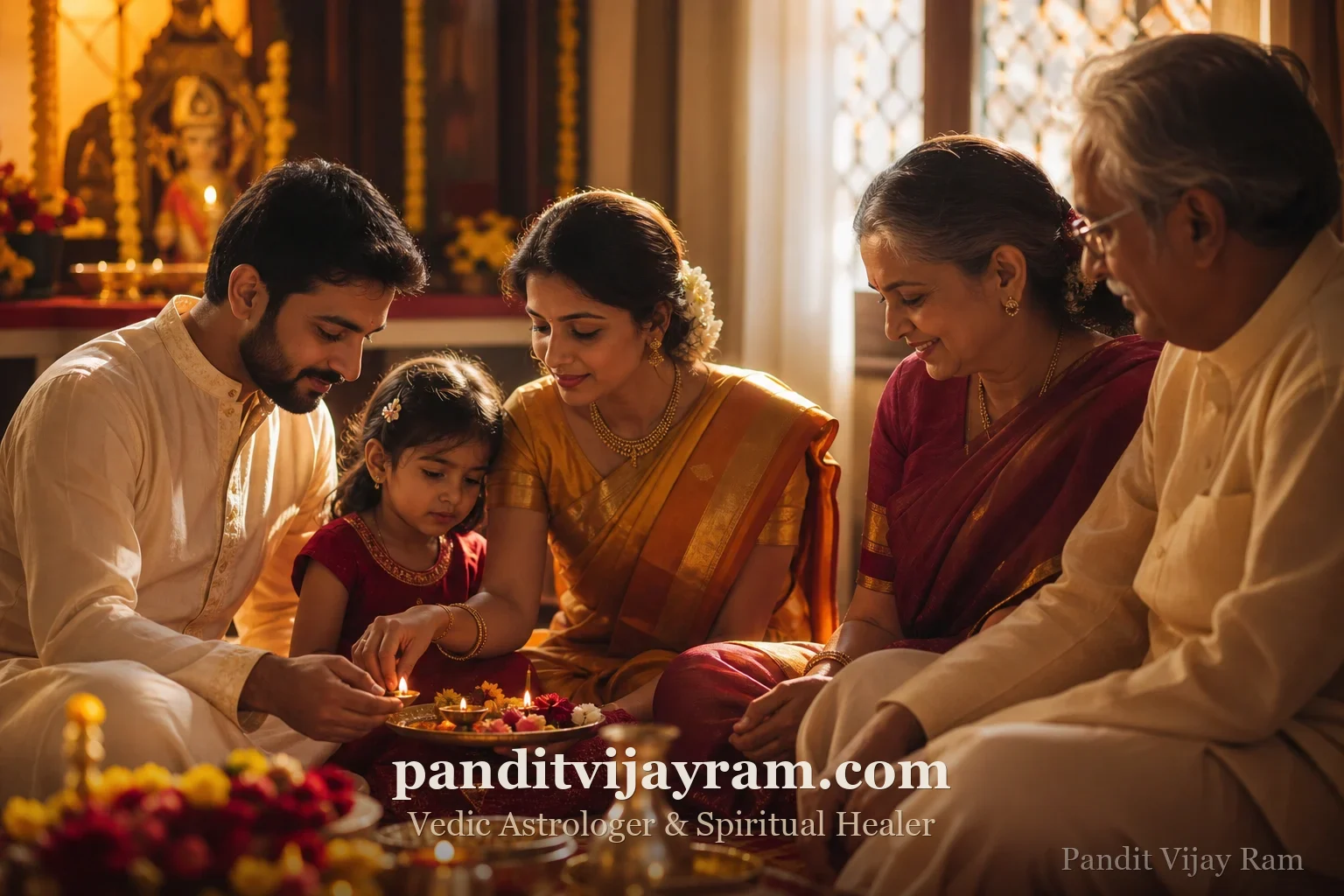
In many Punjabi homes across Brampton, Mississauga and Malton, the festival calendar is shared. A Hindu grandmother and her Sikh neighbour throw peanuts into the same Lohri fire, then stand together months later as the Vaisakhi GTA parades pass. Yet the meaning of each festival is not always the same for both faiths, and that difference deserves respect. Families in North York and across the region often ask me how to celebrate with Sikh relatives or in-laws without stepping on anything sacred. After more than forty years of serving Punjabi households, I have learned that the warmest celebrations come from understanding what each day means to the other person. This guide explains Lohri and its midwinter bonfire, the twin meanings of Vaisakhi as harvest and as the birth of the Khalsa, the Toronto nagar kirtan, Diwali and Bandi Chhor Divas, and simple etiquette for visiting a gurdwara or a mandir during the festival season.
What is Lohri and how do Punjabi families celebrate it in the GTA?
Lohri is a Punjabi midwinter festival marking the end of the coldest nights and the coming harvest. Families light a bonfire, circle it, offer sesame, jaggery sweets, peanuts and popcorn to the flames, sing folk songs about Dulla Bhatti and dance bhangra and giddha. A first Lohri for a new bride or baby is especially festive.
Lohri belongs to Punjab as a region, so Sikh, Hindu and many Muslim Punjabi families have traditionally shared it. In the GTA it lands in deep winter, which changes how families celebrate.
Common customs include:
- The fire. The centre of the evening. People circle it, toss in til, rewri, gajak, peanuts and popcorn, and pray for a good harvest and a warm home.
- Songs. Children once went door to door singing the ballad of Dulla Bhatti, a Robin Hood figure of Punjabi folklore, and receiving sweets.
- A first Lohri. Families celebrate a newly married couple or a newborn with gifts and a larger party.
- Food. Sarson da saag and makki di roti are favourites.
Fire rules matter here. Most GTA municipalities restrict open-air burning, and a backyard bonfire may need a permit or may not be allowed at all. Our guide to bonfire rules in the GTA explains what to check. Many families choose a banquet hall with a supervised fire feature, a community event or a symbolic lamp and heater indoors.
For local events, see our guides to festivals in Brampton and festivals in Mississauga.
Why is Vaisakhi important to Sikhs, and how is it different for Hindus?
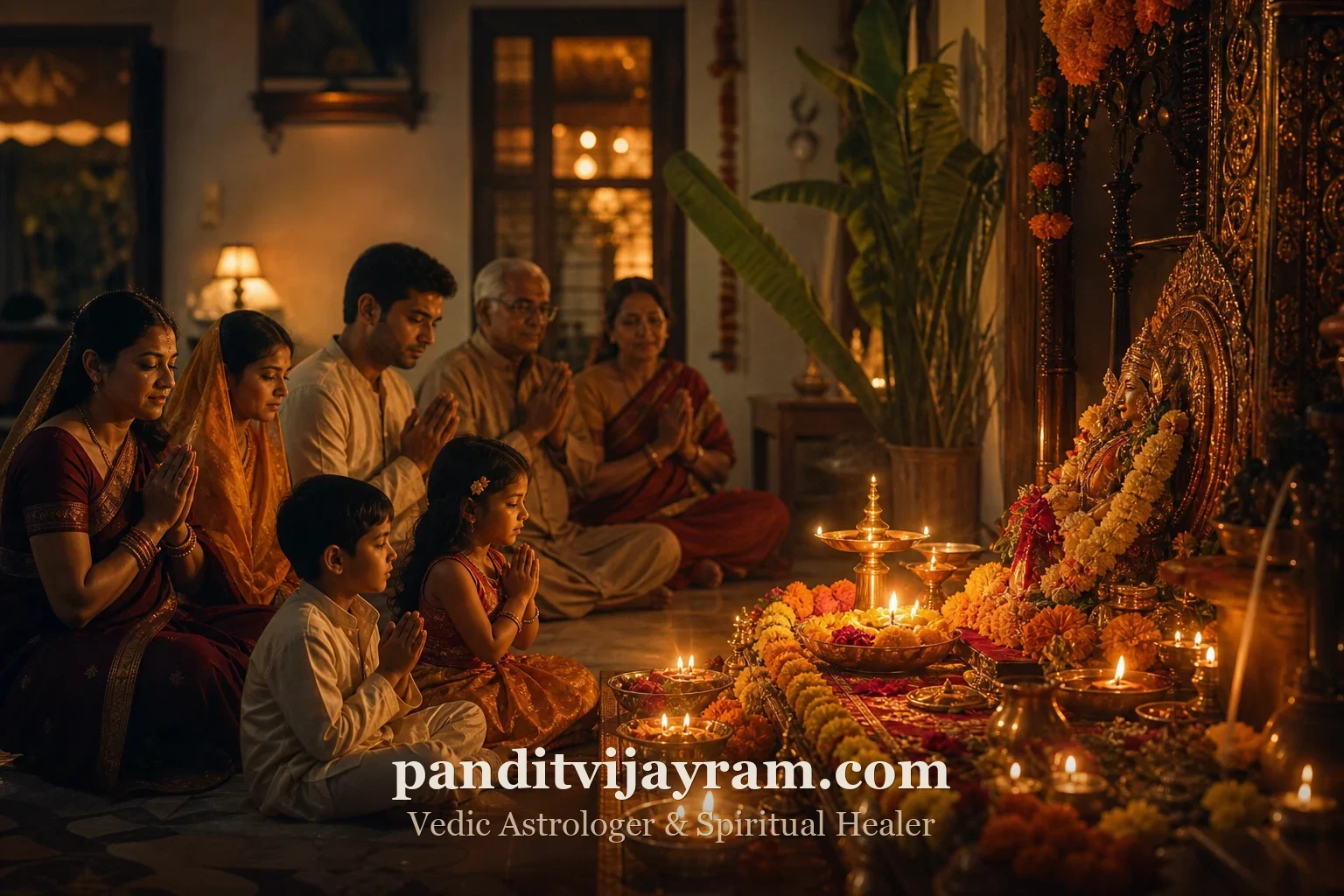
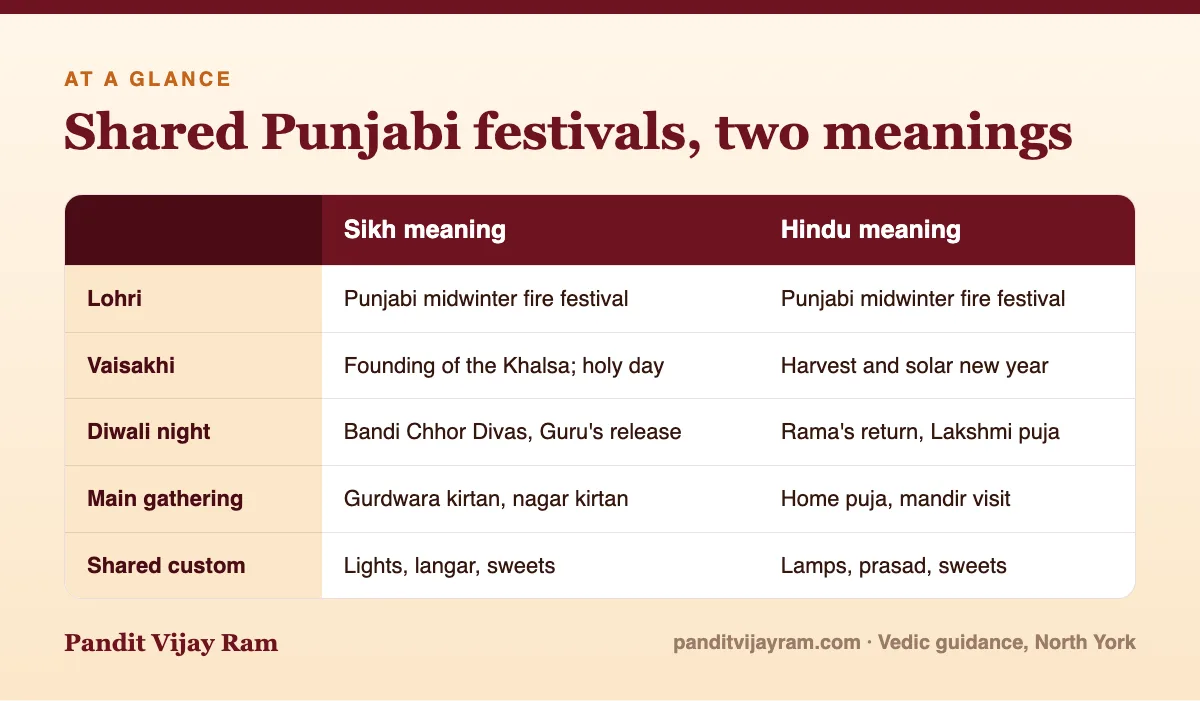
For Sikhs, Vaisakhi commemorates Guru Gobind Singh's founding of the Khalsa at Anandpur Sahib, when the first Panj Pyare were initiated. It is a central religious day. For many Punjabi Hindus, Baisakhi is mainly a harvest and new-year festival, sometimes with a temple visit and river bath. Both are valid, but they are not the same.
Vaisakhi falls in the month of Vaisakh. In Punjab it marks the wheat harvest, and farmers, whatever their faith, gave thanks for the crop.
For Sikhs the day carries a much deeper meaning. Guru Gobind Singh, the tenth Guru, called the community together at Anandpur Sahib and asked who would offer their head for the faith. Five men stepped forward and became the Panj Pyare, the Five Beloved Ones. Through the Amrit ceremony, the Khalsa was created, with its articles of faith and its commitment to equality and service.
That is why, for Sikh families, Vaisakhi is a religious holy day marked with Akhand Path, kirtan, Amrit ceremonies and nagar kirtan. For Punjabi Hindus, Baisakhi is often a seasonal celebration, and in some regions of India it is also a solar new year.
Respect starts with language. Avoid describing Sikhism as a branch of Hinduism, or the Gurus as Hindu saints. Sikhism is a distinct faith with its own scripture, the Guru Granth Sahib. Hindu families joining Sikh relatives on Vaisakhi can share the joy while letting the Sikh meaning lead.
Interfaith couples sometimes feel these tensions most. Our article on interfaith marriage and family disapproval offers gentle guidance.
What happens at the Toronto Khalsa Day nagar kirtan?
Toronto's Vaisakhi nagar kirtan, often called the Khalsa Day parade, travels from the Exhibition Place grounds east to Toronto City Hall. The Guru Granth Sahib rides on a decorated float, led by the Panj Pyare, while sangat sing kirtan. Volunteers serve free langar along the route, and visitors of every background are welcome.
A nagar kirtan is a religious procession, literally a singing of hymns through the town. It is not a carnival, though it is joyful. Understanding its order helps visitors behave respectfully:
- The Panj Pyare walk at the front, often barefoot and carrying swords, representing the first five initiated Sikhs.
- The Guru Granth Sahib follows on a beautifully decorated float. People bow, and some sweep the road ahead as an act of humility.
- Sangat, the congregation, walks behind singing shabads.
- Gatka demonstrations, a Sikh martial art, are sometimes performed.
- Langar stalls line the route, offering free food to everyone.
Brampton, Malton and other GTA communities also hold their own nagar kirtans. Exact dates, routes and road closures change each season, so check your city's notices and local gurdwaras.
Visitor etiquette is simple. Cover your head near the Guru Granth Sahib, do not smoke or drink alcohol nearby, accept langar with thanks, and dispose of waste properly. Take photos thoughtfully and never block the procession.
Canada recognises Sikh Heritage Month among its commemorative observances, and the Sikh Heritage Month Foundation runs programming based in Brampton.
What is Bandi Chhor Divas and how does it relate to Diwali?
Bandi Chhor Divas, the Day of Liberation, is a Sikh celebration on the same day as Diwali. It commemorates Guru Hargobind, the sixth Guru, being released from Gwalior Fort along with fifty-two imprisoned kings. Sikhs light homes and gurdwaras, hold kirtan and share langar, while Hindus celebrate Diwali as Rama's return and Lakshmi's blessing.
On the same autumn night, a Punjabi street in the GTA may hold two meanings in its lamps. Hindu homes celebrate Diwali, remembering Rama's return to Ayodhya and worshipping Lakshmi and Ganesh. Sikh homes and gurdwaras celebrate Bandi Chhor Divas.
Sikh tradition holds that the Mughal emperor imprisoned Guru Hargobind at Gwalior Fort. When release was offered, the Guru asked that the fifty-two kings held with him also be freed, and he walked out with them holding the hem of his cloak. His arrival in Amritsar was celebrated with lights, and the Harmandir Sahib is still illuminated on this day.
In a mixed household or neighbourhood, both stories can be honoured:
- Greet Sikh friends with Bandi Chhor Divas wishes, not only Happy Diwali.
- Join a gurdwara's kirtan and langar if invited.
- Keep your own Lakshmi puja; our guide to Diwali Lakshmi Ganesh puja at home walks through it.
- Follow local rules on fireworks. See our guide to Diwali fireworks rules across the GTA.
Sharing the night of lights is one of the most beautiful parts of Punjabi life in the GTA.
How should Hindu families visit a gurdwara during the festival season?
Cover your head, remove your shoes, wash your hands, and do not bring tobacco or alcohol. Sit on the floor in the darbar hall, bow if you wish but never turn your back sharply to the Guru Granth Sahib, accept karah prashad with cupped hands, and sit in pangat for langar. Everyone is welcome.
Gurdwaras across the GTA open their doors to all, and many Hindu families visit during Vaisakhi and Bandi Chhor Divas. A few habits show respect:
- Head covering. Men and women cover their heads. Gurdwaras usually keep scarves at the entrance.
- Shoes and hands. Leave shoes in the shoe area and wash hands, sometimes feet.
- Inside the darbar. Sit on the floor, keep feet away from the Guru Granth Sahib and stay quiet during kirtan or Ardas.
- Karah prashad. Receive it with both hands cupped and eat it fully.
- Langar. Sit in rows with everyone, accept what is served and avoid waste. Offering to help with seva is welcomed.
- Offerings. Money placed before the Guru Granth Sahib is optional. Do not bring idols, incense or lamps meant for Hindu puja.
In my experience, Sikh sangats are generous to respectful guests. When Hindu families ask me which prayers to say at a gurdwara, I suggest simply listening to the shabad with an open heart.
If family tension surfaces around shared festivals, Vijay Ram ji's family problem guidance focuses on understanding, and Brampton families can read more on the Brampton consultation page.
The bottom line
Lohri, Vaisakhi and Diwali bind Punjabi Sikh and Hindu families in the GTA, but each festival can carry different meanings. Celebrate Lohri's fire within local burning rules, let the Sikh story of the Khalsa lead at Vaisakhi, and greet Sikh friends with Bandi Chhor Divas on the night of Diwali. Visiting a gurdwara with simple respect turns a shared calendar into shared understanding across the whole GTA.
Key takeaways
- Lohri is a Punjabi midwinter fire festival shared across faiths; check local open-air burning rules.
- For Sikhs, Vaisakhi commemorates the founding of the Khalsa and is a central holy day.
- Toronto's Vaisakhi nagar kirtan runs from Exhibition Place to City Hall, with langar for all.
- Bandi Chhor Divas, on Diwali night, marks Guru Hargobind's release with fifty-two kings.
- Sikhism is a distinct faith; cover your head and follow gurdwara etiquette when visiting.