
Community Gardens in the GTA: Growing Tulsi, Methi and Puja Flowers

For many families, the smell of fresh methi or a row of orange marigolds is a taste of home. Condo balconies and shaded backyards make that hard, which is why so many people look for community gardens GTA cities offer. Clients in North York, Brampton and Scarborough often tell me that tending a plant for puja steadies their mind more than any lecture on peace. In more than forty years of practice, I have found that growing your own tulsi or puja flowers turns worship into a daily relationship rather than a weekly purchase. This guide explains how municipal community and allotment gardens work in Toronto, Brampton and Mississauga, using each city's own pages. It covers how to join a waiting list or start a new group garden, the organic and no-sale rules you will meet, and season tips for tulsi, methi, coriander and marigolds. It also explains how to bring a garden tulsi indoors before the first cold nights.
What is the difference between a community garden and an allotment garden?
In Toronto, a community garden is a shared space in a city park managed by a community group or agency, while an allotment plot is an individual space a resident books by permit to grow for their own household. Brampton and Mississauga use group community gardens with member plots instead of a separate allotment system.
The two terms are often used loosely, but Toronto separates them clearly on toronto.ca:
- Community gardens are shared spaces in parks where people grow food, flowers and native plants together. A community group or agency manages each garden. The City provides the space, water access and waste removal. Some plots are tended together and the harvest donated to local food organisations.
- Allotment plots are for residents who want to grow just for themselves or their family. The permit holder must be a City of Toronto resident, and bookings go through the City's permit system, with a waiting list because demand is high.
Toronto also runs indoor allotment benches, such as the Riverlea Greenhouse Allotment, for winter growing.
Elsewhere in the GTA the model differs. Brampton describes its community gardens as land managed by a group of residents, and individuals join an existing garden group. In Mississauga, the City supports community gardens through a partnership with the non-profit Ecosource, which handles sign-ups for individual member plots and group community plots.
Whichever model you join, you are sharing land with neighbours of many cultures. Expect to swap seeds and recipes. Some of my clients have learned Caribbean pepper varieties in exchange for teaching others how to grow methi.

How do you get a garden plot in Toronto, Brampton or Mississauga?
In Toronto, join the waiting list for an allotment plot through the City's booking system, or contact the Community Gardens Programs supervisor about a group garden. Brampton adds new gardeners to a waiting list by email or 311. In Mississauga, contact Ecosource, which manages the city's community gardens.
Each GTA city handles sign-up its own way. From the official pages:
- Toronto allotment plots: residents join a waiting list for a chosen garden through the City's online registration and booking system. Plots not tended or planted by June 1 without notice may be offered to someone else.
- Toronto community gardens: find a garden in the City's district list and contact the Supervisor of the Community Gardens Programs. Some gardens have their own waiting lists.
- Brampton: joining is free, and the City places new gardeners on a waiting list when gardens are full. Email the address on the City's community gardens page or call 311 within city limits.
- Mississauga: sign up through Ecosource, the City's community garden partner, to become a member gardener with your own plot.
Markham, Vaughan, Richmond Hill and Durham municipalities have their own programmes or partner groups; check your city's parks pages or dial 311 where available.
Starting a new garden in Toronto takes patience. The City asks for a group of at least five residents plus one or two leaders, a sunny site in a City-owned park with water nearby, a written proposal and a community consultation run by the local councillor's office. Gardening cannot begin until the City approves.
A temple or seniors club might be a natural core group for a new garden. Our guide to services for South Asian seniors in the GTA explains how gentle activity like this eases isolation.
What rules apply in GTA community gardens?
Toronto's allotment rules allow only organic growing, ban chemical pesticides and fertilisers, fresh manure, cannabis and invasive plants, and limit structures to one metre. Brampton forbids selling produce or flowers from its gardens and reassigns plots left untended for over two weeks. Read your garden's rules before planting.
Rules keep shared land fair and safe. Toronto's allotment page lists several that matter for puja gardeners:
- Organic only. Insecticidal soap, compost and clean soil are allowed; chemical pesticides and fertilisers are not.
- No fresh manure, propane or other fuels.
- No cannabis, invasive plants or noxious weeds.
- Personal use only. No selling and no large single crops for profit.
- Low structures. Fences and small greenhouses cannot exceed one metre, and tall plants should not shade neighbours.
Brampton's page adds that produce and flowers cannot be sold, that gardeners away for more than two weeks must arrange care or notify the coordinator, and that children under 18 must be with an adult.
Two customs need thought in a shared garden:
- Lamps and incense. Do not light a diya, camphor or agarbatti in a park garden. Do your aarti for the plants at home and treat the garden as a place of quiet seva.
- Offerings. Leftover flowers and prasad should not be scattered on others' plots. Compost them in the garden's bins if allowed, as our guide to disposing of old puja items respectfully in Toronto explains.
How do you grow tulsi, methi and marigolds in a GTA garden season?
Plant after the last spring frost. Tulsi needs full sun and warm nights, so start it indoors and move it out only when nights stay mild. Methi and coriander grow fast from seed and prefer cooler weeks. Marigolds tolerate most soils and flower until frost. Water deeply and mulch.
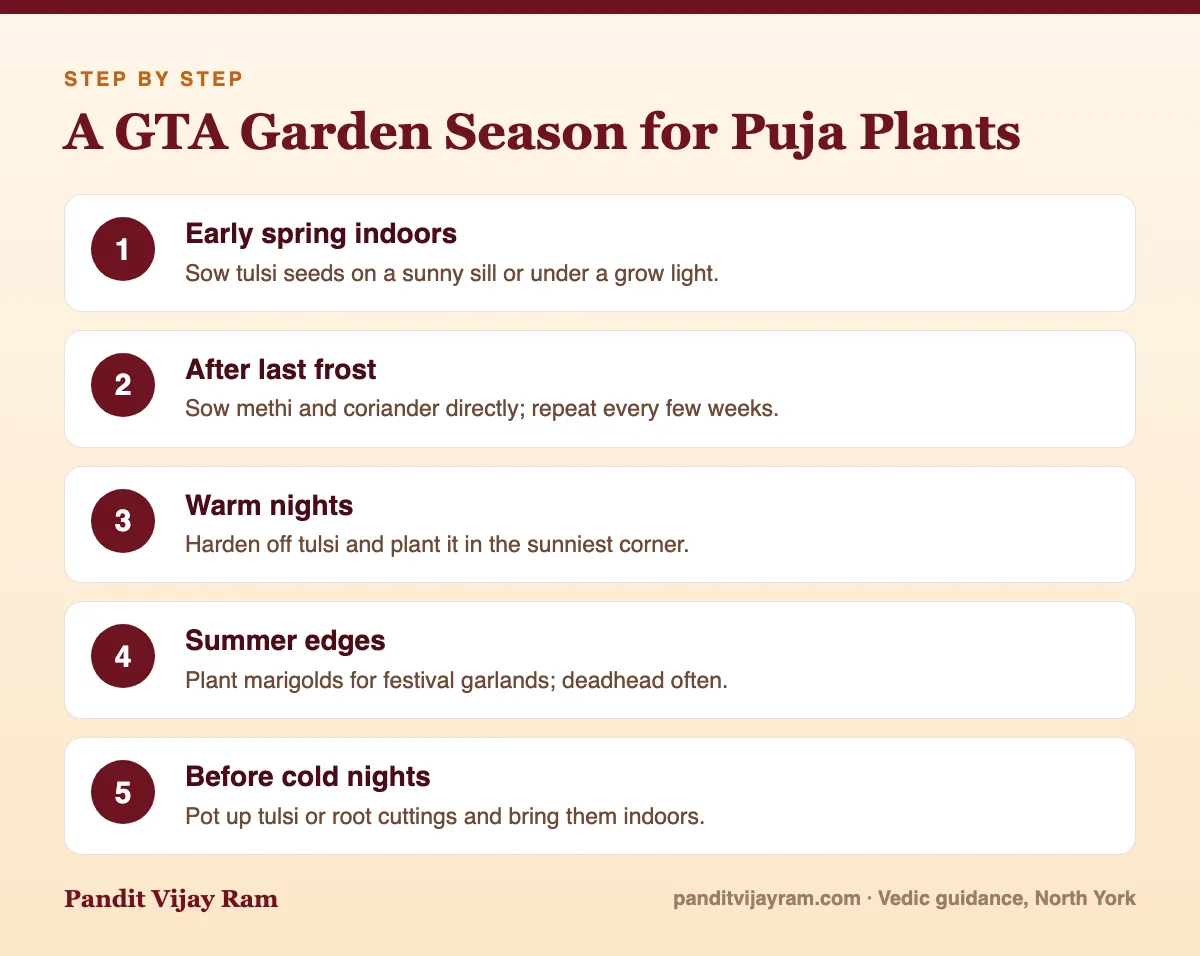
The GTA growing season is short and changeable. Brampton's community gardens, for example, are open from May to the end of October. A simple seasonal plan:
- Early spring, indoors: sow tulsi seeds on a sunny windowsill or under a grow light. Holy basil is frost-tender and needs warmth to germinate.
- After the last frost: sow methi and coriander directly in the plot. Both sprout within days and can be cut young for greens. Sow small batches every few weeks for a steady supply.
- When nights stay warm: harden off tulsi seedlings over about a week, then plant them in the sunniest corner. Pinch flower spikes to keep leaves coming.
- Late spring to summer: plant marigold seedlings along the edge of the plot. They flower freely through summer and give garlands for autumn festivals such as Navratri in the GTA.
- Late summer: take tulsi cuttings and root them in water so you have young plants to bring home.
Other puja flowers that suit GTA plots include zinnias, cosmos and hibiscus kept in pots. Jasmine and parijat generally need a pot that comes indoors. Our puja samagri list suggests substitutes when a flower will not grow here.
Shared gardens are busy; label your tulsi so no one mistakes it for a weed or sweet basil.
What happens to a garden tulsi when the cold arrives?
Tulsi will not survive a GTA winter outdoors. Before nights fall towards about 10°C, dig the plant or cuttings into a pot with drainage and bring it home to your brightest window. Many families keep rooted cuttings indoors over winter and replant in the garden plot the following season.
Allotment and community gardens close for winter, and the first frost can kill tulsi overnight. Plan the move before the weather turns:
- Pot it up early. Lift the plant with a generous root ball into a pot with drainage holes and fresh potting mix, not garden soil.
- Check for pests on leaf undersides and rinse the plant before it joins houseplants.
- Expect some leaf drop as it adjusts to lower light.
- Keep cuttings as insurance. Young rooted cuttings often adapt to indoor life better than a large garden plant.
Our full guide to caring for a tulsi plant indoors through a Canadian winter covers grow lights, watering and diagnosing a struggling plant. Families who perform Tulsi Vivah in the autumn may like to read Tulsi Vivah: meaning, story and how families celebrate, since the plant from the garden can become the centre of that puja at home.
A tulsi that does not survive is not a bad omen. I tell clients that it simply needed more light or warmth than our climate gave it. Thank the plant, return it to the earth or compost, and start again from seed or cuttings. For a home where the mood has felt heavy, our negative energy guidance covers practical and spiritual steps, but a dying plant is almost always about light and water.
The bottom line
Community gardens across the GTA give families space to grow tulsi, methi and puja flowers even without a backyard. Toronto separates group community gardens from resident allotment plots, Brampton runs free group gardens, and Mississauga's gardens run through a partnership with Ecosource. Follow each garden's organic, no-sale and no-flame rules. Start tulsi indoors, sow methi and marigolds after frost, and bring cuttings home before winter.
Key takeaways
- Toronto offers group community gardens and fee-based allotment plots for residents.
- Brampton's community gardens are free to join, with a waiting list when full.
- Mississauga's community gardens run through a City partnership with Ecosource.
- Toronto allotments allow only organic growing, and selling produce is not permitted.
- Tulsi must come indoors before cold nights; methi and marigolds suit the summer plot.