
Puja Samagri List: What You Need and Substitutes in Canada

A puja samagri list can look intimidating when you are standing in a grocery aisle in winter, phone in hand, trying to match a priest's handwritten note to the packets on the shelf. What is akshat? Is any camphor fine? What if there are no banana leaves or bilva leaves this month? Families in North York, Scarborough and Brampton bring me these questions before almost every ceremony. In more than forty years of Vedic practice, I have learned that a clear list, sorted by purpose, prevents most of the last-minute stress, and that tradition is more flexible about substitutes than people fear. This guide gives you the everyday essentials, the extra items for a kalash puja and a havan, practical substitutes when something is unavailable in Canada, where to shop across the GTA and online, what to know at the border, and how to store and check items safely at home.
What items are on a basic puja samagri list?
A basic home puja needs a diya with ghee or oil and cotton wicks, incense, a matchbox or lighter, kumkum, haldi, sandal paste, unbroken rice, fresh flowers, a small vessel of water with a spoon, a bell, a plate, fruit and a simple sweet. Add a kalash, coconut and betel leaves for larger pujas.
Sorting the list by stage of the puja makes shopping and setting up easier.
- Seat and altar: a clean cloth, a low chowki or tray, the murti or picture, an asana mat to sit on.
- Purification: a lota or small pot of water, a spoon, a little Ganga jal if you keep it.
- Marking: kumkum or roli, haldi, chandan paste, akshat, which is unbroken raw rice.
- Light and fragrance: a brass or clay diya, ghee or sesame oil, cotton wicks, incense sticks or dhoop, camphor, a heat-proof plate.
- Offerings: flowers, a garland, tulsi for Vishnu forms, durva for Ganesh, bilva for Shiva, fruit, a sweet, betel leaves and whole supari.
- Thread and sound: mauli or kalava thread, a janeu for the deity if your family uses one, a bell, a conch.
- For a kalash puja: a copper or steel kalash, mango leaves, a coconut with its husk, red cloth and a coin.
Each deity also has favourite offerings. Our Satyanarayan puja guide, for example, lists the extras that ritual needs, such as panchamrit and banana leaves. For the cleansing items families keep in the home, such as rock salt and guggul, see the separate Vedic cleansing toolkit.

What havan samagri do you need in Canada?
A home havan needs a metal havan kund, dry mango or other untreated hardwood sticks, ghee, a ready havan samagri mix of herbs and resins, black sesame, barley, rice, sugar, a long wooden or metal spoon for ahuti, camphor to start the fire, a coconut for purnahuti, and a fire extinguisher or bucket of water nearby.
Havan materials are the ones most likely to cause trouble in Canada, because of smoke, fire rules and limited supplies.
- Havan kund: a copper or steel kund on a metal tray, raised on bricks or a stand so the floor does not scorch.
- Wood: dry mango wood sticks are traditional. Untreated hardwood kindling is the usual stand-in. Never burn painted, pressure-treated or glued wood.
- Samagri mix: packaged blends contain herbs, resins and dried leaves. Smaller amounts produce less smoke.
- Grains and seeds: black til, jau or barley, rice and a little sugar are mixed with ghee for offerings.
- Ghee: use pure ghee, kept warm so it pours easily.
- Purnahuti: a dry coconut filled with ghee and samagri for the final offering.
- Safety: a small extinguisher, an open window, a working smoke alarm, and a permission check in rentals and condos.
Many condos and rentals do not allow open fire. Our article on havan in a rented Ontario home covers that conversation, and the household havan guide sets out the full sequence. Where a home havan is not possible, Vijay Ram ji can perform it through his puja and anushthan service.
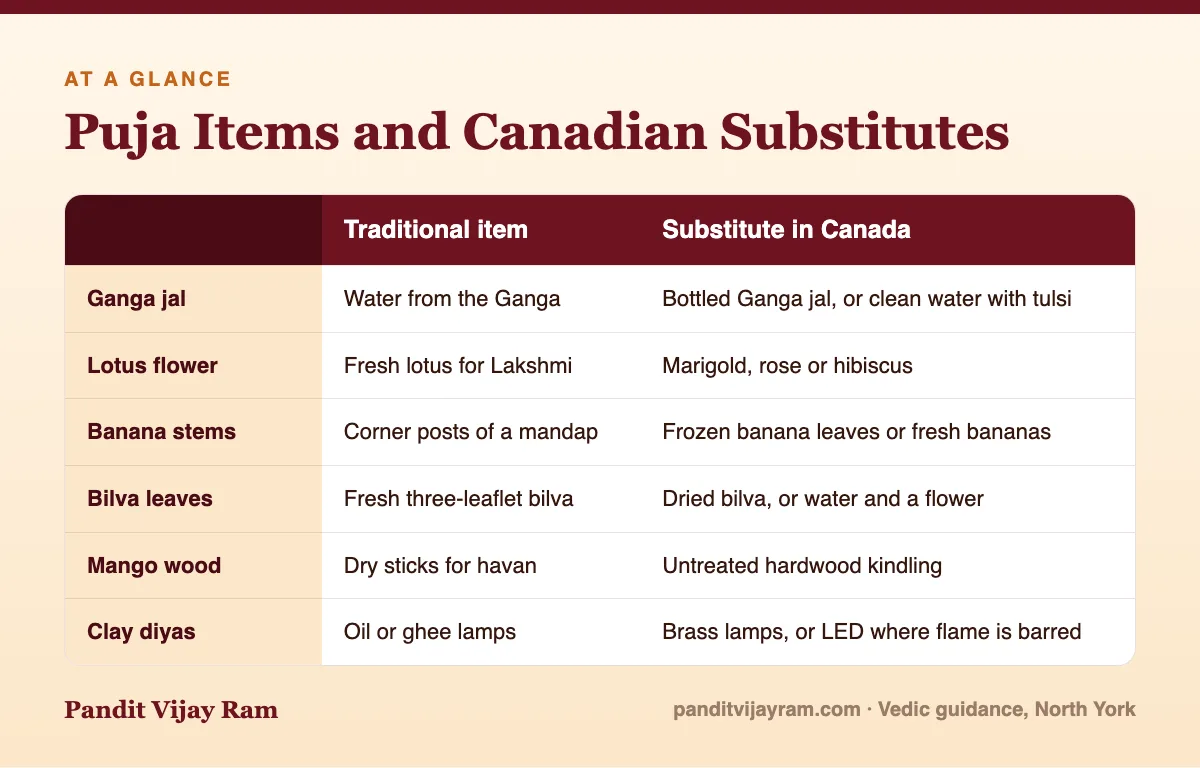
What can you use as substitutes for puja items you cannot find?
Tradition allows sensible substitutes. Clean water with a tulsi leaf can stand in for Ganga jal, marigolds for lotus, frozen banana leaves or fresh bananas for banana stems, dried bilva leaves for fresh ones, store-bought ghee for homemade, and untreated hardwood for mango sticks. When nothing fits, a sincere mental offering is accepted.
Scriptural manuals themselves allow replacement. When an item is missing, many priests offer akshat or a flower in its place while naming the intended item, and the offering is considered complete.
Common Canadian substitutions:
- Ganga jal: bottled Ganga jal is sold at many grocers. Otherwise, use clean water with a tulsi leaf and a prayer.
- Lotus: marigold, rose, hibiscus or chrysanthemum.
- Banana stems: frozen banana leaves from South Asian or Caribbean grocers, or a bunch of bananas on the altar.
- Bilva leaves: dried bilva sold in packets, or a few drops of water and a flower offered with the bilva mantra.
- Durva grass: pesticide-free grass from your own garden in summer, or packaged durva.
- Tulsi: a leaf from a home plant, or dried tulsi in winter.
- Cow-dung cakes: untreated hardwood kindling or charcoal in a well-ventilated space.
- Clay diyas: brass or steel lamps, or LED diyas where flame is not allowed.
Keeping a tulsi plant alive through an Ontario winter makes one item easy. Our tulsi winter care guide explains how.
Where can you buy puja samagri in the GTA and online?
Most puja samagri is sold at South Asian grocery stores in Brampton, Mississauga, Scarborough, North York and Markham, at temple shops, and through online sellers who ship across Canada. Fresh flowers, fruit and banana leaves come from grocers and florists. Order specialist items like havan kunds and yantras a week or two ahead.
Where you shop depends on what you need and how quickly.
- South Asian grocers: kumkum, haldi, akshat, ghee, wicks, incense, camphor, dhoop, mauli thread, coconuts, betel leaves and supari. Larger stores keep a puja section.
- Temple shops: murtis, lamps, kalash sets, prayer books, rudraksha and malas. Temples are also the most reliable place for seasonal items around festivals.
- Caribbean and East Asian grocers: banana leaves, coconuts and fresh flowers.
- Florists and supermarkets: marigolds and garlands, especially near Diwali and weddings.
- Online sellers: useful for havan kunds, yantras, specific samagri mixes and items for families outside the GTA.
Bringing items from India. Seeds, soil, fresh leaves, some wood and certain plant materials are restricted when entering Canada. Declare food, plants and plant products at the border and check the official guidance before packing. Sealed, commercially packaged items are usually easier.
Before Diwali and Navratri, popular items sell out. A shopping list made a week early, using a guide such as our Diwali Lakshmi–Ganesh puja guide, saves a stressful last-minute trip.
How should you store puja samagri safely at home?
Keep powders, rice and herbs in sealed containers in a cool, dry cupboard, and replace anything damp, mouldy or infested. Store camphor and lamp oil out of reach of children and pets. Check kumkum and sindoor for ingredient lists, since some imported products have contained lead, and dispose of old offerings respectfully.
A little care keeps samagri usable and the household safe.
- Seal and label. Glass or steel jars for akshat, haldi and kumkum. Write the purchase month on the lid so you know what is old.
- Watch for damp. Basements in Ontario can be humid. Mould on samagri, rice or dried leaves means it should be replaced.
- Ghee and oil. Ghee keeps well, but rancid smell means it is time for fresh. Keep lamp oil capped.
- Camphor. It evaporates and is toxic if swallowed. Keep it in an airtight tin, high up, away from children and pets.
- Kumkum and sindoor. Some imported products have been found to contain lead. Choose brands that list ingredients, avoid very bright unlabelled powders, and keep them away from small children.
- Matches and lighters. Store them separately from the samagri, out of reach.
- Old offerings. Wilted flowers, used wicks and leftover samagri go to compost, a temple collection or respectful disposal. Our note on disposing of puja items in Toronto explains the options.
A small, well-kept puja box often serves a family better than a crowded cupboard of half-used packets.
The bottom line
A good puja samagri list starts with the essentials of light, water, marking, flowers and a sweet, then adds a kalash or havan items when the ritual calls for them. Tradition welcomes sensible substitutes such as marigolds, frozen banana leaves or dried bilva when the original is unavailable in Canada. Shop early at GTA grocers, temple shops or online, respect border rules, and store camphor, kumkum and oil safely.
Key takeaways
- Sort your samagri list by stage: altar, purification, marking, light, offerings.
- Havan items need extra care with wood, smoke and permission in rentals.
- Tradition accepts substitutes, and a flower or akshat can stand in for a missing item.
- Declare plant materials and food when bringing samagri from India.
- Store camphor high and sealed, and choose kumkum with a clear ingredient list.