
Hanuman Puja at Home on Tuesday and Saturday: A Simple Method

Many devotees light a lamp for Hanuman ji every Tuesday and Saturday, yet feel unsure about the order of steps. What goes first, the sindoor or the flowers? Can you offer a chola at home? Is gud-chana enough, or must it be laddoos? Families in North York ask me these questions often, especially when they have moved from a city where the local temple did everything for them. In more than forty years of Vedic practice, I have found that Hanuman responds to sincerity far more than to elaborate samagri. This guide gives you a clear hanuman puja at home method that fits a working day. You will learn why Tuesday and Saturday are chosen, how to set up the altar, what the sindoor and chola customs mean and when to leave them to a temple, which offerings are traditional in different regions, and how to keep the lamp safe. Recitation of the Hanuman Chalisa itself is covered in a separate guide, linked below.
Why is Hanuman worshipped on Tuesday and Saturday?
Tuesday, Mangalvar, is ruled by Mars, and Hanuman's strength and courage are linked with that planet; many traditions also hold he was born on a Tuesday. Saturday is tied to Shani, and a popular story says Hanuman freed Shani Dev from Ravana, so Shani promised to spare Hanuman's devotees from harsh trouble.
Both days have their own mood, and many families keep one rather than both.
- Tuesday. In North India especially, Mangalvar is the main Hanuman day. Devotees often wear red or saffron, keep a light fast, and visit the temple in the evening. People going through a Mars dasha or a manglik concern sometimes choose Tuesday puja as a gentle remedy.
- Saturday. In Maharashtra and the South, Saturday is a strong day for Maruti or Anjaneya. It is also chosen by people in Sade Sati or a Saturn period, because of the Shani story. A sesame or mustard oil lamp is common on this day; our Shani Saturday oil ritual explains the related practice.
Neither day is compulsory. If your work schedule allows only Sunday, a sincere Sunday puja is better than a hurried Tuesday one. Some devotees also worship daily with a very short version: a lamp, one flower and a single mantra.
Beginnings matter in tradition. Many people start a Hanuman vow on the first Tuesday of the bright half of the lunar month and continue for eleven or twenty-one weeks. A Toronto panchang will show you when that falls.
What do you need for Hanuman puja at home?
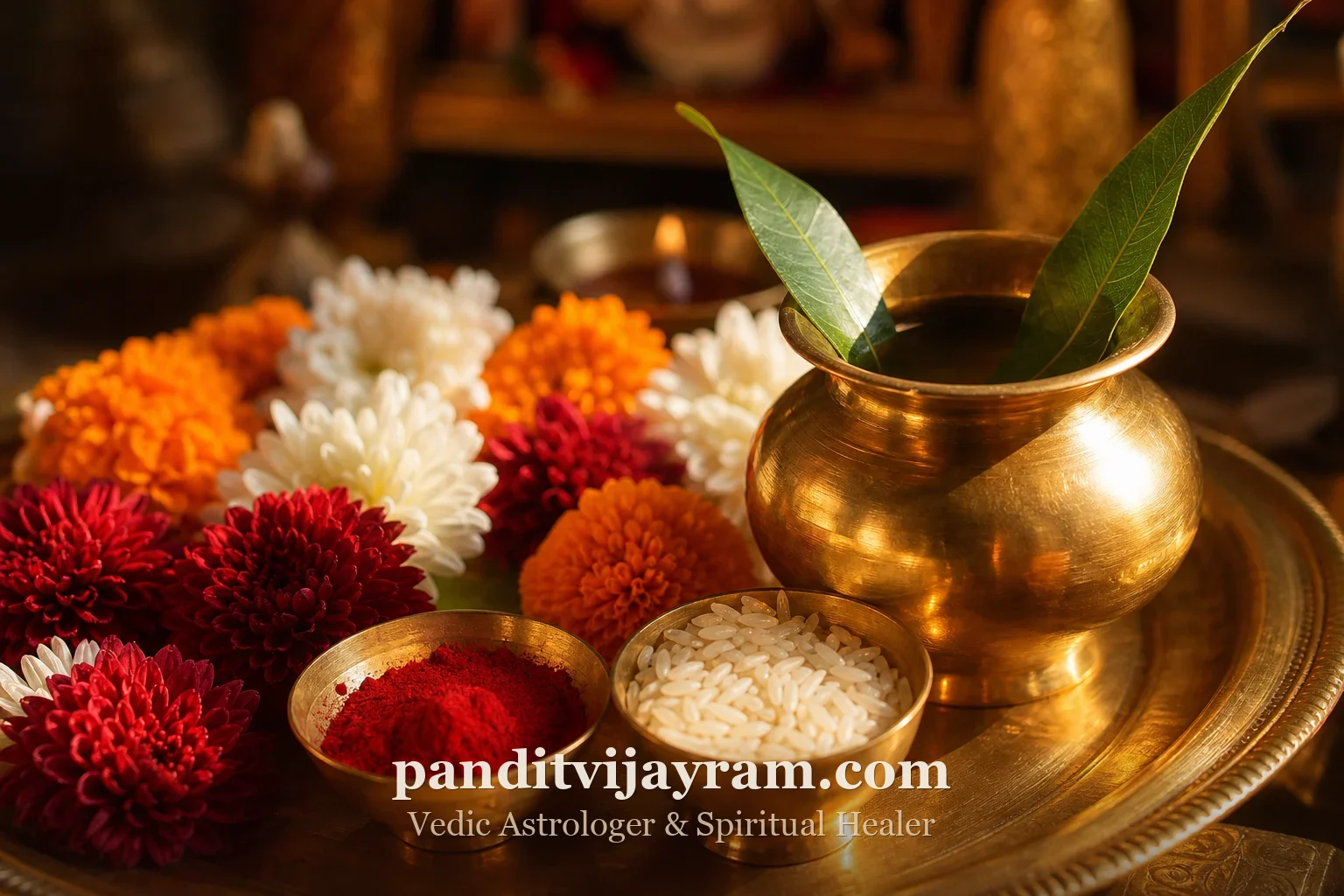
The essentials are a picture or small murti of Hanuman, a clean red cloth, a ghee or oil lamp, incense, sindoor, red flowers, a few tulsi leaves, water in a small vessel, and a sweet offering such as gud-chana, boondi laddoo or bananas. A bell and a copy of the Hanuman Chalisa complete the set.
Here is a practical list, with simple substitutes where items are hard to find in the GTA.
- Image or murti. A standing Hanuman, or Hanuman with Rama, Sita and Lakshman. Many families prefer a picture of Hanuman in a calm, blessing pose for the home.
- Red or saffron cloth to cover the small platform.
- Lamp. Ghee is traditional for Tuesday; sesame or mustard oil is often used on Saturday.
- Sindoor. The orange-red powder offered to Hanuman. Buy from a reputable shop; some sindoor has been found to contain lead, so keep it away from children's hands and mouths.
- Flowers. Red hibiscus, red roses or marigolds.
- Tulsi. A few leaves or a small garland, because Hanuman is the great devotee of Rama, Vishnu's avatar.
- Offerings. Gud-chana, jaggery with roasted chickpeas, is the simplest. Boondi laddoo, besan laddoo, bananas and paan leaves are also common.
- Incense and camphor for aarti.
You do not need everything every week. A lamp, a flower, a little gud and a sincere mantra make a complete puja. Our puja samagri list covers substitutes for other rituals, and the Hanuman Chalisa and Sundarkand guide explains recitation counts.

What is the sindoor chola offered to Hanuman, and can you do it at home?
The chola is a coating of sindoor mixed with jasmine oil or ghee, applied over a Hanuman murti, often with silver or gold foil. It recalls the story of Hanuman covering himself in sindoor for Rama's long life. Full chola is usually a temple rite; at home, a sindoor tilak is enough.
The story is loved across North India. Hanuman saw Sita applying sindoor in her hair parting and asked why. She said it was for Rama's long life and wellbeing. Hanuman reasoned that if a pinch helped, covering himself completely would help even more, and he smeared his whole body. Rama was moved by this devotion, and the orange colour of Hanuman's murtis comes from this custom.
In temples, the chola is a careful process. Priests remove the old layer, clean the murti, and apply fresh sindoor mixed with chameli oil, then decorate it with foil and new clothes. It is often done on Tuesdays, Saturdays or Hanuman Jayanti, sometimes as a sponsored seva.
For a home puja, a gentler approach makes sense:
- For a picture, place a small tilak of sindoor on the glass or frame, or offer a pinch in a small bowl before it.
- For a small metal or stone murti, touch a sindoor tilak to the forehead or feet with your ring finger.
- Avoid oily coatings on resin or painted murtis, which they can damage.
Customs differ on who offers the chola. Some North Indian families hold that women should not touch the murti or apply the chola, out of regard for Hanuman's celibacy. Many temples and teachers see no bar to women's worship, chanting and offerings. Follow your family's custom with kindness, and do not let it keep anyone from prayer.
Which offerings does Hanuman like, and how do they differ by region?
Common offerings include gud-chana, boondi or besan laddoos, bananas, red flowers, tulsi and paan. Regional customs vary: North Indian homes favour laddoos and sindoor, Maharashtrian devotees offer oil on Saturdays, and South Indian families may offer butter, a garland of betel leaves or a vada mala. Sincerity matters most.
Hanuman is worshipped under different names, and each region has its favourite offerings.
- North India and the Hindi belt. Boondi laddoo, besan laddoo and gud-chana on Tuesdays; sindoor and chameli oil; a red cloth or janeu. Tulsidas's hymns, the Chalisa and the Sankat Mochan Hanuman Ashtak, are recited.
- Maharashtra. Maruti temples see a flow of devotees on Saturdays, offering oil, flowers and coconuts.
- Tamil Nadu and Karnataka. Anjaneya is offered butter, a vada mala, a garland of small savoury lentil fritters, and garlands of betel leaves. Margazhi month is especially important in Tamil homes.
- Andhra Pradesh and Telangana. Many devotees keep a forty-one-day Hanuman deeksha, wearing saffron and following simple rules.
- Indo-Caribbean families. Hanuman jhandi flags, red and triangular, are raised after pujas in many homes and mandirs in Trinidad, Guyana and Suriname, and in their GTA communities.
Food offered is shared afterwards as prasad. If you keep a jhandi, retire old flags respectfully; our guide to disposing of puja items in Toronto has options.
Avoid offering meat, alcohol or anything stale. If anyone in the home has a nut allergy, choose chickpea or jaggery sweets over nut-based laddoos.
How do you keep a Hanuman puja safe in a home, condo or rental?
Place the lamp on a metal tray on a stable surface, away from curtains, paper pictures and hanging garlands. Keep camphor aarti brief and well away from smoke detectors. Never leave a flame burning unattended, keep matches away from children, and use an LED diya where building rules or a sleeping household make an open flame unwise.
Most home puja accidents are small and avoidable. A few habits prevent nearly all of them.
- Stable base. A brass or steel tray under the diya catches spills of hot oil and stray wicks.
- Clear space. Keep at least a hand's width between the flame and the picture frame. Flowers and dry tulsi garlands catch fire quickly.
- Short aarti. Camphor burns hot and fast. Light a small piece on a dedicated aarti plate and let it finish before moving on.
- Ventilation. Open a window slightly when burning incense. Condo smoke detectors are sensitive, and building fire alarms bring the fire service.
- Children and pets. Matches and lighters go back in a high drawer at once. A curious cat near a lamp is a common risk.
- Put it out. Snuff the flame before leaving the room or going to bed, unless you keep an akhand jyoti under constant supervision.
For renters, a respectful conversation with your landlord helps. Our guides to fire-safe diyas in condos and puja in a rented home cover the details.
For a larger Sankat Mochan anushthan or a havan, Vijay Ram ji's Hanuman puja and havan service can perform it on your behalf with full safety arrangements.
The bottom line
Hanuman puja at home is simple and needs no priest when done sincerely. Choose Tuesday or Saturday, set up a clean altar, and offer a lamp, sindoor tilak, red flowers, tulsi and a sweet before aarti. Leave full chola to temples, and honour regional customs with respect. Keep every flame safe, so your Hanuman puja at home brings calm rather than worry.
Key takeaways
- Tuesday links Hanuman with Mars; Saturday recalls his story with Shani.
- Lamp, sindoor, red flowers, tulsi and gud-chana make a complete puja.
- Full chola is usually a temple rite; a tilak is enough at home.
- Offerings vary by region, from laddoos to butter and vada mala.
- A stable tray, clear space and no unattended flame keep puja safe.