
Spiritual Body Cleansing: What It Is and What It Is Not
Search for spiritual body cleansing and you will find everything from ancient temple customs to juice cleanses with a crystal on top. That confusion worries me, because some of what is sold under the word detox can hurt people. Clients in North York and across Canada often ask me which is which. Is a neem bath medicine? Does fasting flush out negativity and toxins together? Will an egg passed over the body show what is wrong inside? After more than forty years in Vedic practice, my answer is that ritual purification has real value, but its value is spiritual and emotional, not chemical. This guide draws a clear line between the two. It explains what the tradition means by cleansing the body, why it is not a detox, the main families of method with links to deeper guides, what these practices can and cannot do, and how to choose a safe one for yourself and your family.
What does spiritual body cleansing mean in Hindu tradition?
In Hindu and yogic tradition, cleansing the body is called shaucha, meaning purity. It has an outer part, washing and ritual bathing, and an inner part, clearing the mind of anger, envy and agitation. Practices such as snan, achamana and marjan prepare a person for prayer and mark a fresh start.
Shaucha is listed as the first of the niyamas, the personal observances, in Patanjali's Yoga Sutras. Commentators describe two sides:
- Bahya shaucha, outer purity. Bathing, clean clothes, a clean space, and simple clean food.
- Antar shaucha, inner purity. Letting go of resentment, greed and restlessness through prayer, mantra and reflection.
Everyday rituals put this into practice:
- Snan. The bath before worship, often with a short mantra invoking the sacred rivers.
- Achamana. Sipping a few drops of water three times from the palm with the names of Vishnu, done at the start of many pujas.
- Marjan. Sprinkling water on the head and body with a flower or kusha grass while reciting a purifying verse.
- Tilak and bhasma. Marking the forehead with sandalwood, kumkum or sacred ash as a sign of a purified intention.
None of these is about scrubbing away dirt in the ordinary sense. They mark a shift: from the noise of the day to a state of attention. That is the heart of what the tradition means. The same idea, applied to the aura and energy centres rather than the physical body, is why many people pair a bath with a few minutes of quiet chanting.

Is a spiritual cleanse the same as a detox?
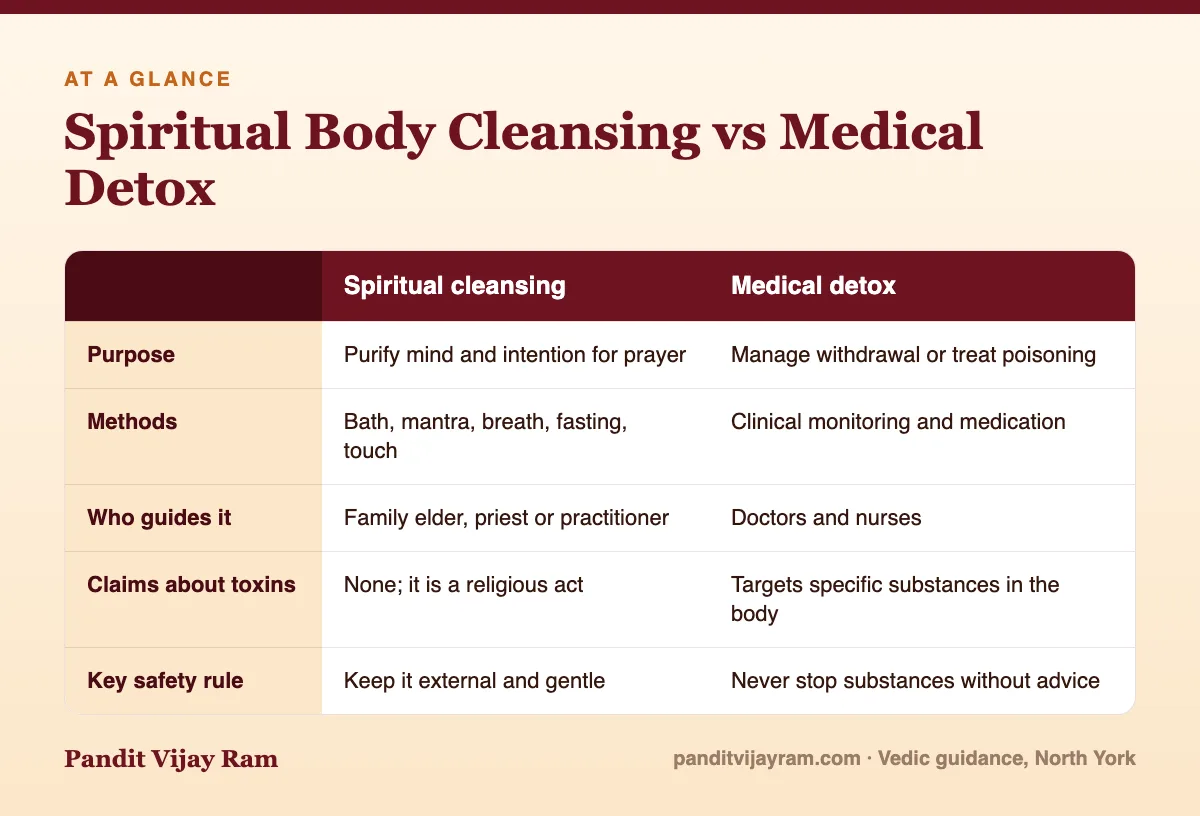
No. In medicine, detox means supervised treatment for alcohol or drug withdrawal or poisoning. Commercial detox teas, juice cleanses and footbaths are not supported by good evidence, and the liver and kidneys already clear waste. Spiritual cleansing works on intention and the mind, and should never be presented as removing toxins.
The word detox gets attached to so many products that it has almost lost its meaning. It helps to separate three things clearly:
- Medical detoxification. A clinical process, often in hospital or a treatment centre, to manage withdrawal from alcohol, opioids or other substances, or to treat poisoning. Stopping some substances suddenly without supervision can be dangerous.
- Commercial detox products. Laxative teas, multi-day juice fasts, ionic footbaths and colon cleanses. Reviews have not found good evidence that they remove toxins, and some cause dehydration, electrolyte problems or interactions with medication.
- Ritual purification. A religious act of preparing body and mind for prayer, or closing a difficult chapter. It does not claim any chemical effect.
If anyone offers you a spiritual cleanse that involves drinking large quantities of salt water, taking unlabelled herbal powders, or stopping prescribed medicine, decline. If you need to come off alcohol or drugs, speak to your family doctor or a provincial addictions service first. Ritual can support that journey later, but it is not the treatment.
The article on fasting as spiritual cleansing explains who should not fast at all.
What are the main ways to cleanse the body spiritually?
Traditional methods fall into a few families: water, such as a herbal ritual bath; breath, through pranayama; sound, through mantra and japa; restraint, through fasting; and touch or objects, such as passing salt, a lemon or, in Latino tradition, an egg over the body. Each has its own guide and cautions.
Here is a short map of the main approaches and where to read more about each:
- Water. A ritual bath with neem leaves, turmeric, rock salt or Ganga jal. The neem and turmeric bath guide covers one recipe in depth, with skin cautions.
- Breath. Nadi shodhana, alternate nostril breathing, and bhramari, humming breath, are gentle; forceful methods need care. See pranayama for energetic cleansing.
- Sound. Japa with a mala, or chanting the Gayatri or Mahamrityunjaya mantra, is considered purifying in itself.
- Restraint. Vrat on Ekadashi or another chosen day, from a full fast to a single simple meal.
- Touch and objects. Nazar utarna with salt or chillies, the lemon passed over the body, or the Latino limpia with an egg, compared in egg cleansing and Vedic nazar rituals.
- Wearables. A rudraksha or tulsi mala, or a kalava thread, as an ongoing reminder of protection.
A good starting point is to pick one method that fits your health and routine, and practise it steadily for a few weeks before adding more. Layering many methods at once tends to create anxiety rather than calm.
What can spiritual body cleansing do, and what can it not do?
Ritual cleansing can help a person feel settled, mark the end of a hard experience, prepare the mind for prayer and build a steady daily rhythm. It cannot treat infection, chronic illness, addiction, depression or injury, and it does not remove chemical toxins. Anyone who claims otherwise is overstating the practice.
Being clear about limits protects the practice itself. When cleansing is oversold, people feel it failed them.
What people commonly report:
- A sense of closure after a funeral, hospital stay, breakup or argument.
- A calmer mind before worship, exams or a big meeting.
- Feeling cared for, especially when a parent or elder performs the ritual for a child.
- A daily anchor during a stressful season.
What it does not do:
- Lower blood sugar, blood pressure or cholesterol.
- Clear an infection, a rash or a chronic pain condition.
- Replace therapy, medication or crisis support.
- Flush substances out of the liver, kidneys or blood.
When someone tells me they feel heavy and tired all the time, I ask first about sleep, diet, thyroid, iron and mood, and I send them to their family doctor before we talk about any cleansing. If low mood is part of the picture, the guide to telling negative energy from depression is worth reading. Anyone with thoughts of self-harm can call or text 9-8-8 at any time.
How do you choose a safe spiritual body cleansing practice?
Choose methods that do not involve swallowing unfamiliar substances, extreme fasting or forceful breathing unless your doctor agrees. Patch-test herbs on skin, adapt everything for children, elders and pregnancy, and never accept a practitioner who asks you to undress, be alone with them without consent, or stop medical treatment.
Use this decision rule before starting any body-focused practice:
- Check your health first. Pregnancy, diabetes, heart or blood-pressure conditions, eczema, epilepsy and eating disorders all change what is safe. Ask your doctor about fasting and strong breathwork.
- Keep it external when in doubt. Baths, mantra and gentle breathing are low-risk. Anything swallowed carries more risk.
- Patch-test. Rub a little of any herbal paste on the inner forearm and wait a day before using it more widely.
- Adapt for the vulnerable. Children, elders and anyone frail need lukewarm water, short sessions and someone nearby.
- Insist on dignity. A genuine practitioner never needs you undressed, never touches you without clear consent, and welcomes a family member in the room.
- Watch for pressure. Urgency, secrecy and escalating fees are warning signs, not spiritual seriousness.
If you would like guidance on which method fits you, the aura cleansing service starts by asking about health and routine, then suggests a practice you can do at home. The cleansing and protection hub collects the related guides in one place.
The bottom line
Spiritual body cleansing is ritual purification of body and mind, rooted in the idea of shaucha, and it is not a medical detox. Its main methods are water, breath, sound, fasting and touch, each with its own safe practice. It can steady the mind and mark a fresh start, but it does not treat illness or remove toxins. Choose external, gentle methods first, adapt them to your health, and keep your doctor in the picture.
Key takeaways
- Shaucha means purity, with an outer and an inner side.
- Ritual cleansing is not a detox and makes no claim to remove toxins.
- Water, breath, sound, fasting and touch are the main families of method.
- It can steady the mind but cannot treat illness, addiction or depression.
- Pick gentle external methods first and check health conditions with a doctor.