
Is It Negative Energy or Depression? When to See a Doctor First

Some people come to me saying they feel heavy all the time. They sleep badly, food has lost its taste, and getting through the workday takes everything they have. A relative has told them it must be nazar or black magic. Whether it is negative energy or depression is one of the most important questions anyone can ask, and I answer it the same way every time, whether the person lives in North York or in another province: please see your family doctor first. Depression is common, it is a medical condition, and it responds to care. In this article you will find the signs that point to depression, the physical causes doctors check, how faith can sit alongside treatment, and the situations where you should seek help today. I have been a Vedic practitioner for more than forty years, and the most responsible thing I have ever said to a client is "this is not something a puja should handle alone". If you are thinking about ending your life, stop reading and call or text 9-8-8 now.
How do I know if I have depression or just feel spiritually low?
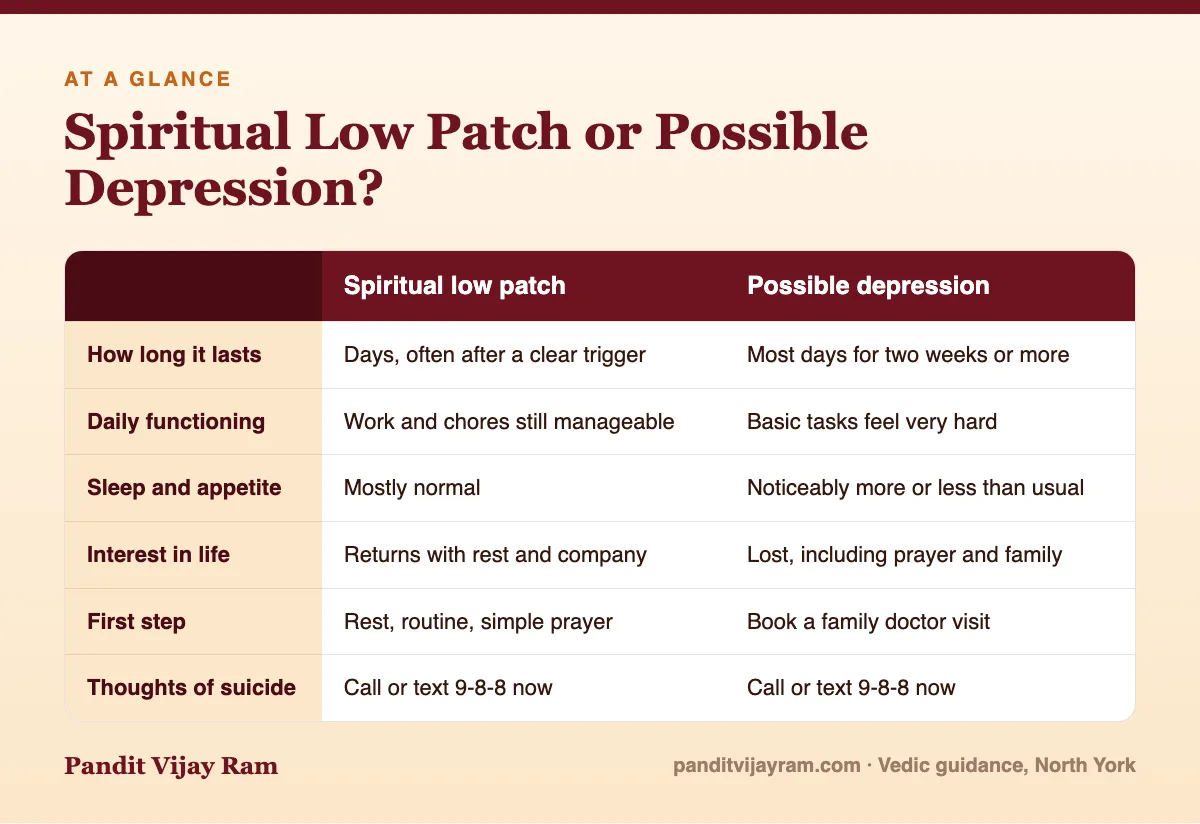
Depression is suggested when low mood, emptiness or loss of interest lasts most of the day, nearly every day, for at least two weeks, with changes in sleep, appetite, energy or concentration. Spiritual low patches tend to be shorter and lighter. Only a doctor can assess this properly, so overlap is a reason to book an appointment.
Clinicians look for a cluster of symptoms rather than a single bad feeling. Common ones include:
- Persistent sadness, emptiness or irritability.
- Losing interest in things you used to enjoy, including prayer, family time or hobbies.
- Sleeping much more or much less than usual.
- Appetite or weight changes.
- Tiredness that rest does not fix.
- Trouble concentrating or making small decisions.
- Feeling worthless, guilty or like a burden.
- Thoughts of death or of not wanting to be here.
Notice how many of those overlap with what families call negative energy: heaviness, bad sleep, no interest in anything. That overlap is exactly why the label matters. If someone has five or more of those signs for two weeks, calling it nazar can delay care that works.
A spiritually low patch, by contrast, often has a clear trigger such as a hard week, a quarrel or a missed festival, and lifts with rest, company and a return to routine. It does not usually take away your ability to function. Even so, I never ask anyone to diagnose themselves from a list. The list is a reason to talk to a doctor, not a substitute for one. Where heaviness is clearly tied to a specific person, the article on negative energy from a jealous person covers that narrower situation.

Why should I see a doctor before trying spiritual remedies?
Many physical problems produce the same heaviness people blame on negative energy: thyroid disorders, anaemia, low vitamin D or B12, sleep apnoea, hormonal shifts after childbirth or in menopause, chronic pain and medication side effects. A family doctor can test for these quickly. Treating the real cause matters more than any ritual.
When a client describes constant heaviness, these are the questions I ask before we discuss anything spiritual:
- When did you last have blood work? Thyroid, iron and vitamin levels are routine tests in Canada and explain a surprising amount of fatigue.
- How do you sleep? Loud snoring, waking gasping or never feeling rested can point to sleep apnoea.
- Have you recently had a baby, started or stopped a medication, or entered menopause? Each can affect mood significantly.
- Are you drinking more alcohol or using cannabis to cope? Both can deepen low mood.
- Has something painful happened? Bereavement, job loss, migration and relationship breakdown are ordinary human causes of heaviness.
If you do not have a family doctor, walk-in clinics, community health centres and, in Ontario, Health811 by phone can help you get started. Newcomers sometimes avoid doctors because of language or cost worries; ask about interpreters and your provincial coverage.
None of this dismisses faith. It simply puts first things first. A body that is short of iron will not feel lighter after a havan, and a mind exhausted by grief needs both care and time. The health and wellbeing guidance page explains how I keep spiritual work in step with medical care.
Can spiritual practice help with depression alongside treatment?
Yes, as support. Many people find that daily prayer, a lamp at the shrine, gentle pranayama, temple attendance and community service give structure and meaning while they receive medical or counselling care. These practices do not replace medication or therapy, and no practitioner should advise stopping treatment for a ritual.
Faith communities often say that the mind is governed by the Moon, and Vedic tradition offers gentle practices for steadiness. Used alongside proper care, these can be a real comfort:
- A fixed daily ritual. Lighting a ghee lamp and reciting a short prayer at the same time each day gives shape to days that feel shapeless.
- Breath practice. Slow, unforced breathing such as anulom vilom for a few minutes. Our post on pranayama for cleansing explains a safe beginner routine; skip breath retention if you feel dizzy or panicky.
- Mantra. Om Namah Shivaya or the Mahamrityunjaya Mantra, recited softly. The words matter less than the calm rhythm.
- Satsang and seva. Being among people, cooking for a langar or helping at a temple event counters isolation, which deepens depression.
- Monday prayers for the Moon. Traditional remedies for emotional steadiness include offering water or milk to a Shiva lingam on Mondays.
Please tell your doctor about any fasting, herbs or supplements you take as part of spiritual practice. Some interact with medication. And if a healer ever tells you to stop your pills, find another healer. The mantras guide describes routines gentle enough to keep up during treatment.
What if my family insists it is black magic or nazar?
Family members usually mean well, but labelling depression as black magic can delay treatment and add fear. Thank them for their concern, explain that you are seeing a doctor, and invite them to support both care and prayer. A respected elder or priest who supports medical help can often settle the disagreement.
In many South-Asian, Caribbean and Latino households, mental illness still carries stigma. Saying "someone has done something to her" can feel easier than saying "she has depression". I understand why, and I also see the harm when that story keeps someone away from a doctor for months.
Some approaches that help families:
- Use both languages. "I am getting medical help, and I would love you to pray with me." This respects faith without surrendering care.
- Bring someone to the appointment. A parent or spouse who hears the doctor directly often relaxes.
- Ask a priest, imam or granthi to speak. Many faith leaders in the GTA openly encourage mental-health care.
- Refuse costly rituals offered in panic. If anyone proposes expensive removals while you are unwell, pause. The article on negative energy removal scams lists the warning signs.
Where families are worried about black magic specifically, I am happy to look at the chart and the situation honestly. Most of the time, I end up encouraging the doctor's plan and offering a simple protective practice for the household. That reassurance alone often eases the pressure in the home. You can read more on the cleansing and protection hub.
When is low mood an emergency?
Seek help immediately if you think about suicide or self-harm, feel you cannot keep yourself safe, hear or see things others do not, or stop eating and drinking. In Canada, call or text 9-8-8 any time, call 9-1-1 for immediate danger, or go to the nearest emergency department. Do not wait for a ritual.
I want to be very direct in this section, because it is the part that matters most.
If you are thinking about ending your life, or making plans, please contact 9-8-8 now by call or text. It is Canada's Suicide Crisis Helpline, free and confidential, with trained responders at every hour. If you are in immediate danger, call 9-1-1. If you are worried about someone else, you can contact 9-8-8 for guidance too.
Other situations that need same-day medical attention:
- A new mother who feels detached from her baby, hopeless or frightened by intrusive thoughts.
- Sudden confusion, hearing voices or very unusual beliefs, especially with little sleep.
- Not eating or drinking for days.
- Heavy use of alcohol or drugs combined with low mood.
After the crisis has passed and care is in place, spiritual support can return in its proper role. Many people tell me that the first prayer they say after recovery feels different, because it is offered from a steadier place. If and when you feel ready, a gentle negative energy consultation can be part of rebuilding, always alongside your doctor's plan.
The bottom line
Negative energy or depression is a question for your family doctor first, because depression and many physical conditions feel exactly like spiritual heaviness. Prayer, mantra, breath work and community can support recovery, but only alongside medical care. If you ever think about suicide or cannot stay safe, call or text 9-8-8 or call 9-1-1 straight away.
Key takeaways
- Two weeks of low mood or lost interest needs a doctor.
- Thyroid, iron, vitamin and sleep problems mimic heaviness.
- Prayer and seva can support treatment, never replace it.
- No genuine healer tells you to stop prescribed medication.
- In crisis, call or text 9-8-8, or call 9-1-1.