
Fasting as Spiritual Cleansing: Ekadashi and Monday Vrat

Many families grew up watching a grandmother quietly skip grains on Ekadashi or keep a Monday fast for Lord Shiva. Years later, people ask me whether fasting as spiritual cleansing still has a place in a busy Canadian life, or whether it is just habit. I meet these questions often in North York, especially from younger people who want to keep a tradition without harming their health. This guide explains what a vrat actually is, how an Ekadashi fast and a Monday vrat are kept, and the different levels of fasting, from a single sattvic meal to the strict waterless fast. It also sets out clearly who should not fast and what they can offer instead. In more than forty years of guiding families, I have seen that the sankalp, the intention you make at the start, matters far more than how hungry you become. A gentle fast kept with a clear mind is closer to the spirit of the scriptures than a punishing one. You will finish knowing how to choose a fast that suits your body and how to break it properly.
What does upvas mean, and how is fasting a spiritual cleansing?
Upvas comes from upa, near, and vas, to stay, so it means staying near the divine. A vrat is a vow. Together they describe a day when food, speech and habits are simplified so the mind can rest on prayer. The cleansing is of attention and desire, not of the bowel.
Hindu texts treat fasting as a form of tapas, self-discipline that burns off restlessness. The idea is simple. When we stop reaching for snacks, screens and arguments for a day, we notice how often the mind is pulled outward. That noticing is the purification.
A proper vrat has three parts:
- Sankalp. A short vow made in the morning, often with water in the right palm, naming the deity, the fast and the purpose.
- Observance. The fast itself, along with prayer, mantra, reading or listening to the vrat katha, and kind speech.
- Parana. Breaking the fast at the right time with a simple offering and a light meal.
Fasting is one of several body-centred practices in our wider guide to spiritual body cleansing, which also explains why ritual purity is different from medical detox claims. Hunger itself is not holy. A person who fasts but spends the day irritable and gossiping has, in the traditional view, missed the point.
Many of our readers also come from traditions with their own fasts, such as Ramadan, Lent or Yom Kippur. The shared thread is restraint as a way of making room for God. Each tradition has its own rules, and they deserve to be kept on their own terms.
How do you keep an Ekadashi fast correctly?
Ekadashi is the eleventh lunar day of each fortnight, so it comes about twice a month and is devoted to Lord Vishnu. Devotees avoid grains, rice and beans, eat fruit, milk or permitted foods, pray through the day, and break the fast on Dwadashi within the time window shown in a local panchang.
Because Ekadashi follows the moon, its date moves each month. Always check a panchang set for Toronto or your own city, since sunrise times change the correct day and the parana window.
- The evening before. Eat a light, early dinner on Dashami and avoid rice. Many families also skip onion and garlic.
- Morning sankalp. Bathe, light a lamp before Vishnu or Krishna, and make your vow, naming the level of fast you will keep.
- Through the day. Recite Om Namo Bhagavate Vasudevaya, read the Vishnu Sahasranama, or listen to the Ekadashi katha. Tulsi leaves are offered, though traditionally they are picked the day before.
- Permitted foods. Fruit, milk, yoghurt, nuts, potatoes, sweet potato, and flours such as kuttu (buckwheat), singhara (water chestnut) or rajgira (amaranth). Sendha namak, rock salt, is used instead of table salt.
- Foods avoided. Rice, wheat, lentils, beans and most grains.
- Parana. On Dwadashi morning, offer food to the deity, then break the fast with something light. Panchangs give the window, and finishing within it is considered important.
The day also suits a gentle home cleansing. Ekadashi is one of the lunar days discussed in our guide to the best day for spiritual cleansing.
What are the rules of the Monday Somvar vrat for Lord Shiva?
The Somvar vrat is a Monday fast for Lord Shiva. Devotees bathe early, offer water or milk on a Shiva lingam with bilva leaves, chant Om Namah Shivaya, and eat one simple meal or fruit after the evening prayer. Some keep sixteen Mondays, called Solah Somvar, for a particular sankalp.
Monday belongs to Soma, the moon, and the moon sits on Shiva's head in many images. That link is why the Monday fast is associated with emotional steadiness and family harmony. It is often kept by unmarried people hoping for a good marriage, by couples, and by anyone who simply feels drawn to Shiva.
A typical Monday looks like this. You rise early, bathe and wear clean clothes, often white. At home or at a mandir, you offer jal or milk over the lingam, followed by bilva leaves, white flowers, and a little sandalwood paste. You chant Om Namah Shivaya on a mala, perhaps one or more rounds of one hundred and eight. Many families read the Somvar vrat katha in the afternoon.
Food rules vary by family. Some take only fruit and milk until sunset, then one sattvic meal without grains. Others eat a single normal vegetarian meal. Salt is often avoided or replaced with rock salt.
Monday fasting is also a mild option for people who want a weekly discipline without the stricter Ekadashi rules. If a chart shows the moon under stress, a kundli reading may suggest a Monday practice; that is something to check through a kundli and horoscope consultation rather than guesswork.
Other weekday fasts exist too. Tuesday is often kept for Hanuman, and Saturday for Shani, which our article on Saturday Shani remedies covers in detail.
Which type of fast should I choose: nirjala, phalahar or one meal?
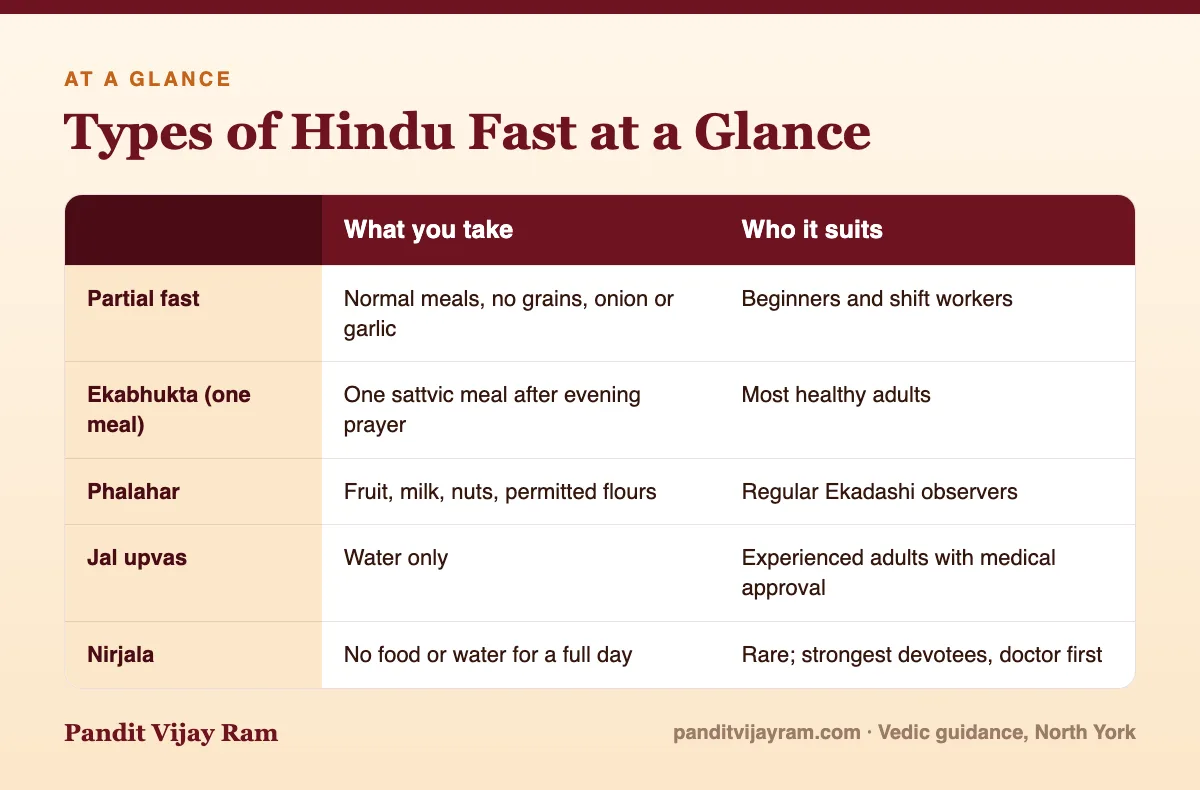
Choose the gentlest fast that still feels like a real vow. Most people do well with phalahar, fruit and milk, or ekabhukta, one sattvic meal. Nirjala, without water, is the strictest form and is risky for many bodies. A partial fast kept sincerely is fully acceptable in tradition.
Here are the common levels, from lightest to strictest:
- Partial fast. Normal meals, but no grains, onion, garlic, meat or alcohol. Good for beginners, workers on long shifts, and anyone new to fasting.
- Ekabhukta. One sattvic meal in the day, usually after evening prayer. Water and tea are taken as needed.
- Phalahar. Fruit, milk, nuts and permitted flours only. This is the most common Ekadashi practice in Canadian homes.
- Jal upvas. Water only. Suitable only for healthy adults with experience and medical clearance.
- Nirjala. No food and no water from sunrise to the next sunrise. Traditionally kept once a year on Nirjala Ekadashi by the strongest devotees.
A simple decision rule: if you take daily medicine, work a physical job, or have never fasted before, start with a partial fast or ekabhukta. Move to phalahar only if that feels steady for several months. Do not try water-only or nirjala fasting without a doctor's approval.
Ordinary effects are not spiritual signs. A headache on a fasting day is usually caffeine withdrawal or low fluids. Light-headedness can mean low blood sugar. Irritability is just hunger. None of these mean that negativity is leaving the body, and pushing through them is not more devout.
In summer, or in heated Toronto offices in winter, dehydration comes quickly. Keep water and a piece of fruit close.
Who should not fast, and what can they do instead?
People with diabetes, pregnancy or breastfeeding, kidney or heart disease, a history of eating disorders, frailty in old age, or medicines that must be taken with food should not fast without a doctor's approval. Children should not fast. Tradition itself allows substitutes such as charity, japa and simple food.
This is the most important part of the article. Fasting can be dangerous for some bodies. People using insulin or certain diabetes tablets can have a serious drop in blood sugar. Pregnant and breastfeeding women need steady nutrition. People with past eating disorders can find that fasting reopens old patterns. Please see your family doctor before any fast if one of these applies to you.
Hindu tradition is kinder than many people assume. The texts commonly excuse the sick, the elderly, children, and expectant mothers. In place of food restriction, they can:
- Keep the sankalp and prayer, and eat normal sattvic meals.
- Give anna daan, food to the hungry, or donate to a local food bank.
- Do extra japa or read a chapter of the Gita or Ramayana.
- Ask a family member to keep the fast on their behalf, which is an old and accepted custom.
I tell people plainly: God does not want you in hospital for the sake of a vrat. A sincere vow with full meals is more pleasing than a fast that ends in an ambulance.
If you are fasting because you feel weighed down by worry or illness, look at both sides. Our health and wellbeing guidance explains how prayer can sit alongside medical care, and the cleansing and protection hub lists gentler practices that need no fasting at all.
The bottom line
Fasting as spiritual cleansing is about restraint and attention, not about how hungry you can become. Ekadashi and the Monday vrat each have clear, simple rules, and a sincere partial fast is fully valid. People with diabetes, pregnancy, eating disorders or daily medicines should speak with a doctor first and can use charity, japa or a proxy fast instead. Choose the gentlest vow you can keep with a calm mind.
Key takeaways
- Upvas means staying near the divine; the fast supports prayer rather than replacing it.
- Ekadashi falls twice a month and avoids grains; check a local panchang for the parana window.
- The Monday vrat honours Shiva with water, bilva leaves and Om Namah Shivaya.
- Partial fasts and one-meal fasts are valid and safer for most people.
- Diabetes, pregnancy, eating disorders and some medicines call for a doctor's advice before fasting.