
Neem and Turmeric Bath: A Traditional Cleansing Snan
Ask grandparents from Punjab, Gujarat or Tamil Nadu about a neem bath and most will smile, because a bucket of bitter-smelling green water was part of childhood. Today, families in North York and across Canada ask me how to make one properly, often after a stressful stretch, before a festival, or when they simply want a fresh start. The details matter more than people expect. How many leaves? Should the turmeric be boiled? Will it turn the bathtub yellow? Is it safe for a toddler? In more than forty years of Vedic practice, I have suggested this snan many times and learned where it goes wrong: too strong a brew, turmeric on a white acrylic tub, a child with sensitive skin. This guide gives one reliable recipe in depth, explains the meaning behind each ingredient, walks through the bath with its traditional mantra, covers patch testing and staining, and sets out extra care for children.
What is a neem and turmeric bath in Hindu tradition?
A neem and turmeric bath, sometimes called haldi snan, is a ritual bath using water infused with neem leaves and a little turmeric. Neem is linked with the goddess Sheetala and with purity, while turmeric is auspicious and used before weddings and festivals. Together they mark a cleansing of body and mind.
Neem, Azadirachta indica, grows across India and is woven into daily religious life. Its leaves hang at doorways during certain festivals, its twigs were once the household toothbrush, and in many regions it is associated with Sheetala Mata, the goddess invoked for protection from fevers and pox. Its bitterness is understood as something that keeps heaviness away.
Turmeric, haldi, is the colour of auspicious beginnings. It is rubbed on the bride and groom in the haldi ceremony, mixed into kumkum, and offered to Ganesh and Vishnu. A pinch in bathwater signals blessing and new starts.
In combination, the bath is typically used:
- Before a festival, a puja or a family ceremony.
- After a long illness has been treated and the person feels ready to mark recovery.
- After grief, a breakup or a draining period at work.
- As a weekly reset for people who feel affected by nazar.
It is important to be clear that this is a purification ritual. It does not treat skin conditions, infections or anything else medical. If you have a rash or a wound, please see a pharmacist or doctor. For an overview of where ritual bathing sits among other methods, see the guide to spiritual body cleansing.

What do you need for a traditional neem bath?
For one adult bucket bath of about ten to twelve litres, use a generous handful of neem leaves, roughly twenty to thirty sprigs' worth, a quarter to half teaspoon of turmeric powder, an optional pinch of rock salt and a few drops of Ganga jal. You also need a pot, a strainer, a bucket and a lota.
Here is the recipe I give most often, with notes on each item:
- Neem leaves. Fresh leaves are best. Many Indian grocers in Brampton, Scarborough and Mississauga stock them, sometimes frozen. Dried leaves work too; use about two tablespoons. Rinse off any dust.
- Turmeric. A quarter teaspoon for sensitive skin, up to half a teaspoon at most. Fresh turmeric root, sliced thinly, can replace the powder but stains more.
- Rock salt, sendha namak. Optional, a pinch only. Leave it out if your skin is dry or broken.
- Ganga jal. A few drops, if you have it. Clean water with a prayer is perfectly acceptable if not.
- Water. About two litres for simmering, then topped up with warm tap water to about ten to twelve litres in a bucket.
- Tools. A steel pot, a fine strainer, a bucket, a lota or mug, and a dark towel.
What not to add: undiluted neem oil, which irritates skin and is dangerous if swallowed; camphor in the water; strong essential oils; or kitchen spices beyond turmeric. More is not better. The bath is meant to be mild.
The wider Vedic cleansing toolkit explains Ganga jal and sendha namak in more detail.
How do you prepare and take a neem bath step by step?
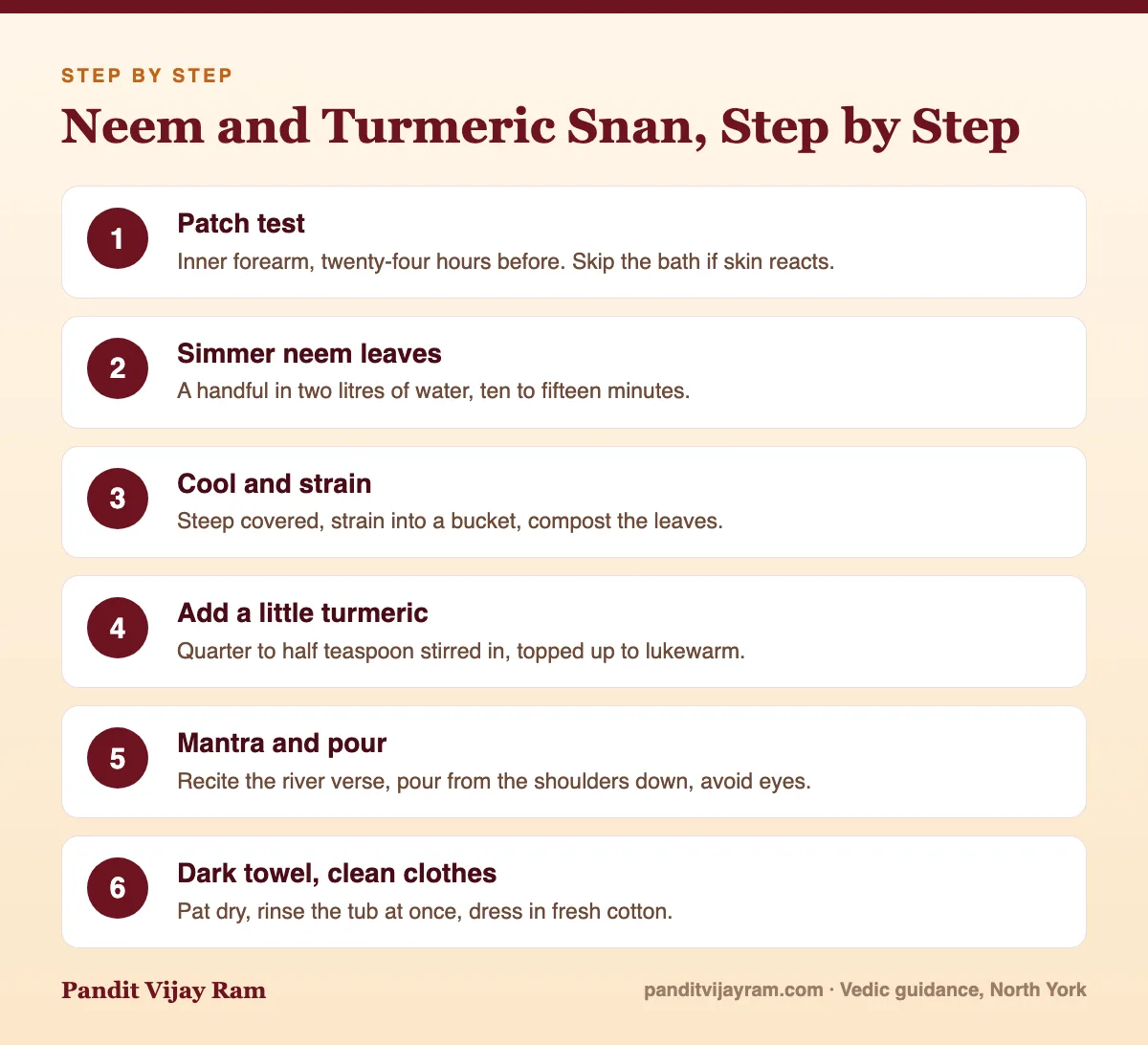
Simmer the rinsed neem leaves in about two litres of water for ten to fifteen minutes, let it steep and cool, then strain it into a bucket. Stir in the turmeric, top up with warm water, add Ganga jal, recite the snan mantra and pour the water over yourself from the shoulders down with a lota.
Allow about forty minutes, most of it waiting for the brew to cool.
- Simmer. Bring the water to a boil, add the leaves, lower the heat and simmer for ten to fifteen minutes. The water turns pale green and smells bitter.
- Steep and cool. Turn off the heat, cover, and let it sit for twenty minutes.
- Strain. Pour through a fine strainer into the bucket. Set the spent leaves aside for composting.
- Add turmeric. Stir the turmeric into the warm brew so it disperses, rather than boiling it. Add salt now if using.
- Top up and test. Add warm water until the bucket is comfortably lukewarm. Test with your inner wrist.
- Recite. Hold your hand over the water and say Gange cha Yamune chaiva Godavari Saraswati, Narmade Sindhu Kaveri jalesmin sannidhim kuru, inviting the seven sacred rivers into the water.
- Bathe. After your normal shower, pour the neem water from the shoulders down with a lota. Keep it away from your eyes.
Pat dry gently with a dark towel and dress in clean, light clothes. Many people sit quietly for a few minutes afterwards. If this bath is part of aftercare following a removal ritual, the timing and prayers differ; see the guide to the ritual bath after black magic removal.
Is a neem and turmeric bath safe for skin, and will it stain?
Most people tolerate a mild neem bath well, but plant extracts can cause contact dermatitis, so patch-test on the inner forearm a day before. Turmeric stains skin, nails, grout, acrylic tubs and pale towels. Keep the amount small, rinse the tub straight away and use a dark towel.
Patch test first. Dab a little of the cooled, turmeric-added water on the inside of your forearm and leave it for twenty-four hours. Redness, itching or bumps mean you should skip the bath. People with eczema, psoriasis, very dry skin or known plant allergies should ask a pharmacist or doctor before trying it.
Avoid these situations:
- Open cuts, fresh tattoos, recent waxing or sunburn.
- Near the eyes, mouth or genitals.
- Pregnancy, unless your doctor or midwife is comfortable with it.
Managing turmeric stains:
- Skin. A faint yellow tint fades within a day. Rinse with plain water and a mild soap.
- Tubs and grout. Acrylic and unsealed grout stain fastest. Stand in the tub rather than sitting, rinse surfaces immediately, and scrub any tint with a paste of baking soda and water.
- Towels and clothes. Use a dark or old towel. Sunlight fades turmeric stains on fabric well.
- Nails. Light staining is common; a little lemon juice on the nail, not the skin, lifts it.
If a rash appears after bathing, stop, rinse with cool water, and see a pharmacist. A spiritual practice should never be pushed through physical discomfort.
Can children and babies have a neem bath?
Older children can have a weak, lukewarm neem bath with very little turmeric and no salt, kept away from the face. For babies and toddlers, ask your paediatrician first. Never give neem oil or neem water to drink, and store neem oil out of reach, because swallowing it has seriously poisoned young children.
Many South-Asian families have customs for children, such as the gram flour and turmeric ubtan rub given to babies. A neem bath can fit into that tradition, but children's skin is thinner and more reactive than adults', so the recipe changes.
- Make it weaker. Use half the neem leaves and only a pinch of turmeric. Skip the salt entirely.
- Check the temperature twice. Lukewarm, tested on your inner wrist and again with your elbow.
- Avoid the face and head. Pour from the shoulders down and keep it out of eyes.
- Patch-test. A small dab on the forearm the day before, as for adults.
- Keep it short. A few lotas of water, then a quick rinse with plain water if the child has sensitive skin.
- Never by mouth. Do not give neem water or oil to drink. Neem oil is toxic when swallowed by young children.
For infants and toddlers, please speak to your paediatrician or a public health nurse before any herbal bath. For newborn customs that need no herbs at all, the guide to care for babies and new mothers offers gentler options.
If you would like a personalised cleansing plan for your family, the health and wellbeing guidance service considers each person's routine and comfort. The cleansing and protection hub lists related practices.
The bottom line
A neem bath with a little turmeric is a gentle traditional snan for purification and fresh starts, not a medical treatment. Simmer a handful of leaves, cool and strain, stir in a small amount of turmeric, and pour it from the shoulders down with the river mantra. Patch-test first, protect tubs and towels from stains, and keep the recipe weaker for children. Ask a doctor first for babies, pregnancy or any skin condition.
Key takeaways
- A neem bath is a ritual of purification, not a skin or medical treatment.
- One handful of leaves and a quarter to half teaspoon of turmeric is enough.
- Stir turmeric into the cooled brew and pour from the shoulders down.
- Patch-test a day ahead and use a dark towel to avoid stains.
- Weaken the recipe for children and never let anyone swallow neem oil.