
How to Clear Your Energy Before Sleep With Mantra and Lamp

Learning to clear energy before sleep is one of the most practical habits I suggest to people who say their mind will not switch off at night. You lie down tired, but the day keeps replaying: a sharp comment at work, a worrying bill, a message you should not have opened. Families in North York, Don Mills and Richmond Hill often tell me the house feels restless after dark, especially in the long winter evenings. This guide gives a simple night routine drawn from Vedic household custom: washing the feet, a short lamp, a bedtime mantra and a screen-free gap before sleep. It explains what each step is for, how long it takes and how to keep it safe in a bedroom. In more than forty years of practice I have noticed that the evening routine matters more than any single remedy, because it tells the body and mind that the day is finished. Prayer can settle the mind. It does not replace medical care for sleep problems, and I will be clear about when to see a doctor instead.
Why do Hindus wash their feet before going to bed?
Washing the feet, called pada prakshalan, marks the end of the day's movement and contact with the outside world. Tradition holds that the feet carry the dust of every place visited. Practically, cool water on the feet also relaxes many people and makes the transition to bed more deliberate.
In many South Asian homes, elders insist on washing the hands, face and feet before sleep, and often before entering the kitchen or the puja corner too. The reasoning is part symbolic and part plain hygiene. The feet touch every floor, bus and pavement of the day. Rinsing them is a way of leaving that behind at the threshold of rest.
A simple version:
- Use lukewarm or cool water, not hot, in a basin or at the tub edge.
- Wash from the ankles down to the toes, as if letting the day run off.
- Some families add a pinch of rock salt to the water on heavy days.
- Dry the feet completely, including between the toes. Traditional advice says not to sleep with wet feet, and it also avoids chills and skin problems.
People with diabetes should check their feet for cuts or sores while washing and avoid very hot or very cold water. Anyone with poor circulation or numbness should follow their doctor's foot-care advice first.
If washing the feet feels like a chore, keep it short. Even a quick rinse, done with the thought the day is done, does the work. For a fuller personal reset after hospitals or crowded places, see the guide to cleansing after crowds.

What mantra should I chant before sleeping for protection?
A widely used bedtime verse is the Ramaskandam shloka, which names Rama, Skanda, Hanuman, Garuda and Bhima and asks that bad dreams pass. Others recite the Ratri Suktam, a Rigvedic hymn to the goddess of night, or simply Om Namah Shivaya eleven times. Choose one and keep it regular.
Here are three options, from shortest to longest. You do not need all three.
- Om Namah Shivaya, eleven or twenty-one times. Simple, easy to remember and suitable for children.
- The Ramaskandam shloka: Ramaskandam Hanumantam Vainateyam Vrikodaram, shayane yah smaren nityam duhswapnam tasya nashyati. It means: whoever remembers Rama, Skanda, Hanuman, Garuda and Bhima at bedtime is freed of bad dreams. It is a traditional night verse in many households.
- The Ratri Suktam of the Rigveda, a short hymn praising Ratri, the night, as a shining goddess who brings rest and keeps away the wolf and the thief through the dark hours. Recite it from a reliable text, or listen to a recording if the Sanskrit is unfamiliar.
Many families also close the day with the Karacharana kritam va verse, which asks forgiveness for faults committed by hand, foot, speech or mind. It suits people who replay mistakes at night.
Pronunciation should be careful, but it need not be perfect. Sincerity and regularity matter more than accent. If you would like a fuller set of protective recitations for the household, the guide to Hanuman Chalisa and Sundarkand for home protection covers longer practices for the evening shrine.
Is it safe to keep a diya burning while you sleep?
No. Never sleep with an open flame burning in the bedroom or anywhere unattended. Light a small ghee lamp for the few minutes of prayer, then extinguish it before lying down, or use a battery-operated diya. Keep flames away from curtains, bedding and anything children or pets can reach.
The evening lamp is a cherished custom, and in many homes the sandhya deep is lit at dusk at the shrine. The bedtime lamp is shorter and more personal. Its job is to mark a moment, not to stand guard through the night.
Safe practice in Canadian homes:
- Light the lamp on a metal or stone plate on a stable surface, never on a bedside table cluttered with paper or fabric.
- Keep it at least an arm's length from curtains, pillows and walls.
- Stay with it for the whole time it burns.
- Put it out by covering it gently or pinching the wick; many families avoid blowing on a sacred flame.
- Check that your bedroom smoke alarm works. Ontario requires working smoke alarms on every storey and outside sleeping areas.
- In condos, dorms and rentals with flame rules, use a battery diya. The intention carries the meaning.
Skip camphor and heavy incense at bedtime. Their smoke can irritate the airways, especially for people with asthma, and lingering fumes in a closed bedroom are not good for sleep. If you like fragrance, a few drops of sandalwood oil on a cotton ball, kept away from the pillow, is gentler.
The wider safety guidance on smoke, fire and cleansing applies here too.
How long before bed should I stop using my phone for better sleep?
Aim for thirty to sixty minutes without screens before sleep. Bright light, news and messages keep the mind alert and undo the settling effect of prayer. Charge the phone outside the bedroom if you can, or at least out of arm's reach, and use a simple alarm clock instead.
A mantra recited with one eye on a group chat does very little. The phone is often the heaviest energy in the bedroom: it carries work, arguments, bad news and the lives of everyone you know. Sleep researchers also point to bright screens and stimulating content as common reasons people lie awake.
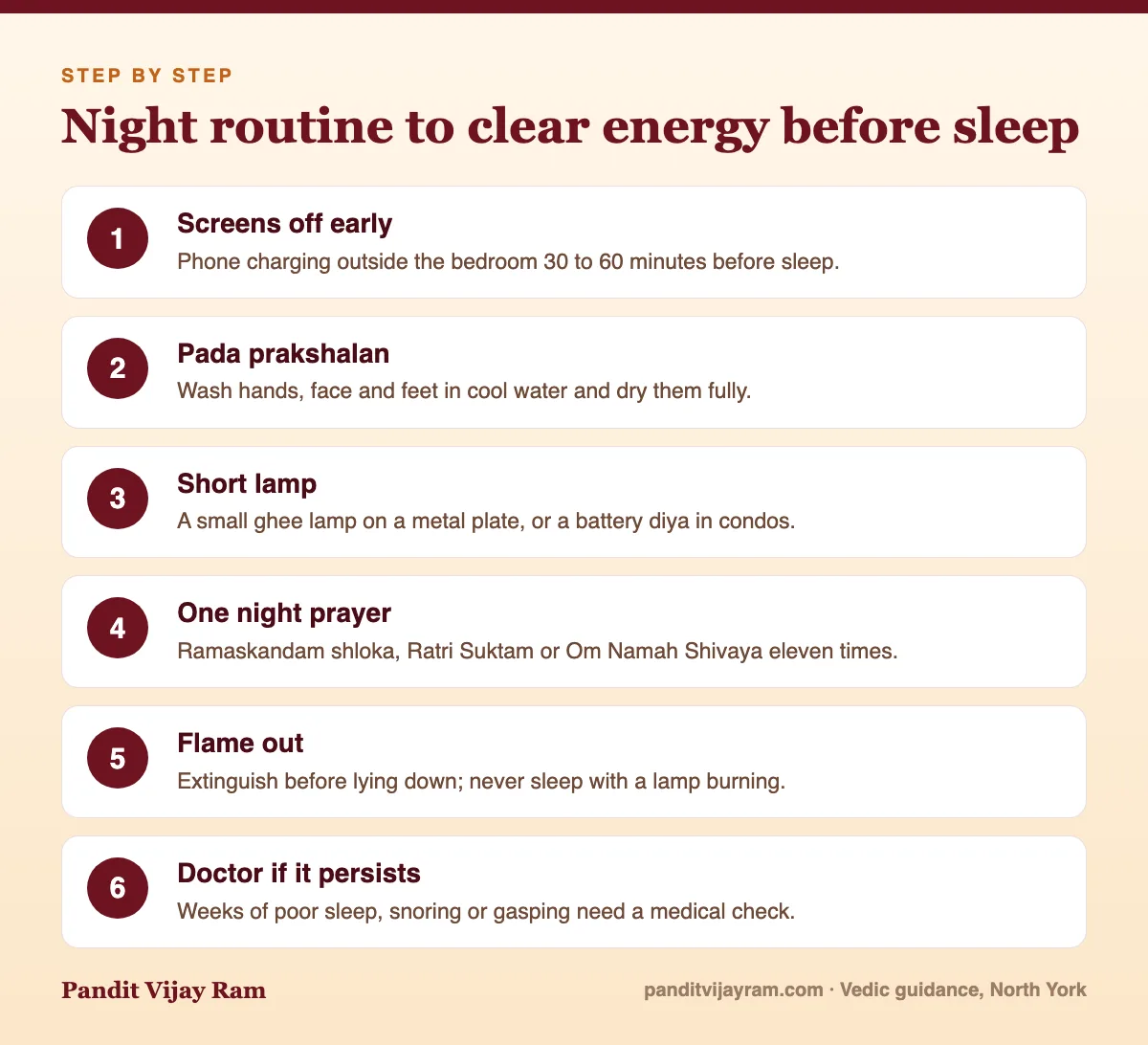
A realistic night sequence, about forty minutes in total:
- Thirty to forty minutes before bed: finish messages, plug the phone in somewhere outside the bedroom, dim the lights.
- Twenty minutes before: wash the hands, face and feet, change into clean night clothes.
- Ten minutes before: sit by the lamp, recite your chosen mantra, and take a few slow breaths.
- At bedtime: extinguish the lamp, lie down, and if thoughts arrive, repeat the mantra silently instead of reaching for a screen.
If you share a room, agree on the routine together, or at least on screens off at a set time. Children respond well to the same pattern with a shorter prayer.
It also helps to keep the bedroom itself calm: clutter cleared from under the bed, work papers out of sight and the mirror not facing the bed. The bedroom cleansing guide covers the room's layout and a weekly routine.
When is trouble sleeping a medical problem rather than negative energy?
If you have trouble falling or staying asleep at least three nights a week for several weeks, if you snore loudly or wake gasping, or if tiredness affects work or driving, see your family doctor. Insomnia, sleep apnoea, depression, pain and medication side effects are common and treatable causes.
A bedtime prayer can quiet the mind, but it cannot fix a blocked airway or a hormone imbalance. People sometimes come to me after months of poor sleep, convinced that something is disturbing them at night, and the honest first step is always a medical check.
Common ordinary causes to rule out:
- Insomnia linked to stress, shift work or irregular hours.
- Sleep apnoea, especially with loud snoring, pauses in breathing or morning headaches.
- Depression or anxiety, which often show first as early waking or racing thoughts.
- Pain, acid reflux or a frequent need to urinate at night.
- Caffeine, alcohol or late heavy meals.
- Medication side effects, worth asking your pharmacist about.
- The room itself: heat, cold, noise, light from street lamps.
Doctors can refer people to sleep studies, and talking therapies for insomnia are widely available. If nights are filled with despair or thoughts of not wanting to wake up, please call or text 9-8-8.
Spiritual care fits alongside this. Recurring frightening dreams can be explored in the guide to dream meanings in Vedic tradition, which also explains when dreams simply reflect stress. If unease in the home continues once health is checked, the negative energy assessment and the cleansing and protection hub are good next steps.
The bottom line
You can clear energy before sleep with a short, steady routine: wash the feet, sit for a few minutes by a lamp, recite one night prayer and keep screens out of the last half hour. Always extinguish the flame before lying down. Regularity matters more than length or perfect pronunciation. When poor sleep lasts for weeks, see a doctor first and let prayer support that care.
Key takeaways
- Washing the feet marks the end of the day and relaxes the body.
- One short mantra, said nightly, works better than a long one said rarely.
- Never leave a lamp burning while you sleep; use a battery diya if needed.
- Keep the last thirty to sixty minutes before bed free of screens.
- Ongoing insomnia, snoring or gasping needs a family doctor.