
How to Cleanse Your Energy After a Hospital Visit or Crowded Place
You come home from a long hospital visit, a funeral, or an hour on a packed subway, and you feel strangely flat. Your head is full, your body is tired, and you want to shake something off before you sit down with your family. Many people ask me how to cleanse yourself after crowds and difficult places without being superstitious or unkind to the people you were with. Clients in North York often describe exactly this after visits to the big hospitals or rush hour at Finch station. This guide offers a short, respectful reset you can do at your own front door. It explains the Hindu customs after funerals, practical care after a hospital visit, and a few quiet ways to carry protection with you in public. In more than forty years of practice, I have noticed that most of this heaviness is ordinary fatigue, noise and emotion, and the traditional routine works partly because it slows you down. You will also learn the signs that tiredness after people needs a family doctor rather than a ritual.
Why do I feel drained after being in a crowd or a hospital?
Crowds and hospitals load the senses with noise, light, smell and other people's emotions. Long waits, stale air, poor food and worry for a loved one add to it. Vedic tradition adds that a person's prana absorbs the mood of a place. Both views explain why a short reset at home helps.
Start with the plain explanation. A hospital corridor is bright, loud and anxious. A packed train is hot and full of strangers' faces. A funeral is heavy with grief. Your nervous system works hard in all of these places, and when you finally get home, it lets go. That release often feels like exhaustion or a low, cloudy mood.
Some people are simply more sensitive to this than others. Introverts and people who have been unwell themselves often need longer to recover from busy places. That is temperament, not weakness.
The traditional view sits alongside this. In Vedic thought, prana is affected by the places we enter and the states of the people around us. The shastras describe certain places, such as cremation grounds, as carrying ashaucha, ritual impurity, which is why washing customs exist. In folk belief, crowds also bring a risk of nazar, the evil eye, especially for children and newly married couples.
None of this means the people you met were bad or contagious in a spiritual sense. A sick relative is not a source of negativity. The washing is for your own transition back into home life, much as you would wash after a long journey.
How do you cleanse yourself after visiting someone in hospital?
Follow the hospital's hand hygiene rules first, then at home take off your shoes, wash your hands and face, and change into clean clothes before hugging children or entering the kitchen. Light a lamp and say a prayer for the patient's recovery. The prayer matters more than any cleansing material.
Physical hygiene comes first. Hospitals ask visitors to clean their hands on the way in and out, and sometimes to wear a mask. Follow those rules exactly. They protect patients, who are often more vulnerable than you, and they protect your family at home.
At home, a gentle routine works well. Leave shoes at the door. Wash your hands, then splash your face and rinse your mouth, which echoes the traditional achaman, three small sips of water taken before prayer. Put the clothes you wore in the laundry, and change into something fresh.
Then turn the visit into a blessing rather than a worry. Light a diya and recite the Mahamrityunjaya mantra for the person you visited, or the Hanuman Chalisa if that is your family's prayer. Many people find that praying for the patient lifts their own heaviness more than any wash.
If you are caring for a relative over many weeks, your own exhaustion is real and deserves attention. Many hospitals have a spiritual care or chaplaincy office that welcomes people of all faiths, and your family doctor can help with caregiver strain. Practices for your own health are covered on our health and wellbeing page.
What is the Hindu custom after coming home from a funeral?
In many Hindu families, people bathe before entering the house or touching anything after a cremation or funeral. Some communities add small customs at the door, such as chewing a neem leaf, touching iron, fire or water, or sprinkling Ganga jal. Customs vary by region, so follow your family's practice.
Hindu tradition treats death with great seriousness, and the washing customs after a funeral reflect respect rather than fear. A few common practices include:
- Bathing before entering. Ideally a full bath before sitting on furniture, cooking or touching the mandir. Some families keep a bucket of water near the back door for this.
- Neem leaf. In Bengali and some North Indian homes, mourners bite a bitter neem leaf at the threshold, a symbol of leaving sorrow outside.
- Touching iron, fire or water. Some communities touch a piece of iron, a flame or water at the door, a custom of returning to ordinary life.
- Washing clothes. Funeral clothes are laundered straight away.
Sikh, Muslim, Christian and Jewish friends have their own customs, such as the Jewish practice of washing hands on leaving a cemetery. When you attend a funeral from another tradition, follow your own practice quietly at home.
For the close family of the person who died, there is a longer period of sutak and a home shuddhi at the end. That is a different process, explained gently in our guide to cleansing the home after a death in the family.
Grief also needs room. Washing marks a transition, but it does not wash away loss, and it should not be used to hurry anyone past their sorrow.
What is a quick cleansing routine after the subway, a mall or a concert?
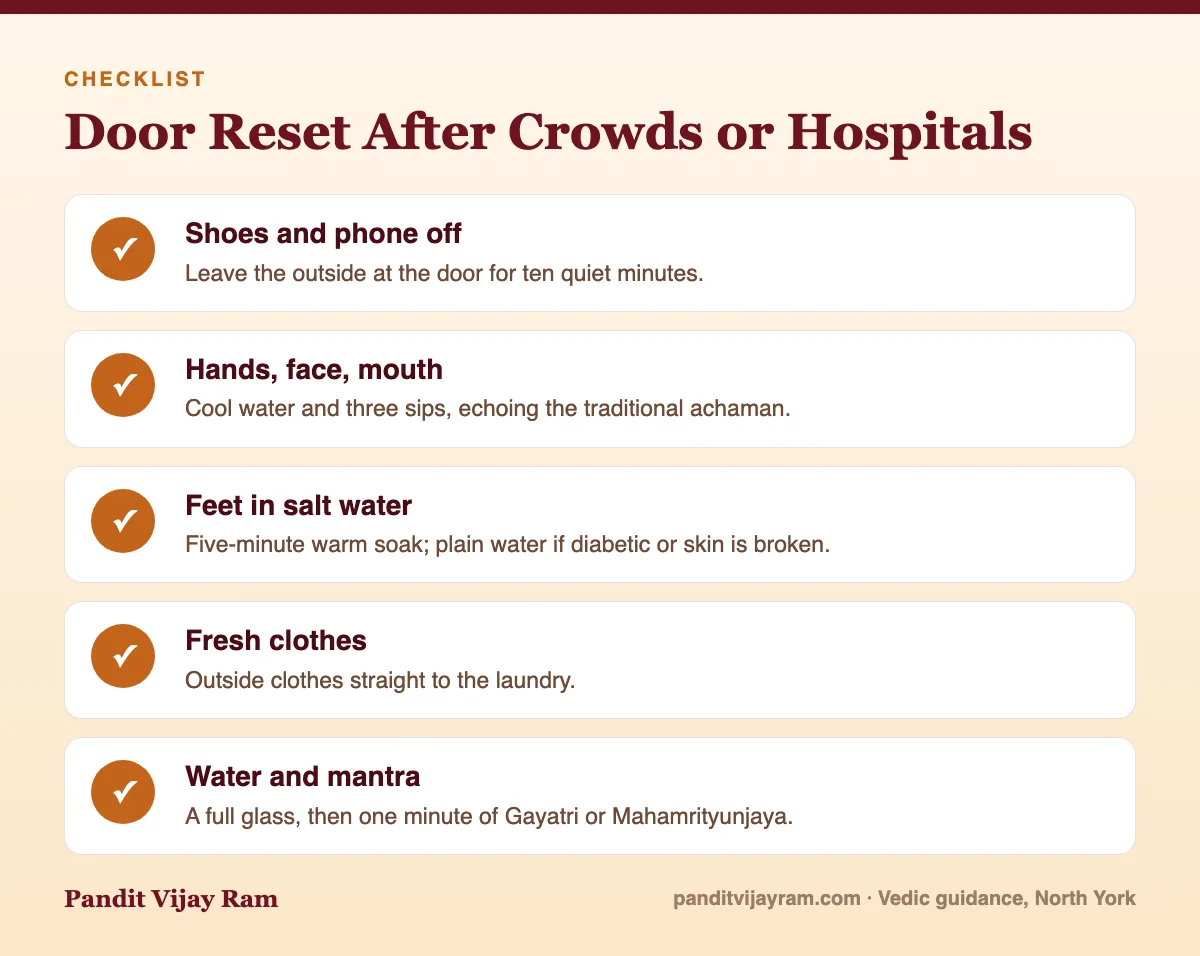
A ten-minute door routine works well: shoes off, hands and face washed, a short salt water foot soak or rinse, a change of clothes, a glass of water, and one minute of mantra or slow breathing. It is simple enough for weeknights and needs no smoke or special items.
This routine suits a condo, a basement apartment or a family house. It uses only water, salt and your own voice.
- Leave the outside at the door. Shoes off, bag down, phone on silent for ten minutes.
- Wash hands and face. Use cool water. Rinse your mouth and take three small sips.
- Salt water for the feet. Fill a basin with warm water and one spoon of rock or sea salt. Soak your feet for five minutes, then rinse with plain water and dry well.
- Change clothes. Put the outside clothes aside and wear something soft and clean.
- Drink water. A full glass, slowly. Dehydration explains a lot of post-crowd fatigue.
- One minute of mantra. Recite the Gayatri mantra, Om Namah Shivaya, or a line of the Hanuman Chalisa. Slow alternate nostril breathing from our pranayama guide also works.
Safety notes: skip the salt soak if you have diabetes with foot problems, poor circulation, cuts or cracked heels, and use plain warm water instead. Check the temperature with your hand first. Do not leave children alone with a basin of water.
On very busy days, even steps one, two and six alone make a noticeable difference.
How can I protect my energy in public places?
Carry a quiet anchor: a short mantra repeated silently, a rudraksha or tulsi mala, or a kalava thread on the wrist. Keep breaks between crowded tasks, step outside for fresh air when you can, and limit time in places that leave you shaken. Protection starts with rest and boundaries.
Daily protection does not need to be visible or dramatic. A few simple supports help many people:
- Silent japa. Repeat a mantra under your breath on the train or in a waiting room. It keeps the mind from absorbing every passing mood.
- Wearable reminders. A small rudraksha or tulsi mala, worn with respect, reminds you of your prayer. Our guide to rudraksha and tulsi mala explains how to choose and care for one.
- Time limits. If malls on a Saturday wear you out, shop at quieter times. That is practical wisdom, not avoidance.
- Fresh air and light. A short walk outdoors between appointments resets the senses.
- Morning lamp. A diya and short prayer before you leave sets the tone for the day.
If you work in a hospital, a shelter or public transit, your exposure is daily. A regular weekly practice suits you better than occasional deep cleansings. A negative energy consultation can help you build a routine that fits shift work.
For families who worry about nazar on babies in crowded places, the old customs of a small black dot or a quick salt-and-chilli circle are covered on our evil eye removal page. Keep them gentle.
When is feeling drained after people a reason to see a doctor?
See your family doctor if tiredness after outings lasts for days, if you avoid leaving home because of fear, or if you have panic attacks, chest pain, breathlessness or ongoing low mood. Grief after a funeral may also need support. In a crisis, call or text 9-8-8, Canada's Suicide Crisis Helpline.
A heavy evening after a hard visit is normal. A pattern that keeps getting worse is not something to manage alone with rituals. Watch for these signs:
- Fatigue that does not lift after a good night's sleep, or lasts most days. Anaemia, thyroid problems, sleep apnoea and long infections are common causes.
- Dread before going out, avoiding the subway or shops, or panic in crowds. These respond well to medical and counselling support.
- Grief that stops you working, eating or sleeping for weeks after a loss.
- Any thought of self-harm. Call or text 9-8-8 immediately.
Seeing a doctor and keeping a spiritual routine are not in conflict. Prayer often comes more easily once the body is being looked after. Each kind of care supports the other.
For quieter daily practice at home, the cleansing and protection hub gathers gentle methods, from evening lamps to home routines, that suit people who spend long days among others.
The bottom line
To cleanse yourself after crowds, hospitals or funerals, a short, respectful reset at the door is enough for most days. Wash hands, face and feet, change clothes, drink water and say a brief mantra or prayer for anyone who is unwell. Follow your family's funeral customs and never treat the sick or grieving as sources of negativity. If tiredness or fear around people keeps growing, see your family doctor.
Key takeaways
- Most post-crowd heaviness is sensory overload, emotion and fatigue.
- Hospital hand hygiene rules come first, then a gentle reset at home.
- Hindu funeral customs ask for a bath before entering the house; details vary by community.
- A ten-minute door routine with water, salt and mantra suits busy weeknights.
- Lasting fatigue, panic or deep grief needs a family doctor or counsellor.