
Black Magic Dreams: Snakes, Dark Figures and What They Really Mean

Waking at three in the morning with your heart pounding after a dream of snakes or a dark figure at the foot of the bed is frightening, especially if you already worry that someone has worked against you. Families in North York, Willowdale and Mississauga often describe black magic dreams to me and ask whether the dream is the proof they feared. My answer is gentle but honest: a dream is a message from the mind more often than from anywhere else. Still, the Hindu tradition has a long, thoughtful body of dream lore, and it deserves to be understood rather than used to frighten people. In this article you will learn what swapna shastra says about snakes, shadowy figures and chase dreams, which dreams tradition treats as meaningful and which as passing impressions, and how sleep paralysis and stress produce the very images people fear most. You will also find a calm bedtime routine and clear signs that it is time to see a doctor. Over forty years of listening to dreams has taught me to read them kindly.
Can black magic cause bad dreams?
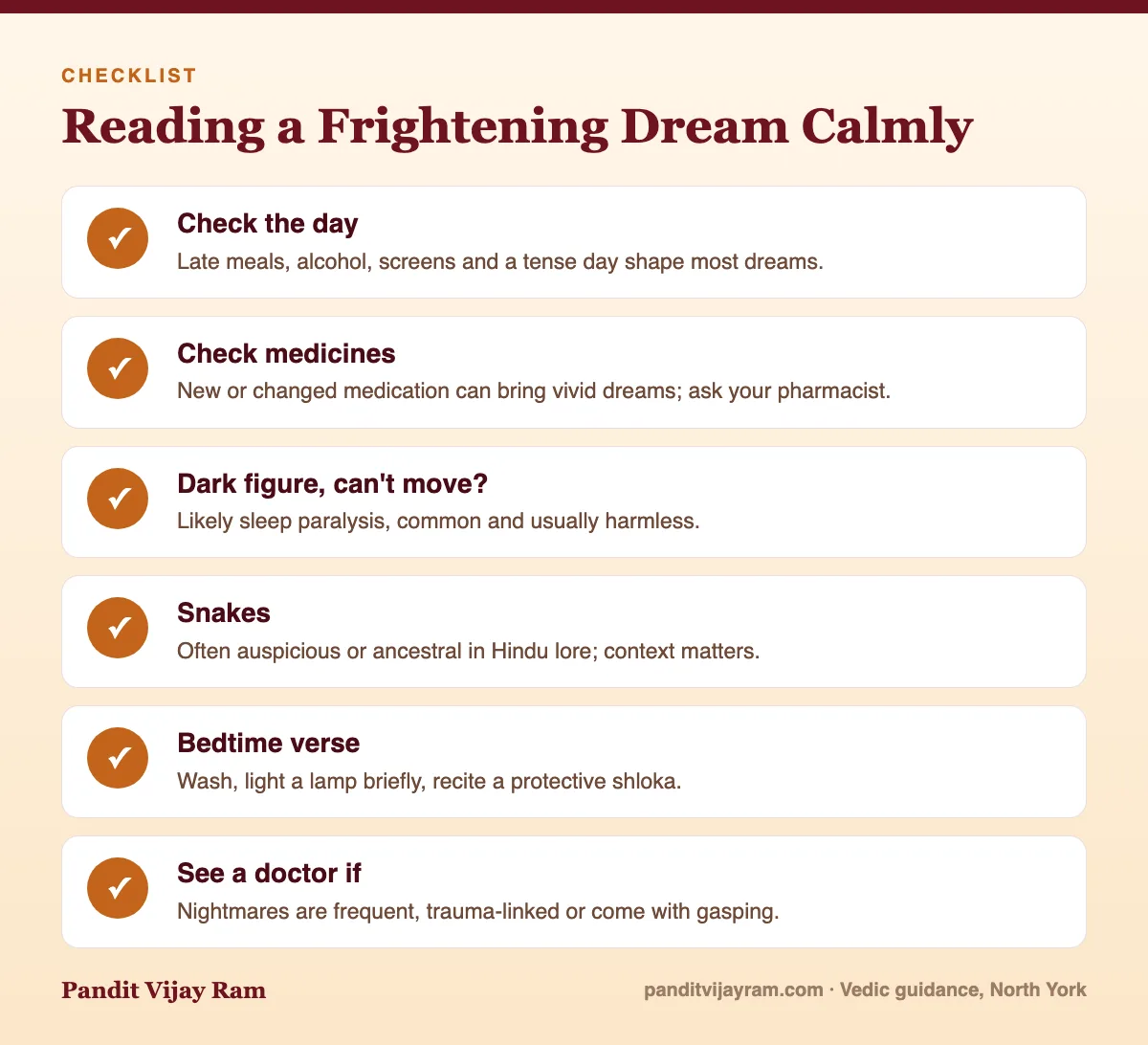
Folk belief holds that jadu can disturb sleep and bring frightening dreams, and many people who fear black magic do report nightmares. But fear itself is one of the strongest causes of nightmares. Stress, alcohol, late meals, some medicines and sleep disorders produce the same images far more often than any ritual.
I take dream reports seriously because they tell me how someone is coping. When a person says, "Ever since the argument with my cousin I dream of snakes," I hear two things: a real emotional wound, and a mind replaying it at night.
The link between worry and dreams works in a loop. You fear harm, you sleep lightly, you wake during vivid REM sleep, you remember a disturbing image, and that memory strengthens the fear. Within weeks, sleep itself becomes something to dread.
Before I consider any spiritual reading of a dream, I ask a few ordinary questions:
- Have you started or changed any medication? Some antidepressants, blood-pressure tablets and sleep aids are known to alter dreams.
- Are you drinking alcohol in the evening, or stopping after regular use?
- Do you eat heavily late at night or use screens in bed?
- Has there been a recent shock, loss, move or conflict?
- Do you snore loudly or wake gasping?
If any of these apply, address them first. Dreams often soften within a couple of weeks. If you also have other worries, the broader triage in signs someone cast a spell on you places dreams alongside other reported signs and their everyday explanations.

What does it mean to dream of snakes in Hindu belief?
In Hindu dream lore, snakes carry mixed meanings. A calm or white snake is often read as auspicious, linked to Shiva, the nagas, ancestors or coming prosperity. A biting or chasing snake may be read as worry, an unsettled ancestral matter or a chart indication. Context matters more than the snake itself.
Snakes hold a sacred place in Hindu life. Shiva wears Vasuki, Vishnu rests on Shesha, and Nag Panchami honours serpent deities. It would be strange if a symbol so revered meant only harm.
Traditional readings vary by region and family, but common threads include:
- A calm snake, or one coiled near a shrine: often read as divine protection or a blessing from the family deity.
- A white or golden snake: widely considered auspicious, sometimes linked to wealth or the arrival of a child.
- Many snakes, or snakes in the home: sometimes linked to ancestral matters, and some families respond with prayers for the pitrs.
- A snake biting you: interpretations differ sharply. Some regional lore treats it as auspicious; others see it as a warning to slow down.
- Being chased by a snake: most often read as anxiety about something unresolved.
Repeated snake dreams are one of the reasons people ask about Kaal Sarp and Pitra dosh. A chart can confirm or rule this out; a dream alone cannot. I also remind people that living in a city where snakes are rare does not stop the mind from using them. They are among the oldest symbols humans dream about, in every culture.
What does a dream of a dark figure or being chased mean?
A dark figure in the room, especially when you cannot move, is very often sleep paralysis, a common and harmless sleep event in which dream imagery overlaps with waking. Chase dreams are among the most universal nightmares and usually reflect stress or avoidance. Spiritual meanings are possible but are considered only after these.
Many people who come to me fearing jadu describe the same scene: they wake, cannot move or speak, feel pressure on the chest and sense or see a shadowy figure nearby. Across cultures this has been given many names, and in South Asian homes it is often blamed on a spirit or black magic.
Sleep researchers recognise this as sleep paralysis. During REM sleep the body is naturally prevented from acting out dreams. If you partially wake while that state continues, you can be aware but unable to move, with dream images appearing in the room. It typically lasts seconds to a couple of minutes. It is more likely with sleep deprivation, irregular hours, sleeping on the back and stress.
Other common images and their usual readings:
- Being chased: avoidance of a problem or a sense of pressure at work or home.
- Falling: loss of control or insecurity.
- Teeth falling out: worry about appearance, ageing or communication.
- A deceased relative: grief and memory, sometimes read in tradition as a call to perform shraddh or tarpan.
If episodes of sleep paralysis are frequent, a family doctor can assess for sleep disorders. A calm bedroom also helps; see how to cleanse your bedroom for peace.
Which dreams does swapna shastra say are meaningful?
Traditional dream lore distinguishes dreams that replay the day's impressions from those thought to carry a message. Dreams seen in the last part of the night, before dawn, are traditionally given more weight. Dreams after heavy food, illness, worry or a disturbed mind are considered unreliable and are not read as omens.
Dream interpretation has a long history in Indian thought. Passages in several Puranas and later manuals of swapna shastra classify dreams and their omens. What strikes me most about this literature is not its list of symbols but its caution.
Traditional teaching groups dreams roughly like this:
- Dreams from daily impressions. Replays of what you saw, heard or thought that day. Considered to have no predictive meaning.
- Dreams from bodily imbalance. Linked in Ayurvedic thought to an excess of vata, pitta or kapha, or to fever, indigestion and fatigue. Also not treated as omens.
- Dreams from desire or fear. The mind showing what it longs for or dreads. Meaningful about your feelings, not about the future.
- Dreams seen near dawn with a clear, calm mind. The only group tradition takes seriously as possible signs, and even these are read gently.
Tradition also advises that after a bad dream you should wash your face, remember God and go back to sleep, and that an inauspicious dream followed by a good one is cancelled by the second. Some families speak of telling a bad dream to a cow or to running water rather than to people.
So a single frightening dream after a late meal and a tense phone call is, by the tradition's own standard, not a sign of jadu.
When are nightmares a sleep or health problem?
See a family doctor if nightmares occur several times a week, leave you afraid to sleep, follow a trauma, come with loud snoring or gasping, involve frequent sleep paralysis, or affect your work and mood. Persistent nightmares are a recognised health issue, and effective treatments exist that work alongside prayer.
I want to be very clear here, because the cost of mistaking a health problem for jadu can be high. These signs call for medical attention:
- Frequent nightmares over a month or more, especially if you dread bedtime.
- Nightmares after a frightening event such as an accident, assault, war or sudden loss, which can be part of post-traumatic stress.
- Snoring, choking or gasping in sleep, and heavy daytime tiredness, which may point to sleep apnoea.
- Acting out dreams, such as shouting, kicking or falling out of bed, which needs a proper assessment.
- Low mood, panic or hopelessness alongside poor sleep.
- New nightmares after a change in medication. Do not stop the medicine yourself; speak to your doctor or pharmacist.
Children's night terrors, where a child screams and seems awake but cannot be comforted and remembers nothing, are common and usually outgrown. A paediatrician can reassure you.
If dark thoughts accompany poor sleep, call or text 988 at any hour. The overlap between spiritual heaviness and depression is explained in negative energy or depression. Medical help and devotional practice sit comfortably side by side.
How can I stop bad dreams spiritually?
A steady bedtime routine helps most: wash your hands, feet and face, sit for a few minutes with a lamp, and recite a protective verse such as the traditional Ramaskandam verse against bad dreams or the Hanuman Chalisa. Keep the bedroom calm and screen-free, and sleep with your head towards the east or south.
This is the routine I suggest to people troubled by frightening dreams.
- Finish eating two to three hours before bed and avoid alcohol in the evening.
- Wash hands, feet and face with cool water. Many traditions treat this as a reset between the day and the night.
- Light a small lamp for a few minutes in the puja corner, then put it out safely before you go to bed.
- Recite the dream-protection verse. A well-known Sanskrit shloka remembers Rama, Skanda, Hanuman, Garuda and Bhima before sleep, ending with the promise that bad dreams are destroyed for one who recalls them. Reciting it three times is customary.
- Add the Hanuman Chalisa if fear is strong, or a short Om Namah Shivaya on a mala.
- Keep the room simple. No phone on the pillow, a dim light if you wish, and a glass of water beside the bed.
The fuller night routine, including foot washing and phone-free time, is set out in clearing energy before sleep. If nightmares continue alongside other troubling signs, the negative energy removal service begins with a calm assessment, and more reading is in the magic and entities guides.
The bottom line
Black magic dreams of snakes, dark figures or being chased are frightening, but swapna shastra itself treats most dreams as impressions of the day, the body or the mind's fears. Snakes carry many meanings in Hindu lore, often auspicious, and shadowy figures with paralysis are very often a known sleep event. Frequent or trauma-linked nightmares deserve a family doctor's attention. A calm bedtime routine with a protective verse helps the mind rest.
Key takeaways
- Most frightening dreams reflect stress, sleep habits or medication, not jadu.
- Snakes in Hindu dream lore often carry auspicious or ancestral meanings.
- A dark figure with inability to move is very often sleep paralysis.
- Tradition gives weight only to calm, pre-dawn dreams, and reads them gently.
- Frequent nightmares or gasping in sleep are reasons to see a doctor.