
Wife Wants a Divorce: What You Can Still Do

The words may have come suddenly, or after months of tense silence. Either way, hearing that your wife wants divorce can feel like the ground has gone from under you. Husbands who come to me in North York and from across the GTA often say the same thing: "I had no idea it was this bad." Often she has been trying to tell you for a long time, in ways that were easy to miss. This guide is about what you can still do, honestly and respectfully. It covers why wives reach this point, how to respond in the first days without making things worse, what counselling can and cannot achieve, the legal basics to understand before anything is signed, and how to accept her decision if she still chooses to go. It will not suggest pressure, family campaigns or rituals to change her mind. In more than forty years of guiding families, I have seen that the husbands with the best chance of repair are the ones who stop arguing their case and start truly listening.
Why does a wife ask for a divorce?
Most wives ask for a divorce after a long period of feeling unheard, overburdened or unsafe, not on a sudden whim. Common reasons include constant criticism, an unfair share of household and family work, in-law pressure the husband did not address, infidelity, addiction, money secrecy, and fear or abuse.
To a husband, the request often feels abrupt. To the wife, it is usually the end of a long road. She may have raised the same problems many times, felt dismissed, then grown quiet. That quiet is easily mistaken for peace.
Reasons I hear most often:
- Feeling unheard. Concerns were brushed aside with "you're overreacting" or "my mother means well."
- Exhaustion. A full-time job plus children, cooking and caring for in-laws, with little help.
- Loneliness. A husband who is always working, on his phone or with friends. The guide to a husband not giving time covers that pattern.
- Broken trust. An affair, hidden debts or lies.
- Drinking, gambling or anger that have frightened her or the children.
- Growing apart. Two people who changed in different directions, sometimes after immigration.
Some wives also leave because they are afraid. If there has been any shouting, threats, control of money or movement, or physical harm, the marriage cannot be repaired by persuasion. Her safety, and the children's, come before everything. The guide to domestic-violence help in the GTA lists services for anyone affected, including men who want to change their own behaviour.

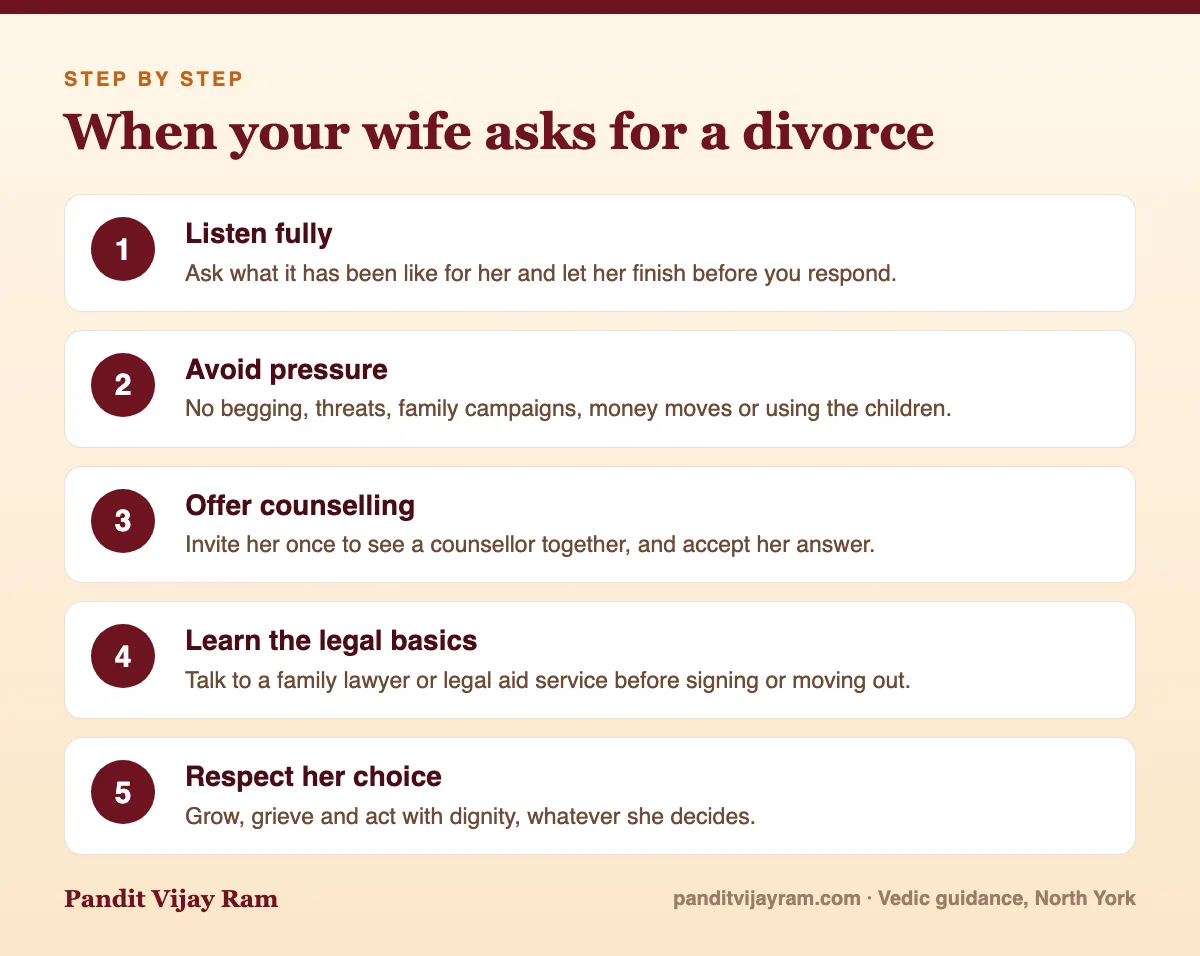
What should a husband do when his wife says she wants a divorce?
Stay calm and listen. Ask her to explain what led her here and do not interrupt or defend yourself yet. Avoid begging, threats, involving relatives against her wishes or moving money. Tell her you take her seriously, ask what she needs right now, and give her the space she asks for.
The first few days shape everything that follows. Panic leads many husbands into reactions that confirm her worst fears. A steadier approach:
- Listen without arguing. Ask, "Can you help me understand what it has been like for you?" Then listen until she is finished. Take notes afterwards if it helps you remember.
- Acknowledge, do not debate. "I hear that you have felt alone for a long time" is more useful than "That's not true."
- Do not recruit the family. Calling her parents, your parents or community elders to pressure her usually deepens her resolve and may feel threatening.
- Keep finances and children steady. Do not empty accounts, change passwords to lock her out or remove the children. Apart from being unfair, these actions can harm you legally.
- Respect space. If she wants time apart or a separate room, agree. Pursuing her constantly makes it harder for her to think.
- Look after yourself. Eat, sleep, and talk to a trusted friend or counsellor. If you feel hopeless, call or text 988.
If she has already moved to her parents' home, the guide to when a wife has left to stay with her family looks at that situation specifically.
Can counselling save a marriage when the wife wants out?
Sometimes. Couples counselling can help when she is uncertain rather than decided, and some counsellors offer short sessions designed for couples where one partner is leaning out. Even if she declines, individual counselling helps you understand your part, change genuinely and cope with whatever she decides.
Ask her, once and gently, whether she would be willing to see a counsellor together. Make it clear that the purpose is understanding, not changing her mind by force. Accept her answer.
What counselling can realistically offer:
- A safe room to speak. Many wives say things in counselling they could never say at home.
- Clarity. Some couples use a few sessions simply to decide whether to work on the marriage or separate kindly.
- Skills. If both want to try, a counsellor teaches ways to argue, listen and repair.
- A better separation. If the marriage ends, counselling can lower conflict, which matters greatly when children are involved.
Counselling is not appropriate as a joint activity where there has been abuse. In that case, separate support is safer.
For your own work, individual therapy is valuable whatever happens. Many husbands discover patterns from their own upbringing, such as never seeing a father apologise, that they had never questioned. The guide to relationship counselling in Toronto explains how to find a registered therapist, including those who understand South-Asian and Caribbean families.
If you would like a spiritual perspective alongside counselling, the marriage problem guidance page explains what a reading and prayer can offer you, and what they cannot.
What should you know about divorce law in Canada before separating?
Divorce in Canada falls under the federal Divorce Act, while property, support and parenting arrangements also involve provincial law. The details depend on your circumstances, so speak with a family lawyer or a legal aid service before signing anything, moving out or changing finances. This article cannot give legal advice.
Many husbands from our communities have never dealt with family law and rely on what relatives say happened "back home" or to a friend. That information is often wrong for Ontario. A few general points to be aware of, which a lawyer can explain properly for your situation:
- The Divorce Act is a federal law. It sets out how a divorce is granted and puts children's best interests at the centre of parenting decisions.
- Property division, spousal support and child support follow legal rules and guidelines, not family agreements made under pressure.
- Religious or community processes, such as a temple, gurdwara or mosque mediation, do not replace the legal process in Canada, though some couples use both.
- Agreements signed without independent legal advice can cause serious problems later.
- Mediation is available for many couples who want a less adversarial route.
If cost worries you, the guide to legal aid and family law help in the GTA lists Legal Aid Ontario, community legal clinics and Family Law Information Centres. Going to a lawyer does not mean you want a divorce; it means you understand your situation before making decisions.
Never use the legal process, immigration status or the children as leverage. Beyond being wrong, it tends to end any chance of goodwill.
How do you accept your wife's decision if she still wants a divorce?
Accepting her decision means honouring her right to choose her own life, even when it breaks your heart. You can grieve, reflect and grow, but you cannot override her choice through pressure, family, rituals or delay. Treat her with dignity, protect the children from conflict and look after your own health.
Many men are taught that a husband must "fix" his marriage at any cost. Sometimes the most loving thing left to do is to let go well. A respectful ending protects your children, your reputation and your own peace.
What acceptance looks like in practice:
- Keeping conversations about logistics calm and brief, perhaps in writing.
- Never speaking badly of her to the children or the community.
- Asking relatives not to pressure her or her family.
- Following the legal process honestly.
- Getting support for your grief. The guide to depression after a breakup explains when to see a doctor.
Some husbands ask me for a ritual to make their wife stay. I do not perform rituals to override another person's will, and I would ask you to avoid anyone who offers one, especially for large sums of money. What I can do is pray with you for your own steadiness, look at your chart for periods when patience and reflection come more easily, and help you understand what you want to carry forward into the next part of life.
If you both later choose to try again, that should come from her free decision, not from pressure. If you want to understand the broader steps couples take to repair a marriage while both are willing, see the guide on how to save a marriage from divorce.
The bottom line
If your wife wants divorce, the most powerful things you can do are to listen fully, offer counselling she is free to refuse and understand the legal basics from a qualified source before acting. Pressure, family campaigns and rituals to change her mind only harm the chance of goodwill. Her choice is hers to make, and accepting it with dignity protects the children and your own future.
Key takeaways
- A wife's request for divorce usually follows a long period of feeling unheard.
- Listen and acknowledge before you explain or defend yourself.
- Never pressure her through relatives, money or the children.
- Speak to a family lawyer or legal aid service before signing or moving out.
- Her decision is hers; your part is to change yourself and act with dignity.