
Breakup Depression: When Sadness Needs a Doctor

Everyone expects to feel sad after a breakup. What fewer people expect is the point where sadness stops moving and settles in, when getting out of bed feels impossible and nothing tastes or matters any more. Breakup depression is real, common and treatable, yet many people wait months before they ask for help. Some fear being called weak. Others are told by family that it is nazar or bad luck. In North York and across the GTA, I meet people at this point, and I always say the same thing first: please see your doctor. This guide explains the difference between grief and depression, how long sadness usually lasts, the warning signs that need medical care, what actually happens at a doctor's appointment, what to do in a crisis, and how prayer and spiritual support can sit alongside treatment. Over more than forty years of spiritual work, I have learned that faith and medicine are partners. Neither should be asked to carry this weight alone.
What is breakup depression?
Breakup depression describes low mood after a relationship ends that becomes heavy, persistent and disabling. Doctors may diagnose it as an adjustment disorder, a stress reaction to a major life change, or as major depression if symptoms are severe and long-lasting. It is a health condition, not a character flaw.
It helps to separate three experiences that often blur together:
- Grief. Sadness, crying, longing, anger and confusion that come in waves. Between the waves you can still laugh, eat, work and enjoy a friend's company. Grief is painful but healthy.
- Adjustment disorder. A stronger reaction to a specific stressful event, such as a breakup, that causes more distress than expected or interferes with daily life. It usually begins within a few months of the event.
- Major depression. Low mood or loss of interest most of the day, nearly every day, for at least two weeks, with other symptoms such as sleep changes, fatigue, poor concentration, guilt or thoughts of death.
A breakup can trigger any of these. People with a past history of depression, those who have also lost a home, job or friendships with the relationship, and those with little support are more vulnerable.
Only a doctor or qualified mental-health professional can tell which is which. The labels matter less than the message: if your sadness feels different, heavier or stuck, it deserves medical attention. The wider grief process is described in relationship grief.

How long is it normal to be sad after a breakup?
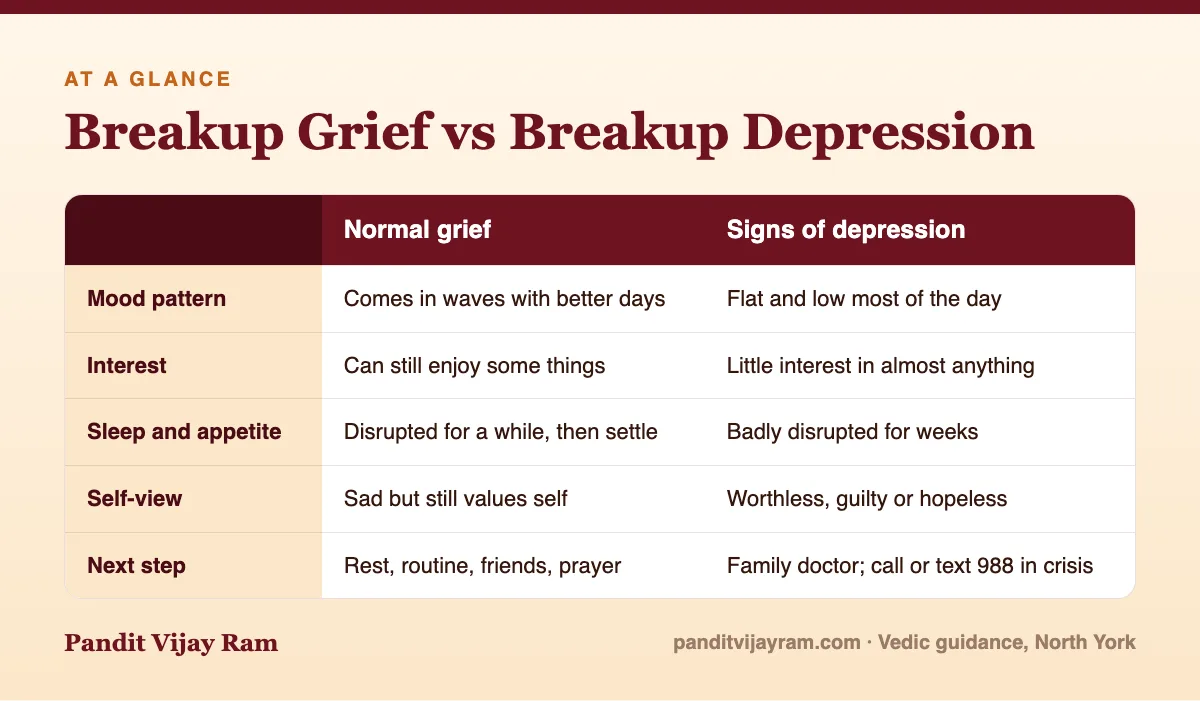
There is no fixed timeline for sadness after a breakup. Many people find the intensity eases over several weeks to a few months, with harder days around reminders. What matters is direction: grief slowly loosens its grip, while depression stays flat or gets worse. Persistent low mood for two weeks deserves attention.
People often ask me for a number. I understand why, but grief does not keep a calendar. A short relationship that ended kindly may hurt for a few weeks. A long marriage that ended suddenly, or a breakup that also meant moving house or losing friends, may hurt for much longer.
Instead of counting days, notice the pattern:
- Healthy grief comes in waves. Bad days are followed by better ones, and over time the good days grow.
- Concerning sadness feels flat and constant. The bad days do not lift, and you stop looking forward to anything.
Notice your body too. Sleep and appetite often change after a breakup, and some disruption is normal for a while. Ways to protect them are covered in sleep and appetite after a breakup. If they stay badly disrupted for weeks, that is a medical signal, not just a lifestyle problem.
Anniversaries, festivals and family events can also bring sadness back months later. That is normal. A return of grief is not the same as never having moved forward.
What are the warning signs that breakup sadness needs a doctor?
See a family doctor if you have low mood or loss of interest most days for two weeks or more, major sleep or appetite changes, trouble working or caring for yourself, heavy use of alcohol or drugs, feelings of worthlessness, or any thoughts of death or self-harm. Thoughts of suicide need help today.
Use this checklist honestly. If several apply for two weeks or longer, book an appointment with your family doctor:
- Feeling sad, empty or hopeless most of the day, nearly every day.
- Losing interest in things you used to enjoy, including friends, food, faith or hobbies.
- Sleeping far more or far less than usual.
- Big changes in appetite or weight.
- Feeling exhausted or slowed down, or restless and agitated.
- Trouble concentrating, making decisions or getting through work or study.
- Strong guilt or a belief that you are worthless or unlovable.
- Drinking more, using cannabis or other drugs to cope.
- Pulling away from everyone, including people who are trying to help.
- Thoughts that life is not worth living, or thoughts of suicide or self-harm.
The last sign is different from the rest. Any thought of suicide, even a passing one, is a reason to reach out the same day: call or text 988, or call 911 if you are in immediate danger.
Families sometimes interpret these signs as black magic, nazar or weakness. Spiritual explanations can be part of a family's faith, but they should never delay medical care. The difference is discussed in negative energy or depression.
What happens when you see a doctor about breakup depression?
A family doctor will ask about your mood, sleep, appetite, safety and history, may use a short questionnaire, and may check for physical causes. Options include counselling or therapy, follow-up visits, and sometimes medication. You decide together. Without a family doctor, walk-in clinics and, in Ontario, Health811 can help.
Many people avoid the doctor because they do not know what to expect. Here is what usually happens:
- Conversation. The doctor asks how long you have felt this way, how you are sleeping and eating, how work is going, and whether you have had thoughts of harming yourself. Honest answers lead to better care.
- Screening. A short questionnaire about mood is common.
- Physical check. Some conditions, such as thyroid problems or anaemia, can mimic depression, so blood tests may be suggested.
- Options. Talking therapy, such as cognitive behavioural therapy, is a common first step. Medication may be discussed for moderate or severe depression. Follow-up visits track progress.
To prepare, write down your main symptoms, how long they have lasted, any medicines or supplements you take, and one or two questions. Bringing a trusted friend is fine.
If you do not have a family doctor, walk-in clinics can help, and in Ontario you can call Health811 for free advice from a registered nurse. Culturally aware services for South Asian families in the GTA are listed in mental health support for South Asian families.
What should I do if I feel like I can't go on after a breakup?
If you are thinking of ending your life, reach out now. In Canada, call or text 988 to reach the Suicide Crisis Helpline at any hour. If you are in immediate danger, call 911 or go to the nearest emergency department. Tell someone you trust and stay with them.
A breakup can bring pain so intense that it feels unbearable. Thoughts of not wanting to live are a sign of how much you are hurting, not a sign of what you should do. They can pass, and help is available right now.
- Call or text 988. Trained responders answer at any hour, every day, anywhere in Canada.
- Call 911 or go to an emergency department if you have a plan or feel you might act.
- Tell someone. A friend, sibling, parent or neighbour. Ask them to stay with you.
- Make your space safer. Put away or give someone else any medicines, alcohol or other means of harm.
- Get through the next hour. Not the next month. Just the next hour.
If you are worried about someone else, ask them directly whether they are thinking about suicide. Asking does not put the idea in their head; it opens the door. Listen, stay with them, and help them contact 988 or emergency services.
Please do not wait for a spiritual remedy in a moment like this. Prayer can be said on the way to help, and it can be said by those who love you while you are being cared for.
Can spiritual care help alongside treatment for breakup depression?
Spiritual care can support recovery alongside medical treatment, never instead of it. Prayer, mantra, a gentle daily routine and belonging to a faith community can offer comfort, meaning and structure. Keep taking any prescribed treatment, tell your doctor what you are doing, and avoid anyone who tells you to stop medical care.
Many people find that faith gives them strength while treatment does its work. A few ways spiritual care can help:
- Structure. A short morning prayer or lamp gives the day a gentle beginning when everything else feels shapeless.
- Calming the mind. Slow chanting with the breath can steady racing thoughts for a few minutes. Suitable verses are gathered in devotional mantras for a heavy heart.
- Belonging. Seva at a temple, gurdwara, mosque or church puts you among people without the pressure of explaining yourself.
- Meaning. Faith can help you see the loss as part of a longer life, not the end of it.
Some cautions matter. Do not stop medication because a remedy or ritual seems to be working; talk to your doctor first. Be wary of anyone who asks for large sums to remove a curse that is "causing" your depression. And be gentle with fasting if your appetite is already low.
Vijay Ram ji's health and wellbeing guidance and love problem consultations are offered as companionship and prayer alongside care from your doctor. He will always ask whether you are already in touch with medical support.
The bottom line
Breakup depression is different from ordinary grief: it is persistent, flat and starts to take over sleep, appetite, work and hope. Low mood most days for two weeks or more is a reason to see your family doctor, who can offer counselling, follow-up and, if needed, medication. Any thought of suicide calls for help the same day through 988 or 911. Spiritual care, prayer and community can support recovery alongside medical treatment, never in place of it.
Key takeaways
- Grief comes in waves; depression feels flat, constant and disabling.
- Low mood most days for two weeks or more is a reason to see a family doctor.
- Any thought of suicide needs help today: call or text 988, or 911 in danger.
- Doctors can offer counselling, follow-up and sometimes medication.
- Prayer and community can support recovery alongside treatment, not instead of it.