
Sleep and Appetite After a Breakup: Looking After Your Body

Heartbreak is not only in the mind. After a breakup, many people lie awake at two in the morning with a pounding heart, or wake at dawn already crying. Food tastes of nothing, or the opposite happens and the fridge becomes the only comfort. Poor sleep after breakup then makes everything feel heavier the next day, and the cycle tightens. People in North York often come to me focused on the emotional pain, and I find myself asking first: are you sleeping, and are you eating? This guide explains why grief shows up in the body, and offers simple, realistic routines for rest and meals when you have little energy. It includes a gentle night routine drawn from Vedic home practice, a way to eat when you have no appetite, and clear signs that your family doctor should be involved. In over forty years of guiding people through loss, I have seen that looking after the body is not a distraction from healing. It is the ground on which emotional healing stands. Small, steady care works better than big plans.
Why can't I sleep after a breakup?
A breakup is a form of loss that the body treats as stress. Stress hormones such as cortisol and adrenaline keep you alert, so falling asleep is harder and waking in the night is common. Racing thoughts, an empty side of the bed and checking your phone late all add to the problem.
When something important is lost, the nervous system moves toward alarm. Heart rate rises, muscles tense, and the mind scans for danger. That is useful in an emergency but unhelpful at bedtime.
Common sleep patterns after a breakup:
- Trouble falling asleep, as the day's thoughts finally have space to surface.
- Waking between two and four with a jolt of sadness or anxiety.
- Waking too early and being unable to return to sleep.
- Sleeping far too much, especially on weekends, as a way to escape the day.
Several habits make things worse without our noticing. Scrolling through old photos in bed, rereading messages, drinking alcohol to fall asleep, and napping late in the afternoon all disturb night-time rest. Alcohol in particular may help you drift off but tends to fragment sleep later in the night.
The night is often when the loop of thoughts about an ex is strongest. If that loop is the main problem, the techniques in how to stop thinking about your ex pair well with the sleep routine below. A bedroom that still holds many reminders can also keep the mind alert; the guide to cleansing the bedroom for peace suggests practical and devotional ways to reset the space.

What helps you sleep after a breakup?
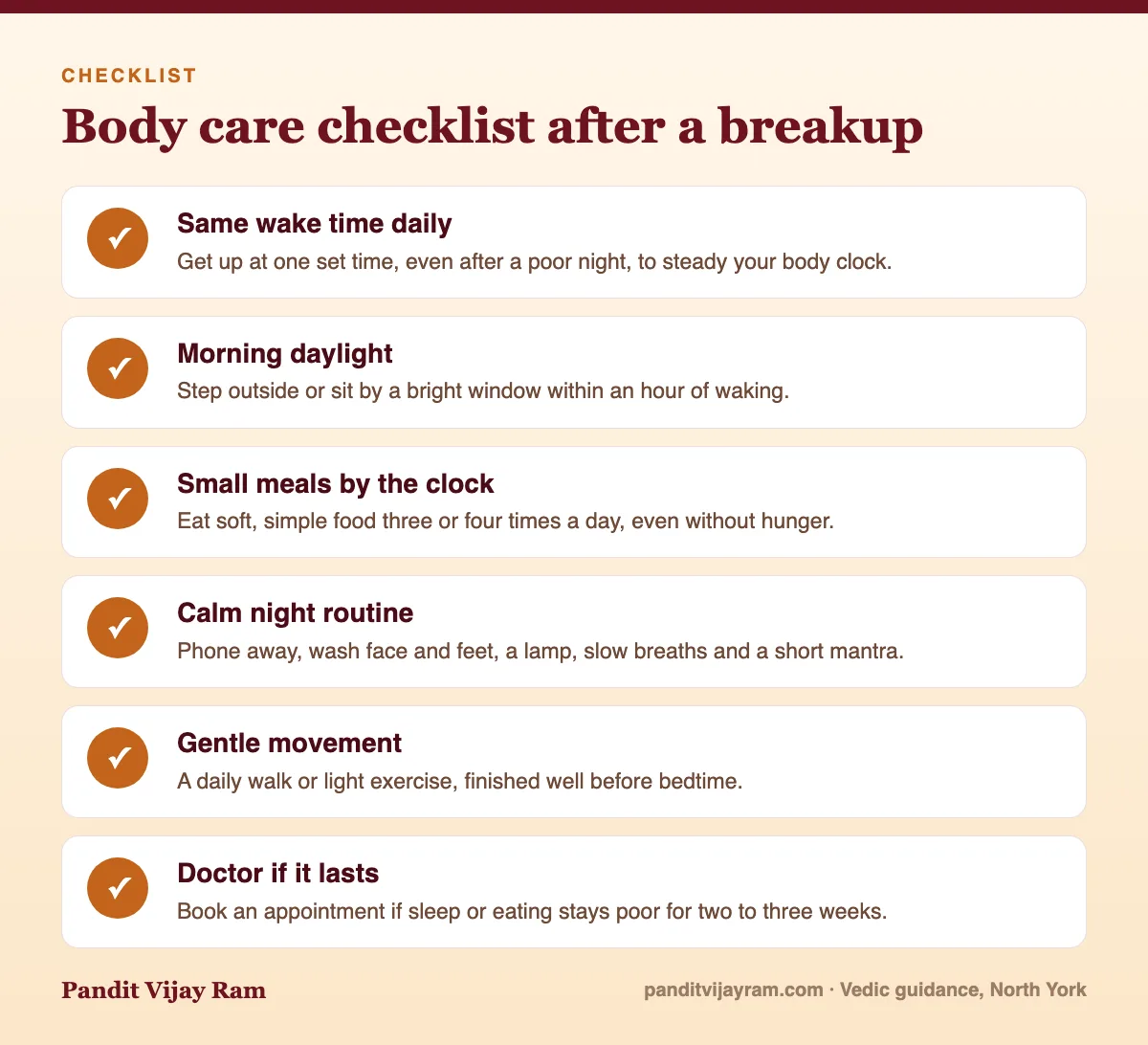
Keep a fixed wake-up time, get morning daylight, move your body during the day, and stop screens an hour before bed. Then use a short calming routine: wash your face and feet, light a lamp, breathe slowly and repeat a simple mantra. If you cannot sleep after twenty minutes, get up briefly.
A gentle night routine, adapted from common Vedic household practice:
- Set the anchor. Wake at the same time every morning, even after a bad night. This steadies the body clock more than a fixed bedtime.
- Daylight early. Step outside or sit by a bright window within an hour of waking. In a Toronto winter this matters even more.
- Move, but not late. A walk or other exercise during the day helps sleep; vigorous exercise close to bedtime can delay it.
- Put the phone away. Charge it outside the bedroom an hour before bed. Mute your ex's profile so it does not appear late at night.
- Wash and settle. Wash your face, hands and feet with cool water. Many families do this before evening prayer.
- Light, breathe, chant. Light a small lamp safely, take ten slow breaths with a longer out-breath, and repeat "Om namah Shivaya" or a prayer of your own for a few minutes.
- If awake, get up. After about twenty minutes awake, sit quietly in dim light elsewhere until drowsy, then return.
The full evening practice is described in clearing energy before sleep with a mantra. Always put lamps out before you lie down.
Do not start sleeping pills, herbal sedatives or supplements without asking your doctor or pharmacist, especially if you take other medication.
Why have I stopped eating since the breakup?
Stress can switch off hunger by diverting the body's resources away from digestion. Many grieving people describe a knotted stomach or food tasting of nothing. Others swing the opposite way, eating for comfort. Both are common responses to loss. The goal is not perfect nutrition but steady, small amounts of real food.
Grief changes appetite in different ways for different people. Some notice nausea or a tight throat. Others forget to eat until evening, then feel shaky and low. Some reach for sweets, fried snacks or takeaway late at night. None of this is a moral failing. It is the body reacting to stress.
When appetite has vanished, try these:
- Eat by the clock, not by hunger. Set three or four gentle reminders a day.
- Small and soft. A bowl of khichdi, dal and rice, soup, yoghurt, a banana or toast with peanut butter is easier than a full plate.
- Drink fluids. Water, warm milk or a light chai. Dehydration worsens headaches and fatigue.
- Accept help. If family or friends offer to cook, say yes. In many homes food is how love is shown.
- Hold off on fasting. Even if you usually keep a vrat, a period of heavy grief and poor appetite is not the time for strict fasting. The guidance on fasting as spiritual cleansing explains who should avoid it.
If comfort eating is the pattern, avoid strict rules that lead to guilt. Keep easy, balanced foods within reach, eat sitting down rather than standing at the counter, and notice when you are eating to soothe rather than from hunger. Canada's food guide offers simple plate ideas when you want a starting point.
How does grief affect the body?
Grief can bring tiredness, headaches, a heavy chest, stomach upset, muscle tension and lowered resistance to everyday illness. Concentration and memory often suffer for a while. These effects are usually temporary, but they deserve the same care you would give a physical injury, including rest, regular meals and gentle movement.
People are sometimes surprised by how physical heartbreak feels. Common experiences include:
- A tight or aching chest, especially when memories arise.
- Fatigue that sleep does not seem to fix.
- Tension headaches and a stiff neck or jaw.
- Stomach problems, from nausea to irregular digestion.
- Catching colds more easily.
- Forgetfulness and trouble focusing at work or study.
Treat this as body grief. A few practices help the body discharge stress:
- Slow breathing with a long exhale, five minutes, twice a day.
- Gentle stretching or simple yoga postures before bed.
- A warm shower or bath, followed by a cup of something warm.
- Time outdoors, even a short walk around the block.
Breathing practices such as nadi shodhana can calm the system, though stronger techniques like kapalbhati are not suitable for everyone; see pranayama for energetic cleansing for cautions.
Any chest pain that is severe, sudden or accompanied by breathlessness should be treated as a medical emergency. Call 911. Do not assume it is only heartbreak.
When should I see a doctor about not sleeping or eating?
See your family doctor if poor sleep or appetite lasts more than two to three weeks, if you are losing weight without trying, if exhaustion affects your safety at work or driving, or if low mood is deepening. Call or text 9-8-8 if you have thoughts of suicide, and 911 in an emergency.
Short-term disruption after a loss is common. When it persists, it can feed into depression or anxiety, and a doctor can help break the cycle. Many people delay this because they feel they should cope alone. Please do not wait.
Book an appointment if:
- You have slept badly most nights for several weeks.
- Your clothes are noticeably looser, or you have stopped eating proper meals.
- You feel too tired to drive or work safely.
- You rely on alcohol or other substances to sleep or cope.
- Sadness has turned into hopelessness or numbness.
In Ontario you can also call Health811 for health advice from a nurse at any hour. Your doctor may suggest counselling, cognitive behavioural therapy for insomnia, or other treatment. The article on breakup depression describes the warning signs in more depth.
Spiritual practice can sit alongside medical care. Some people find comfort in a calm conversation and prayer through the health and wellbeing service, which never replaces a doctor and never promises a medical result. Looking after your body is itself a form of devotion.
The bottom line
Sleep after breakup and healthy appetite both suffer because the body treats loss as stress. A fixed wake time, daylight, a calming night routine and small regular meals help the body steady itself. Gentle movement and breathing ease body grief while emotions heal. If sleep or eating stays poor for weeks, or mood deepens, see your doctor.
Key takeaways
- Breakups raise stress hormones that disturb both sleep and appetite.
- A fixed wake time and morning daylight steady sleep better than forcing bedtime.
- Eat small, soft meals by the clock when hunger has gone.
- Grief often shows up physically, so give the body real care.
- Persistent problems for weeks are a reason to see your family doctor.