
Ganga Jal, Camphor and Rock Salt: The Vedic Cleansing Toolkit Explained
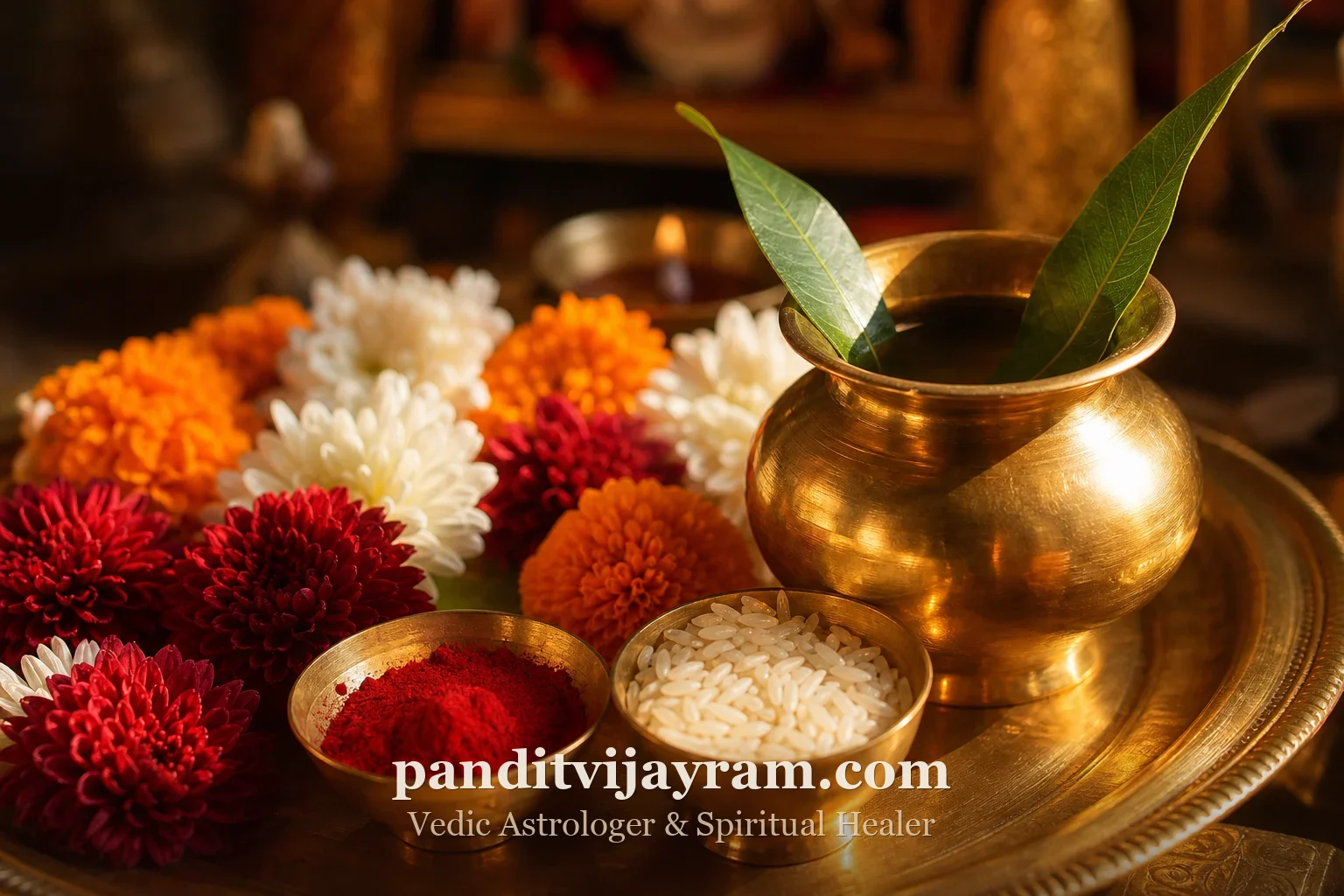
Walk into any Indian grocery in the GTA and you will find a shelf of small packets: camphor tablets, guggul, little bottles of ganga jal, sendha namak. Many people buy them without knowing exactly what each one is for. This guide explains the Vedic cleansing materials one item at a time. Families in North York often show me a cupboard full of half-used packets bought on someone's advice, with no idea which to use when. Here you will learn what each item traditionally does, how it is used, what to watch for on safety, and how to store it so it stays useful. The aim is a small, sensible kit, not a crowded shelf. Over forty years of performing rituals in homes, I have found that a few well-kept materials used with a clear prayer do far more than a cupboard of products used in a hurry. I will also be clear where an item carries a real risk, such as camphor around small children or smoke near someone with asthma.
What is ganga jal used for in cleansing?
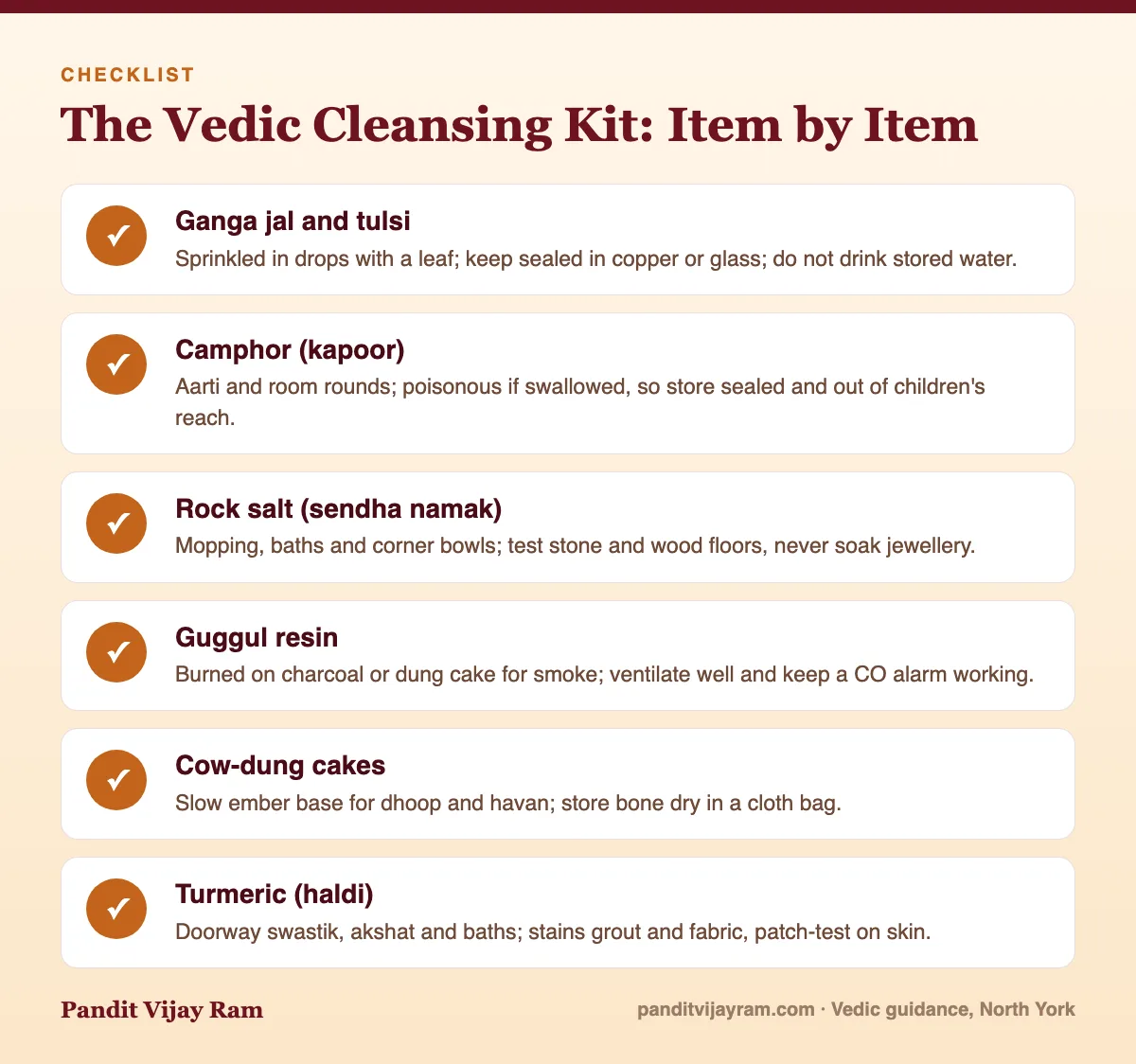
Ganga jal is water from the river Ganga, held sacred in Hindu tradition. A few drops are sprinkled on people, rooms, doorways and puja items to purify them, usually with a mango or tulsi leaf. It is also mixed into a bucket of bathing or mopping water, and given in drops to the dying.
The Ganga is worshipped as a goddess, and her water is treated as purifying in itself. Families keep a small sealed copper or glass bottle, often brought back from Haridwar or Varanasi by a relative, or bought from a temple shop.
Common uses:
- Sprinkling a few drops in each room during a home cleansing, using a leaf dipped in a small bowl.
- Adding a spoonful to a bucket of water for a ritual bath or for mopping the floor.
- Purifying the seat, vessels and offerings before a puja.
- Placing a drop on the lips of a dying family member, a deeply rooted custom.
Is it safe to drink? Do not drink stored ganga jal in quantity. River water can carry bacteria, and bottles kept for years may not be clean. A ritual sip of a drop or two is customary; anything more is not wise.
Storage. Keep it sealed, in a cool dark place at the shrine. A copper vessel is traditional. If you run short, add a few drops of ganga jal to clean tap water. Many priests accept that the mixed water carries the same purpose.
Tulsi belongs beside it. A sprig of holy basil, or a single leaf, is used to sprinkle ganga jal and placed on offerings. A tulsi plant indoors near a sunny window is a living part of any kit.
How is camphor used for spiritual cleansing, and is it safe?
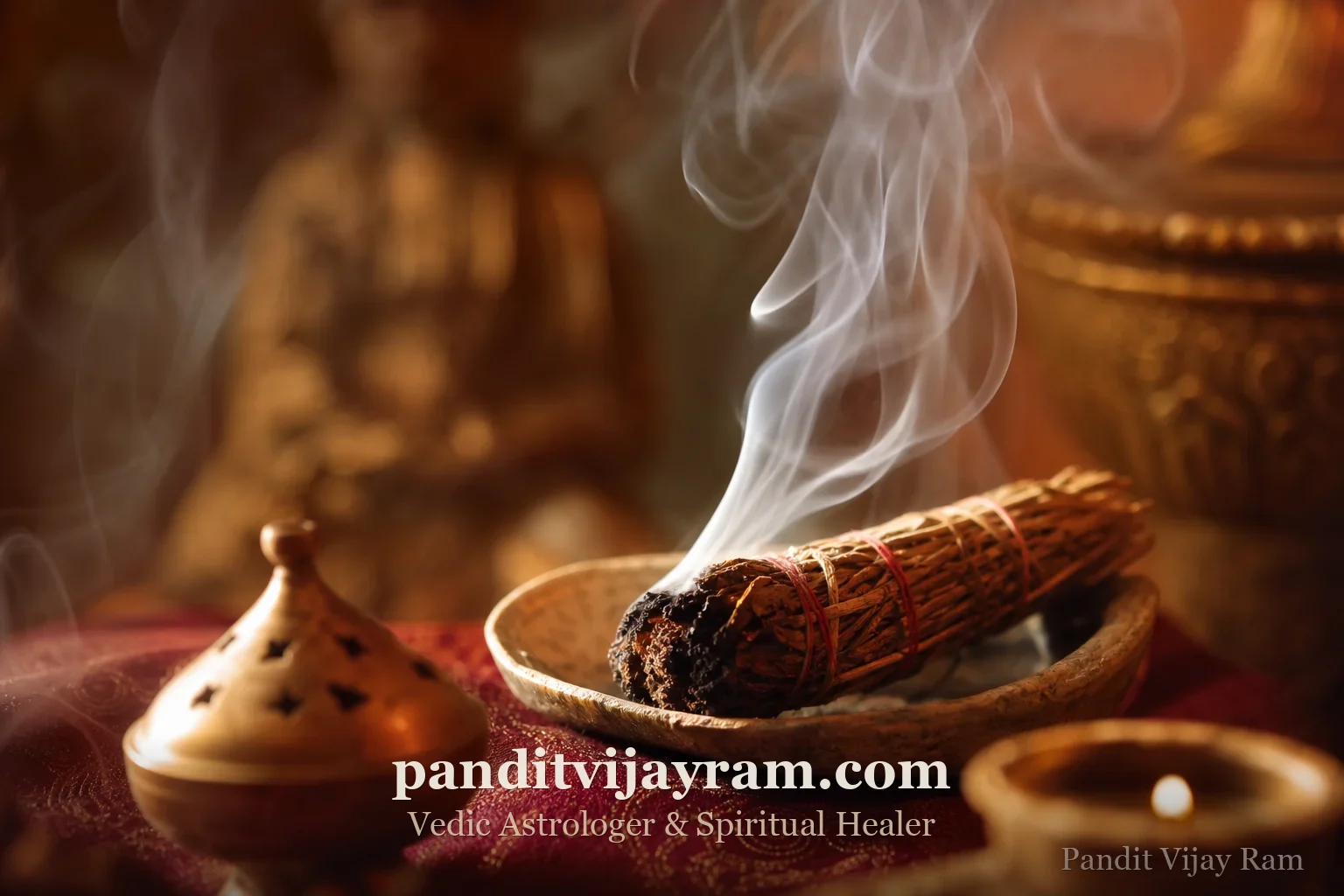
Camphor, or kapoor, is burned during aarti and carried room to room to cleanse a home. It burns completely, leaving almost no ash, which tradition reads as the ego dissolving. It is poisonous if swallowed, especially for children, so store it high, sealed and away from food, and never leave the flame alone.
Camphor is the most common flame in Hindu worship after the ghee lamp. Tablets of it are lit on a small steel plate or in a brass camphor holder and waved in aarti. For a home cleansing, a lit tablet is carried clockwise through each room, pausing in corners.
Types you will see:
- Bhimseni or natural camphor, sold as crystalline pieces, often preferred for puja.
- Pressed tablets, which are cheaper and widely available; many are synthetic.
Safety matters here.
- Camphor is toxic if eaten. Even a small amount can be dangerous for a toddler. Keep it in a locked or high cupboard.
- Never put it in food or drink, and do not rub it on a baby's skin.
- It burns hot and fast. Use a metal holder, hold it away from your face and hair, and keep clear of curtains.
- The smoke can irritate eyes and lungs. Open windows, and keep anyone with asthma at a distance.
If a child swallows camphor, call Poison Control or 911 at once.
Storage. Camphor evaporates slowly at room temperature. Keep it in a tightly sealed glass jar. A few peppercorns in the jar is an old household trick to slow this.
The camphor home round is covered step by step in our guide to cleansing a home with camphor.
Why is rock salt used to remove negative energy?
Rock salt, sendha namak, is valued in tradition as pure and unprocessed, and salt is widely believed to absorb heaviness. A handful is dissolved in mopping or bath water, placed in a bowl in a corner, or used to wash new items. It is used for routine cleansing rather than intensive ritual.
Sendha namak is mined halite, often pink or off-white. It is the salt permitted during many fasts, which is part of why it is considered pure. Sea salt is also used by many families. Iodised table salt is usually avoided for ritual use, though no harm comes from it.
Common uses:
- Mopping water. A handful in a bucket for hard floors, typically once a week. Our deep dive on salt-water mopping covers technique and the days some families avoid.
- A bowl in a corner. A small glass bowl of rock salt in a room that feels heavy, changed weekly and flushed away, not reused in food.
- A bath. A small spoonful in a bucket of warm water. Skip it on broken or very dry skin.
- Washing new or second-hand items. A wipe with salt water on hard surfaces before bringing them into the home.
Cautions. Salt water can damage natural stone such as marble, unsealed hardwood, metal fixtures and some laminate finishes. Test a small hidden area first, and rinse with plain water afterwards. Do not soak jewellery, pearls or porous gemstones in salt.
Storage. Keep ritual salt in its own sealed jar, labelled, away from kitchen salt. Damp clumps can be dried in sunlight.
What are guggul and cow-dung cakes used for?
Guggul is a fragrant resin from the Commiphora wightii tree, burned on charcoal or in dhoop to purify a space with smoke. Cow-dung cakes, called upla or kanda, are dried discs used as a slow, steady base for havan fire and dhoop. Both produce smoke, so ventilation and alarms matter.
Guggul. The resin comes in sticky brown lumps or as part of ready-made dhoop cones. To use it, a small piece is placed on a lit charcoal disc or a smouldering cow-dung cake in a clay or brass dhoop holder. The thick, sweet smoke is carried through the home. Many families use it at dusk, especially on Tuesdays and Saturdays. Loban, a related resin also used by Muslim households, is often sold alongside it.
Cow-dung cakes. In village India, dried dung of the cow is a common fuel and is treated as pure. In ritual, a cake is lit and allowed to smoulder, and ghee, guggul or samagri is offered onto it. Packets of them are sold at Indian grocers in the GTA. They give a steady ember without a tall flame, which some families find easier to manage than wood.
Safety for both:
- Smouldering produces smoke and some carbon monoxide. Never use them in a closed room, a car or a bathroom without a window.
- Keep a working carbon monoxide alarm on every floor.
- Set the holder on a heat-proof surface and let ash cool completely before disposal.
Storage. Guggul hardens with age; keep it in a sealed tin. Dung cakes must stay bone dry; store them in a cloth bag, not plastic, away from damp basements.
Our guide to home cleansing with guggul dhoop gives the room order for a smoke cleansing.
How is turmeric used in Vedic cleansing?
Turmeric, or haldi, is considered auspicious and protective. It is used to mark a swastik or Om at the doorway, mixed into a paste for the pre-wedding haldi ceremony, added to bath water, and stirred into rice for akshat. It stains easily and can irritate sensitive skin, so patch-test first.
Turmeric is everywhere in Hindu ritual. Its warm yellow is linked to Jupiter, to prosperity and to new beginnings.
Common uses:
- Doorway marks. A swastik or Om drawn with turmeric paste beside the main door on festivals or after a home cleansing.
- Akshat. Unbroken rice coloured with turmeric, offered in puja and showered as a blessing.
- Haldi ceremony. A paste of turmeric, gram flour and water or milk applied before a wedding.
- Bath. A pinch in bath water, sometimes with neem leaves. Our guide to the neem and turmeric bath covers that recipe in detail.
Cautions. Turmeric stains grout, light fabrics and painted doors. Test on a hidden patch, or draw marks on a removable tile or paper. Some people develop skin rashes from turmeric; try a small patch on the inner arm a day before any bath or paste.
Storage. Keep ritual turmeric separate from cooking spice, in a sealed jar away from light.
Putting the kit together. A practical household box holds a small bottle of ganga jal, a jar of camphor, a jar of rock salt, a tin of guggul, a few dung cakes, turmeric, a brass bell and a tulsi plant nearby. If you want help choosing what fits your home, the negative energy removal service starts with a short assessment. More guides sit on the cleansing and protection hub.
The bottom line
Vedic cleansing materials form a small, practical kit: ganga jal and tulsi for sprinkling, camphor for flame, rock salt for water, guggul and dung cakes for smoke, and turmeric for marking. Each item has a clear traditional purpose. Each also carries a safety note, from camphor around children to smoke near asthma, and careful storage keeps them useful.
Key takeaways
- Ganga jal is sprinkled in drops or mixed into water; it is not meant for drinking.
- Camphor is central to aarti but is poisonous if swallowed, so store it out of reach.
- Rock salt suits weekly mopping and baths, but it can damage stone, wood and jewellery.
- Guggul and dung cakes give cleansing smoke and need ventilation and a CO alarm.
- Turmeric marks doorways and blesses rice, but stains easily and can irritate skin.