
Havan for Spiritual Cleansing: How the Vedic Fire Ritual Purifies

The fire ritual is one of the oldest acts of worship in the Vedic tradition, and it is still the one families ask for when they want a home to feel truly fresh. Yet many people have only watched a priest perform it and are unsure what each step means. A havan for cleansing combines fire, smoke, sound and prayer in a single ceremony. In North York homes I have performed it in large houses, small apartments and backyards, and each setting needs its own care. This guide explains why fire is treated as a purifier, what goes into the samagri and why, how the offerings are made, and a simple household sequence you can follow for a small havan. It also covers indoor safety in detail, because smoke and open flame in a Canadian home with sealed windows and sensitive alarms are a real concern. With more than forty years of performing havans, I can say the most important ingredient is not rare herbs. It is a calm, unhurried mind and a clearly stated intention.
How does a havan purify a home or a person?
In Vedic belief, Agni, the sacred fire, carries offerings to the gods and burns away impurity. A havan purifies through that fire, the fragrant smoke of herbs and resins, the sound of mantra and the shared intention of the family. Practically, it also gathers a household in calm, focused prayer.
The Rigveda opens with a hymn to Agni, calling him the priest of the sacrifice. That gives a sense of how central fire is. In the havan, also called homa or yajna, the fire is invited and consecrated, then fed with offerings. Each offering, an ahuti, is given with a mantra ending in swaha, a word of surrender meaning roughly "so be it, offered".
Traditional thought sees three layers of cleansing at work:
- Fire transforms what is offered. What enters as ghee and grain leaves as light and smoke.
- Smoke from guggul, camphor and dried herbs fills the room with fragrance, and families often say the air feels lighter afterwards.
- Sound of mantra, repeated by everyone present, steadies the mind and fixes the intention.
There is a plainer layer too. A havan gets everyone in the home to sit together, put phones away and pray for one another. In many families that alone eases tension.
I avoid claims that havan smoke disinfects a home or treats illness. Some old texts and modern articles say so, but this is a devotional practice, not a medical or cleaning one. It sits within the wider family of methods described in our overview of what spiritual cleansing is.
What is havan samagri and what goes into it?
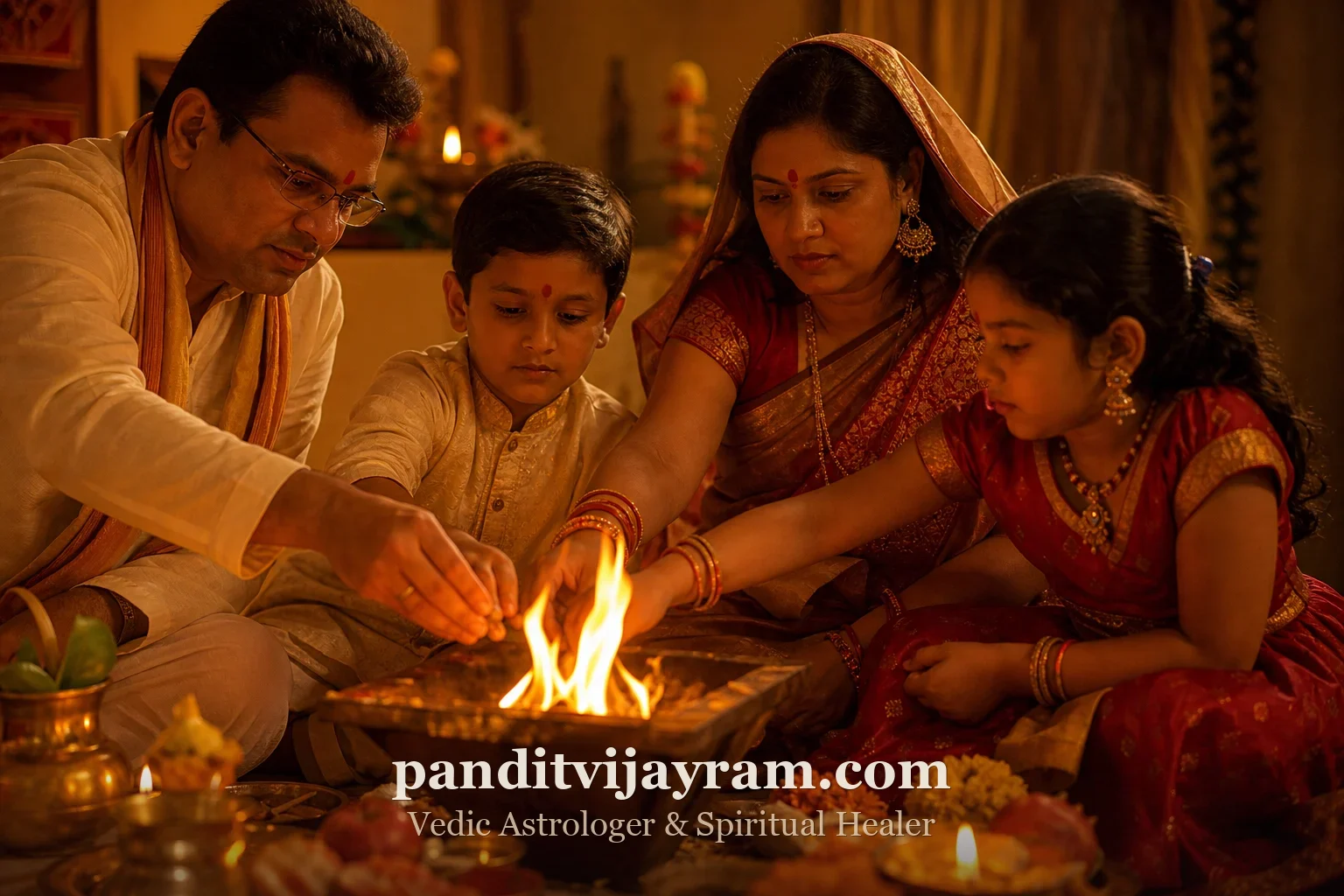
Havan samagri is the dry mixture offered into the fire. Common ingredients are guggul resin, barley (jau), black sesame (til), rice, dried herbs and roots, camphor, sugar or jaggery and pure ghee. The fire itself is built from samidha, thin sticks of mango, peepal or palash wood.
Ready-made samagri is sold at Indian grocers across the GTA. Families who make their own usually blend these items:
- Guggul and loban. Fragrant resins traditionally used for protection and cleansing of a space.
- Jau and til. Barley and black sesame, offered for nourishment and to honour ancestors.
- Rice. Unbroken rice, akshat, symbolising wholeness.
- Dried herbs and roots. Often including nagarmotha, jatamansi, sandalwood powder and dried neem leaves.
- Sweetener. A little sugar, jaggery or dried coconut.
- Ghee. Pure cow ghee is the main offering, poured with a small wooden or brass spoon called a sruva.
The fire is built on a havan kund, a stepped copper, brass or iron vessel, or a square of bricks outdoors. Thin dry sticks of mango wood, called samidha, are stacked loosely so air can circulate. A tablet of camphor starts the flame. Some priests add a specific samidha for each planet in a Navagraha havan.
Buy small quantities fresh, store samagri in an airtight jar away from damp, and check for mould before use. Our Vedic cleansing toolkit explains several of these items in more detail, including storage.
Which mantras are chanted during a cleansing havan?
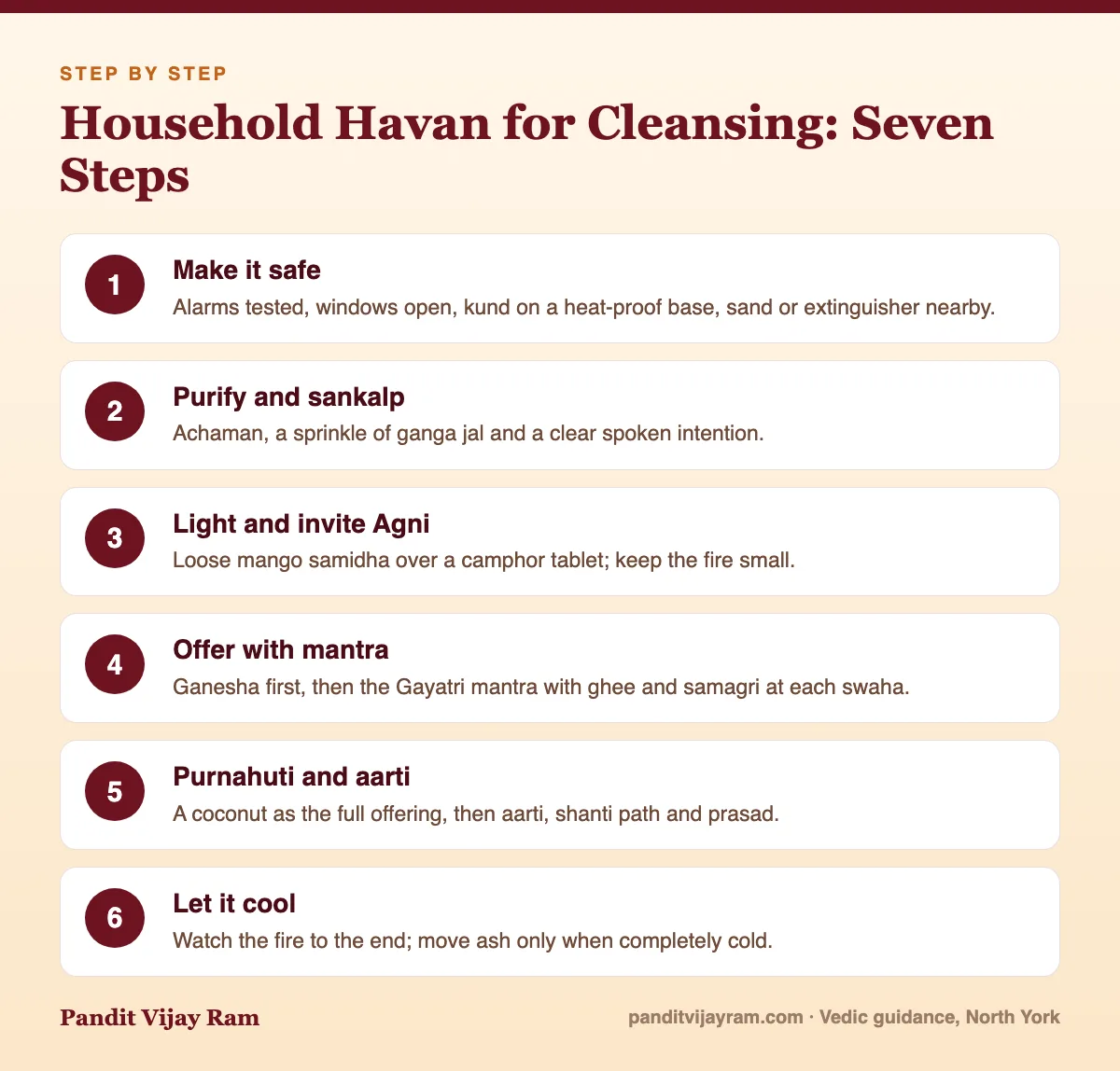
A cleansing havan usually begins with Ganesha mantras, then the Gayatri mantra repeated with each offering, often eleven, twenty-one or one hundred and eight times. Navagraha mantras may follow, then the Mahamrityunjaya mantra for wellbeing. It closes with a purnahuti, the final full offering, and a prayer for peace.
The mantra plan changes with the purpose, but a household cleansing havan often follows this order:
- Om Ganeshaya Namah Swaha for a few offerings, to clear obstacles.
- Gayatri mantra with ghee and samagri, ending each line in swaha. This is the heart of most cleansing havans.
- Navagraha mantras, one or more offerings for each planet, if a reading pointed to a planetary period.
- Mahamrityunjaya mantra for the health and protection of the family.
- Purnahuti, the final offering, usually a dry coconut filled with ghee and samagri, given with the mantra beginning Om purnamadah purnamidam.
- Shanti path, the peace prayer, ending in Om shanti, shanti, shanti.
Pronunciation worries many people. Do your best, speak slowly and do not let fear of mistakes stop you. A priest can lead, and the family can repeat swaha together. Reading from a printed sheet is perfectly acceptable.
For a larger purpose, such as a graha shanti or an anushthan over several days, the mantra counts and sequence are set after a chart reading. The puja and anushthan page describes those longer ceremonies.
Is it safe to do a havan indoors?
A small havan can be done indoors safely with care: a stable metal kund on a heat-proof tray, a small fire, windows open, a working smoke alarm, a fire extinguisher nearby and no one leaving the flame. Large havans, heavy smoke and condo units with strict fire rules are better moved outside or adapted.
Canadian homes are well sealed and alarms are sensitive. That is good for safety but means a havan needs planning.
Before you start:
- Test your smoke and carbon monoxide alarms. Never cover, remove or disable them.
- Place the kund on bricks or a thick metal tray, away from curtains, shelves and carpets.
- Keep a fire extinguisher or a bucket of sand within reach.
- Open two windows on opposite sides of the room for cross-ventilation.
- Keep children and pets back from the flame.
During the havan: keep the fire small. Use a few sticks, not a heap. Offer samagri in pinches and ghee in spoonfuls, not handfuls. Assign one adult to watch the fire at all times.
After: let the ash cool completely, which can take hours, before moving it. Never pour hot ash into a bin.
Anyone with asthma, a heart or lung condition, or pregnancy should sit near a window or away from the smoke. In a condo or rental, check building rules first; our guide to cleansing a condo without smoke offers alternatives. Outdoors, check your municipality's open-air fire rules. Our wider safety article on cleansing side effects covers smoke and allergy risks too.
When should a priest perform the havan instead of the family?
A family can manage a short Gayatri havan at home. A priest is helpful for a griha pravesh, a havan after a death, a Navagraha or graha shanti havan, an anushthan over several days, or any time the family is anxious and wants the ritual led calmly with correct mantras and timing.
A simple household havan, such as the sequence in the steps on this page, is within reach of any family willing to learn. A priest adds value in specific situations:
- Timed ceremonies. A griha pravesh, a wedding, a mundan or a business opening, where a muhurat from the panchang matters.
- After a death. The shuddhi havan at the end of the sutak period follows regional custom and is best led by someone familiar with it.
- Planetary remedies. A graha shanti havan uses specific mantras, counts and samidha for each planet, chosen after a kundli reading.
- Long anushthans. Multi-day or high-count recitations need a steady, experienced reciter.
- A worried household. When fear is high, a calm guide who explains each step helps more than any ingredient.
Timing is often asked about. Many families choose a Sunday, a Purnima or an Amavasya for cleansing; our guide to the best day for spiritual cleansing explains the choices and Rahu kaal.
If you would like Vijay Ram ji to perform a havan, the negative energy removal service describes how a home cleansing is assessed and planned. More guides are collected on the cleansing and protection hub.
The bottom line
A havan for cleansing purifies through fire, fragrant smoke, mantra and shared intention. Its materials are simple: samidha wood, samagri, ghee and a stable kund, offered in a clear sequence that ends in a purnahuti. Safety indoors comes first, and a priest helps for timed, planetary or post-bereavement ceremonies.
Key takeaways
- A havan offers ghee and samagri into a consecrated fire, each offering ending in swaha.
- Samagri usually contains guggul, barley, sesame, rice, dried herbs and a sweetener.
- The Gayatri mantra is the core of most household cleansing havans.
- Indoors, keep the fire small, the windows open and the alarms working.
- A priest helps with griha pravesh, shuddhi after a death and graha shanti havans.