
Spirit of a Deceased Relative: Preta, Shraddh and Letting Go
A mother appears in a dream, smiling or silent. A father's chair feels occupied. The scent of a grandmother's hair oil drifts through the kitchen months after her funeral. Questions about the spirit of deceased relatives come to me from families in North York, Brampton and Markham almost every week, and they always come wrapped in love and loss. Some people are comforted; others are frightened, or worried that their loved one is not at peace because a rite was missed or done far from home. This guide explains, gently, what Hindu tradition means by the preta stage, what the thirteen days of rites and the yearly shraddh are meant to do, why dreams of the departed are so common, and how to let go without feeling that you are forgetting. It also covers grief that becomes too heavy to carry alone. In more than forty years of sitting with grieving families, I have learned that the rites comfort the living as much as they honour the dead, and that both matter.
What happens to the soul after death in Hinduism?
Hindu tradition teaches that the soul, the atman, is not destroyed at death. It leaves the body and enters a transitional state, often called preta, before moving on to join the ancestors and continue its journey according to karma. The funeral rites and offerings of the following days are meant to support that passage.
Different scriptures, regions and families describe the journey in different ways, and I encourage every family to follow its own lineage. Some common threads run through most Hindu homes.
- The atman continues. The Bhagavad Gita compares the body to clothing that the soul sets aside. Death is a change of state, not an ending.
- The preta stage. In the period right after death, the departed is understood to be in between, no longer of this world and not yet among the pitrs, the honoured ancestors.
- Offerings give support. Rice balls called pinda, water offerings and prayers in the first days are believed to nourish and steady the departed for the journey.
- Joining the ancestors. A rite usually called sapindikarana marks the departed joining the line of ancestors. Communities observe it at different times, some within the first two weeks and others around the first anniversary.
Note that preta in this sense is a stage, not a frightening ghost. Popular stories sometimes blur the word with bhoot, but in the rites it simply describes a soul in transition. A wider glossary of these terms is in bhoot, pret and pishach explained.
If your family follows Sikh, Jain or another tradition, its own teachings on the soul apply. The values of remembrance and charity are shared widely.
What are the 13 days of rites after a death for?
The thirteen days after a Hindu death combine care for the departed soul with mourning for the family. Daily offerings, readings such as the Garuda Purana in some homes, and the pinda rites support the soul's passage. The thirteenth-day gathering then closes formal mourning and returns the family to daily life.
Customs vary widely between regions and castes, so treat this as a general outline rather than a rulebook.
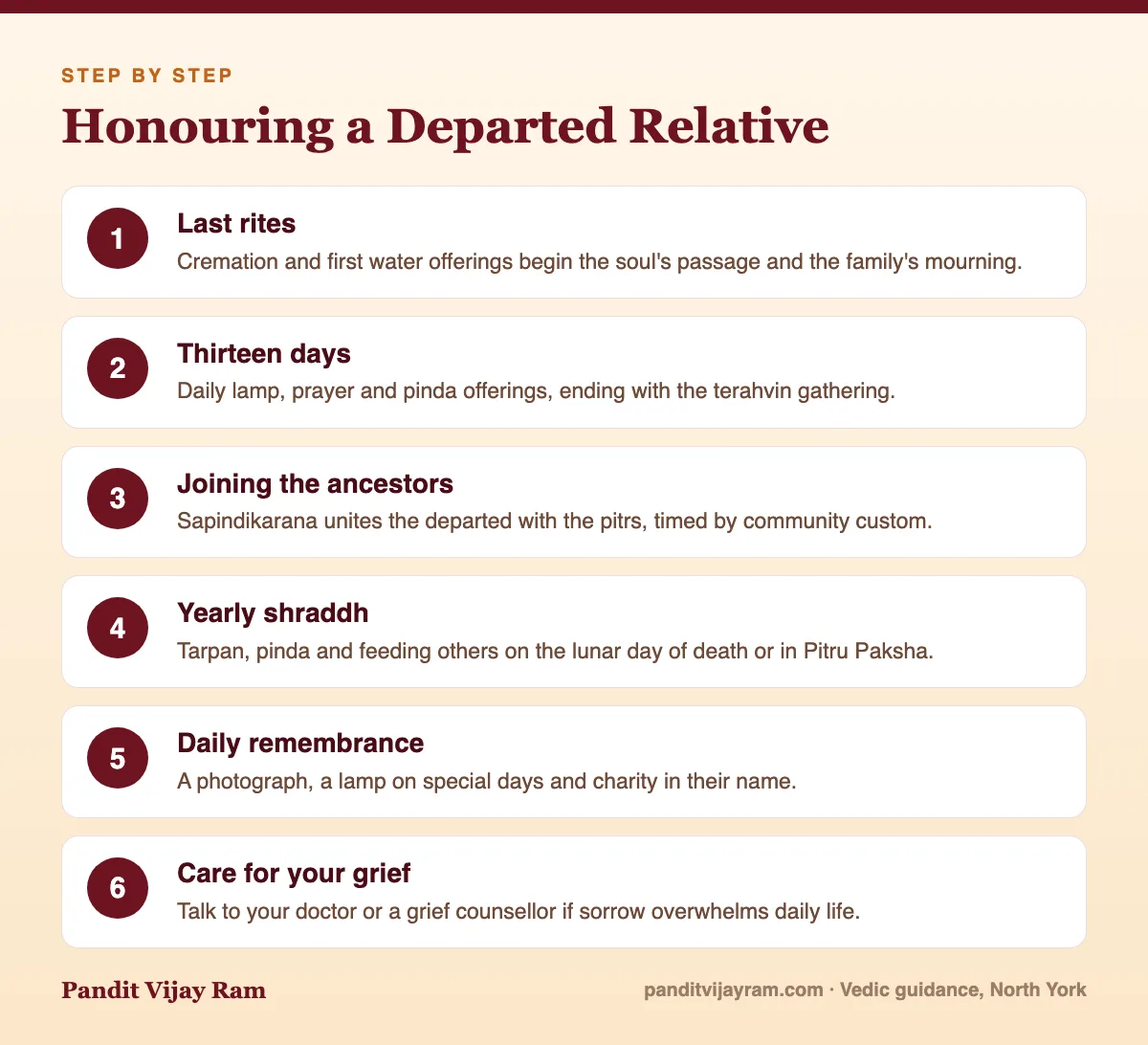
- Cremation and first offerings. The antyesti, or last rites, are followed by water offerings and the beginning of mourning.
- Daily remembrance. Many families keep a lamp lit, offer food and water at a set place, and recite prayers or scripture each day.
- Pinda offerings. Rice balls are offered on specific days, traditionally believed to help form the subtle body that carries the soul onward.
- The tenth to twelfth days. Purification and further rites often take place, depending on community custom.
- The thirteenth day. Often called terahvin, it brings relatives together for a meal, charity and prayer, and marks the end of the intense mourning period.
The purification of the household itself, called shuddhi, is a separate topic covered in cleansing the home after a death in the family.
If the rites could not be done fully
Families in Canada often cannot travel back for every ceremony, or a hospital death leaves little time for custom. Please do not carry that as guilt. A priest can perform rites later, a pinda offering can be made at a pilgrimage place in the family's name, and the yearly shraddh offers a fresh opportunity. Sincerity matters more than perfection. The puja and anushthan page explains how such rites are arranged.
Why do I keep dreaming about my dead relative?
Dreams of the departed are among the most common experiences of grief. The mind is processing loss, memory and unfinished conversations while you sleep. Many families also read such dreams as the loved one visiting or asking to be remembered. Peaceful dreams are usually a comfort; distressing ones often point to grief or guilt needing care.
I hear many kinds of dreams from bereaved families. Their meaning often depends on how they feel.
- Peaceful or smiling. Many people wake comforted, as if they have been visited. Tradition often reads this as a sign that the soul is settled.
- Silent or distant. The departed is present but does not speak. This often reflects the gap that loss creates, and the wish for one more conversation.
- Hungry, cold or asking for something. Some families take this as a reminder to offer food, water or charity in the person's name, or to perform shraddh. That is a gentle, positive response.
- Distressing or repeated. Reliving the death, a hospital scene or an argument usually points to grief, shock or guilt that needs support, not to an angry spirit.
Keep a small notebook by the bed for a few weeks. Write the dream and the feeling it left. Patterns often become clear, such as dreams arriving before anniversaries, family events or stressful days.
If dreams are frightening and nightly, sleep is collapsing, or you are reliving a traumatic death, speak with your family doctor. Grief and trauma counselling help a great deal. Broader guidance on dream symbols is in dreams and their meaning.
How is shraddh performed for a deceased parent?
Shraddh is the annual rite of remembrance for departed ancestors, usually held on the lunar day of death and also during Pitru Paksha. Families offer pinda, water with sesame, and food to a priest, a cow, crows or people in need, while reciting the names of the departed. It expresses gratitude and keeps the bond of memory alive.
Shraddh is less about fear of an unhappy spirit and more about love expressed through duty. A simple shraddh at home often includes:
- Choosing the day. The tithi of death in the lunar calendar is used for the yearly rite. If unknown, families often use the last day of Pitru Paksha, called Sarva Pitru Amavasya.
- Preparation. Bathing, wearing clean clothes and preparing sattvic food that the departed enjoyed.
- Tarpan. Offering water mixed with black sesame, while saying the names of the departed.
- Pinda. Rice balls offered with prayer, then given to crows, a cow or flowing water where local rules allow.
- Feeding others. Serving a priest, elders or people in need, or donating a meal to a food bank in the person's name.
In the GTA, many families combine a short home rite with a donation, which fits city life well. Where a chart suggests ongoing ancestral imbalance, that is a separate matter called pitru dosh, explained in clearing pitru dosh with shraddh. The pitra dosh consultation page covers when a reading is useful.
Do not worry about doing it perfectly. A sincere offering made with love is the heart of shraddh.
How do I let go of a loved one without feeling I am forgetting them?
Letting go in the Hindu sense means releasing the departed to continue their journey, not erasing them from your heart. Keep remembrance through a photograph, a lamp on special days and charity in their name. At the same time, allow yourself help with grief, because carrying it alone can become harmful to your own health.
Many grieving people fear that moving forward is a betrayal. Tradition suggests the opposite: excessive clinging may hold the departed back, and steady remembrance honours them.
Ways to remember with peace
- Place a photograph with a garland in a calm spot, not inside the main shrine with the deities.
- Light a lamp on their birthday, death anniversary and during Pitru Paksha.
- Give to a cause they cared about, or feed someone in need on special days.
- Tell their stories to children so that memory passes on.
- Speak to them in prayer when you need to; there is nothing wrong in that.
When grief needs more support
See your family doctor or a grief counsellor if, after several months, you cannot sleep or eat properly, feel unable to work or care for family, are consumed by guilt, or feel life is not worth living. Hospices and community groups across Ontario run bereavement programmes. If you are in crisis, call or text 988 at any hour.
Spiritual care can walk beside that support. Families who also feel the home itself is heavy after a death can read living in a house where someone died, and other guides are gathered in the magic and entities hub.
The bottom line
The spirit of a deceased relative, in Hindu belief, passes through the preta stage and is supported by the thirteen days of rites and the yearly shraddh. Dreams and the sense of a loved one nearby are common parts of grief and are often a comfort. Missed or incomplete rites can be offered later, without guilt. Honour the departed with remembrance and charity, and accept counselling or medical help when grief becomes too heavy to carry.
Key takeaways
- Preta describes a soul in transition after death, not a frightening ghost.
- The thirteen days of rites support the departed and help the family mourn.
- Dreams of a loved one are a common and often comforting part of grief.
- Shraddh is a yearly act of gratitude through offerings and charity.
- Grief counselling and your doctor are part of caring for yourself.