
Exorcism in Hinduism: What Genuine Practice Looks Like

When someone in the family suddenly changes, speaking strangely, refusing food, staring or shouting, fear spreads quickly through a household. Relatives may insist the person needs a bhoot to be removed, and someone may suggest a tantrik or a distant temple. Families in North York, Brampton and Scarborough have come to me in exactly this moment, frightened and under pressure. Exorcism in Hinduism is a real tradition with a long history, but it is also an area where vulnerable people have been badly hurt by those claiming to help. In this guide you will learn what the tradition actually involves, what genuine, prayer-based practice looks like, which practices must always be refused, why medical care comes first, and how to choose safely if you still want spiritual help. I have practised for more than forty years, and I have never needed to touch anyone roughly, deprive them of anything, or keep them from their family. If a ritual requires harm, it is not a ritual worth having. If anyone is in danger right now, call 911.
What is exorcism in Hinduism?
In Hindu tradition, exorcism means rites to release a person believed to be troubled by a bhoot, preta or other spirit. Folk names include bhoot utarna, jhaad-phoonk and nazar utarna. Methods draw on Vedic and Puranic prayer, especially to Hanuman, Narasimha, Shiva and the Goddess, and vary widely between regions, families and practitioners.
Ideas about spirits troubling people are very old in India. The Atharvaveda includes hymns asking for protection from hostile beings, and later Puranic and folk traditions developed many local rites. In villages, an ojha or local healer might perform them; in towns, a temple priest or a tantric practitioner. Some temples in India are known as places where families bring relatives believed to be afflicted.
The vocabulary varies, but the main ideas are fairly consistent:
- Possession is often called being caught, pakadna, by a bhoot or pret.
- Release is sought through the power of a protective deity rather than the practitioner's own strength.
- Remedies include mantra, recitation, sacred ash (vibhuti), water sanctified with prayer, havan and a protective thread or kavach.
It is important to know that within Hinduism there is no single authority or rite for this. That diversity means families must use their own good judgement, because the label exorcism has been attached to both gentle prayer and real cruelty.
A plain glossary of the spirit terms used in these practices is in bhoot, pret and pishach explained.

Why must medical care come first in suspected possession?
Many conditions that look like possession are medical and treatable: psychosis, seizures, severe depression, bipolar episodes, dissociative states, delirium from infection or medication, postpartum psychosis, dementia, and drug or alcohol withdrawal. Some are emergencies. A doctor must assess the person first; prayer can continue alongside treatment, never instead of it.
The behaviours families describe as possession, such as speaking in a different voice, not recognising relatives, sudden aggression, rigid staring, shaking, or refusing food, are also signs of illnesses that need urgent care. Delays can be dangerous. Delirium from a urinary or chest infection in an older person, for example, can come on within hours and look like a total personality change.
A safe order:
- Emergency. If the person is violent, unresponsive, having a seizure, has stopped eating or drinking, or talks of harming themselves or others, call 911.
- Crisis support. In Canada, call or text 9-8-8 at any hour for suicide and mental-health crisis support.
- Same-week care. For new but less urgent changes, see the family doctor or go to an urgent care clinic.
- Continue treatment. Never stop prescribed medication because a ritual is planned or because someone says medicine blocks healing.
I tell every family the same thing: if the person improves with medical care, God has answered your prayer through that care. Faith and medicine are not rivals. The guide on possession or mental illness explores this balance in more depth.
Which exorcism practices should families refuse?
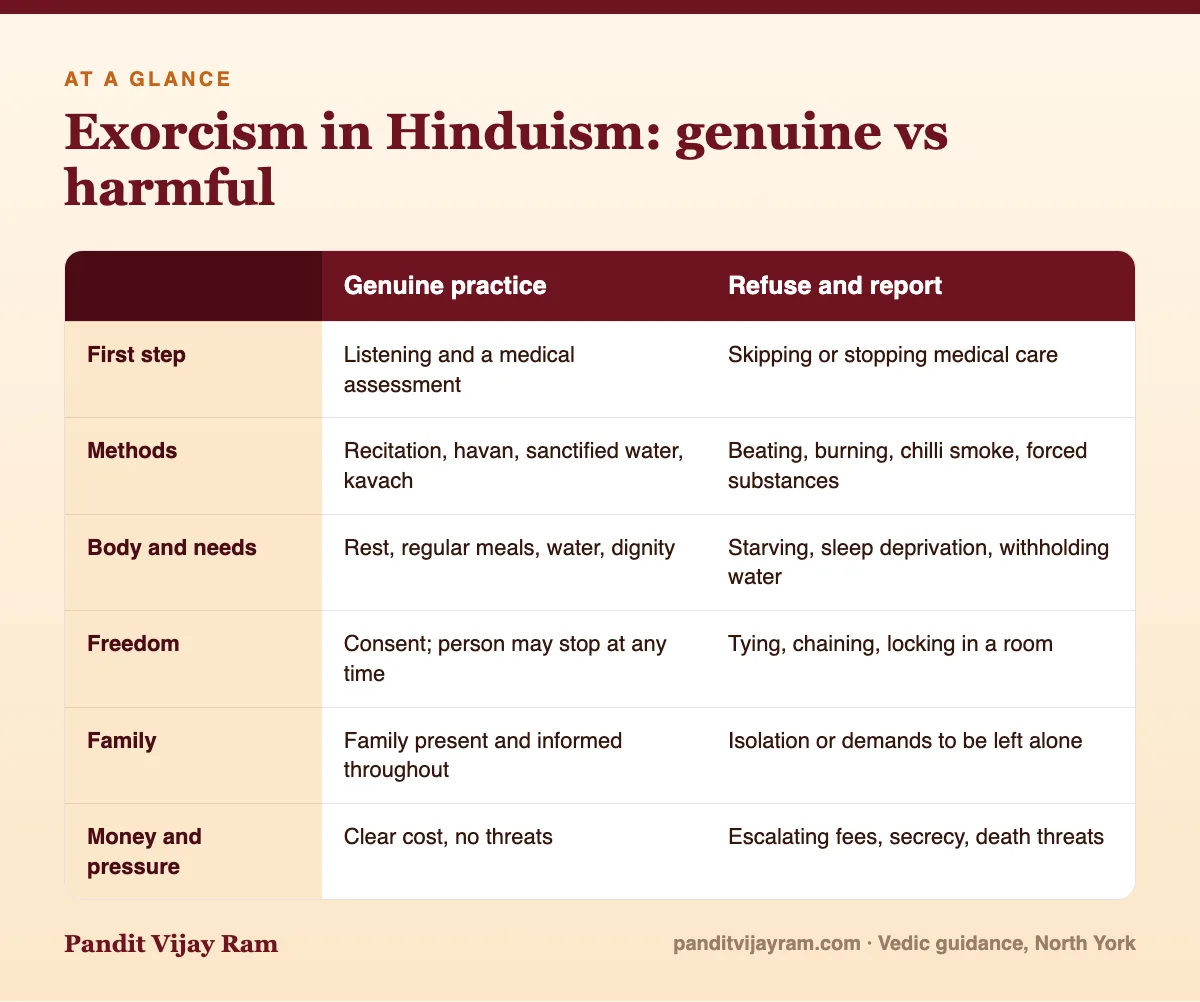
Refuse any practice that hurts, frightens, deprives or confines a person. That includes beating, slapping or striking with objects, starving or withholding water, chaining or tying, locking in a room or isolating, burning or branding, forcing smoke or chilli into the eyes or nose, sexual touching, and stopping medication. These are abuse, whatever the intention.
I want to be very direct here, because people are still harmed by these practices in many communities and countries, including by relatives who sincerely believe they are helping.
Never allow:
- beating, slapping, pulling hair, or striking with sticks, brooms or chains;
- starving, withholding water, or forced fasting of a sick person;
- tying, chaining or holding someone down for hours;
- locking a person in a room, shed or basement, or isolating them from family and friends;
- burning, branding, cutting, or forcing smoke, chilli or substances into the eyes, nose or mouth;
- sleep deprivation or long sessions of shouting at the person;
- any sexual touching or demand to be alone with a vulnerable person;
- stopping prescribed medicine or keeping the person away from a doctor.
The law is clear. In Canada, harming or confining a person is a crime no matter what spiritual reason is given. Assault, forcible confinement and failing to provide the necessaries of life are offences under the Criminal Code. Where a child is involved, child protection services must be told. If you see these things happening, call police.
A practitioner who suggests any of them should be refused and reported. The article on scam warning signs lists other red flags.
What does genuine Hindu exorcism practice involve?
Genuine practice is gentle, transparent and consensual. It begins with listening and a health check, then uses prayer: recitation of the Hanuman Chalisa or Durga's hymns, a havan, sanctified water, a raksha sutra or kavach, and steady family support. The person is treated with dignity, families are present, and nothing is hidden or forced.
When families ask me what a responsible approach looks like, I describe it in these stages.
- Listening. Hearing the person and the family carefully: what changed, when, and what has been done so far.
- Medical check. Confirming a doctor has seen the person. If not, that comes first.
- Consent. The person, if able, agrees to what will happen. Nothing is done to someone who is refusing or frightened.
- Prayer and recitation. Hanuman Chalisa, Sundarkand, the Devi Kavach or the Narasimha mantra, recited calmly, often by the family as well as the priest.
- Havan or puja. A fire offering where safe and permitted, to sanctify the home and the person.
- Protective items. A raksha sutra, sacred ash on the forehead, or a kavach whose contents are explained.
- Aftercare. Rest, regular meals, gentle routine and continued medical follow-up.
Throughout, family members stay present, the person is free to stop, and everything is explained in plain language. The household practice of Hanuman Chalisa and Sundarkand for home protection is a good daily companion to this. The spirit and ghost removal service describes how consultations are approached here.
Is tantric exorcism safe?
Tantra is a diverse and serious set of traditions, and some lineages include rites for removing spirits. Safety depends entirely on the practitioner and the method. Prayer, mantra and fire offerings done with consent are generally safe. Claims of commanding spirits, secret nighttime rites alone with the person, or any form of harm are warning signs to refuse.
The word tantrik is used loosely, sometimes for learned initiates in established lineages and sometimes for people with no training who use it to sound powerful. That makes careful questions essential.
Questions to ask any practitioner, tantric or otherwise:
- What exactly will you do, step by step, and how long will it take?
- Will family members be present throughout?
- Are you comfortable with the person continuing medical treatment?
- What will it cost in total, and are there any further charges?
- What happens if there is no improvement?
Good answers are plain and calm. Warning signs include refusal to explain, insistence on being alone with the person, especially a woman or child, claims to control or enslave spirits, demands for ever-larger payments, and threats that someone will die if you do not proceed immediately.
A consumer-protection checklist for the GTA is in the guide to choosing a genuine practitioner in Toronto. If you have already paid someone who used threats, you can contact police and the Canadian Anti-Fraud Centre.
What should I do if a relative is believed to be possessed?
Stay calm, keep the person safe and with family, and get medical help first: 911 for emergencies, 9-8-8 for crisis support, or the family doctor for new changes. Do not let anyone restrain, hit or isolate them. Once they are under care, gentle household prayer and a trustworthy practitioner can support the family.
Families in this situation are often exhausted and frightened, and sometimes pressured by relatives in India or elsewhere who insist on a particular ritual. Here is a simple plan to hold on to.
- Make the space calm. Lower voices, reduce the number of people in the room, and stay with the person.
- Get help. Call 911 for any immediate danger. Otherwise, contact the family doctor or 9-8-8.
- Bring information. Tell the doctor about any medication changes, recent illness, childbirth, substance use or head injury.
- Pray quietly alongside. Light a lamp, recite the Hanuman Chalisa, and ask the family to pray in their own way.
- Protect the person. Say no firmly to anyone proposing harm, deprivation or isolation, however senior they are.
- Plan any ritual later. When the person is stable and agrees, a calm puja with family present can bring comfort.
I often find that once a person receives treatment, the family's fear eases as much as the patient's symptoms, and prayer becomes a source of hope rather than panic. The magic and entities hub gathers further guides for families facing these questions.
The bottom line
Exorcism in Hinduism, at its best, is calm prayer: recitation, havan, a protective thread and family support, offered with consent and after medical care. Beating, starving, restraint, isolation and stopping medication are abuse and, in Canada, can be crimes, whatever reason is given. Get medical help first, refuse anything harmful, and let prayer support the person rather than frighten them.
Key takeaways
- Hindu exorcism traditions vary widely; genuine practice is prayer-based and gentle.
- Many signs called possession are medical conditions that need urgent care.
- Refuse beating, starving, restraint, isolation, burning or stopping medicine.
- Harming or confining a person is a crime in Canada, whatever the spiritual reason.
- Consent, family presence and transparency mark a trustworthy practitioner.