
Possession or Mental Illness? Why Medical Care Comes First

A son who stops sleeping and talks to someone no one can see. A mother who speaks in a strange voice and does not recognise her children. A sister who collapses, shakes and wakes confused. In moments like these, families often ask me one urgent question: possession or mental illness? People in North York, Brampton and Mississauga have brought me this fear many times, usually after relatives or online videos have already suggested a spirit. I understand why. Our traditions carry stories of possession, and a sudden change in someone we love is terrifying. But I want to be very clear: when behaviour changes like this, medical care comes first. This guide explains which conditions are commonly mistaken for possession, the warning signs that mean calling 911 or 988 now, how to support someone through treatment, the harmful practices you should refuse, and how prayer and spiritual care can sit beside the doctor's work. In more than forty years of practice, the most important thing I have done in such cases is help families get the person to hospital.
What conditions can look like spirit possession?
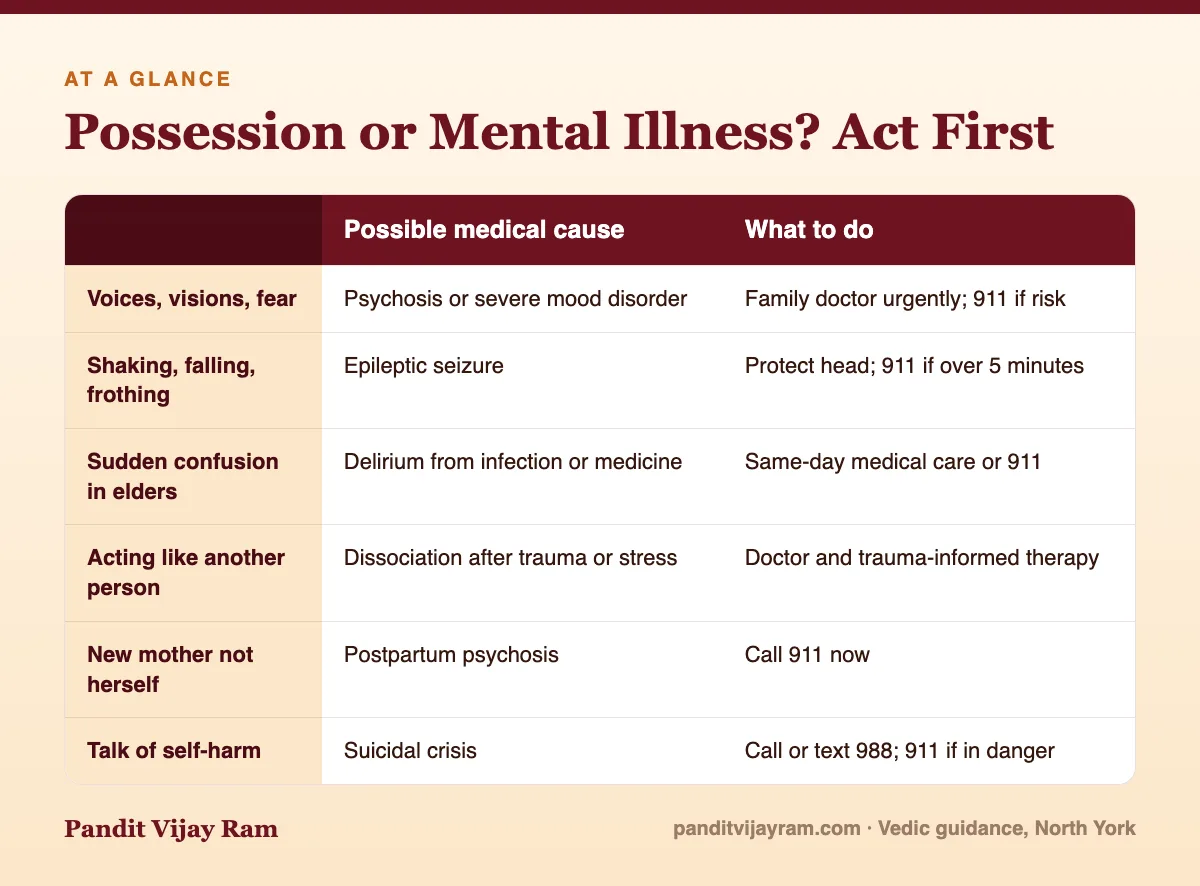
Several medical conditions produce what families describe as possession: psychosis with hallucinations and fixed false beliefs, mania, severe depression, dissociative episodes, epileptic seizures, delirium from infection or fever, reactions to drugs or alcohol withdrawal, low blood sugar, head injury and postpartum psychosis. Each is treatable, and some are emergencies.
Many of the signs that folklore links to possession have clear medical explanations. Knowing them can help your family act quickly.
- Psychosis. Hearing or seeing things others cannot, believing one is being controlled or watched, speaking in confused or unusual ways, withdrawing from family. It often begins in the late teens or twenties, and early treatment improves outcomes.
- Mania. Little sleep, racing speech, grand ideas, reckless spending or risky behaviour, sometimes with religious themes.
- Seizures. Convulsions, foaming at the mouth, rolling eyes, falling, then confusion. Some seizures cause staring, strange smells or sensations, odd movements and fear without a full convulsion.
- Dissociation. Episodes of seeming like a different person, losing time or not recognising surroundings, often after trauma or extreme stress.
- Delirium. Sudden confusion, agitation and hallucinations, very common in older adults with a urinary or chest infection, dehydration or medication changes.
- Substances. Cannabis, stimulants, alcohol withdrawal and some prescribed medicines can cause hallucinations or violent agitation.
- After childbirth. A new mother with confusion, strange beliefs or severe mood swings needs emergency care. Postpartum psychosis is rare but serious.
Possession beliefs exist in Hindu, Muslim, Christian, Caribbean and many other communities. I respect them. Respect for tradition, though, must never delay a person's access to a doctor. A broader self-check on lingering unease is in entity attachment or anxiety.

When should I call 911 or 988 for someone who seems possessed?
Call 911 if the person has a seizure, is violent or threatening, may harm themselves or others, is very confused or drowsy, is not eating or drinking, or is a new mother with strange behaviour. Call or text 988 for suicide crisis support at any hour. When unsure, call 911; dispatchers will guide you.
These situations are emergencies. Do not wait for a ritual, a priest or a relative's opinion.
Call 911 now if the person:
- is having a seizure lasting more than five minutes, repeated seizures, a first-ever seizure, or a seizure with injury or breathing trouble;
- is talking about suicide or harming someone, or has a weapon;
- is extremely agitated, violent or cannot be safely calmed;
- is suddenly confused, very drowsy, feverish or unable to stay awake;
- has not eaten, drunk or slept for days;
- has given birth recently and shows confusion, paranoia or extreme mood changes;
- may have taken drugs, poison or too much medication.
Seizure first aid while you wait
- Note the time and stay with them.
- Move hard objects away and cushion the head.
- Do not hold them down and never put anything in their mouth.
- Once the shaking stops, roll them onto their side and let them rest.
For crisis support
Call or text 988, the Suicide Crisis Helpline, any time. In Ontario, Health811 can also give health advice by phone. For non-urgent changes, book your family doctor as soon as possible and ask about early psychosis services.
Tell the medical team about the family's spiritual beliefs. Good clinicians want to understand culture, and it helps them communicate.
What practices should families refuse when someone seems possessed?
Refuse anything that harms the person or replaces treatment: beating, burning, starving, tying up, locking away, forcing them to drink substances, depriving them of sleep, or stopping prescribed medicines. These cause injury and trauma, can worsen illness and may be crimes. Genuine spiritual care is gentle, consented to and works alongside doctors.
Sadly, harmful practices are still promoted in the name of driving out spirits, sometimes for large fees. I have no hesitation in saying that no genuine tradition requires hurting a sick person.
Warning signs of an unsafe practitioner
- They say a doctor will make things worse or tell you to stop medication.
- They want to isolate the person from family or medical care.
- They use physical force, smoke in closed rooms, hot objects, fasting or sleep deprivation.
- They demand urgent payment or keep adding new rituals.
- They will not allow you to stay present during their work.
If a vulnerable person is being harmed, call police. If you have paid money under pressure or false promises, you can report it to the Canadian Anti-Fraud Centre.
What respectful care looks like is explained in exorcism in Hinduism. In my own work, I meet the family, ask about medical care first, and suggest only prayer, mantra, protective items and pujas that never interfere with treatment. Muslim families seeking a Qur'anic approach can read the respectful overview of ruqyah healing, which follows the same principle of working alongside medicine.
When a family is frightened, they are vulnerable to anyone who promises a quick fix. Taking a breath, getting medical advice and asking questions protects the person you love.
How can I support a family member being treated for psychosis?
Stay calm and present, speak simply, and avoid arguing about what they see or believe. Help them keep appointments and take medicine as prescribed, watch for warning signs of relapse, and look after yourself too. Family education programmes and support groups help a great deal. Recovery is common, especially with early treatment.
Treatment for psychosis usually combines medication, regular follow-up, psychological therapy and family support. Many people recover well and return to study, work and family life.
How to help day to day
- Keep your voice low and sentences short. Confused or frightened people take in less when we speak quickly.
- Do not argue with hallucinations. You can say, I don't hear it, but I can see it is frightening you, and I am here.
- Protect sleep and routine. Regular meals, sleep and light activity support recovery.
- Avoid cannabis and alcohol in the home if they worsen symptoms.
- Learn the early warning signs of relapse, such as poor sleep, withdrawal or suspicion, and agree a plan with the treatment team.
- Look after yourself. Carers burn out. Ask your doctor about family support groups.
Reducing stigma at home
In many communities, mental illness carries shame, and families may prefer to call it nazar, black magic or a spirit. That language can feel softer, but it can also delay care. You can hold both: prayer for the person, and respect for their diagnosis. Read more about telling the two apart in negative energy or depression.
The health and wellbeing page sets out how spiritual support fits beside medical treatment.
Can prayer and spiritual healing help alongside psychiatric treatment?
Yes, as long as they accompany treatment rather than replace it. Prayer, mantra, a calm puja and a supportive faith community can ease fear, strengthen hope and help a family cope. I always ask families to continue medication and appointments, and I never advise anyone to stop treatment because of a spiritual remedy.
Faith is often a source of strength during illness. Research on mental-health recovery recognises that meaning, community and hope matter. Spiritual care can offer all three when it is gentle.
Ways families include spiritual care safely
- Reciting the Hanuman Chalisa, Durga stuti or Om Namah Shivaya together each evening, keeping it short and calm.
- Lighting a lamp in the home and praying for the person's recovery, with or without them present.
- Asking a priest, imam or granthi to visit or pray in hospital, which many hospitals welcome through their spiritual care departments.
- A protective thread or kavach worn with the person's consent, never forced.
- A family puja or havan for wellbeing once the person is stable, with smoke kept away from them if it distresses them.
What I ask of every family
- Continue all prescribed treatment and appointments.
- Tell the doctor about any remedies or herbal products being used.
- Never pressure the person into a ritual they do not want.
- Seek help immediately if warning signs return.
If the family still worries about a spiritual cause once the person is under medical care, a consultation can explore that calmly, alongside treatment. The spirit and ghost removal page explains this approach, and related guides are in the magic and entities hub.
The bottom line
Possession or mental illness is a question to answer with medical care first, because psychosis, seizures, delirium and drug reactions can all resemble possession and are treatable. Call 911 for seizures, danger or sudden confusion, and 988 for crisis support. Refuse any practice that harms, isolates or stops treatment. Prayer, mantra and a caring faith community can then walk beside the doctor, strengthening the person and the family through recovery.
Key takeaways
- Psychosis, seizures, delirium and drug reactions can look like possession.
- Call 911 for seizures, violence, sudden confusion or a new mother in crisis.
- Call or text 988 at any hour for suicide crisis support.
- Refuse beating, starving, isolation or stopping medicine in any ritual.
- Prayer helps best alongside treatment, never as a replacement.