
Negative Energy After Moving to Canada: Isolation, Homesickness and Unease
The flight landed, the apartment is rented, the job or the study permit is sorted, and yet something feels wrong. The rooms seem cold in more than temperature. Prayers feel thin without the temple bell down the road. Many people who write to me about negative energy after moving abroad are describing this exact mix, and it is especially common among families settling in North York, Scarborough, Brampton and the rest of the GTA. I want to say clearly that this is a normal stage of migration, not a sign that something is attacking you. In this guide you will learn how tradition understands a new land and a new home, which practical causes usually sit underneath the unease, how to rebuild a daily spiritual rhythm in a Canadian apartment, and when the heaviness is better taken to a doctor. Over forty years of serving families across Canada and abroad, I have watched many newcomers move from this unsettled first chapter into a grounded life, and the steps were usually simple.
Why do I feel so heavy and unsettled since moving to Canada?
Most newcomers carry several loads at once: grief for the family left behind, the stress of new work or study, an unfamiliar climate, and fewer people to share festivals with. Psychologists call the pattern culture shock. Tradition adds that leaving one's birthplace and ancestral shrine unsettles the spirit until new roots form.
Researchers describe culture shock in phases. There is often an early honeymoon, then a frustration stage when the novelty fades and every small task, from banking to bus routes, feels harder than it should. That second stage is when most people tell me they feel "negative energy". It tends to arrive a few months in, just as the first winter begins.
Vedic tradition has its own language for this. A person's janma bhoomi, the land of birth, is linked to the family deity and the ancestors who were remembered there. When you move, the household rituals that anchored you may lapse. The lamp is not lit because there is no proper shelf. Shraddh dates pass unnoticed. Without those anchors, people feel spiritually unhoused.
There is also a simpler physical story. Toronto winters bring sunset before five in the afternoon. Many people spend those months moving between an apartment, a vehicle and an office with little daylight. Low light, less movement and heavier food affect mood for almost anyone.
I find it helpful to name all three layers together: emotional loss, practical strain and a broken ritual rhythm. Each layer has its own remedy, and treating only the spiritual one rarely works. The negative energy assessment guide explains how I separate these layers in a consultation.

Is it homesickness, winter blues or something spiritual?
Homesickness is longing tied to people and places; it rises around festivals and family news. Winter low mood follows the calendar and eases in spring. Spiritual unease is the sense that home and worship feel empty. They overlap. A useful test is whether the feeling changes with season, contact with family, or restored daily prayer.
Here is a simple comparison I use with newcomer families:
- Homesickness: worse after video calls, during Diwali, Eid, Vaisakhi or Christmas, and when there is news from home such as an illness. Better when you find people from your community.
- Seasonal low mood: begins in late autumn, deepens in January and February, and lifts as days lengthen. Often comes with oversleeping, carbohydrate cravings and low energy. Seasonal affective disorder is a recognised condition that doctors can treat.
- Spiritual unease: the apartment feels unwelcoming, sleep is restless in a specific room, prayers feel mechanical, or you sense that the previous occupant's troubles are still present.
Many people have all three. If the low mood lasts most days for more than two weeks, or you lose interest in things you normally enjoy, please book a visit with a family doctor or walk-in clinic. Newcomers are often unsure whether they qualify; provincial health coverage, settlement agencies and community health centres can explain your options. Our separate article on negative energy or depression goes into the medical warning signs in more depth.
If you ever feel unsafe or hopeless, call or text 9-8-8, Canada's Suicide Crisis Helpline. It is free, confidential and available in English and French at any hour.
How do you make a new apartment in Canada feel like home spiritually?
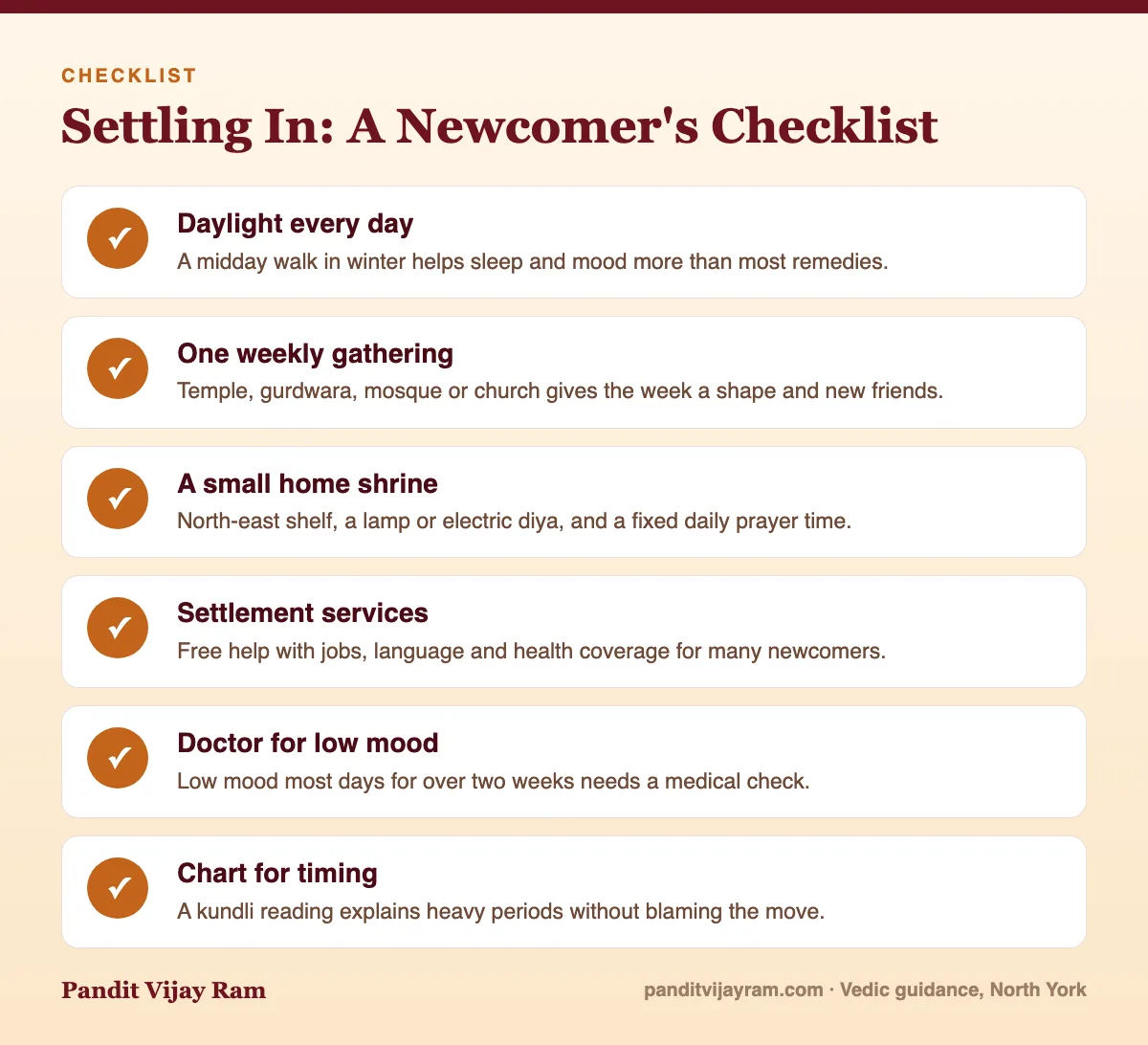
Begin with a small griha pravesh style blessing: clean the space thoroughly, set a modest shrine facing east or north-east, light a ghee lamp, and recite a familiar prayer daily. Electric diyas suit buildings that ban open flames. Consistency matters more than scale; a two-minute daily ritual roots a home faster than one big ceremony.
Rentals and condos come with rules about smoke, candles and incense, and many newcomers stop praying at home because they assume they cannot do it properly. Adapting is fully in keeping with tradition. Here is a practical order:
- Physical cleaning first. Wash floors, wipe cupboards and open windows on a mild day. A pinch of rock salt in the mop water is a common household custom.
- Choose the shrine spot. A shelf in the north-east corner is traditional. If that is a closet or bathroom wall, any clean, quiet surface at chest height is acceptable.
- Bring something from home. A small murti, a photo of your family deity, a bottle of Ganga jal or soil from your village creates continuity.
- Light a lamp safely. A ghee diya on a metal plate, never unattended, or an electric diya where fire alarms are sensitive.
- Fix a daily time. Morning after bathing or evening at sunset. Even the Gayatri Mantra eleven times is enough.
For rentals where smoke is not an option, our guide to cleansing a condo without smoke lists alternatives. If you are still house-hunting, read cleansing a new house before moving in.
Where can newcomers find community and support in the GTA?
Temples, gurdwaras, mosques and churches across the GTA run weekly gatherings, langar, language classes and youth groups that ease isolation. Government-funded settlement agencies help with jobs, housing and health coverage. Combining community worship with practical settlement services addresses both the spiritual and the everyday sides of starting again.
Isolation is the heaviest load I see in newcomer families, and no puja replaces people. A few suggestions that consistently help:
- Attend one regular gathering. A weekly satsang, Sunday gurdwara visit, Friday prayer or church service gives the week a fixed shape and introduces you to people who have already settled.
- Use settlement services. Immigration, Refugees and Citizenship Canada funds free services for permanent residents in many areas, including employment help, language classes and orientation. Ask your local library or community centre for the nearest provider.
- Get outside in daylight. A thirty-minute walk at midday in winter makes a measurable difference to mood for many people.
- Keep festival rhythms. Celebrate Diwali, Navratri or Karva Chauth even if only with two other families. Ritual shared is ritual strengthened.
- Phone home on a schedule. Regular, planned calls ease guilt and worry better than constant checking.
International students carry a particular version of this strain, with exams added on top. The article on negative energy and students speaks to them directly.
Can astrology explain a hard first year abroad?
Astrology can describe timing but not fate. A kundli often shows foreign settlement through the 12th and 9th houses or a Rahu period, and difficult transits such as Sade Sati can coincide with relocation. A reading helps set expectations and choose supportive remedies; it does not replace practical settlement steps or medical care.
Many clients ask why the move felt right and then turned hard. In Jyotish, the 12th house relates to distant lands and expenses, the 9th to long journeys and fortune, and the 4th to home and inner contentment. A move during a strong 12th-house period can bring opportunity alongside a feeling of loss, because the 4th house is being left behind.
Rahu, the shadow planet, is classically linked with foreign places, ambition and restlessness. People running a Rahu mahadasha often describe themselves as unsettled even when things are going well on paper. Saturn's Sade Sati, the seven-and-a-half-year transit around the natal Moon, is associated with hard work, slow results and emotional heaviness.
What I offer in a kundli and horoscope reading is perspective. Knowing that a period is demanding helps people stop blaming themselves or their new home. Remedies are modest: Saturday mustard-oil lamps for Saturn, Durga or Hanuman prayers for Rahu, charity to newcomers who arrived after you. I will not tell anyone that their move was a mistake or that a planet will ruin them. Those claims cause more harm than any transit.
More guides on rebuilding steadiness sit on the cleansing and protection hub.
The bottom line
Negative energy after moving abroad is usually a blend of culture shock, winter darkness and a broken ritual rhythm rather than an attack. Rebuild the basics first: daylight, community, a doctor's check when mood stays low, and a small daily shrine. Astrology can explain why the timing feels heavy, but steady prayer and real human connection are what help newcomers settle in Canada.
Key takeaways
- Unease after migrating is a normal stage, not a curse.
- Seasonal low mood and homesickness often feel spiritual.
- A small daily shrine roots a new home quickly.
- Community gatherings and settlement services ease isolation.
- Low mood lasting weeks deserves a doctor's visit.