
Cleansing the Main Door and Entrance: Threshold Rituals Explained
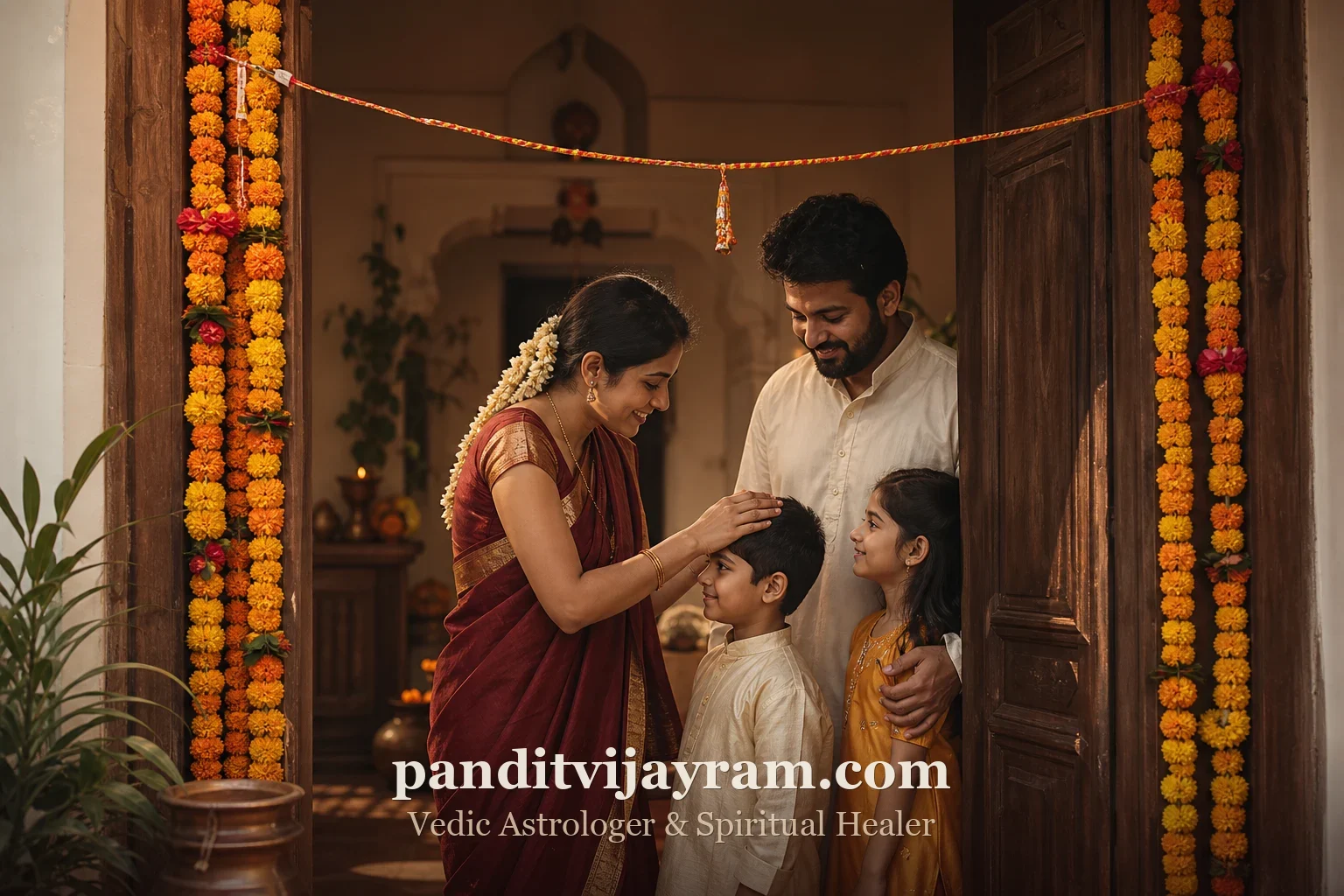
In Hindu homes the doorway is far more than a way in and out. It is the place where Lakshmi is welcomed each evening, where guests are greeted with folded hands and where many families believe both blessings and trouble arrive. When people sense negative energy at the main door, they often feel unsafe in their own home, even when nothing is obviously wrong. Clients in North York, Markham and Mississauga describe it as a heaviness on walking in or a sense that luck stops at the threshold. This guide explains the classic threshold rituals: washing the step, the toran, the swastik and Om, rangoli and the dusk lamp, with what each means and how it is done. It also covers practical checks, because a dim bulb, a squeaky hinge or a pile of shoes affects how an entrance feels more than most people realise. In more than forty years of practice, I have watched simple, daily care at the door settle a household more reliably than any single dramatic remedy. A tended doorway tells everyone who arrives that this home is cared for.
Why is the main door important in Vedic tradition?
The main door, or simha dwar, is treated as the mouth of the house. Vastu teaches that energy, guests and fortune all enter through it, and many traditions place protective deities at thresholds. A clean, bright, marked doorway is believed to welcome Lakshmi and keep heaviness from settling inside.
Temple architecture places guardian figures, the dvarapalas, on either side of the sanctum door. Homes follow the same idea on a small scale. The threshold, called dehli or umbara in different languages, is never stepped on carelessly in many households, and a new bride traditionally tips over a pot of rice there as she enters for the first time.
Several beliefs come together at the door:
- Lakshmi's arrival. Many families believe she visits at dusk and enters only a clean, lit home.
- Ganesh as gatekeeper. His image is often placed above or beside the entrance to remove obstacles.
- Vastu's direction. North-, east- and northeast-facing doors are preferred, but every direction can be balanced.
- Nazar protection. The entrance is where envious looks are believed to land first.
Before any ritual, look at the door with a stranger's eyes. Common practical issues include a burnt-out porch light, a sticking lock, a creaking hinge, peeling paint, a broken doorbell or shoes heaped on the step. Fix these first. They shape how every visitor, and every family member, feels on arrival.
For the wider order of clearing a house by direction, see the guide to vastu cleansing by room and direction. All of the home methods in this series are collected on the cleansing and protection hub.

How do you wash the doorstep to remove negative energy?
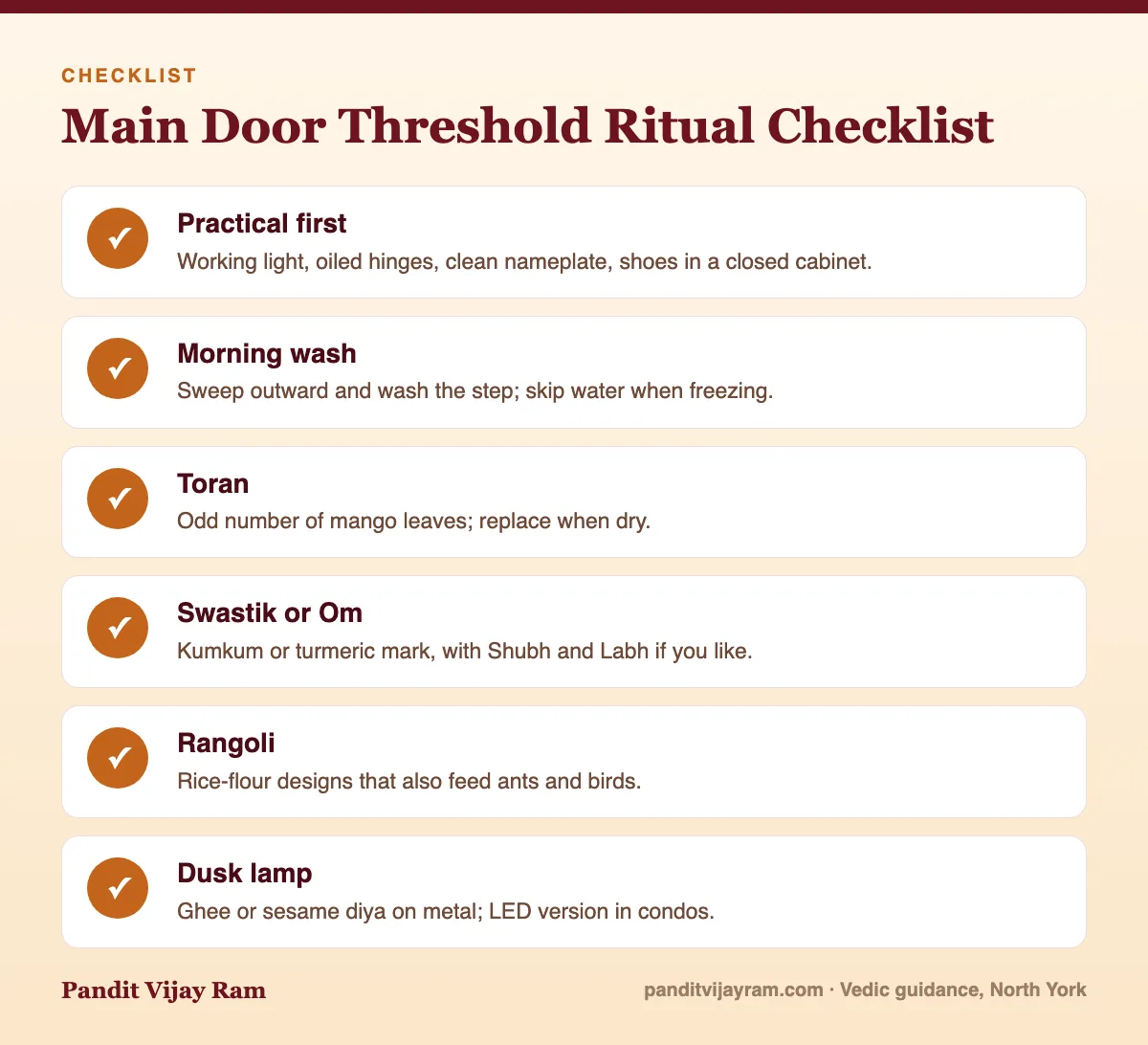
Each morning, before or soon after sunrise, sweep the step and wash it with water mixed with a pinch of turmeric or a few drops of Ganga jal. Many households then draw a small rangoli or place a few grains of rice. The idea is to start each day with a fresh, welcoming threshold.
Washing the threshold is one of the oldest daily duties in Indian homes. In villages it was often done with cow-dung water, which dries into a clean, smooth surface. In Toronto homes, plain water works perfectly well.
A simple morning method:
- Sweep the step outward, away from the house.
- Pour a small pot of water mixed with a pinch of turmeric across the step. Use Ganga jal on special days.
- Wipe it with a cloth kept only for the doorway.
- Touch the threshold with your right hand and then your forehead, as a small gesture of respect.
A few cautions for Canadian weather and materials:
- Winter: skip water on outdoor steps when it is below freezing; it turns to ice. Sweep, then sprinkle a pinch of rice or offer a short prayer instead.
- Turmeric: it stains pale stone, wood and grout. Use plain water on light-coloured surfaces.
- Salt: avoid salt water on concrete and stone steps in winter, since road salt already damages them.
On Saturdays, many families also sprinkle a little mustard oil or light a sesame-oil lamp at the threshold for Shani. That custom is explained more fully in the guide to the Saturday mustard oil ritual.
What does a toran, swastik and rangoli at the door mean?
A toran is a garland of mango or ashoka leaves, or marigolds, hung across the top of the door to welcome blessings. The swastik and Om, drawn in kumkum or turmeric, mark the home as auspicious. Rangoli at the threshold welcomes guests and Lakshmi, and rice-flour designs also feed ants and birds.
Each of these symbols has its own meaning and its own small rules.
Toran (bandanwar). Fresh mango leaves are the classic choice, usually in odd numbers such as five, seven or eleven, strung on a thread. Ashoka leaves and marigolds are common for festivals. Replace fresh torans when they dry out, usually within a week or two. Fabric or beaded torans are fine for every day and can be dusted rather than replaced.
Swastik and Om. The Hindu swastik is an ancient sign of well-being, with four arms often linked to the four Vedas or four directions. Draw it with kumkum, turmeric paste or sandalwood on or above the door, with four dots between the arms. Many families add Shubh and Labh, meaning auspiciousness and gain, on either side. In Canada, where the symbol is easily misread, many people prefer to place it inside the door frame or use Om instead. That is a sensible choice.
Rangoli and kolam. Designs of rice flour, coloured powder or flower petals are drawn at the threshold, especially on festivals. South Indian families draw a fresh kolam every morning. Rice flour is traditionally chosen because it feeds ants and small birds, an act of daily kindness.
The lemon-and-chilli hanging is a separate custom with its own disposal rules. It is covered in the guide to nimbu mirchi at the door. For door-related protection against envy, the evil eye and nazar removal page explains further options.
Why do Hindus light a lamp at the door in the evening?
Lighting a lamp at dusk, called sandhya deepam, welcomes Lakshmi and marks the change from day to night. A small ghee or sesame-oil diya is placed near the door or at the threshold, usually facing east or north, with a short prayer. It is one of the simplest daily protections for a home.
Dusk, or sandhya, is considered a sensitive transition in Vedic thought. Many households avoid sweeping, sleeping or arguing at this time. Instead, they light a lamp at the entrance and at the altar, and chant a short verse.
A commonly recited dusk verse is Shubham Karoti Kalyanam, which asks the lamp to bring auspiciousness, health and wealth, and to remove hostile thoughts. Others chant the Gayatri or simply say a prayer in their own words.
How to do it safely:
- Place the diya on a metal plate or a stone tile, never on a wooden step or a doormat.
- Keep it out of the path of foot traffic and away from coats, curtains and shoe racks.
- In windy weather, use a glass-covered lamp or place it just inside the door.
- Stay nearby until it burns out, or put it out before leaving the house.
Some families light a mustard-oil lamp on Saturdays and a ghee lamp on other days. On Diwali, rows of lamps line every threshold and window.
For families who want to protect the home with recitation as well as light, the guide to home protection with Hanuman Chalisa and Sundarkand pairs naturally with the dusk lamp.
How can I do threshold rituals in a condo or apartment?
Keep everything inside your unit door rather than in the shared hallway. Use a removable toran on the inside frame, a small swastik or Om sticker, a rangoli mat or flower bowl just inside, and a battery-powered diya at dusk. Check your building's rules before hanging anything outside or lighting a real flame.
Condo hallways in Toronto are shared spaces governed by fire codes and building rules. Open flames are usually banned, objects can block evacuation routes, and some boards have rules about door decorations. Respecting those rules keeps you on good terms with neighbours and management.
Condo-friendly versions of each custom:
- Washing the step: wipe the inside threshold strip and your doormat area with a damp cloth and a few drops of Ganga jal.
- Toran: a light fabric or beaded toran on the inside of the door frame, held with removable hooks.
- Swastik or Om: a small sticker or a kumkum mark inside the frame, away from the hallway.
- Rangoli: a reusable rangoli mat, a bowl of floating flowers, or a small chalk design just inside the door.
- Dusk lamp: an LED or battery diya placed inside the entrance. Light a real ghee lamp at the altar instead.
- Ganesh image: a small frame facing inward above the door, where permitted.
When should you look further? If you have kept the entrance clean, bright and tended for several weeks and the household still feels unsettled, ask whether something practical is going on, such as conflict with a neighbour, noise or a safety concern. If someone is leaving objects at your door, or you feel threatened, keep a record and contact building security or the police. For a fuller look at the home, the negative energy removal service explains how an assessment works. For more smoke-free methods, see cleansing a condo without smoke.
The bottom line
Negative energy at the main door is traditionally cleared through simple, daily care rather than one-off remedies. Wash or wipe the threshold each morning, hang a toran, mark a swastik or Om, and draw rangoli on special days. Light a lamp at dusk with a short prayer, and keep flames safe and attended. In condos, bring each ritual inside the unit to respect fire codes and shared spaces.
Key takeaways
- The main door is treated as the mouth of the house in vastu.
- Fix lights, locks, hinges and shoe clutter before any ritual.
- Morning threshold washing, toran, swastik or Om and rangoli are the classic customs.
- A dusk lamp welcomes Lakshmi; keep it on metal and attended.
- Condo residents can adapt every ritual inside the unit door.