
Aftercare Following Negative Energy Removal: What to Do and Avoid

A removal ritual is not the end of the work. Families often feel lighter on the day of a puja or havan, then wonder what they should do next and what might undo the good. That question is exactly what aftercare after negative energy removal answers. Clients in North York, Etobicoke and across the GTA ask me the same practical things: can I eat meat this week, what do I do with the lemons and flowers, should I still wear the thread in the shower, is it safe to visit my in-laws. This guide sets out the traditional precautions for diet, places, objects and daily practice, explains the reasoning behind each, and separates the customs that matter from the superstitions that only add worry. It is written for the weeks after a removal specifically, not for the general days after any cleansing. I have guided families through this stage for more than forty years. The households that do best keep their aftercare simple, consistent and calm, and treat any new symptom first as an ordinary event rather than a sign that the removal failed.
What should you do after negative energy removal?
In the weeks after a removal, keep a short daily practice such as a morning lamp and the Hanuman Chalisa, follow the diet and abstinence advice your practitioner gave, dispose of ritual remnants as instructed, and note how you feel each day. The aim is to consolidate calm, not to watch anxiously for signs of trouble.
Different practitioners prescribe different aftercare depending on the ritual. A one-day cleansing may need a week of care; a forty-day anushthan or a removal involving a havan often comes with a full forty-day period. Ask your practitioner for the exact length before you leave, and write it down.
The core habits are broadly similar across lineages:
- Morning: bathe before entering the kitchen or shrine, light a ghee lamp, and recite the prayer you were given. Five to ten minutes is enough.
- Evening: a lamp at sunset and a short prayer. Some households add camphor aarti.
- Protective items: keep the kalava, kavach or taweez on as instructed, and do not swap it for something else from another healer during this time.
- Rest: early nights. Many people are more tired than usual after a ritual, which is normal.
- A simple diary: one line each day about sleep, mood and home atmosphere. Patterns over weeks are more meaningful than one bad evening.
Also keep up ordinary life. Go to work, see friends, take your medication, attend appointments. Aftercare supports normal living; it does not replace it. The more general first-week guidance for any cleansing is in the first seven days after cleansing, and the specific ritual bath used after black magic removal is covered in the post-removal ritual bath.

What should you eat and avoid after a removal ritual?
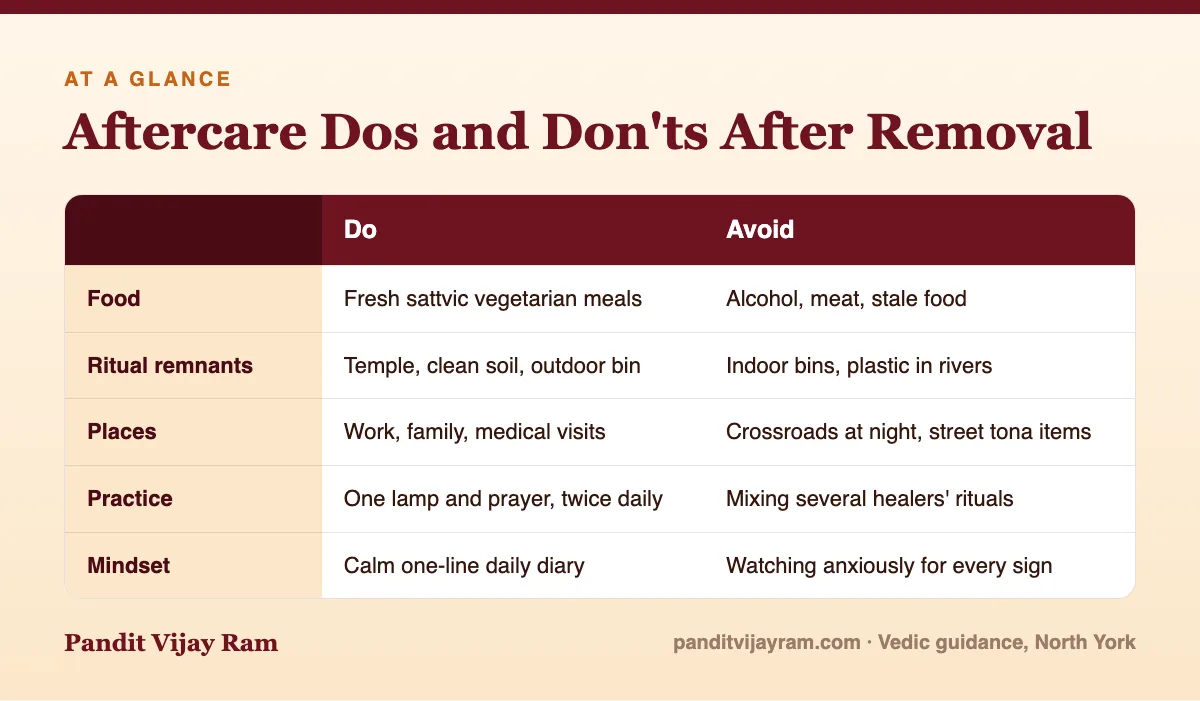
Tradition recommends a sattvic diet for the aftercare period: freshly cooked vegetarian food, fruit, milk, rice, lentils and ghee. Meat, fish, eggs and alcohol are usually avoided, and many families also skip onion and garlic. Eat at regular times, and do not fast to the point of weakness. Follow medical dietary advice first.
Ayurveda divides food into three qualities. Sattvic food is light and clarifying; rajasic food, such as very spicy or fried dishes, is stimulating; tamasic food, including meat, alcohol, stale or reheated food, is considered heavy and dulling. After a removal, the goal is clarity, so the sattvic list is preferred.
A practical guide for most households:
- Prefer: khichdi, dal, rice, rotis, seasonal vegetables, yoghurt, milk, fruit, nuts and a little ghee. Fresh tulsi leaves in water or tea.
- Avoid for the aftercare period: alcohol, recreational drugs including cannabis, meat, fish and eggs. Tobacco too, if you can.
- Family custom: onion and garlic are avoided in many Vaishnava and Jain-influenced homes. Follow your household's practice.
- Stale food: eat freshly cooked meals where possible rather than food left out for many hours.
Important cautions. If you have diabetes, are pregnant, take medication or have a history of eating difficulties, do not make drastic diet changes without speaking to your doctor. Fasting can be part of devotion, as described in our post on Ekadashi fasting, but aftercare does not require you to go hungry. Children and older family members should eat normally.
Many traditions also ask for celibacy, brahmacharya, during an anushthan and its aftercare. This is a personal and couple decision, not something to impose.
Which places and objects should you avoid after removal?
Tradition advises avoiding crossroads at night, stepping over or touching items left at intersections or doorsteps such as lemons, cloth bundles or vermilion, and visiting cremation grounds unless duty requires it. Do not bring home items from places linked to the original trouble. These are precautions of attention, not reasons to stop living normally.
Many removal rituals end with items being placed at a crossroads, in flowing water or buried. That is why tradition says not to step over unfamiliar ritual items in the street, especially during aftercare. In Toronto that might be a lemon and nails near a curb, or a bundle of coloured threads at a park entrance. Walk around them, and do not pick them up.
A simple decision rule for the aftercare weeks:
- Avoid where you can: crossroads after dark, discarded ritual items, places of heavy drinking, and the specific location you or your practitioner associate with the problem.
- Attend when duty calls: a funeral, a hospital visit to family, a court date. Go, do what is needed, and bathe on return. Tradition never asks you to abandon responsibility.
- Be thoughtful with gifts: if the original concern involved a particular household, politely set aside gifted food or objects from there until the aftercare period ends. Do this quietly, without accusation.
- Second-hand items: delay bringing old furniture, jewellery or idols from unknown sources into the home. If you must, cleanse them first; see clearing energy from jewellery and gifts.
None of this calls for fear. People often over-apply these rules and end up anxious about every walk. If you find yourself scanning every sidewalk, that worry deserves attention in its own right.
How do you dispose of lemons, flowers and ritual items after a removal?
Follow your practitioner's instructions exactly. Common methods are immersion in flowing water, burial in clean soil, or burning dry items safely outdoors. Lemons and chillies used for nazar are usually discarded outside the home without looking back. Never leave ritual remnants in household bins inside the house, and respect local bylaws when using rivers or lakes.
Disposal is where many people in Canada feel unsure, because the traditional answer, a river or a peepal tree, is not always practical in a Toronto winter. Here is how households usually adapt:
- Flowers, rice and kumkum from a puja: collect in a clean paper bag. Place them in the soil of a garden or a large plant pot, or take them to a temple; many GTA mandirs collect nirmalya, the used offerings.
- Lemons, chillies and salt used for nazar: take them outside the house in a paper bag and place them in an outdoor waste bin, ideally on the same day. Traditional practice is not to look back.
- Ash from a havan: keep a pinch as prasad for tilak if instructed, and place the rest in garden soil or flowing water where permitted.
- Coconut shells and threads: bury them or hand them to the temple.
- Plastic and foil: recycle normally. They were packaging, not offerings.
Please do not throw plastic bags or idols into Lake Ontario or the Humber. Many temples now encourage eco-friendly immersion and accept items for proper disposal. If you have been asked to bury something and cannot, tell your practitioner; there is usually an acceptable alternative. The full negative energy removal service includes specific disposal guidance for each ritual.
How do you keep protection going after the aftercare period ends?
When the formal aftercare period ends, keep a lighter routine: a daily lamp, one weekly prayer such as the Hanuman Chalisa on Tuesdays, refreshing your protective thread at festivals, and occasional home cleansing with salt or camphor. If old symptoms return, review ordinary causes first, then contact your practitioner rather than starting a new ritual elsewhere.
Protection is best thought of as maintenance, like keeping a garden. A small regular effort is far more useful than a dramatic one every few months.
A sustainable long-term routine:
- Daily: a lamp and a two-minute prayer or mantra. The mantras guide suggests three good options.
- Weekly: the Hanuman Chalisa on Tuesday or Saturday; salt in the mop water once a week.
- Monthly: a small offering or charity on Amavasya, the new moon, which many families associate with ancestors.
- At festivals: replace the kalava, cleanse the shrine, and renew any kavach as advised. Protective items are discussed in the taweez and kavach page.
Two common mistakes to avoid. First, visiting several healers at once. Mixed instructions confuse people and sometimes clash. Second, treating every headache or quarrel as a relapse. If symptoms return, ask whether something ordinary changed: sleep, work, health, a family visit. Our post on whether black magic can come back explains the most frequent reasons symptoms recur. And if low mood or anxiety persists for weeks, please see your family doctor. More guides are on the cleansing and protection hub.
The bottom line
Aftercare after negative energy removal rests on three things: a simple daily practice, a light sattvic diet without alcohol, and calm respect for ritual items and places during the set period. Dispose of remnants as instructed and in ways that respect local rules. Then move into a lighter long-term routine, and treat any returning symptom first as an ordinary event worth checking.
Key takeaways
- Ask your practitioner for the exact aftercare length and write it down.
- Eat freshly cooked vegetarian food and skip alcohol during aftercare.
- Walk around ritual items in the street; never pick them up.
- Return used offerings to a temple or clean soil, not plastic into rivers.
- Keep one practitioner and one routine; avoid mixing instructions.