
What Happens After a Spiritual Cleansing? The First 7 Days

The ritual is over, the smoke has cleared and you are home again. Now what? Many people are unsure what to do after spiritual cleansing, and that uncertainty can turn into worry about every small feeling. Clients in North York often phone the next morning to ask whether being tired is normal, whether they may eat meat, or whether they should avoid visitors. This article answers those questions with a simple day-by-day plan for the first week. It explains what most people feel on each day, the traditional dos and don'ts, and the small practice that helps the calm hold. It also marks the points where a physical symptom deserves a doctor rather than a ritual. In more than forty years of guiding families, I have noticed that the week after a cleansing shapes how people remember it. A calm, unhurried week lets the benefit settle. A week of late nights, quarrels and anxious checking tends to undo it. The plan below is meant to be easy, not strict.
What should you expect in the first 24 hours after a spiritual cleansing?
In the first day, many people feel tired, a little emotional or unusually calm. Some sleep deeply; a few sleep lightly because the day was intense. Mild thirst, a dull head from smoke or a wish to be quiet are common. These usually pass within a day with rest, water and simple food.
A cleansing asks a lot of the body and mind, even when it looks simple. You may have fasted, stood for an hour, sat near a fire, or talked about painful things. So the first day is often the most noticeable.
Common and usually harmless:
- Tiredness or a heavy, sleepy feeling by evening.
- Tears or a sense of tenderness, especially if grief or fear was spoken about.
- A dull headache or dry throat after smoke from camphor, guggul or havan samagri.
- Feeling quiet and not wanting company.
Worth calling a doctor or 811 for health advice: chest tightness, wheezing, a burn that blisters, a rash that spreads, or dizziness that does not ease with rest and water. In an emergency, call 911. These are physical reactions, and they deserve medical care first.
For the first night, keep things light. Have a warm bath or shower, eat a simple vegetarian meal such as khichdi, and go to bed early. Leave the phone in another room if you can. If you were given prasad, take a little and share the rest with family. Our article on spiritual cleansing side effects explains which reactions need attention.

What should you do on days two to seven after a cleansing?
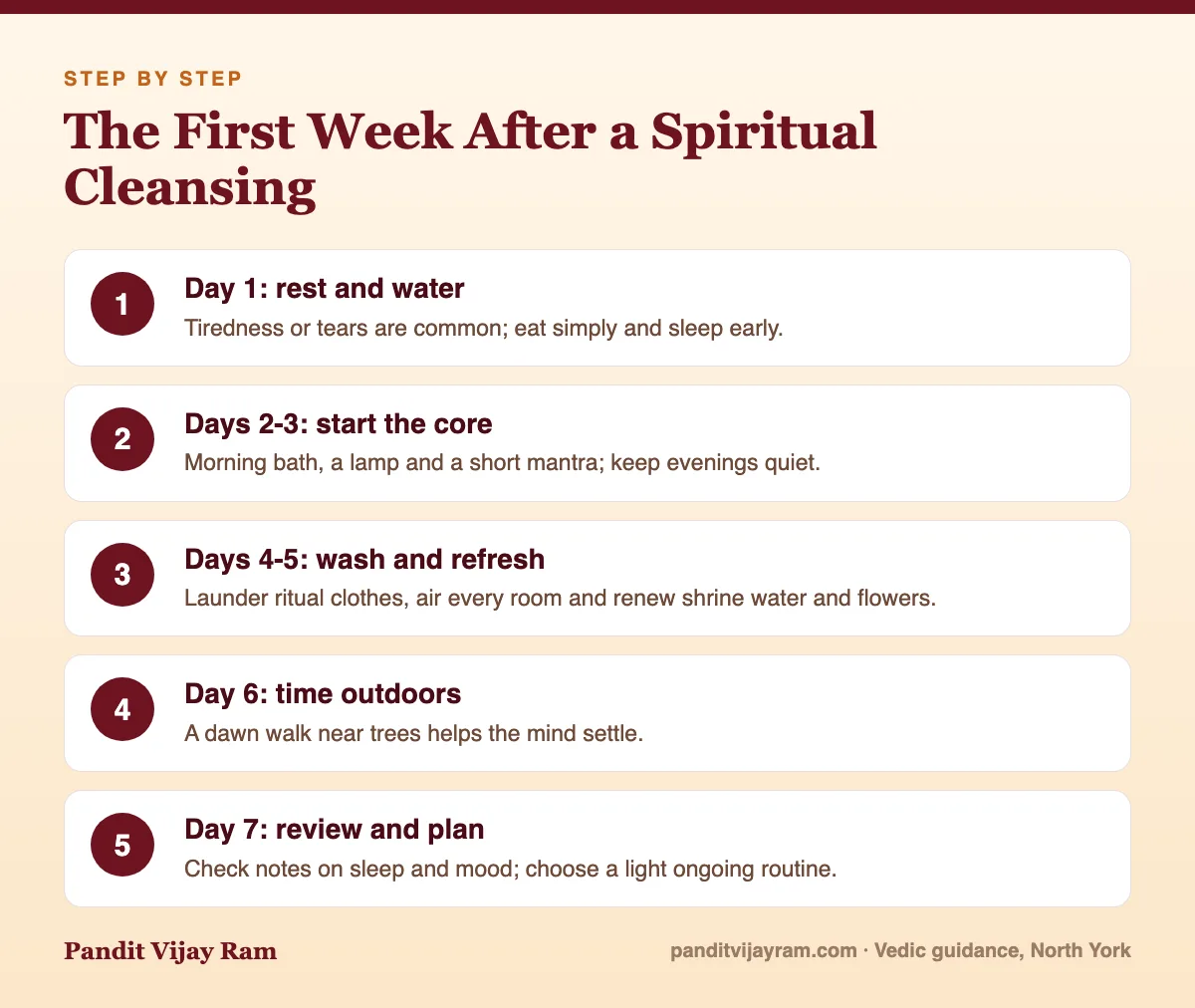
From day two, settle into a short routine: bathe in the morning, light a lamp, chant a brief mantra and keep the home tidy. Midweek, refresh the shrine and air every room. By day six or seven, review how you have slept and felt, and plan a light routine for the weeks ahead.
Here is a simple timeline. Adjust it to your family and your faith.
- Day two. Bathe before breakfast. Light a ghee or sesame-oil lamp and chant Om or the Gayatri mantra eleven times. Keep food simple and drink plenty of water.
- Day three. Many people feel a lift around now. Resume normal work, but avoid crowded late-night events if you can.
- Day four. Wash the clothes worn during the ritual, if you were advised to keep them aside. Open windows for twenty minutes in every room.
- Day five. Change the water and flowers at the home shrine. Wipe the shelf and the deity's cloth.
- Day six. Spend some time outdoors, ideally a walk at dawn or near trees. A park in your neighbourhood is fine.
- Day seven. Read back over any notes on sleep and mood. Decide on a modest ongoing routine.
The daily core never changes: bath, lamp, short mantra, early night. Everything else is support. If you miss a day, carry on the next without fuss.
Some practitioners give a specific bath or mantra count for the week. Follow that if it was explained clearly. If it was not, ask before guessing.
What are the dos and don'ts after a spiritual cleansing?
Do rest, bathe daily, eat simple sattvic food, keep a lamp and mantra going, and stay gentle with people at home. Don't drink heavily, pick fights, stay up very late, bring home items from a funeral that week, or keep repeating the ritual out of worry. Moderation matters more than strict rules.
Families often receive long lists of rules after a ritual. Most come from good intentions, but they can create anxiety. These are the ones I think matter in the first week.
Do:
- Eat sattvic, freshly cooked food: rice, dal, vegetables, fruit, milk if it suits you.
- Keep the home clean and aired, especially the room where the ritual was done.
- Keep one small daily practice, such as the lamp and a mantra.
- Speak kindly at home. Tension tends to undo the calm faster than anything else.
Don't:
- Drink alcohol heavily or use recreational drugs.
- Go looking for omens in every small event.
- Repeat the whole cleansing because a day felt hard.
- Stop any prescribed medicine. Spiritual practice and medical treatment work side by side.
Optional and family-specific: avoiding meat, eggs, onion and garlic for the week, avoiding haircuts or nail-cutting on certain days, and not lending money. These are customs, not requirements. Follow them if they matter to your household.
For a removal ritual, the aftercare is more structured; our guide to aftercare after negative energy removal covers that separate situation.
Why do some people feel worse after a cleansing?
Some people feel worse for a day or two because of physical strain, smoke exposure, hunger after fasting or emotions brought to the surface. Feeling worse for longer usually means something else is going on, such as illness, stress or poor sleep. That calls for rest and a doctor, not another ritual.
It is common to hear that feeling worse proves the cleansing "pulled something out". There may be some truth in the idea of emotional release, but the explanation is often used too freely. Here is how I sort it.
Probably the ritual itself: a heavy head on day one after a havan, aching legs after a long puja, or tearfulness after speaking about a loss. These ease within a day or two.
Probably something else: fever, a cough that develops, stomach upset, a rash or dizziness. These are health signs. Call your family doctor or a nurse line.
Probably worry: lying awake wondering whether the ritual worked, checking for signs, or feeling dread when a lamp flickers. This is anxiety. It is not a spiritual failing, and it often improves with rest, company and fewer rituals.
If low mood deepens through the week or you feel hopeless, speak to your doctor. In a crisis, call or text 988 at any hour.
Once the week has passed, our guide to the signs a spiritual cleansing worked helps you judge the longer trend calmly.
What comes after the first week of cleansing aftercare?
After the first week, move to a lighter routine you can keep: a lamp and short mantra most days and a weekly home cleaning with salt water. Review how things feel after three or four weeks. If the household has settled, carry on gently; if not, check ordinary causes before booking anything else.
The seven-day plan is a bridge. After it, the aim is a small, steady habit that keeps the home and mind from slipping back.
A sensible long-term pattern looks like this:
- Most days: lamp, short mantra and washing hands and feet on coming home.
- Weekly: mop hard floors with a little rock salt in the water and air every room.
- Monthly: a family puja or longer recitation on a day that suits you.
Our article on how often to do a spiritual cleansing explains that rhythm in more detail.
At three or four weeks, ask honestly: is sleep better, are arguments fewer, does the home feel easier? If yes, keep going lightly. If not, look again at health, damp, money and relationships before anything spiritual. If those are addressed, a practitioner can review what was done. A personal session through the aura cleansing service is one option; another is a chart reading to see whether a planetary period is involved.
The cleansing and protection hub lists every guide in this series.
The bottom line
After spiritual cleansing, the first week is a time to settle, not to test. Rest on day one, keep a short daily routine of bath, lamp and mantra, and follow a few sensible dos and don'ts. Any physical symptom that worries you belongs with a doctor, and after the week a lighter ongoing habit keeps the calm in place.
Key takeaways
- Tiredness and tender feelings on the first day are common and usually pass quickly.
- The daily core for the week is a bath, a lamp, a short mantra and an early night.
- Simple sattvic food and kind words at home help the calm settle.
- Physical symptoms after a ritual need medical care first, not another cleansing.
- After seven days, move to a light routine and review the trend at three or four weeks.