
Ritual Bath After Black Magic Removal: The Snan Sequence
A removal ritual can leave people unsure of what to do next. They go home tired, a little emotional, and full of questions about whether to wash, what to wear and what to do with the lemons or threads they were given. Body cleansing after black magic removal is the step that closes the ceremony, and it is simpler than many people fear. Families who see me in North York often expect elaborate instructions, so this guide sets out the whole snan sequence plainly. You will learn when to bathe, what goes into the water and what stays out of it, the prayer that has been recited at Hindu baths for centuries, and how to deal with clothes and ritual items in a Canadian home without polluting rivers or offending neighbours. In more than forty years of this work, I have found that people settle best when the last step is calm and practical rather than dramatic. The bath is a full stop at the end of a sentence. It does not need fear, and it does not need anything you cannot buy at an ordinary grocery store.
Why is a bath taken after black magic removal?
In Vedic practice, snan marks the change from one state to another. After a removal ritual, the bath separates the person from what was worked on and returns them to ordinary life. It is a symbolic and devotional close, much like the bath taken after a funeral or before entering a temple.
Ritual purification runs through almost every Hindu ceremony. People bathe before puja, after cremation, after an eclipse, and before a wedding. In each case the water stands for a clean beginning. A removal ritual follows the same logic. Whatever was addressed during the ceremony stays with the ceremony, and the person steps out of the bath into a fresh start.
Removal work may also involve smoke from guggul, ash, oil, vermilion or the juice of cut lemons. Washing them off is simple hygiene; the prayer makes it an act of faith.
The snan is not a test, and a forgotten detail brings no harm. The meaning lies in the intention: I accept the help I received, and I return to my daily life.
When I perform black magic removal, I explain the bath before the person leaves, so they are not guessing at home. Being told to repeat the bath daily for months with costly ingredients is a warning sign, not a tradition.
When should you take the snan after a removal ritual?
The usual guidance is to bathe on the same day, once you reach home and before eating a full meal. If the ritual ends late at night, the bath can wait until the next morning, ideally before sunrise. Avoid bathing in a rush; ten calm minutes matter more than exact timing.
Timing customs vary by family and teacher, but a few points are widely shared:
- Same day if possible. Bathe after returning home, before you sit down to a full meal or meet visitors.
- Late rituals. If the work finished after dark, many families wait for the next morning. Brahma muhurta, the hour or so before sunrise, is traditionally favoured.
- Before touching the shrine. Bathe before lighting the home lamp or touching the mandir again.
- Not during illness. If you have a fever, a dizzy spell or a skin flare, a gentle wipe-down with clean water and a short prayer is enough. Take the full snan when you are well.
After a remote ritual by phone or video, bathe once the closing prayer is complete.
The days after this bath have their own rhythm of diet, places and objects. That is covered separately in our guide to aftercare after negative energy removal, so this article stays with the bath itself.
What do you put in a cleansing bath after removal?
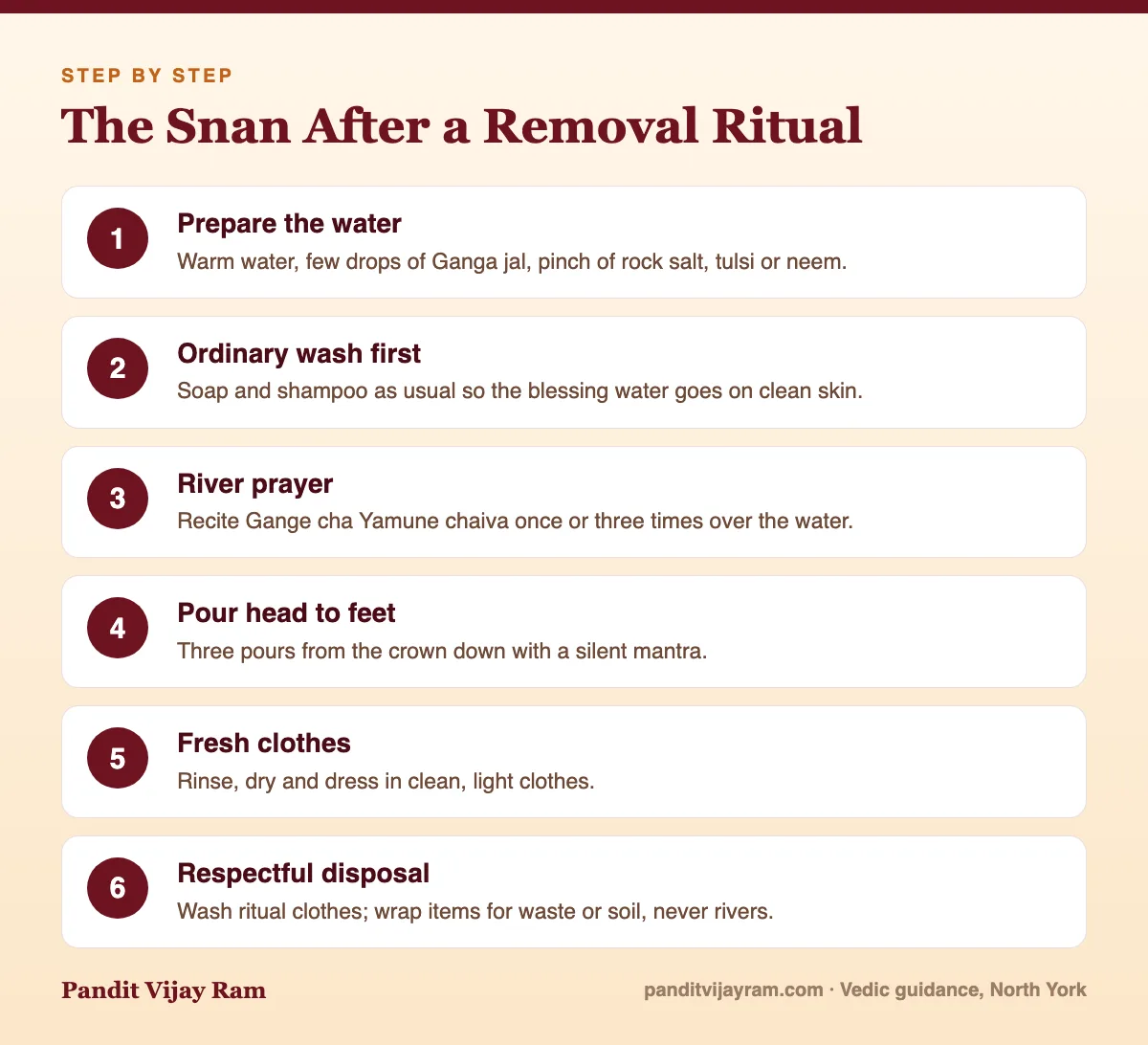
Keep it simple: a bucket of clean, comfortably warm water with a few drops of Ganga jal, a pinch of rock salt, and a handful of washed tulsi or neem leaves. Some families add rose water or a spoon of raw milk. Never add camphor, bleach, essential oils undiluted, or anything harsh.
Here is a practical list, in the order people usually add them:
- Water. A bucket or large jug of clean tap water, warm but not hot.
- Ganga jal. A few drops is enough. If you have none, any water from a temple or one you have prayed over with a mantra is accepted in most homes.
- Sendha namak or sea salt. One small pinch. Salt is traditionally used to absorb heaviness. More is not better and can sting the skin.
- Tulsi or neem leaves. Five to seven washed leaves, lightly crushed.
- Optional. A little rose water, or a spoon of raw milk if that is your family custom.
What to leave out: camphor, which can irritate skin and should never touch the eyes; bleach or disinfectant; undiluted essential oils; coloured powders; and anything you were told to buy at a high price. If you want to understand each item better, our explainer on ganga jal, camphor and salt describes what each one is traditionally for.
Neem and turmeric baths are a separate practice with their own skin cautions and staining issues. Our neem and turmeric bath guide covers that recipe, including patch tests.
Do not put salt on cuts, eczema or broken skin. People with sensitive skin can skip the salt and leaves completely; plain water with prayer is fully valid.
Which prayer or mantra is said during the ritual bath?
The traditional bathing prayer invokes the seven sacred rivers: Gange cha Yamune chaiva Godavari Saraswati, Narmade Sindhu Kaveri jale asmin sannidhim kuru. It asks their presence to enter the water. Many people then add Om Namah Shivaya, the Gayatri mantra, or a few lines of the Hanuman Chalisa.
This sequence suits a shower or a bucket bath.
- Hold the water. Place your right hand over the bucket or jug, or simply touch the water.
- Invoke the rivers. Recite the river prayer once or three times. Pronunciation does not need to be perfect; sincerity counts.
- Pour from the head down. Using a lota or mug, pour water over the crown first, then the shoulders, then the body. Many families do this three times.
- Silent repetition. As the water runs, repeat Om Namah Shivaya or the name of the deity you trust.
- Rinse with plain water. Finish with clean water so no salt or leaves stay on the skin or in the hair.
- Dry and pause. Dry off with a fresh towel and sit for a minute, palms together, before dressing.
Sanskrit is not required. People of other faiths can use their own prayer; washing with prayer is shared by many traditions.
If you have a shower only, fill a jug with the prepared water and pour it from the head down after your normal wash.
What should you do with your clothes and ritual items afterwards?
Wash the clothes you wore during the ritual in an ordinary wash, separately if you prefer; there is no need to burn or discard them. Ritual items such as cut lemons, threads or ash are wrapped and placed in household waste, or buried in garden soil, as your practitioner advises. Never dump them in lakes or rivers.
Clothes. Put on fresh, clean clothes after the bath, often light colours. The ritual clothes go in the laundry. Some families add a pinch of salt to that wash, but normal detergent is fine. Good clothes do not need to be thrown away.
Bath water. Let it drain normally. In a house with a garden, some people pour the last mug at the base of a tree, which is acceptable if it holds only water, salt and leaves.
Ritual items. Common instructions include:
- Cut lemons, chillies or eggs: wrap in newspaper and place in green bin or household waste.
- Ash and flowers: compost or bury in garden soil where allowed.
- Threads and paper: wrap and place in household waste with a short prayer.
- Leftover Ganga jal: pour onto a plant or keep in the mandir.
In Toronto and the wider GTA, do not leave items at intersections, in parks or at the lakeshore, and do not place them in the Don or Humber rivers. That custom from village life now harms the environment and can alarm neighbours.
Some people worry about stepping over the drain or crossing paths with others afterwards. These fears are more folklore than scripture. If your fear feels overwhelming, our article on whether black magic can return after removal answers that question honestly.
What if you still feel unwell after the cleansing bath?
Tiredness or emotion for a day is common after any intense ritual. If you have pain, fever, ongoing low mood, poor sleep or other symptoms that last more than a few days, see your family doctor. The bath supports peace of mind; it is not medicine and does not replace medical care.
Some people feel drained, tearful or simply hungry after the bath. These are ordinary reactions to a long, emotional day. Rest, eat lightly and sleep early.
Watch for signs that point to ordinary causes rather than anything spiritual:
- A skin rash after the bath usually means the salt or leaves irritated your skin. Rinse well and skip them next time.
- Headaches may come from smoke during the ritual, dehydration or skipped meals.
- Ongoing low mood, panic or thoughts of self-harm need urgent support. In Canada, call or text 9-8-8 at any hour.
If physical causes have been checked and you still feel unsettled after a week or two, speak to the practitioner who performed the ritual. An honest practitioner will review what was done, check the chart and home, and tell you if nothing more is needed. The cleansing and protection hub also lists gentle daily practices you can do yourself.
The bottom line
Body cleansing after black magic removal is a simple snan that closes the ritual and returns you to ordinary life. Bathe the same day or the next morning with clean water, a little Ganga jal, rock salt and leaves, and recite the river prayer. Wash your clothes normally and dispose of ritual items in household waste or garden soil, never in rivers. If you still feel unwell, rest, check ordinary causes and see your doctor.
Key takeaways
- The snan is a devotional close to the ritual, not a new remedy.
- Bathe the same day, or the next morning if the ritual ends late.
- Clean water, a few drops of Ganga jal, a pinch of rock salt and tulsi or neem are enough.
- Wash ritual clothes normally; they do not need to be burned.
- Dispose of lemons, threads and ash in household waste or soil, never in lakes or rivers.