
Vastu for the Kitchen: Stove Direction and Simple Fixes

The kitchen is where a household's day begins and ends, and many families feel that if anything in the home should follow vastu, it is the place where food is cooked and offered. Then they look at their own kitchen and find it in the north, or the stove pressed right against the sink. This guide to vastu for kitchen layouts explains the traditional logic in plain terms, so you can see what matters and what can be left alone. I often hear from families in North York and Scarborough who have just bought a resale home or moved into a rental and want to know whether to worry. You will learn why the southeast is called the agni corner, which way to face while you cook, how to separate fire and water, and a set of fixes that need no contractor. There is also a section on fire safety, because no direction protects a kitchen as well as a working smoke alarm. In more than forty years of practice I have found that a clean, calm, well-run kitchen satisfies most of what the texts ask.
What is the best direction for a kitchen according to vastu?
The southeast is the ideal kitchen zone because it is ruled by Agni, the fire deity, and governed by the fire element. The northwest, the zone of Vayu and air, is the usual second choice. Kitchens in the northeast, southwest or centre of the house are considered less suitable and are balanced through placement rather than demolition.
Vastu assigns each of the eight directions a guardian deity, or dikpala, and an element. The kitchen follows fire, so it belongs where fire is at home.
- Southeast (Agneya) – Agni's corner. Morning sun reaches it early, which traditional writers saw as drying and purifying.
- Northwest (Vayavya) – Vayu's corner. Air feeds fire, so this is a workable alternative. Some teachers say a northwest kitchen keeps food moving, meaning guests are fed often.
- South – acceptable in many schools if the stove sits in the southeast part of the room.
- Northeast (Ishanya) – the water and prayer zone. A kitchen here is the most commonly flagged conflict.
- Southwest (Nairutya) – the earth zone for stability and rest; fire here is thought to unsettle the household's anchor.
- Centre (Brahmasthan) – meant to stay open; an island cooktop here is usually advised against.
To find your kitchen's zone, map the whole house from its centre, not just the kitchen in isolation. The guide to vastu home cleansing by direction explains the eight zones in a cleansing context. Within any kitchen, you can also map the room itself and place the stove in its own southeast corner, which many practitioners treat as a meaningful second layer.

Which direction should you face while cooking?
Vastu prefers that the cook faces east, toward the rising sun, while standing at the stove. Facing north is a common second choice. Facing south while cooking is traditionally discouraged, and facing west is considered neutral by many teachers. If the counter fixes your direction, a small change in burner choice often helps.
Facing east links the cook with Surya and with the morning, which is why many older Indian kitchens placed the chulha against an east wall. In a modern North American kitchen, the cooktop often sits wherever the plumbing and gas line made sense to the builder.
Some practical ways to adjust:
- Two-sided cooktops. If you have four burners, use the ones that let you stand facing east or north for daily cooking.
- A portable induction plate. For a short daily ritual, such as boiling milk on a festival morning, a single induction plate on an east-facing counter is a safe option. Keep it on a clear, stable surface with the cord tucked away.
- The puja moment. Many families offer the first roti or a pinch of food to Agni or Annapurna before serving. Doing this while facing east carries the intention, even if the rest of the cooking faces another way.
Do not twist into an awkward or unsafe stance to face a particular direction. Hot oil and a pressure cooker demand your full attention, and a comfortable posture is part of cooking safely. Vastu is meant to support daily life, not to make it more dangerous.
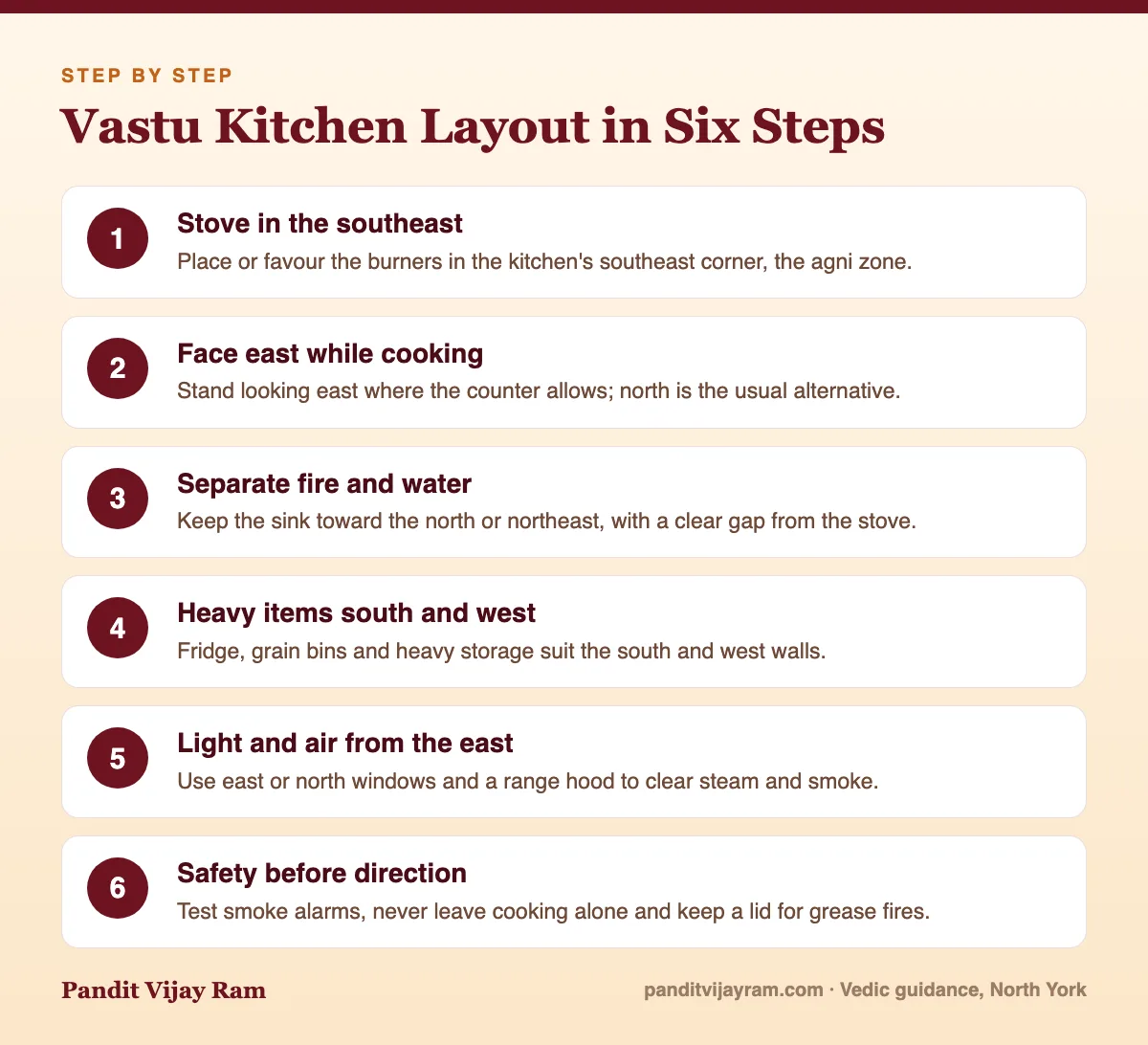
Where should the sink and stove be placed in a vastu kitchen?
Fire and water are opposing elements, so vastu keeps the stove and sink apart. The stove sits in the southeast of the kitchen and the sink toward the northeast or north. If they must sit side by side, leave a working gap or a cutting board between them. The fridge and heavy storage suit the south or west walls.
A simple placement plan, drawn on the kitchen alone, looks like this:
- Stove or range – southeast corner of the kitchen, cook facing east.
- Sink and water filter – northeast or north, away from the burners.
- Refrigerator – southwest, south or west, never pressed against the stove.
- Microwave and toaster – along the south or southeast, keeping fire-type appliances together.
- Heavy storage and grain bins – south and west walls and lower cabinets.
- Window and exhaust fan – east or north, to let in morning light and carry out steam.
The most frequent concern I hear is a sink right next to the stove, which is standard in many GTA kitchens. Vastu calls this a fire-water clash. The everyday fix is simple: keep a strip of counter between them, use a wooden board or a small tray of spices to mark the boundary, and never leave a wet dish rack against the burners. In a galley kitchen where they face each other across the aisle, the space between them already separates the elements.
Practical sense agrees with vastu here. Water splashing into hot oil is dangerous, and a gap between sink and stove is good kitchen design anywhere.
How can you fix kitchen vastu without renovating?
Without renovation, adjust how the kitchen is used. Cook on the burners closest to the room's southeast, add a warm red or orange accent near the stove, keep the northeast part clean and light, separate sink and stove with a board, store heavy items low on south and west walls, and keep the space spotless and uncluttered.
Here are fixes for the three layouts that worry people most.
Kitchen in the northeast:
- Move the stove use to the southeast part of the room where possible.
- Keep the northeast area of the kitchen for water, the filter and light items only.
- Choose pale yellow or cream textiles rather than strong reds in this space.
- Keep it scrupulously clean; this zone is linked with clarity, so clutter here is the first thing to remove.
Kitchen in the southwest:
- Keep the heaviest storage and the fridge here to restore the sense of weight.
- Use earthy tones such as terracotta and beige.
- Avoid adding water features or a second sink.
Kitchen or island in the centre:
- Keep the island clear rather than stacked with appliances.
- Cook on the southeast side of the cooktop.
- Leave open floor around it so the centre still breathes.
Notice what is missing from these lists: copper strips, pyramids and costly yantras. Some practitioners use them, but I prefer changes you can see and maintain. The wider guide to vastu remedies without demolition discusses gadgets honestly, and the condo vastu guide covers open-plan kitchens in compact units.
How do you keep a vastu kitchen safe from fire?
Never leave cooking unattended, keep tea towels and curtains away from burners, turn pot handles inward and keep a lid within reach for grease fires. Ontario requires working smoke alarms on every storey and outside sleeping areas, and homes with fuel-burning appliances need carbon monoxide alarms too. No direction replaces these basics.
A kitchen is called the agni zone for a reason, and Agni deserves respect in the practical sense too. These habits protect the household far more reliably than any layout:
- Stay with the stove. Most kitchen fires start when someone steps away for a moment, especially when frying or tempering in hot oil.
- For a grease fire, turn off the heat and slide a lid over the pan. Never pour water on burning oil.
- Keep an extinguisher near the kitchen exit, not right beside the stove, and learn how to use it.
- Test smoke alarms monthly. If tadka sets one off, run the range hood and open a window rather than disabling the alarm.
- Gas ranges need good ventilation and a carbon monoxide alarm in the home.
- Puja lamps belong on a stable, heat-safe surface away from cabinets and curtains, never on top of the range.
Many families keep a small diya or an image of Annapurna in the kitchen. That is a lovely custom when the flame is never left alone. In condos, an LED diya is often the wiser choice. The guide to diya and fire safety in condos covers festival lamps in more detail, and your local fire service publishes current home-safety guidance.
Can kitchen vastu affect health and family harmony?
Vastu texts link the kitchen with nourishment and the household's warmth, but a stove's direction does not cause illness or quarrels. Food hygiene, nutrition, sleep and how a family shares the work affect health and harmony directly. Use kitchen vastu as a way to bring order and care to the room, and see a doctor for health concerns.
I want to be clear about limits. When someone says their family has been unwell since moving, and asks whether the kitchen is to blame, my first questions are ordinary ones. Has anyone seen a doctor? Is there mould under the sink or a leaking fridge line? Is the range hood venting outdoors or just recirculating?
Family friction around food is also common and very human. One person may cook every meal and feel unappreciated. A vastu adjustment can mark a fresh start, but a conversation about sharing the work does the real repair.
Where tradition helps is in attitude. Offering the first portion to the deity, keeping the kitchen clean before cooking and cooking without anger are practices many grandmothers taught, and they change how a meal feels. A Friday Lakshmi puja at home often includes blessing the grain store, which many families find meaningful.
If you would like a full layout review rather than general rules, the vastu consultation looks at the kitchen within the whole home's plan.
The bottom line
Vastu for kitchen layouts centres on the southeast agni corner, an east-facing cook and a clear separation of fire and water. When the kitchen sits in another zone, changes in burner use, storage, colour and cleanliness stand in for renovation. Fire safety comes before any direction, from working smoke alarms to never leaving the stove unattended. Treat the kitchen with order and care, and the most important parts of vastu are already in place.
Key takeaways
- The southeast is the ideal kitchen zone, with the northwest as second choice.
- Facing east while cooking is preferred; never adopt an unsafe stance for direction.
- Keep the sink and stove apart, or mark a clear gap between them.
- Burner choice, storage and colour can rebalance a kitchen without renovation.
- Working smoke and carbon monoxide alarms matter more than any direction.