
Partner Lost Interest: Questions to Ask Before You Panic

The texts get shorter. Dinner happens in silence, phones in hand. Plans you used to make together now feel like your project alone. When it seems your partner lost interest, the mind races to the worst story: someone else, boredom, the end. People in North York who sit with me about this are usually frightened more than angry, and fear makes for poor judgement. This guide slows things down. You will find the questions to ask yourself first, the ordinary life causes that quietly drain affection, how to raise the subject without an accusation, what a Vedic reading can and cannot add, and the point at which it is fair to decide something must change. In more than forty years of practice, I have watched many couples misread a tired, struggling partner as an uncaring one. The chart can show a heavy period, but it is the honest conversation, not the planets, that tells you what your partner actually feels.
Why would a partner suddenly lose interest?
Interest often fades because of pressure outside the relationship rather than feelings about you. Work strain, money worries, illness, grief, poor sleep, depression and caring for family can leave a person with little energy for closeness. Sometimes real dissatisfaction is the cause, but it is rarely the first explanation to assume.
Before you decide what the distance means, list what has changed in the last few months. Common drains on affection include:
- Workload and job insecurity. Long shifts, layoffs or a new role can leave nothing in the tank by evening.
- Money pressure. Rent, debt or sending support to family abroad weighs on many households.
- Health and medication. Thyroid problems, chronic pain and some prescriptions can lower energy and desire.
- Grief or family crisis. A parent's illness overseas can pull someone inward for a long time.
- Depression or burnout. These often look like indifference from the outside.
- Unspoken resentment. Small hurts never discussed can cool warmth slowly.
Only the last item is directly about the two of you, and even that one can usually be repaired. If a married partner seems to be retreating into a shell at home, our guide on what to do when a spouse becomes distant covers reconnection in marriage specifically.

How do I know if my partner has lost interest or is just stressed?
Stress tends to dim interest across everything: hobbies, friends, food and sleep as well as you. Lost romantic interest is more selective, with energy still flowing to other people and activities. Watch the pattern for several weeks, and notice whether your partner still responds when you reach out with care.
A rough comparison can help you read the signs more fairly:
- Stressed or unwell: withdrawn from most things, tired, irritable, sleeping badly or too much, apologetic when they notice the distance.
- Low on romantic interest: lively with friends and colleagues, flat only at home, avoids plans for the future, uninterested in talking about it.
- Hiding something: sudden secrecy with the phone, unexplained absences, defensiveness out of proportion to the question.
These are clues, not proof. A person can be both stressed and unhappy in the relationship. If the signs point to low mood, persistent sadness, loss of pleasure or talk of hopelessness, encourage a visit to the family doctor. Our guide to mental health support in the GTA lists culturally aware options, and anyone in crisis can call or text 988.
If the worry is about your own racing thoughts rather than their behaviour, the companion post on relationship anxiety may fit you better.
What questions should I ask myself before I panic?
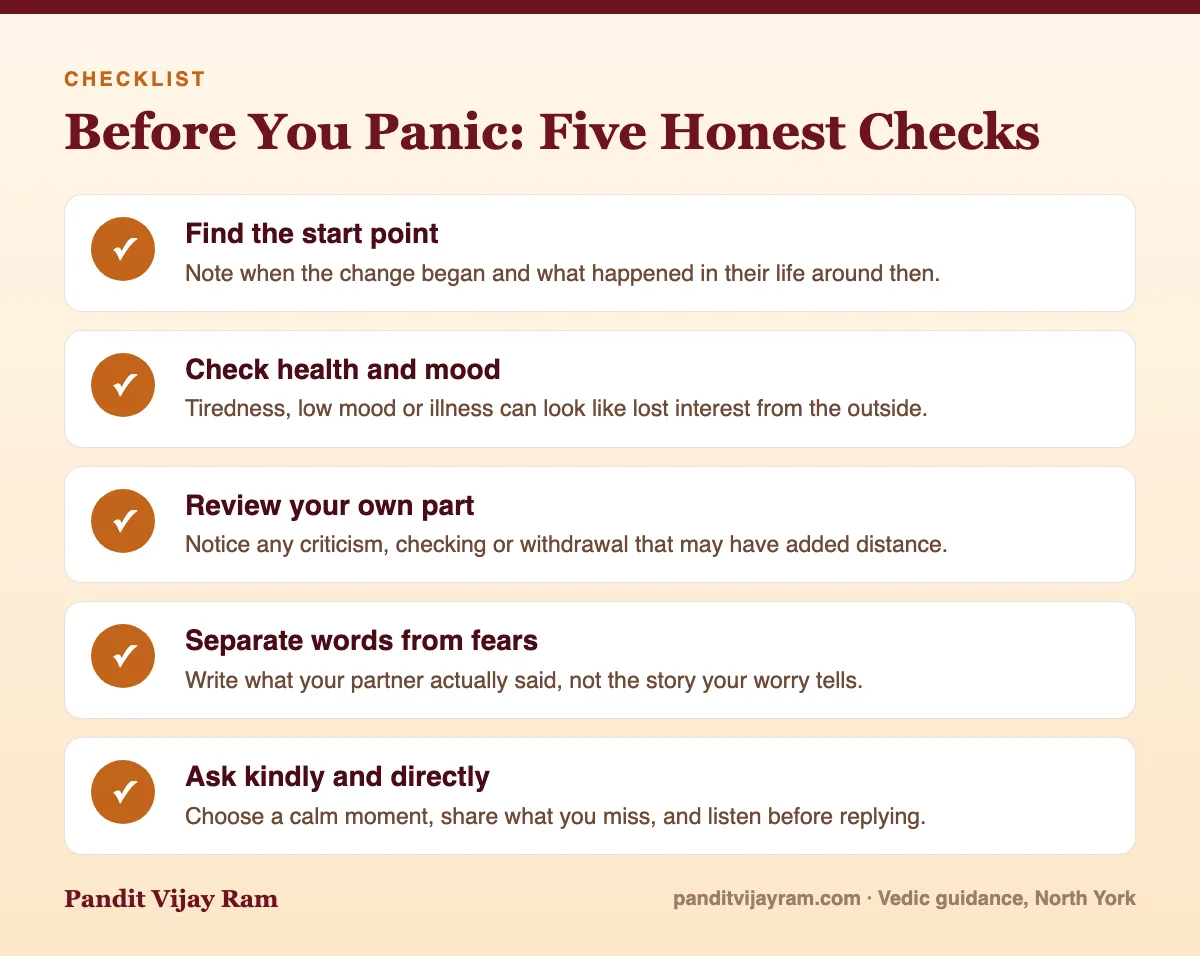
Ask yourself when the change began, what else changed at that time, whether you have both been under strain, what your partner has said directly, and whether you have actually asked them. Writing the answers down separates evidence from fear and often shows that a calm conversation is the missing step.
Try this five-question check. Write the answers rather than thinking them in circles:
- When did I first notice the change? A clear start point often lines up with a job, a move, a loss or a health issue.
- What changed for them around then? Think about work, family, sleep and money.
- What have I changed? Honest self-review matters. Criticism, constant checking or our own withdrawal can invite distance.
- What have they actually said? Separate their words from the story your fear has written.
- Have I asked, kindly and directly? Many people wait months without ever asking a plain question.
A decision rule: if the change is under a few weeks old and has an obvious outside cause, offer support first and talk later. If it has lasted months, or you sense secrecy, it is time to speak openly. Panic usually comes from guessing, and the answer to guessing is information gathered gently.
How do I talk to my partner about losing interest without a fight?
Choose a calm, private moment, describe what you have noticed without blame, say how it affects you, and ask an open question. For example: I have missed our evenings together lately, and I wonder how you are really doing. Then listen fully before you explain or defend yourself.
The opening line decides most of what follows. Starting with an accusation, such as you don't care any more, puts your partner on the defensive. Starting with an observation and a feeling invites honesty.
- Pick the moment. Not late at night, not during a disagreement, not in front of family.
- Lead with care. You seem worn out lately, and I miss you. What is going on for you?
- Listen longer than feels natural. Let silences sit. People often reveal the real issue only after a pause.
- Don't demand instant answers. Some partners need a day to think before they can say what they feel.
- Agree on one small step. A walk together each week, phones away at dinner, or seeing a doctor.
If every attempt to talk turns into the same argument, structured tools help. Our post on communication problems in marriage sets out a weekly check-in and other practical methods that work for dating couples too.
What if my partner really has lost interest in the relationship?
If your partner tells you clearly that their feelings have changed, take them at their word. You can ask whether they are willing to try counselling, but you cannot make someone feel love. Respecting their answer protects your dignity and leaves room for honest choices on both sides.
Sometimes the conversation confirms the fear. Your partner may say they feel unsure, stuck or no longer in love. That is painful, and it is also information you can work with.
A few honest paths remain open:
- Counselling together if both of you want to understand what went wrong and try again.
- A trial period with clear changes agreed by both, reviewed after a set number of weeks.
- A respectful ending if one person has decided. Our guide to deciding whether a relationship is worth saving can help you weigh this.
When people bring this question to a love problem consultation, I look at the kundli for the pressures each person is carrying, such as a demanding Saturn period or a strained Moon, and suggest prayer for one's own steadiness. I do not perform rituals to make anyone return their affection. Their feelings belong to them, and a relationship built on pressure would not bring you peace.
Can Vedic astrology explain why a partner's interest fades?
Vedic astrology reads tendencies, not hidden feelings. A reading may show a heavy dasha, a stressed Moon or pressure on the seventh house during a hard period, which can explain withdrawal and help you respond with patience. It cannot tell you what your partner thinks; only they can.
In the Vedic view the Moon reflects emotional availability, Venus shows affection and pleasure, and the seventh house describes partnership. Saturn's periods are traditionally linked with responsibility, fatigue and a serious mood, while Rahu periods can bring restlessness or distraction. Reading both charts can show that one partner is in a demanding phase that has little to do with love.
That insight is useful in three ways:
- It can soften blame, because you see strain rather than rejection.
- It suggests timing for important conversations, such as waiting until a crisis has eased.
- It points to supportive practice: Monday prayers for the Moon, Friday devotion linked with Venus, or simple shared lamp-lighting at home.
A chart is never a verdict about another person's heart, and it is not a substitute for asking them. If you want both charts read side by side, a relationship compatibility reading is the right starting point.
The bottom line
When a partner lost interest, the most common causes are stress, health, low mood and life changes rather than a verdict on you. Write down what has changed, check for depression or exhaustion, and then ask a kind, direct question. Respect the answer you receive, whether that leads to counselling, small shared changes or an honest ending.
Key takeaways
- Fading interest is often caused by stress, illness, grief or depression, not by you.
- Selective withdrawal and secrecy say more than general tiredness does.
- Write down the timeline and what changed before you raise the subject.
- Open with an observation and a feeling, then listen without defending.
- A kundli can show a heavy period but cannot reveal another person's feelings.