
Forgiving an Ex Without Getting Back Together

Anger after a breakup can feel like the last thread that still connects you to the other person. You replay what they did, rehearse what you should have said, and feel the heat rise each time. Many people resist forgiving an ex because they fear it means pretending nothing happened, or inviting them back. It means neither. People in North York often tell me they are tired of being angry but do not know how to put it down safely. This guide explains what forgiveness is and what it is not, why it serves your own peace, and how the Gita's idea of kshama fits a modern breakup. You will find a short forgiveness meditation, a way to keep boundaries firm while the heart softens, and honest guidance for situations where forgiveness should wait. Over forty years of sitting with people after painful endings, I have learned that forgiveness is rarely a single moment. It is a practice, repeated on the hard days, until the memory loses its grip. The other person does not need to know you are doing it, and you do not need their permission.
What does it really mean to forgive an ex?
To forgive an ex is to let go of the wish to see them suffer or pay, and to stop letting the hurt run your days. It does not mean the harm was acceptable, that you trust them again, or that you owe them contact. Forgiveness changes your inner state, not your boundaries.
Psychologists who study forgiveness separate it from several things it is often confused with. Seeing the difference makes forgiveness feel possible.
- Forgiving is not excusing. You can say clearly that what happened was wrong.
- Forgiving is not forgetting. Memory remains. What changes is the charge it carries.
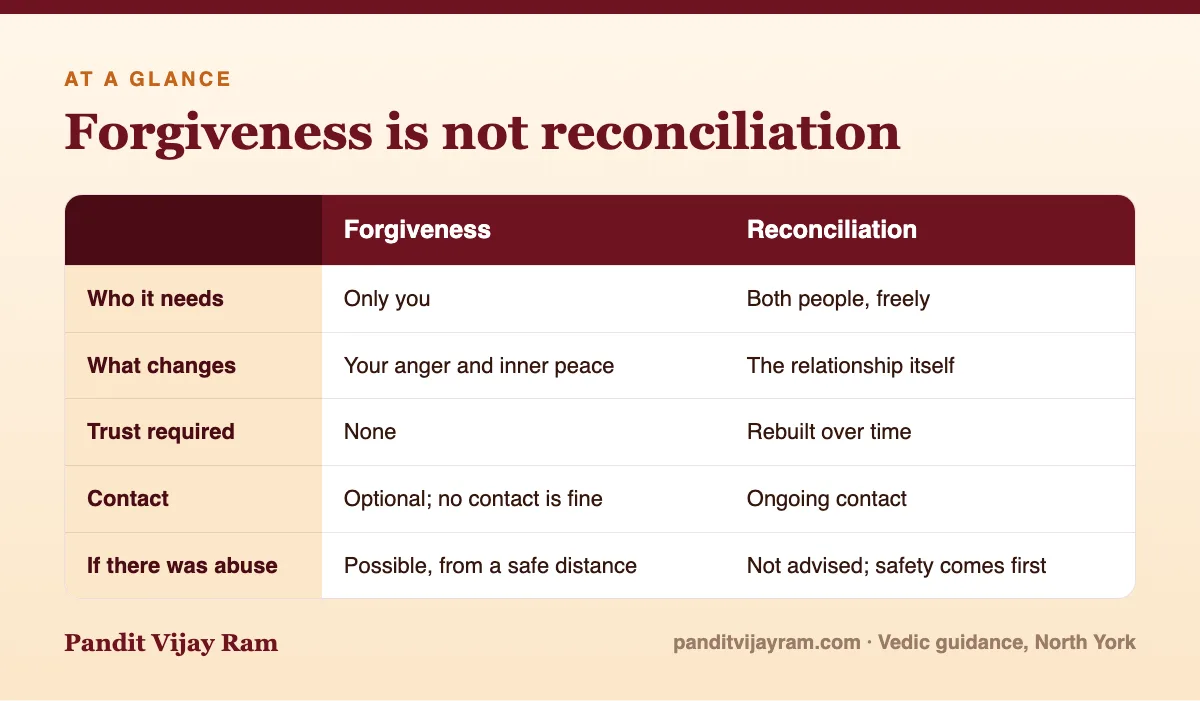
- Forgiving is not reconciling. Reconciliation needs two people and rebuilt trust. Forgiveness needs only you.
- Forgiving is not a debt. The other person does not have to apologise first, though an apology can help.
Think of resentment as holding a hot coal, ready to throw. The coal burns your hand long before it reaches anyone else. Forgiveness is opening the hand.
This matters especially when an ex never apologises. Waiting for their remorse keeps your healing in their hands. If you are the one who caused hurt and want to make amends, the separate guide on how to apologise to an ex covers that side. If the relationship ended after infidelity and you are deciding whether to rebuild, rebuilding trust after cheating deals with the much longer path of repair.

What does the Bhagavad Gita say about kshama, or forgiveness?
The Gita names kshama, patient forgiveness, among the divine qualities in its sixteenth chapter and describes the devotee dear to Krishna as forgiving in its twelfth. It presents forgiveness as strength and steadiness of mind, a sign of inner freedom rather than weakness or surrender to the person who caused harm.
Kshama is often translated as forgiveness, patience or forbearance. In the Gita it appears in a list of qualities that lead toward freedom, alongside fearlessness, truthfulness and freedom from anger. Chapter twelve describes the beloved devotee as one who bears no ill will toward any being, is friendly and compassionate, and is forgiving.
Three ideas from this teaching help after a breakup:
- Kshama belongs to the strong. It is not something you do because you have no choice. It is a choice made from steadiness.
- Anger binds. The Gita warns that anger clouds judgement and memory. Releasing it is first a gift to your own clarity.
- Equanimity is the aim. Being steady in praise and blame, honour and insult, means the ex's opinion of you stops deciding your worth.
Many families read a few verses each evening. You might read chapter twelve slowly over a week, pausing on the verses that describe the forgiving heart. Some people like to pair this with a simple mantra practice; the guide to mantras for a heavy heart suggests ones that ask only for your own peace.
Other traditions say the same in their own words. Sikh, Muslim and Christian teachings all hold forgiveness high, and readers from those faiths can draw on their own prayers in exactly the same way.
How do I let go of anger toward my ex?
Let go of anger in layers. First let yourself feel it fully and safely, through writing or exercise. Then look for the hurt underneath, usually fear, shame or grief. Finally practise a short daily forgiveness meditation. Anger that is suppressed tends to return; anger that is felt and understood loosens.
Try this ten-minute forgiveness meditation once a day for three weeks. It is adapted from common practices in many contemplative traditions.
- Settle. Sit comfortably, light a lamp if you wish, and take ten slow breaths.
- Name the hurt. Silently say one specific thing that hurt you. Notice where you feel it in the body.
- Name what lies under it. Ask: is this fear, humiliation, loneliness? Name it gently.
- Wish yourself peace. Say: "May I be free of this weight. May I be at peace."
- Widen slowly. When you can, add: "May they also find what they need, far from me." If that is too much today, stop at step four.
- Close. Fold your hands and end with "Om shanti" or your own prayer.
Physical release helps too. A brisk walk, cleaning a room or vigorous breathing exercises let the body discharge some of what the mind is holding. Avoid venting to the ex directly or online. It feels powerful for a moment and keeps the wound open.
If the anger is connected to harsh words exchanged across a family, the article on hurtful words after a family argument describes repair and protective prayer without retaliation.
Can I forgive my ex and still keep no contact?
Yes, and for many people that is the healthiest combination. Forgiveness lives in your heart, while boundaries live in your actions. You can wish someone well and still mute them, decline calls, return gifts by courier and refuse to discuss the relationship. Firm limits often make forgiveness safer and easier to sustain.
Some people worry that if they forgive, they will be expected to be friends. Others fear that softening inside will lead them to reach out at a weak moment. Clear boundaries protect against both.
Useful boundaries while you forgive:
- Decide in advance how you will respond if they contact you, so you are not deciding while emotional.
- Limit what you see of them on social media.
- Ask mutual friends not to pass messages either way.
- Keep any necessary contact, such as shared rent or a pet, short, written and practical.
Where there are children, contact cannot stop, but it can be structured. Written schedules and calm, brief exchanges let you co-parent while you forgive in private. A family lawyer or mediator can help set that structure up.
Forgiveness is also not a reason to drop safety measures. If an ex was abusive, controlling or threatening, keep your protections in place. Peace of heart and a peace bond can exist together. The GTA domestic violence help guide lists services that support safety planning; in danger, call 911.
When should forgiveness wait?
Forgiveness should wait while you are still unsafe, still in contact with someone who keeps hurting you, or being pressured to forgive by family. Rushed forgiveness can bury anger that later returns. It is fine to say not yet. Healing, safety and support come first; forgiveness can follow in its own time.
In many families, a woman or a younger family member is told to forgive quickly to keep the peace. Elders may say "forget it, move on, think of the family's name". This pressure can make someone swallow real harm. True kshama cannot be demanded by others. It grows when a person feels safe enough to let go.
Signs that forgiveness should wait:
- The person is still harming you, by messages, threats or spreading rumours.
- You are being asked to forgive so that you will return.
- You have not yet allowed yourself to feel angry at all.
- You are forgiving mainly to stop others being uncomfortable.
A counsellor can help you work through these layers at your own pace. Your family doctor can refer you, and many employers offer free counselling through an assistance programme. If anger turns into constant low mood or thoughts of harming yourself, call or text 9-8-8.
For spiritual support alongside that work, the love problem consultation offers a calm reading and prayer for your own peace. It is never used to influence the other person. If closure itself is still missing, the guide to finding closure after a breakup may be the better place to begin.
The bottom line
Forgiving an ex is a release you give yourself, not a reunion or an excuse for harm. The Gita's kshama shows that forgiveness comes from strength and steadiness of mind. A short daily meditation can loosen anger, while no contact and firm boundaries keep you protected. When you are unsafe or pressured, it is right to let forgiveness wait.
Key takeaways
- Forgiveness changes your inner state; boundaries stay exactly where you set them.
- Kshama in the Gita is a sign of strength, not surrender.
- Feel the anger safely before trying to release it.
- No contact and forgiveness work well together.
- Nobody can demand your forgiveness, including family.