
Fake Gemstones and Certificates: How to Buy Safely in Canada

Buying a gemstone for astrology is an act of faith, and fake gemstones are sold by people who rely on exactly that. A family is told a stone is natural and untreated, or that it has been specially energised, and the price rises with the story. Later a jeweller looks at it under magnification and the picture changes. When clients in North York bring me rings bought online or abroad, I often ask to see the paperwork before I look at the chart. In more than forty years of practice, I have seen more distress from misdescribed stones than from any planetary placement. This guide explains the difference between synthetic, simulant and treated gems, which treatments a seller should disclose, what a proper lab report contains and how to verify it, the warning signs of a gem scam, and the general consumer options available in Canada if something goes wrong. It names no laboratories or shops. It is not legal advice; for a dispute, a lawyer or your provincial consumer protection office is the right contact. The aim is simple: know what you are buying before you pay for it.
What counts as a fake gemstone?
A fake gemstone is any stone sold as something it is not. That includes synthetics, which are lab-grown with the same chemistry as the natural gem; simulants, which only look similar; composites glued or filled to seem larger or cleaner; and treated stones whose treatment is hidden. Honest disclosure separates a fair sale from a fake one.
It helps to use the trade's own terms, because sellers sometimes blur them:
- Natural: formed in the earth, or for pearl and coral, by living animals.
- Synthetic or lab-grown: made in a laboratory with the same chemistry and structure as the natural stone. A synthetic sapphire is still corundum.
- Simulant: a different material that imitates the look. Glass, cubic zirconia and many plastics fall here.
- Composite: pieces glued together, such as doublets and triplets, or low-grade stone filled with large amounts of glass.
- Treated: a natural stone altered after mining to improve colour or clarity.
None of these is wrong when sold openly. A lab-grown ruby at a lab-grown price is a fair purchase. The problem is misrepresentation, when one category is sold as another.
For astrology, most Vedic teachers prefer natural stones and accept common, disclosed treatments such as heating. Our stone guides explain the issues for each gem, including blue sapphire, ruby and emerald.

Which gemstone treatments should a seller disclose?
A seller should disclose heating, diffusion, glass or resin filling, oiling, dyeing, irradiation and coating. Heating of sapphire and ruby and oiling of emerald are widespread and usually accepted when disclosed. Glass filling, dyeing and diffusion change a stone much more and should be named clearly on the invoice and report.
A quick reference to what you may meet:
- Heating: common in ruby and sapphire to improve colour and clarity. Generally stable.
- Lattice diffusion: elements such as beryllium are driven into corundum at high heat, creating strong yellow, orange or deeper colours.
- Lead-glass filling: heavily fractured ruby filled with glass. It can be damaged by jewellery repair heat or household chemicals.
- Oil or resin filling: standard for emerald to reduce visible fractures. Needs gentle cleaning.
- Dyeing: common in coral, lower-grade ruby and sapphire, onyx and some pearls.
- Irradiation: used to create colours such as the blue of most blue topaz.
- Coating: thin films that add colour or sparkle, which can wear off.
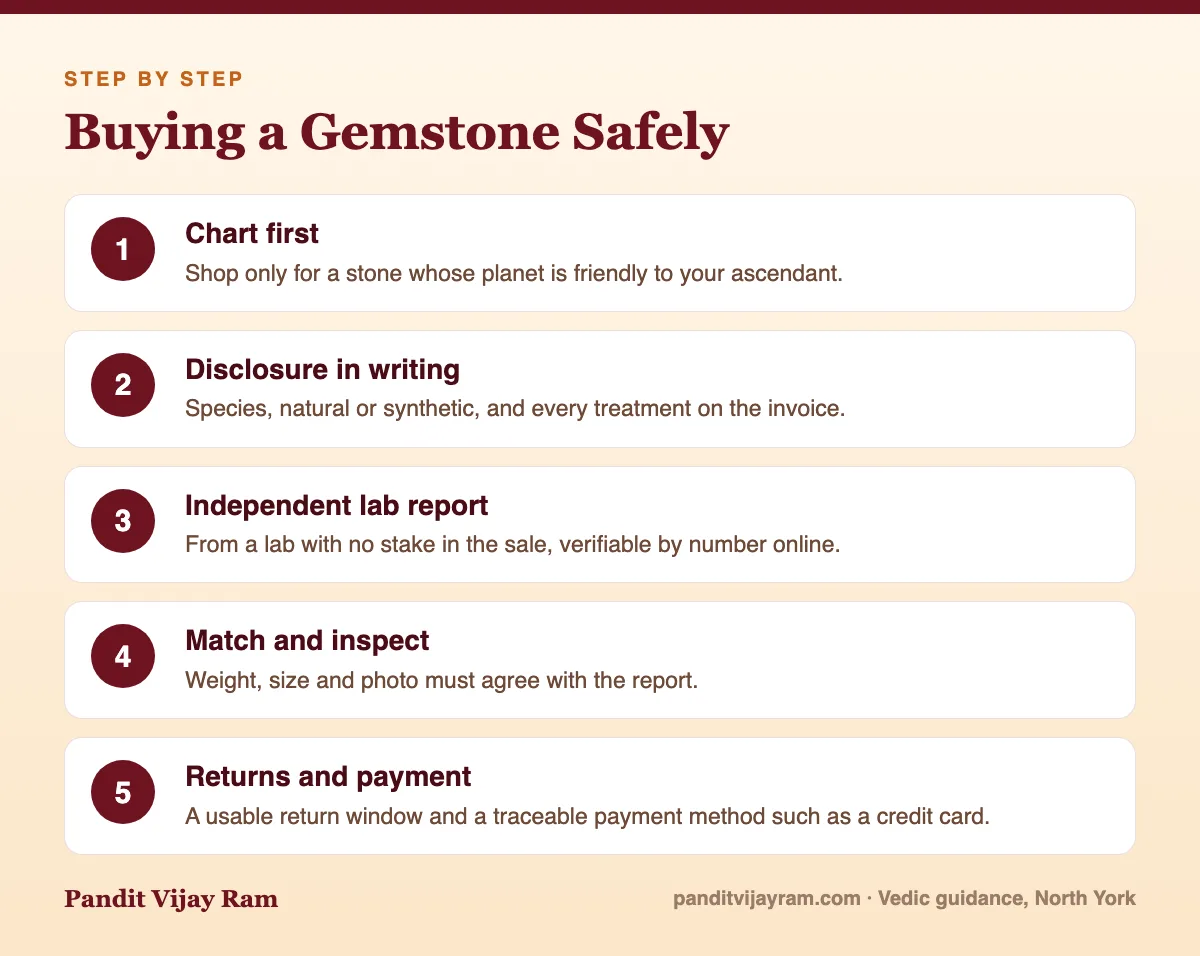
Disclosure should be in writing on both the invoice and the lab report. A verbal "it's natural" is not enough. If a seller refuses to put the description on paper, treat that as your answer. For organic gems, our red coral guide explains dyed and reconstituted coral in more detail.
What should a real gemstone lab report include?
A genuine lab report should name the issuing laboratory, give a unique report number you can check online, and state the stone's species and variety, natural or synthetic origin, weight, measurements, shape, colour and any treatments detected. Many also include a photograph and, for costly stones, an opinion on geographic origin.
Use this checklist when you read a report:
- Who issued it? The lab should be independent of the seller. An in-house "certificate" printed by the shop is a sales document, not a lab report.
- Can you verify it? Most reputable labs offer an online lookup by report number. Confirm the details match.
- Does the stone match? Weigh and measure it, or ask an independent jeweller to. Weight to two decimal places and dimensions should agree.
- Identity: species and variety, such as "natural corundum, sapphire".
- Treatment comments: phrases like "indications of heating" or "no indications of heating", or notes on filling.
- Origin opinion: optional, and an opinion rather than a fact.
- Photograph: helpful for matching the stone you hold.
Be wary of laminated cards with impressive seals but no verifiable number. Also be wary of reports for a stone you never see in person. If you are unsure, an independent appraiser who is not selling you anything can review the report and the stone together for a fee.
What are the warning signs of a gemstone scam?
Warning signs include pressure to buy immediately, fear-based claims that your life will suffer without a particular stone, prices far below market for natural gems, refusal to give treatment disclosure in writing, certificates that cannot be verified, no return policy, and payment requested by wire transfer, gift cards or cryptocurrency.
Gem scams often borrow the language of astrology. Patterns I hear about regularly:
- Fear selling. "Your Saturn is dangerous; buy this neelam today." An honest astrologer does not frighten clients into purchases.
- Energising fees. Extra charges for remote rituals on a stone, with no way to know anything was done.
- Mandatory purchase from one source. A reading that only works if you buy the reader's stone at the reader's price.
- Bargain natural gems. A large, clean, untreated ruby offered cheaply is very likely something else.
- Unverifiable paperwork. No report number, or a number that does not match on the lab's website.
- No returns. Or a return window so short you cannot get an independent check.
- Unusual payment methods. Gift cards, wire transfers and cryptocurrency are hard to reverse.
Our article on spiritual service scam warning signs covers similar tactics in other remedies. Whoever you buy from, including an astrologer, the same standards should apply. If you are unsure whether a stone even suits you, start with how a chart chooses a gemstone.
What can I do in Canada if I was sold a fake gemstone?
Start with the seller, in writing, citing the invoice and the lab findings. If that fails, consider a credit card chargeback, your provincial consumer protection office, and small claims court. Misleading advertising can be reported to the Competition Bureau, and suspected fraud to the Canadian Anti-Fraud Centre and local police.
This is general information, not legal advice. Rules differ by province, and a lawyer or paralegal can advise on your own situation.
- Keep records. Invoice, advertisements, messages, the report and photographs of the stone.
- Get an independent opinion. A report from a lab unconnected to the seller is your strongest evidence.
- Write to the seller. State what was promised, what was found and what you are asking for, such as a refund.
- Contact your card issuer. Many credit cards allow disputes for goods not as described, within time limits.
- Provincial consumer protection. Each province has an office that handles complaints about businesses; in Ontario it is Consumer Protection Ontario.
- Competition Bureau. The federal agency that handles false or misleading representations in advertising.
- Canadian Anti-Fraud Centre. Report scams, especially those involving online or phone sellers.
Please do not feel ashamed. Skilled sellers fool careful people. If you would like a calm second opinion on whether a stone you already own suits your chart, our gemstone consultation can review it alongside its paperwork.
The bottom line
Fake gemstones range from synthetics and simulants sold as natural to treated stones whose heating, filling or dyeing is hidden. A verifiable report from an independent laboratory, written treatment disclosure and a fair return window protect you far better than any seal or story. If a purchase goes wrong in Canada, start with the seller and your records, then use card disputes, provincial consumer protection, the Competition Bureau or the Canadian Anti-Fraud Centre as needed.
Key takeaways
- Synthetic, simulant, composite and treated stones are fair only when disclosed.
- Heating and emerald oiling are common; glass filling and dye are bigger changes.
- A real lab report is independent and verifiable by its number online.
- Fear, urgency and unusual payment methods are classic scam signs.
- Keep records; seller, card issuer and consumer protection offices come first.