
Ruqyah Water and Oil: What They Are and Safety Notes

Bottles labelled ruqyah water and ruqyah oil now sit on the shelves of halal grocers and online shops, and many people are unsure what they are buying. A friend may hand you a bottle after a hard month, or a relative may insist you bathe a child in recited water. Families from North York, Brampton and Mississauga sometimes bring these questions to me, often because they live in mixed-faith homes. This guide explains the practice as mainstream Muslim scholars describe it, the place of Zamzam water and olive oil, sensible hygiene and skin safety, and the scams that have grown around a sincere act of faith. I am a Vedic practitioner, not an Islamic authority, so on any ruling please speak with your imam. In more than forty years of practice I have seen that the safest spiritual habits are usually the simplest ones, done with clean hands and a calm heart. Medical symptoms still need a doctor, whatever is in the bottle.
What is ruqyah water and how is it prepared?
Ruqyah water is made by reciting Quranic verses and authentic supplications over a container of clean water, often blowing lightly over it afterwards. Common recitations include Al-Fatiha, Ayat al-Kursi and the last three chapters. A family member can prepare it; scholars say no special reciter or payment is needed.
The practice rests on the wider Islamic tradition of ruqyah, healing recitation. Hadith collections describe companions reciting Al-Fatiha over someone who was unwell, and the Prophet approving. Scholars extended this to reciting over water, which the person then drinks or uses to wash. Many classical and modern scholars accept this, though a minority are more cautious about practices not described in detail in the early sources.
A typical home method, as many imams teach it, looks like this:
- Use a clean glass or bottle and fresh drinking water.
- Make wudu if possible and sit calmly.
- Recite Al-Fatiha, Ayat al-Kursi, and Al-Ikhlas, Al-Falaq and An-Nas, often three times.
- Blow gently over the water without spitting into it.
- Drink some with the intention of seeking Allah's help, and use the rest within a few days.
Scholars differ on whether playing a recording over water has the same standing as live recitation. Many say a person's own recitation is preferred. This is a good question for your imam.
For how ruqyah relates to Hindu protective practice, see the comparison of ruqyah and Vedic protection. This site's ruqyah healing page explains how families are referred respectfully.
Why is olive oil used for ruqyah?
Olive oil holds a special place in Islamic tradition. The Quran's Verse of Light mentions a blessed olive tree, and a hadith encourages eating olive oil and anointing with it. Muslims therefore often recite over olive oil and rub a little on the forehead, chest or aching areas.
Olive oil is the classic choice, but shops also sell "ruqyah oils" blended with black seed oil (Nigella sativa), essential oils or fragrances. These blends are commercial products, not religious requirements. Scholars generally say the recitation, not the recipe, is what matters, and plain olive oil is entirely sufficient.
Good practice with oil:
- Choose a food-grade olive oil from a sealed bottle.
- Recite over a small amount in a clean bowl or bottle.
- Apply a thin layer only to unbroken skin.
- Keep it away from the eyes, inner ears and any open wound.
- Do not drink commercial blends unless the label clearly says they are food-safe.
Black seed oil is respected in hadith literature, but it is a strong oil. Dermatology reports describe allergic and irritant skin reactions to it, especially when applied often or undiluted. Essential oils such as tea tree, clove or camphor can burn the skin of babies and small children.
A Vedic household might use ghee or sesame oil in a lamp, or apply sacred ash, for its own devotional reasons. That is a different practice, explained in the guide to daily protection after spell removal.
Is Zamzam water the same as ruqyah water?
No. Zamzam water comes from the well within the Grand Mosque in Mecca and is honoured in its own right, without needing recitation. Ruqyah water is any clean water that has been recited over. Some people combine them, reciting over Zamzam, but each has its own place in Muslim devotion.
Pilgrims returning from Hajj or Umrah often bring Zamzam home as a gift, and families in Toronto treasure it. Hadith reports describe Zamzam as blessed and say it serves the purpose for which it is drunk, which is why people drink it with a sincere intention or prayer.
Because demand is high, unofficial bottles are sold far from Mecca. Food-safety authorities in several countries have warned about water marketed as Zamzam that was not from the well or had not been tested. Practical steps:
- Prefer water brought personally by a trusted pilgrim.
- Be wary of cheap bulk Zamzam sold online with no source details.
- Do not give unverified water to infants or people with weak immunity.
- If you have a health concern about a product, Health Canada's consumer safety information is a good reference.
Zamzam is spiritually precious to Muslims, so these cautions are about counterfeit sellers, not the water's religious value.
How do you use ruqyah water safely at home?
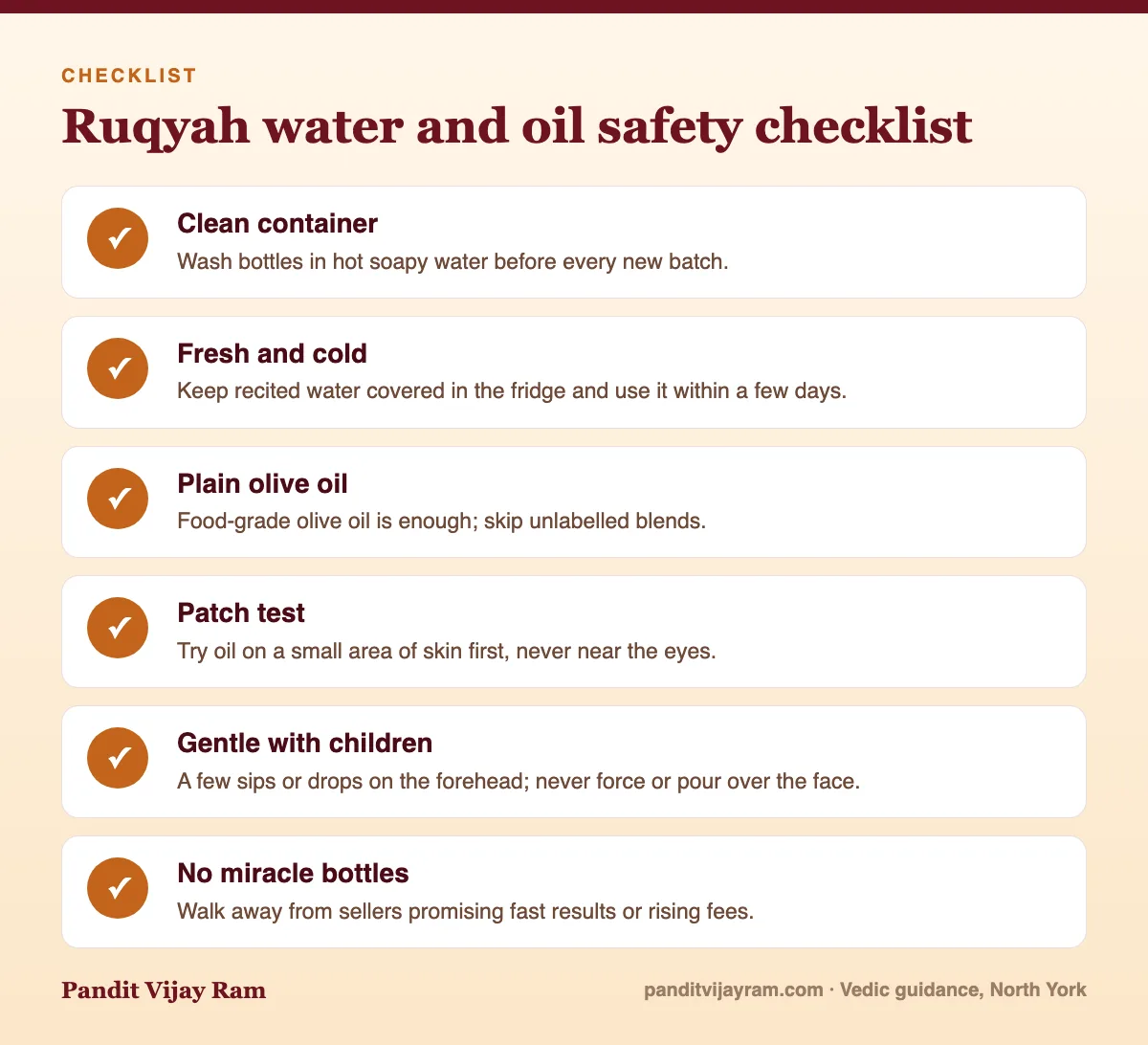
Treat ruqyah water like any drinking water: clean container, fresh supply, and use within a few days, kept in the fridge. For bathing, add it to a normal bath rather than pouring it over the head of a frightened child. Never mix in unknown powders, perfumes or herbs from an unfamiliar seller.
Hygiene matters more than most people expect. Water that has been breathed over and left at room temperature can grow bacteria. A simple routine keeps it safe:
- Container: wash the bottle with hot, soapy water before each new batch.
- Storage: keep it covered in the fridge and label it with the day it was made.
- Shelf life: pour away anything cloudy or more than a few days old.
- Bathing: many families add a cup to a warm bath; a few scholars discourage bathing in a toilet room, so ask your imam.
- Disposal: many Muslims pour leftover recited water on plants or clean ground rather than down a toilet.
Children need extra care. Never force water on a crying child or hold them under a stream of water. That can frighten them and can cause choking. A gentle wipe on the forehead with a few drops is enough for many families.
If someone in the house has symptoms such as fever, rash, confusion or weight loss, please book a doctor's appointment. Ruqyah is understood by scholars as seeking Allah's help, and Islamic ethics also encourage seeking medical treatment.
What ruqyah water and oil scams should you watch for?
Watch for sellers who claim one bottle will break sihr, remove a jinn or bring a spouse back, who charge rising fees for "stronger" batches, or who sell sealed bottles recited "by a famous sheikh" without proof. Mainstream scholars teach that anyone can recite, so paying a fortune is unnecessary.
Because ruqyah is sincere and widely respected, it attracts people who sell fear. Warning signs include:
- promises of guaranteed or fast results, which no scholar endorses;
- "special" oils with secret ingredients and no labelling;
- a diagnosis of sihr or jinn over the phone, followed by a product list;
- pressure to buy monthly packages or to recruit relatives;
- requests for photos, hair or clothing alongside the oil order.
If you have lost money, report it to the Canadian Anti-Fraud Centre and to your bank. Skin reactions to a product can also be reported to Health Canada.
A sincere raqi, like any honest healer, will tell you that you can recite over your own water at the kitchen table. If someone discourages that, or says only their bottles work, treat it as a sales tactic rather than religious guidance.
The questions in our guide to choosing a spiritual specialist apply equally to ruqyah sellers. More guides on these topics are gathered in the magic and entities hub. Vijay Ram ji does not sell ruqyah products or talismans of any kind.
The bottom line
Ruqyah water and ruqyah oil are simple acts of faith: clean water or olive oil over which the Quran is recited, with healing sought from Allah alone. Hygiene, skin safety and care with children matter as much as the recitation. Expensive bottles, secret blends and promises of quick results are signs of a scam, and your imam remains the guide for any ruling.
Key takeaways
- Ruqyah water is clean water recited over with Quranic verses and supplications.
- Plain olive oil is sufficient; commercial blends are not a religious requirement.
- Zamzam is honoured in its own right and should come from a trusted source.
- Keep recited water covered, refrigerated and fresh, and patch-test any oil.
- No bottle can promise results, and anyone can recite without payment.