
Feeling a Presence in the House: Ordinary Causes and Spiritual Steps

The house is quiet, the doors are locked, and still you feel that someone is in the next room or standing just behind you. Feeling a presence in the house can make an ordinary evening tense, and it often grows stronger the more you notice it. Families in North York, Willowdale and Scarborough describe this to me regularly, and many apologise as if it were silly. It is not silly, and it deserves a careful answer. In this guide you will learn the one safety check every home should do first, the everyday reasons the mind senses company that is not there, how grief can make a loved one feel close, and the simple Vedic practices that help a home feel settled again. You will also see the point at which it makes sense to ask for a consultation. In more than forty years of practice I have found that the people who check the practical things first end up calmer, whatever they later decide about the spiritual side.
Could carbon monoxide make me feel a presence in my house?
Yes, it can. Carbon monoxide is an odourless gas from faulty furnaces, water heaters, fireplaces, stoves or a car running in an attached garage. Low exposure causes headaches, dizziness, nausea, confusion and a heavy, uneasy feeling, and some people describe sensing someone in the room. Test your CO alarm before considering anything spiritual.
This is the first thing I ask about, because it is the one cause that can quietly harm a whole family. Carbon monoxide has no smell or colour. It builds up when fuel-burning appliances are faulty, blocked or poorly vented, and Canadian winters keep windows shut, so it lingers.
Warning signs worth taking seriously:
- headaches, tiredness or nausea that ease when you leave the house;
- several people, or a pet, feeling unwell at the same time;
- symptoms worse in the morning or when the furnace runs hardest;
- confusion, a sense of dread or odd perceptions without a clear reason.
What to do now:
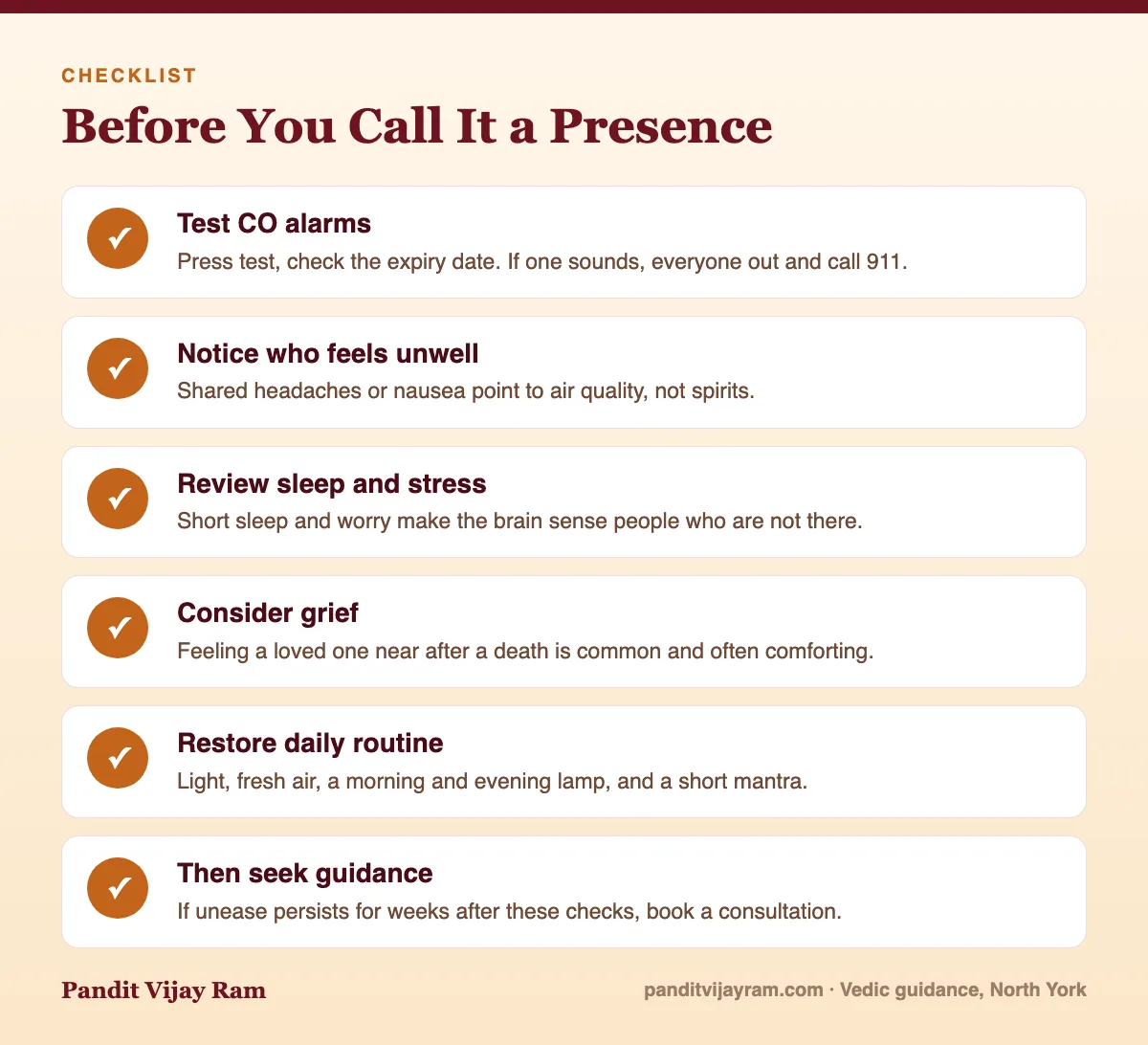
- Press the test button on every CO alarm and check the expiry date printed on the back. Ontario requires working CO alarms in homes with a fuel-burning appliance, a fireplace or an attached garage.
- If an alarm sounds or anyone feels faint, get everyone outside, including pets, and call 911 from fresh air. Do not stay to search for the cause.
- Have a licensed heating technician inspect the furnace, water heater and venting once a year.
- Never run a generator, barbecue or car engine inside a garage or home.
Only when the air is confirmed safe should you look further. A home with a gas problem needs a technician, not a priest.

Why do I feel like someone is watching me at home?
The brain constantly scans for people because noticing others kept our ancestors safe. When you are stressed, tired, alone or recently moved, that alarm system becomes oversensitive and fires without a real cause. Small sounds, shadows and draughts then feel like evidence of company. The feeling is real; its source is usually inside our own vigilance.
Psychologists sometimes call this a sensed presence. Mountaineers, sailors and people under extreme strain have described it for centuries, often as a companion walking beside them. In everyday life it appears in quieter forms.
Common triggers I hear about:
- Living alone for the first time, or a partner travelling for work, so the home feels emptier than usual.
- A new house or condo with unfamiliar sounds: the ventilation, the elevator, a neighbour's door.
- Long-term stress, such as job worries, immigration paperwork or a family dispute, which keeps the body on alert.
- Too little sleep, which makes the brain fill gaps with guesses.
- Scary films, videos or stories watched late at night.
- Anxiety or low mood, where unease attaches itself to the house.
A quick self-check helps. Does the feeling come mainly at night, when you are tired, or after a hard day? Does it fade when someone else is home or the lights are on? If so, the house is probably reflecting your state rather than hosting a visitor.
If the unease is constant, follows you outside the home, or comes with low mood, speak to your family doctor. The guide on negative energy or depression explains how to tell the difference.
Is it normal to feel a loved one's presence after they die?
Yes. Many bereaved people feel that a parent, spouse or grandparent is near them, sitting in their chair or passing through the kitchen. Grief researchers describe these experiences as common and often comforting. They are part of how love adjusts to loss, and they usually soften over months rather than needing to be removed.
When the presence feels familiar rather than threatening, grief is the first place I look. A home holds a person's routines: the kettle they used, the corner where they prayed, the sound of their slippers. After a death the mind keeps expecting them, and sometimes it seems to find them.
Families from many traditions describe this:
- a scent of a mother's oil or a father's aftershave;
- a feeling that someone has sat down on the edge of the bed;
- a sense of being looked after during a hard moment.
These experiences do not mean anything is wrong. In Hindu belief, the period after death and the rites that follow help the soul move on with peace, and they also help the living say goodbye. You can light a lamp near a photograph, speak a few words to your loved one, or offer food to someone in need in their name.
Seek extra support if grief stops you sleeping or eating, if you cannot face daily tasks after several months, or if the presence feels frightening rather than warm. Your family doctor can connect you with grief counselling. For the rites themselves, see the spirit of a deceased relative.
How do I make my house feel peaceful again?
Start with light, fresh air and routine: open curtains in the day, air out rooms, and fix anything that rattles or flickers. Then add a steady spiritual rhythm, such as a morning and evening lamp, a short mantra and a weekly salt-water mopping. Consistency settles a home more than one dramatic ritual.
A home that feels occupied often simply feels neglected or tense. Bring it back into daily use and care.
A one-week reset
- Day one: declutter the room where the feeling is strongest. Remove broken items and anything you dislike looking at.
- Day two: open windows for ten minutes, even in winter, and let daylight in. Replace dim or buzzing bulbs.
- Day three: mop floors with water and a spoon of rock salt, working from the back of the house towards the door.
- Day four onwards: light a ghee diya at the prayer place each morning and evening. In a condo, a battery lamp is a safe substitute.
- Each evening: recite Om Namah Shivaya or the Hanuman Chalisa once, unhurried, with the family if possible.
- Weekend: play gentle devotional music or a recorded aarti through the home for half an hour.
Keep the tone peaceful, not defensive. You are making the house feel lived in and loved, not hunting for an intruder. A fuller routine for whole-house care is in how to cleanse negative energy from your home, and renters can follow a smoke-free cleansing for condos.
When should I ask a spiritual healer about a presence in my home?
Consider a consultation when the air is confirmed safe, your health has been checked, and the unease still persists for weeks, affects several family members, or began after a specific event such as a move, a death or a conflict. A good practitioner will review practical causes with you before suggesting any ritual.
I would rather hear from someone who has already tested their CO alarm and spoken to their doctor, because then we can look at the spiritual side with clear eyes.
A simple decision rule
- Safety concern (alarm, headaches, nausea, several people unwell): leave and call 911, then a heating technician.
- Mostly at night, when alone or tired: improve sleep and routine for a month before doing anything else.
- Linked to grief: honour the person, follow the rites, and lean on grief counselling.
- Persistent, shared by others, tied to a clear event, and not easing with routine: a consultation is reasonable.
In a consultation I listen to what is happening in the household, look at the birth chart where relevant, and suggest proportionate steps such as a specific puja, a lamp and mantra routine, or a protective thread. The negative energy removal service starts this way. Where a family is convinced a spirit is involved, the spirit and ghost removal page explains what is and is not offered. You can also compare self-checks in entity attachment or anxiety and browse the wider magic and entities hub.
The bottom line
Feeling a presence in the house is common and deserves a calm, ordered response. Test your carbon monoxide alarms and get out and call 911 if they sound or anyone feels faint. Look honestly at stress, sleep and grief, which explain most of these experiences and respond well to care. Then a steady routine of light, cleanliness, lamp and mantra helps the home feel peaceful again.
Key takeaways
- Check carbon monoxide alarms first; leave and call 911 if one sounds.
- Stress, poor sleep and living alone often create a sense of being watched.
- Sensing a loved one after death is a normal part of grief.
- Daily light, fresh air, lamp and mantra settle a home over a week or two.
- Seek a consultation only once practical and health causes are ruled out.