
Flickering Lights and Cold Spots: Electrical and Spiritual Checks

The kitchen light dims every evening at the same moment. One corner of the bedroom is always cold, even with the furnace running. In many cultures, these are classic signs that a spirit is near, and the idea of a flickering lights spirit message is repeated in films and family stories alike. Families in North York, Don Mills and Etobicoke ask me about this every winter, usually with a mix of curiosity and worry. I always give the same answer first: check the wiring and the walls before anything else, because some of these causes are genuine safety risks. In this guide you will learn the ordinary reasons lights flicker, the warning signs that need an electrician the same day, why Ontario homes develop cold spots in winter, how to find drafts yourself, and what Hindu tradition suggests once the house is safe. In more than forty years of practice I have learned that a house made safe and warm is already far more peaceful, and any prayer you add afterward rests on a sound foundation.
Why do my lights flicker?
Most flickering comes from the bulb, the fixture or the circuit. Loose bulbs, LED bulbs on incompatible dimmer switches, worn switches, overloaded circuits, and brief voltage dips when a furnace, air conditioner or fridge starts are the usual causes. Flickering across the whole house can point to a supply or panel problem that needs prompt attention.
A useful first step is to notice how widespread the flicker is, because that narrows the cause quickly.
- One bulb only. Tighten it with the power off, or swap in a new bulb. Cheap or ageing LEDs often flicker as their internal drivers wear out.
- One fixture or dimmer. Many LED bulbs are not dimmer-compatible, and older dimmers designed for incandescent bulbs cause flicker or buzzing. Look for bulbs labelled dimmable and a compatible switch.
- One room or circuit. If lights dip when a space heater, microwave or hair dryer turns on, the circuit may be overloaded or have a loose connection.
- When big appliances start. A brief dim as the furnace blower or air conditioner kicks in can be normal. Pronounced dimming is worth asking an electrician about.
- The whole house. Lights brightening and dimming across many rooms, especially in wind or storms, can mean a problem at the panel, the service connection or the utility's line.
Older homes in Toronto may still have knob-and-tube wiring or other ageing systems that were not designed for modern loads. Condos have their own building electrical systems; report recurring flicker to management. For a wider look at what old homes do at night, see the guide to old-house noises and haunting signs.

When is flickering a safety risk?
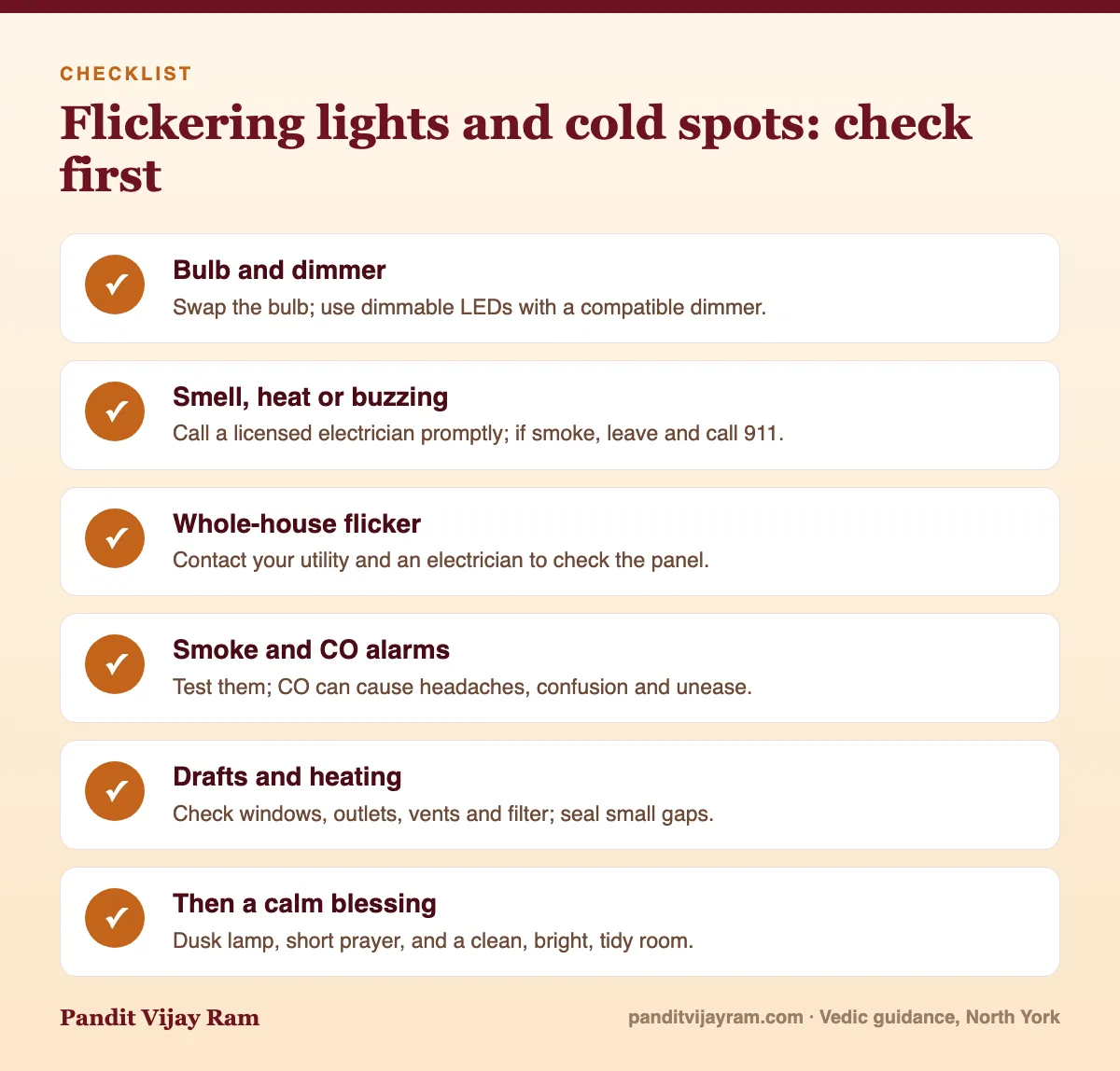
Call a licensed electrical contractor promptly if flickering comes with a burning smell, buzzing or crackling, warm or discoloured switches or outlets, sparks, frequently tripping breakers, or lights that dim and brighten across the house. Do not open the panel yourself. If you smell burning or see smoke, leave the home and call 911.
I am not an electrician, and I tell every family that clearly. A spiritual reading should never delay a safety check. Here is a simple rule I use when people describe flickering to me.
- Is there smell, heat, smoke or sparking? Turn off the circuit if safe to do so, leave if there is smoke, and call 911.
- Is the whole house affected, or does it happen in wind and storms? Contact your local electricity utility, and a licensed electrician to check the panel and service connection.
- Is one circuit or fixture affected, with no smell or heat? Book a licensed electrician soon. In Ontario, electrical contractors are licensed through the Electrical Safety Authority, and you can ask to see their licence.
- Is it a single bulb? Replace it. If the new bulb also flickers, treat it as a fixture problem.
If you rent, tell your landlord in writing. Do not hide a wiring problem because you suspect something spiritual; loose connections can overheat and start fires.
It also makes sense to test your smoke and carbon monoxide alarms. Carbon monoxide has no smell and can cause headaches, dizziness, confusion and a feeling of unease. If the CO alarm sounds, get everyone out and call 911. The guide on strange smells with no source covers gas and electrical odours in more detail.
What causes cold spots in a house?
Cold spots are usually caused by air leaks and uneven heating: drafts around windows, doors, baseboards and outlets on outside walls, thin insulation in rooms over garages or under roofs, recessed lights in top-floor ceilings, blocked or closed vents, and ductwork that delivers less warm air to distant rooms. Ontario winters make every gap more noticeable.
Cold air behaves in predictable ways, even when it feels mysterious. In winter, warm air rises and escapes through the upper part of a house, and cold outdoor air is drawn in through gaps lower down. Builders call this the stack effect. The result is a draft you may feel as a sudden chill in one spot.
Common sources of cold spots in GTA homes:
- Windows and doors with worn weatherstripping or failed seals.
- Electrical outlets and switches on exterior walls, which often let cold air in around the box.
- Rooms over garages or porches, and bump-out bay windows, which are hard to insulate well.
- Attic hatches and pot lights in top-floor ceilings that leak warm air out.
- Thermal bridges, where framing or concrete conducts cold through the wall.
- Heating imbalance: closed or blocked vents, a dirty furnace filter, or long duct runs to far rooms.
Condos have their own patterns, such as cold corners near balcony slabs or window walls. If a cold spot comes with damp or mould, address it promptly for health reasons. For broader home triage, the guide is my house cursed walks through practical checks room by room.
How do I find drafts and cold spots myself?
On a cold, windy day, move slowly around windows, doors, outlets and baseboards with the back of your hand or a thin strip of tissue and feel or watch for movement. An inexpensive infrared thermometer shows surface temperature differences. Check that vents are open and the furnace filter is clean. A home energy advisor can do a fuller assessment.
Finding a cold spot's source is satisfying, and it often brings immediate relief from worry. Here is a simple method.
- Choose a cold, windy day. Drafts are strongest when the temperature difference and wind pressure are highest.
- Close the windows and turn off exhaust fans so you can feel natural leaks rather than airflow you created.
- Use your hand or a tissue. Hold the back of your hand or a light tissue near window frames, door edges, outlet covers, baseboards and the attic hatch.
- Measure surfaces. An infrared thermometer reveals cold patches on walls and ceilings, often where insulation is missing.
- Check the heating. Open all registers, move furniture off vents and replace a dirty filter.
- Make small fixes. Weatherstripping, foam gaskets behind outlet covers and door sweeps are low-cost improvements.
Avoid using a lit candle or incense to trace drafts near curtains or in a home with children or pets. If you rent, report the problem to your landlord. Larger issues, such as missing insulation, are a job for a contractor. Once the house is warmer, many families notice that the feeling of a presence fades too, which the guide on feeling a presence in the house discusses.
What does Hindu tradition say about flickering lights?
In folk belief, a diya flame that flickers or goes out during puja is sometimes read as a sign of disturbance, and sudden cold is linked in stories to unseen presences. Hindu teaching treats light as sacred. Once the house is safe, the traditional response is to relight the lamp calmly, pray and keep the home clean and bright.
Light holds a special place in Hindu worship. The lamp, or deepa, represents knowledge overcoming darkness, which is why Diwali is a festival of lights. Because of this, families naturally attach meaning when a light behaves oddly.
Some traditional readings and responses:
- A flickering diya is usually caused by a draft or an uneven wick. Folk belief sometimes treats it as a sign that the space needs attention, and the remedy is to shield the flame, trim the wick and continue praying.
- An electric light flickering during prayer may feel meaningful, but the safety checks above still come first.
- A persistently cold, gloomy corner is often linked in vastu to neglect or clutter, especially in the northeast. Clean it, let in daylight and keep it tidy.
After the practical work, a short weekly routine helps a home feel cared for: a ghee lamp at dusk near the entrance, the Hanuman Chalisa or Gayatri mantra once, and a sprinkle of clean water with a little salt. In condos and rentals, choose methods that avoid smoke, as described in cleansing a condo or rental without smoke. For room placement and light, a vastu consultation can look at your layout.
When should I consider spiritual help for lights and cold spots?
Consider spiritual help only after an electrician has checked the wiring, drafts and heating have been addressed, and alarms are working, and if you still feel uneasy. A responsible practitioner will ask what those checks found. Be wary of anyone who says a flickering light proves a spirit before any safety check has been done.
There is a sensible order for this, and following it protects your family.
- Safety trades first. Electrician for flickering, HVAC technician for heating imbalance, contractor or energy advisor for insulation.
- Health next. If anyone in the home has headaches, dizziness or sleep problems, see your family doctor, and confirm the carbon monoxide alarm works.
- Then the home's atmosphere. A thorough clean, fresh air on mild days, and a regular evening lamp.
- Then guidance if you want it. A practitioner can suggest a household puja, a havan where permitted, or protective recitation.
When families describe flickering lights to me, I ask for the electrician's findings before anything else. Very often the problem has already been fixed and what remains is lingering worry. That worry is real and deserves care, and a calm blessing of the home can help it settle. If questions remain, the spirit and ghost removal service describes how a consultation begins, and the magic and entities hub brings together related guides.
The bottom line
A flickering lights spirit sign is a familiar belief, but flickering is usually electrical and cold spots usually come from drafts, insulation and heating. Treat both as safety checks, with a licensed electrician for wiring and working smoke and carbon monoxide alarms. Once the home is safe and warm, a lamp at dusk, a short prayer and a tidy, bright space complete the care.
Key takeaways
- Most flickering comes from bulbs, dimmers, loose connections or overloaded circuits.
- Burning smells, heat, buzzing or whole-house flicker need a licensed electrician promptly.
- Cold spots usually come from drafts, missing insulation or uneven heating.
- Test smoke and carbon monoxide alarms whenever a home feels strange.
- Add prayer and a dusk lamp after the safety checks, not instead of them.