
Strange Smells With No Source: Practical Checks Before Spiritual Ones

A whiff of burning plastic in the bedroom, a sudden sulphur smell in the basement, or the sweet scent of sandalwood when no one has lit incense. If you have typed unexplained smells in house into a search bar late at night, you are not alone, and many families quickly wonder whether something spiritual is behind them. People in North York, Scarborough and Thornhill describe these experiences to me often. Before we discuss meaning, I always ask about safety, because some smells are urgent warnings that need action within minutes, not prayer. This guide walks through the dangerous smells to act on first, the common household causes that are easy to fix, the medical reasons a person may smell something others cannot, and finally what Hindu tradition says about fragrances and foul odours, with calm steps to cleanse the home. In more than forty years of practice I have learned to treat a strange smell the way a careful neighbour would: check the gas, the wiring and the drains, look after your health, and only then light the dhoop.
What should I do if my house smells like rotten eggs or sulphur?
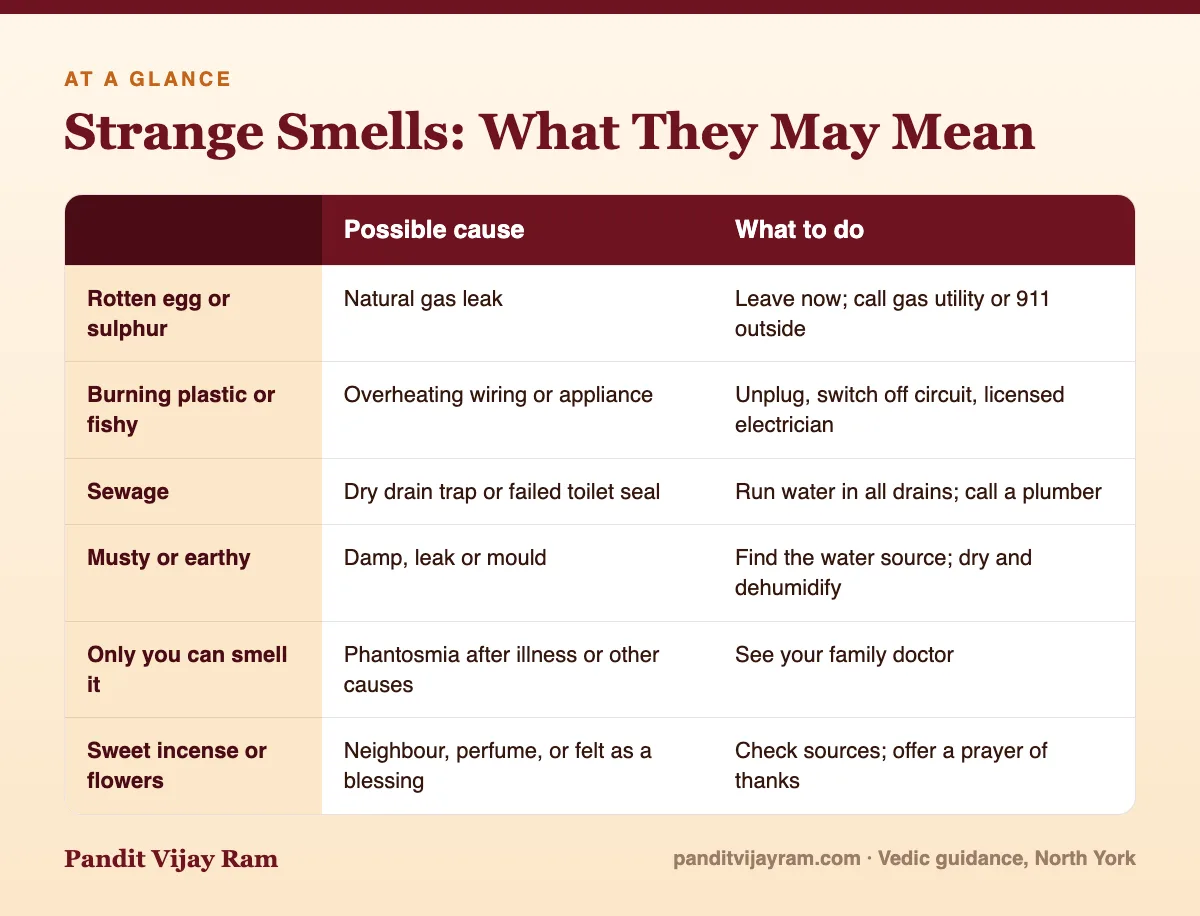
Treat it as a possible natural gas leak. Utilities add a sulphur-like odourant to gas so leaks can be noticed. Leave the house immediately with everyone, including pets, without flipping switches, using appliances or lighting anything. Once outside and at a safe distance, call your gas utility's emergency line or 911.
Natural gas has no smell of its own. A chemical with a rotten-egg odour is added so that a leak is obvious. That makes a sulphur smell the one odour you should never investigate on your own.
If you smell gas
- Get everyone out, including pets. Leave doors open as you go if that is quick.
- Do not switch lights on or off, unplug anything, use the doorbell, or start a car in an attached garage. Sparks can ignite gas.
- Do not use a phone inside the house. Call from outside, well away from the building.
- Call your gas utility's emergency number, which in most of the GTA is Enbridge Gas, or call 911.
- Do not go back in until the utility or fire service says it is safe.
Other sulphur-like sources, once gas is ruled out
- A dry drain or floor drain releasing sewer gas.
- Well water or a water heater with sulphur bacteria, which smells strongest from hot taps.
- Spoiled eggs or food at the back of the fridge.
Make sure your carbon monoxide alarms work too. Carbon monoxide has no smell, so a faulty furnace may give no warning at all. The guide to feeling a presence in the house explains that check.

Why do I smell burning in my house but nothing is on fire?
A burning, hot-plastic or fishy smell can come from overheating wiring, a failing outlet, a light fixture, an appliance motor or a dimmer switch. Unplug the suspect device and, if safe, switch off its circuit at the panel. Call a licensed electrician. If you see smoke or feel heat in a wall, leave and call 911.
Electrical faults often announce themselves through smell before anything else. Overheated insulation and plastic can smell like burning, and some components give off an odd fishy or urine-like odour as they heat.
Where to check
- Outlets and switch plates that feel warm, crackle or are discoloured.
- Extension cords and power bars under rugs or behind furniture.
- Light fixtures with bulbs above the recommended wattage.
- Appliances such as space heaters, dryers, fridges and dehumidifiers.
- The electrical panel, if you notice a smell nearby.
Common harmless burning smells
- The furnace's first run in autumn, which burns off dust for a short while.
- A new oven or a toaster with crumbs.
- Neighbours' cooking, wood stoves or barbecues drifting through vents and windows.
A smell that keeps returning in the same room, especially with flickering lights or a buzzing sound, should not be ignored. Electricians can find hot spots with thermal cameras. More on flickering lights and odd drafts is in flickering lights and cold spots.
Test your smoke alarms monthly. If a burning smell comes with smoke, heat or sparks, leave the house and call 911 from outside.
What causes sewage, musty or rotting smells with no obvious source?
Sewage smells often come from dry plumbing traps in rarely used sinks, showers or basement floor drains, or from a failed toilet seal. Musty odours usually mean mould or damp. A sweet, rotting smell that builds over days can be a dead mouse or bird in a wall, vent or attic.
Most bad smells in a home trace back to water, drains or small animals. They are unpleasant, but they are fixable.
Quick checks by smell
- Sewer or drain smell. Run water in every sink, tub and shower for a minute, and pour a jug of water into basement floor drains. The water refills the trap that blocks sewer gas. If the smell is near a toilet, the wax seal may have failed; a plumber can replace it.
- Musty or earthy. Look for leaks under sinks, around windows and in basements. Check behind furniture against outside walls. A dehumidifier helps, and visible mould over a small patch needs professional cleaning.
- Sweet, sickly rotting. Often a dead rodent. The smell peaks over a week or two and then fades. Pest control can locate and remove it.
- Ammonia. Pet accidents, rodent urine or certain cleaning products.
- Garlic-like or chemical. Can come from stored chemicals, paint or a leaking appliance. Ventilate and investigate.
Keep a short log: the time, the room, the weather and what was running. Smells that appear only when it rains, when the furnace runs or when a neighbour cooks point clearly to the cause.
Vents and shared walls in condos carry odours between units. If the smell seems to come from a vent, ask building management to check.
Why do I smell something no one else can smell?
Smelling an odour that others cannot is called phantosmia. It often follows a cold, sinus infection or viral illness such as COVID, and can come with migraines, nasal polyps, dental problems or a head injury. Less often it relates to seizures or other neurological conditions. If it persists, see your family doctor.
If you notice smoke, burning, chemical or rotten odours and nobody else in the house can, the smell may be coming from your own nose or brain rather than from the room. This is more common than people realise.
Common causes
- sinus infections, chronic sinusitis or nasal polyps;
- recovery after a viral infection, including COVID, when the sense of smell is rewiring;
- dental infections or gum disease;
- migraine, where smell changes can be part of an aura;
- some medications and smoking.
See your family doctor if
- the phantom smell lasts more than a couple of weeks;
- it comes with headaches, numbness, confusion or changes in vision or speech;
- you have brief episodes of a smell followed by staring, lost time or unusual movements, which can be a sign of seizures;
- your sense of taste or smell has otherwise changed.
Call 911 for sudden weakness, facial drooping, trouble speaking or a severe headache. Those are stroke warning signs and need help immediately.
Many people feel relieved to learn there is a name for this experience. A doctor may refer you to an ear, nose and throat specialist or a neurologist. The health and wellbeing page explains how spiritual support can sit alongside that care without replacing it.
What does a sudden smell of incense or flowers mean spiritually?
In many traditions, a sudden sweet fragrance such as sandalwood, jasmine or incense is read as a blessing, the presence of a deity or a departed loved one. Foul smells are linked in folklore to unsettled energy. I respect both readings, but only after gas, wiring, drains and health have been checked.
Fragrance is woven into Hindu worship. Dhoop, agarbatti, sandalwood paste and flowers are offered to the deities, and a fragrant home is considered welcoming to the divine. It is natural, then, that families read a sudden pleasant scent as a sign of grace, or of a grandparent who loved a particular perfume. Catholic, Muslim and Caribbean families have similar traditions of sacred scents.
Foul smells sit at the other end of folk belief. Some families associate them with heavy energy or an unhappy influence. I encourage a calm view: an unpleasant smell in a home almost always has a physical source, and fixing it also lifts the atmosphere.
Gentle cleansing once practical checks are done
- Air the home thoroughly for ten minutes.
- Clean the area where the smell appeared with water and a little rock salt.
- Light a lamp at the prayer place morning and evening.
- Offer guggul dhoop or a small piece of camphor in a safe holder, with windows open and smoke alarms in mind. The methods are in home cleansing with guggul dhoop and cleansing a home with camphor.
- Recite the Gayatri mantra or the Hanuman Chalisa as you move through the house.
If a pleasant scent comforts you after a bereavement, simply accept it with a short prayer of thanks. If unease persists after all checks, the negative energy removal service begins with a careful conversation. More guides are in the magic and entities hub.
The bottom line
Unexplained smells in a house should be handled in a clear order. A rotten-egg smell means leave and call your gas utility or 911; a burning smell means check wiring and appliances and call a licensed electrician. Sewage, musty and rotting odours usually come from dry drains, damp or a small animal, and a smell only you notice deserves a doctor's visit. Once those checks are done, airing the home, a lamp and gentle dhoop with prayer bring the atmosphere back to peace.
Key takeaways
- A rotten-egg or sulphur smell may be gas: leave first, then call from outside.
- Burning or fishy smells can signal overheating wiring; call a licensed electrician.
- Dry drains, damp and dead rodents explain most sewage and rotting smells.
- Smelling what no one else can may be phantosmia; see your family doctor.
- Spiritual cleansing with lamp and dhoop comes after safety checks.