
Taweez for Nazar: Wearing, Care and When to Retire It
A taweez often arrives as a gift. A grandmother pins one inside a newborn's vest, an aunt sends one from Lahore or Lucknow, or a family elder brings one back from a shrine. Then the questions start. Can you shower with it? Should a child sleep in it? What do you do when the thread frays or the case cracks? A taweez for nazar is one of the most widely worn protective objects among South-Asian families, and families in North York ask me about its care almost weekly. This guide explains what a taweez is in both Muslim and Hindu practice, including the honest fact that Islamic scholars disagree about wearing one. It covers how to wear it, what to do when bathing, sleeping and using the washroom, and the safety rules that matter most for babies and young children. It ends with when to retire a taweez and how to dispose of it respectfully in a Canadian home. In more than forty years of practice, I have found that people worry most about breaking rules, when the truth is that care and intention matter far more than ritual detail.
What is a taweez and how is it used against nazar?
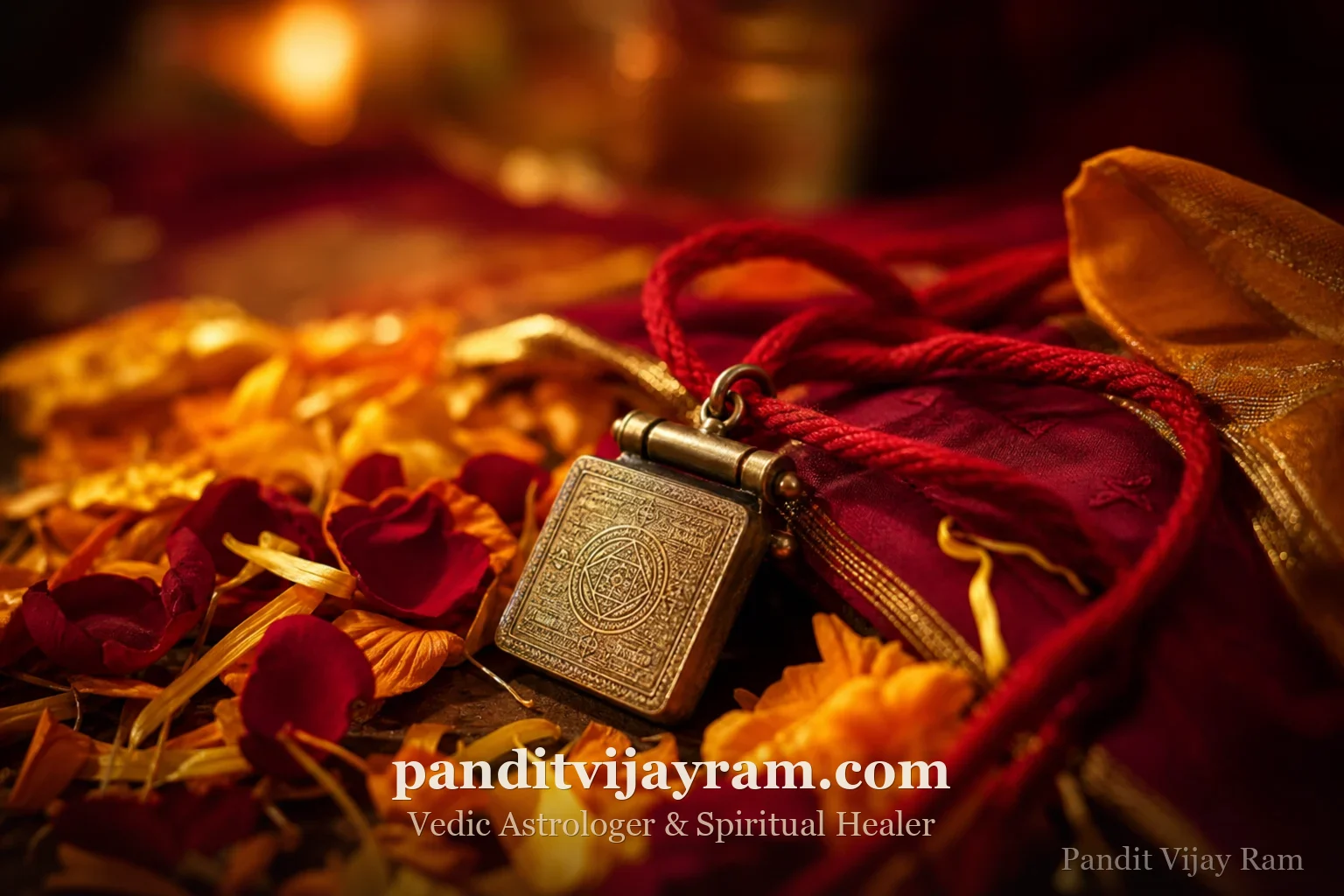
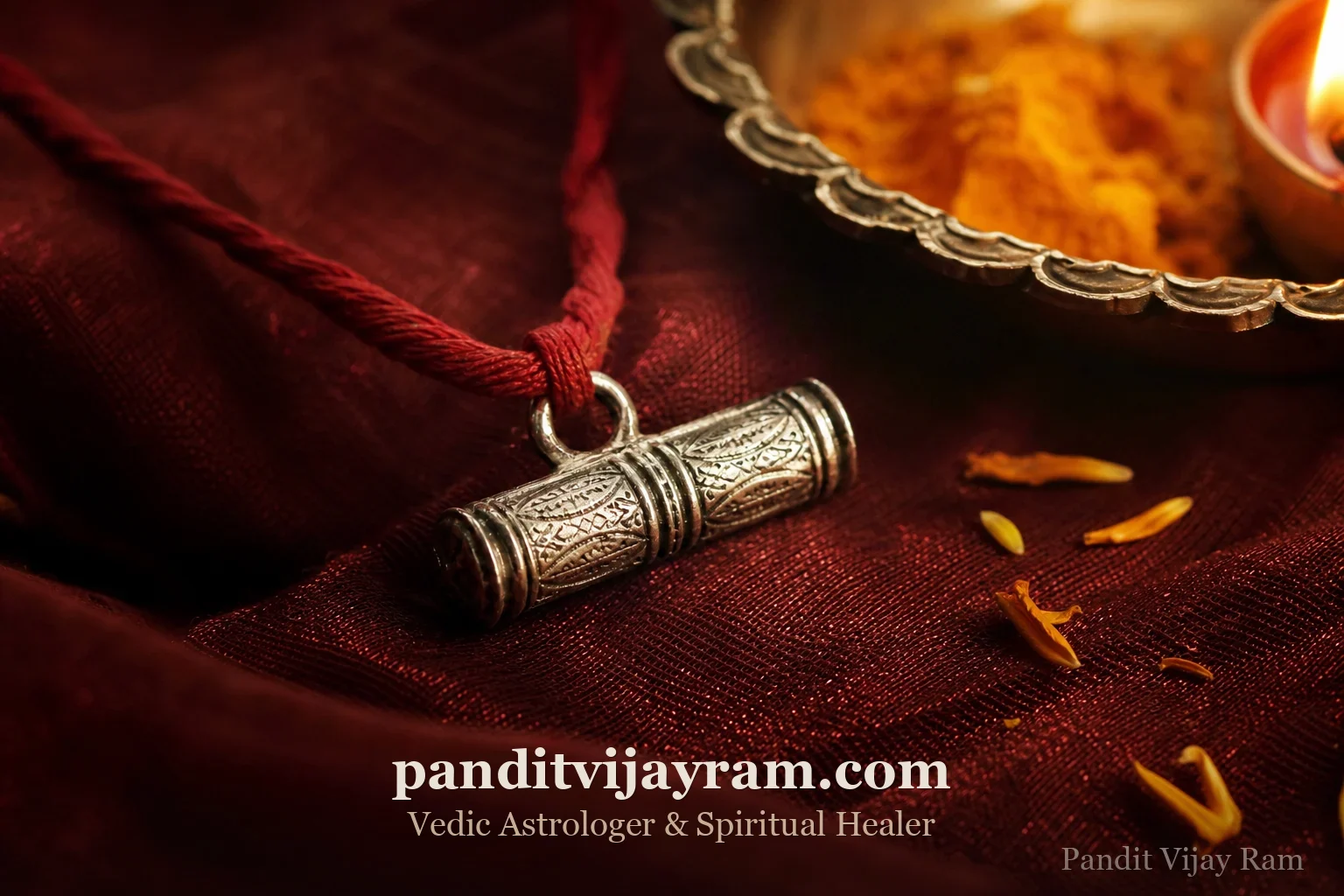
A taweez, also spelled tawiz, tabeez or ta'wiz, is a written protective text sealed in a small case and worn on the body. Against nazar, Muslim families typically use verses such as Ayat al-Kursi, Surah al-Falaq and Surah an-Nas. Hindu families may use a mantra, a small yantra or a blessed item in a copper or silver capsule.
The word comes from Arabic and is linked with seeking refuge. In South Asia it crossed communities long ago, so Hindu, Muslim and some Sikh families all use versions of it, though with different contents and meanings.
- Muslim taweez. Usually a Qur'anic verse or prophetic dua written on paper, folded tightly and sealed in leather, cloth or metal. It is often prepared by an imam or a respected elder.
- Hindu tabeez. Often a mantra written on bhojpatra or paper, a small yantra, or sacred ash sealed in a metal capsule. It may be energised in a puja before being given.
- Shrine taweez. Families visiting a dargah sometimes bring back a blessed thread or amulet. Hindus and Muslims both visit many such shrines.
A taweez differs from an evil eye bead or a hamsa, which are symbols rather than written prayers. It also differs from a larger kavach kit used after removal work, which the post on kavach protection after spell removal covers. For a wider look at symbols, see the guide to hamsa, nazar battu and evil eye beads.
Is wearing a taweez allowed in Islam?
Scholars disagree. Some hold that any hanging amulet is forbidden, citing hadith that warn against tama'im, and teach reciting the verses instead. Others permit a taweez that contains only Qur'an and authentic dua, with no unknown symbols, provided the wearer trusts Allah, not the object. Ask a scholar whose guidance you follow.
This is a genuine difference of opinion, and it is worth stating plainly rather than taking sides. Muslim readers of this site come from many schools and backgrounds.
Points that most scholars on both sides agree on:
- Recitation is preferred. Reading the protective surahs morning and evening is encouraged by everyone, whether or not a taweez is worn.
- Contents must be known. A taweez with numbers, grids, unfamiliar names or symbols is widely rejected. If you cannot find out what is inside, many imams advise not wearing it.
- Trust belongs to Allah. The object must never be treated as the source of protection.
- No payment-driven fear. Anyone selling taweez with threats about what will happen without it is a warning sign.
Hindu tradition has less debate about wearing a tabeez, but it shares the core point: the protection is understood to come from the deity and the prayer, not the metal.
For Muslim families who prefer recitation-based protection, our ruqyah healing guidance centres on Qur'anic recitation. For those who prefer a worn item, the taweez and kavach service explains what goes into each one and why.
Can you shower, sleep or use the washroom wearing a taweez?
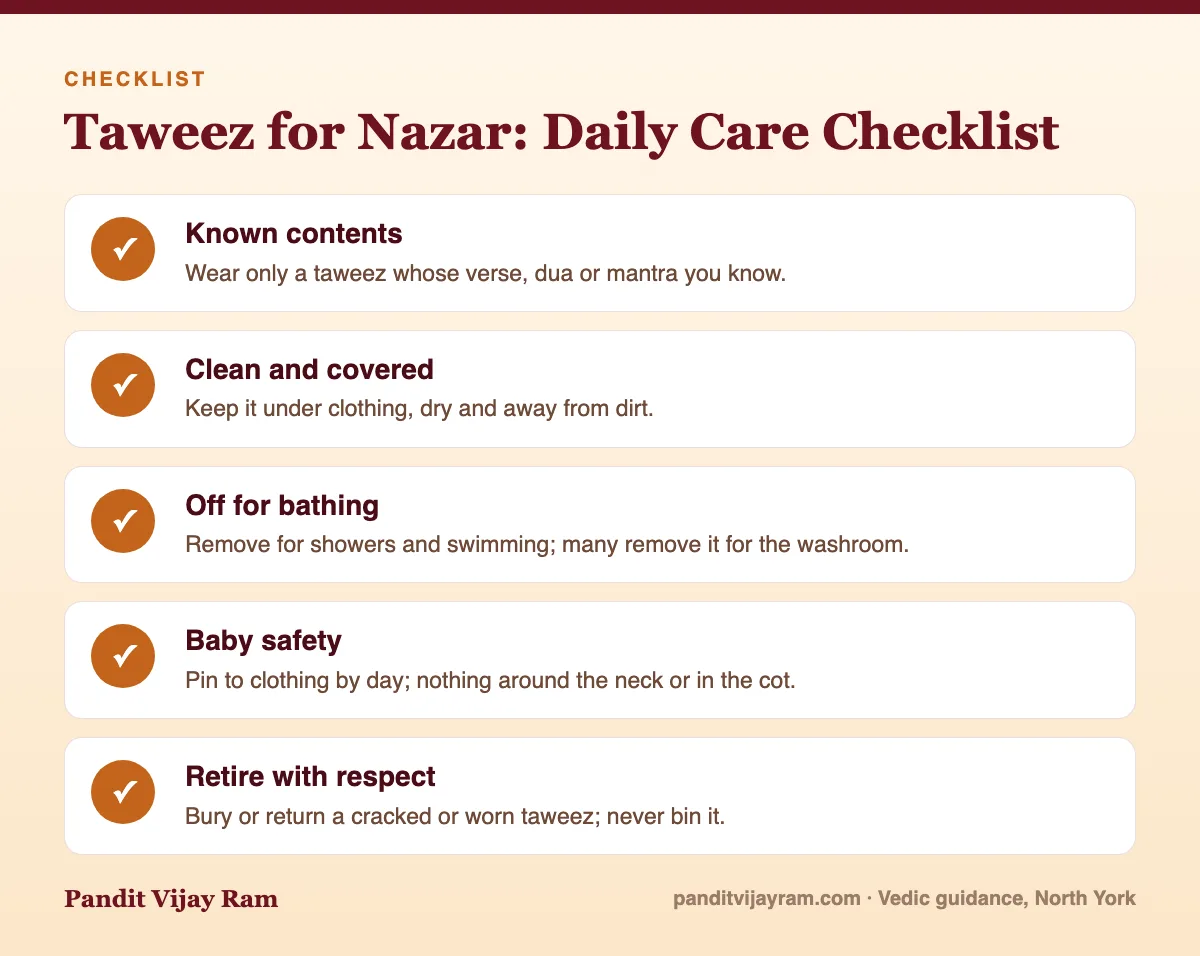
Many Muslim families remove a Qur'anic taweez before entering the washroom, or keep it fully sealed and covered under clothing. For showers, remove it unless the case is waterproof, and dry it if it gets wet. Adults may sleep wearing one. Babies and young children should never wear a cord around the neck while sleeping.
Practical rules for daily life:
- Washroom. Out of respect for written verses, many Muslims take the taweez off and leave it on a clean shelf outside. Others keep it sealed and hidden under clothing, which some scholars accept. Hindu families usually follow a similar respect for written mantras.
- Bathing and swimming. Water damages paper and leather. Take it off, place it somewhere clean and high, and put it back on after dressing.
- Sleeping. Adults can keep it on if comfortable. Many people move it to a pillow pouch or bedside drawer.
- Sport and work. Remove it for contact sports, gym work and jobs near machinery, where a cord can catch.
- Intimacy and menstruation. Customs vary between families and scholars. Follow your own tradition's guidance without anxiety.
A simple rule: keep the taweez clean, dry, covered and treated with respect. If a rule causes daily stress, ask the person who gave it whether it is truly required. Most of the strictest-sounding rules turn out to be family habit rather than religious obligation.
How do you keep a taweez safe for babies and children?
Never put a cord around a baby's neck, wrist or ankle while sleeping or unsupervised, because of strangulation and choking risk. Instead, pin the taweez securely to the outside of clothing during the day, or hang it out of reach near the cot, never inside it. Check that metal cases have no sharp edges.
Infant safety has to come before any custom. Cords and small objects are known hazards for babies, and Health Canada's safe sleep advice is to keep the sleep space bare: a firm mattress, a fitted sheet, and nothing else.
Safer ways families keep the custom:
- Pinned, not tied. Use a secure safety pin on the outer side of a top or vest during supervised daytime hours.
- Above the cot. Hang the taweez on the wall or the frame, well out of reach, rather than placing it in the cot.
- With the parent. Some mothers wear the child's taweez themselves until the child is older.
- Check materials. Small capsules can come loose and be swallowed. Leather can harbour mould if damp. Inspect it daily.
For toddlers and older children, a short, breakaway cord is safer than a strong thread, and it should come off for sleep and play at the park.
If a baby is unsettled, feverish or not feeding well, call your doctor or Health811 first. A taweez is a comfort for the family, not a reason to delay medical care. The guide to gentle protection for babies and new mothers covers more customs safely.
When should you retire a taweez and how do you dispose of it?
Retire a taweez when the case is cracked or open, the paper is wet or damaged, the cord is badly frayed, or the period it was given for has ended. Dispose of it respectfully: bury it in clean soil, return it to a mosque, temple or the person who made it, and never put it in the garbage.
There is no fixed lifespan. Some families keep the same taweez for years; others replace it after a set period, such as forty days, if the person who made it advised that. Signs it is time:
- The case has split, letting moisture or dirt reach the writing.
- The thread is frayed or has caused skin irritation.
- The taweez has been lost and found in an unclean place.
- The purpose has passed, such as the first months after a birth or a stressful exam season.
- You simply no longer feel you need it.
Respectful disposal in Canada:
- Bury it. In a clean garden spot or under a tree, wrapped in a clean cloth.
- Return it. Many mosques accept worn Qur'anic material for respectful disposal. Temples often accept old religious items too.
- Avoid waterways. Traditional river immersion is not appropriate in local lakes and rivers. Choose burial instead.
Before removing it, a short prayer of thanks is enough. Retiring a taweez is not inviting nazar back. More nazar guides are in the evil eye and curses hub.
The bottom line
A taweez for nazar is a written prayer worn in a sealed case, used by Muslim and Hindu families alike, and Islamic scholars genuinely differ on whether to wear one. Keep it clean, dry and covered, remove it for bathing, and never place a cord on a sleeping baby. Retire it when it is damaged or no longer needed, and bury or return it respectfully rather than discarding it.
Key takeaways
- A taweez is a sealed written prayer; its contents should be known.
- Islamic scholars disagree about wearing amulets; recitation is agreed by all.
- Remove it for showers and, in many families, before the washroom.
- Never tie a cord on a baby who is sleeping or unsupervised.
- Retire a damaged taweez by burial or return, never the garbage.