
Nazar on a New Business or Shop: Signs and Traditional Protections

A grand opening with marigold garlands, a full house and congratulations from the whole community, then a quiet second month. Many owners in North York and across the GTA tell me that this is exactly when they began to worry about nazar on business. The feeling is understandable. South-Asian trading families have long believed that a shop drawing too much attention can attract envy, and older shopkeepers still keep small daily customs to guard against it. In more than forty years of advising families, including many who run restaurants, salons, groceries and offices, I have also seen how often the quiet second month has ordinary explanations. This guide covers the beliefs specific to business nazar, the signs owners notice, a practical audit to run before reaching for any remedy, the traditional protections shops have used for generations, and how to keep both your faith and your business sense working together. It focuses on nazar itself, not on general space clearing, which has its own guide.
Can a new business or shop get nazar?
In South-Asian trading tradition, yes. A new shop is believed to be especially exposed because it draws attention, praise and comparison from neighbours, competitors and visitors. Envy, even unintended, is thought to settle on the business and slow it. That is why many owners keep protective customs from the first day of trading.
Marwari, Gujarati, Sindhi, Punjabi and Chettiar trading families each developed small customs around this belief. Several ideas recur:
- Opening is the most exposed moment. Crowds, photos, gifts and publicity bring the most eyes at once, so protection is placed before the shutter goes up.
- Visible success attracts envy. A full shop, a new car parked outside or a big sign announcing record sales is believed to invite a bad eye.
- The first sale sets the tone. The bohni, the first sale of the day, is treated with care. Many shopkeepers touch the first note to their forehead or to the goods and say a short prayer.
- Envy can come from anywhere. Tradition does not single out competitors. A customer admiring the decor or a relative comparing incomes is equally said to cast nazar, usually without meaning to.
Muslim business owners may frame the same concern through al-ayn and recite protective verses; Sikh owners often begin trading with an ardas and give thanks regularly. The common instinct is humility: acknowledge that success is a blessing and do not parade it.
For the broader picture of how nazar is understood, see the evil eye and curses hub. If your concern is about the energy of the premises themselves, the separate guide to space clearing an office or shop covers the entrance, counter and desk layout.

What are the signs of nazar on a shop?
Owners often describe a strong start followed by a sudden drop in customers, equipment breaking repeatedly, cash shortfalls, staff quarrels or quitting, a run of bad reviews, or deals collapsing at the last moment. Each of these also has common business explanations, so each sign is best read alongside a practical cause.
Here is how I suggest owners read the usual signs, side by side with what else might explain them:
- Footfall drops after opening. Folk view: envy after the launch. Business view: opening-week traffic is inflated by friends, family and curiosity, and nearly every new shop sees a dip afterwards.
- Equipment keeps failing. Folk view: a bad eye on the machines. Business view: new fridges, ovens or POS systems often have early faults; used equipment wears quickly.
- Cash does not add up. Folk view: barkat, the blessing of plenty, has gone. Business view: pricing, wastage, supplier costs, theft or till errors.
- Staff tension or turnover. Folk view: nazar on harmony. Business view: long hours, unclear roles, scheduling or pay concerns.
- A wave of negative reviews. Folk view: jealous competitors. Business view: a real service problem, or a few unhappy customers posting at once.
- Deals falling through. Folk view: obstacles from envy. Business view: financing, permits or a partner's cold feet.
I do not ask owners to drop the folk view. I ask them to give the business view an honest hearing first, because it can be fixed with action you control. When the practical side is in order and the pattern persists, spiritual practice has a clearer role. The guide to spell removal for business and career covers the rarer case where an owner fears deliberate harm.
What should you check before blaming nazar for slow business?
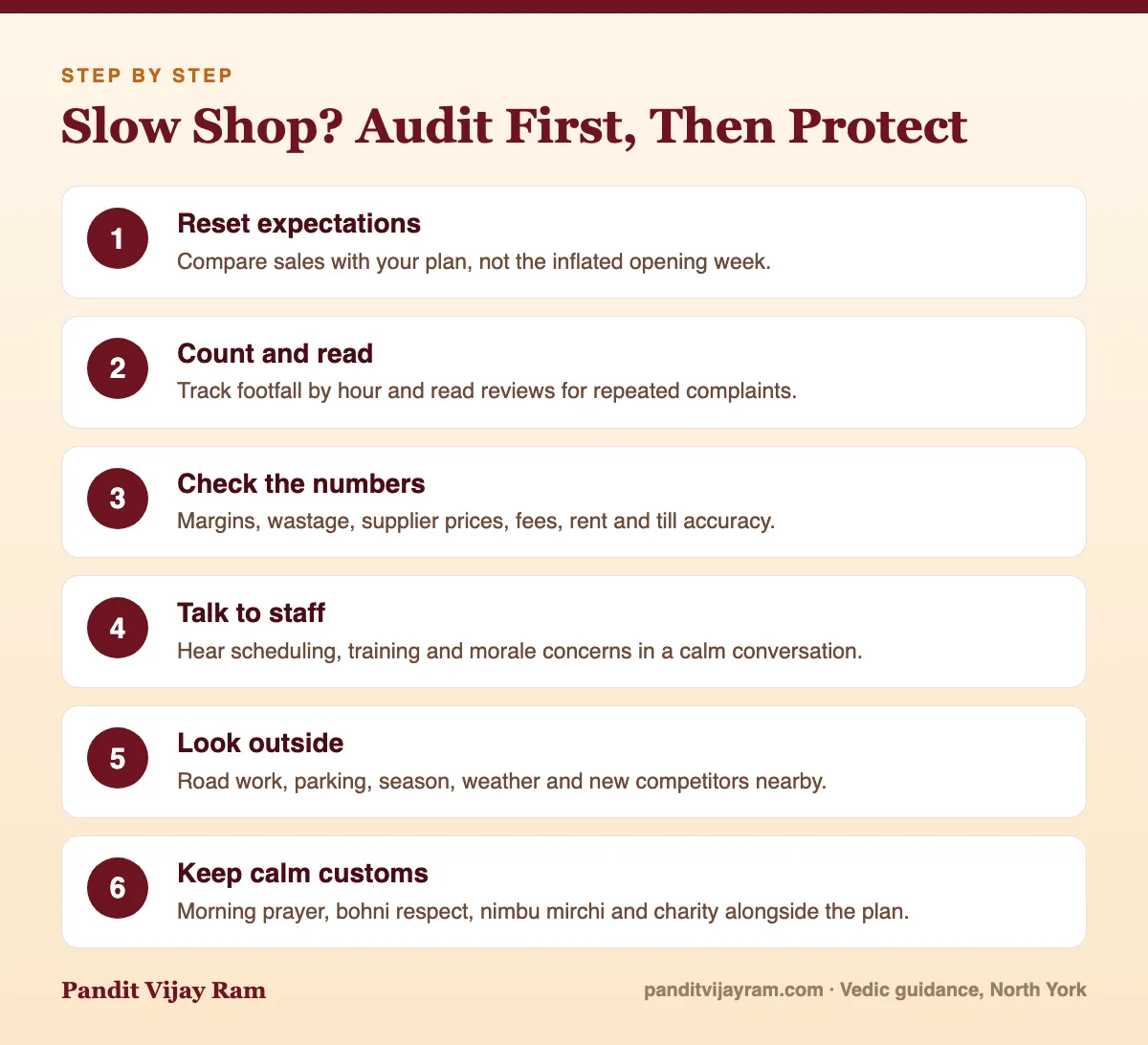
Run a simple audit: compare this month with realistic expectations, check footfall and online reviews, review pricing and costs, test equipment and suppliers, talk honestly with staff, and look at outside factors such as road work, parking or season. Most slowdowns show a clear practical cause within a week of looking.
A seven-point audit I suggest to shop and restaurant owners:
- Set fair expectations. Compare sales to your plan, not to opening week. Ask a mentor or accountant what a normal second and third month looks like in your trade.
- Count customers. Track footfall by day and hour for two weeks. Patterns often appear, such as weekday lunch strong, weekends weak.
- Read your reviews. Look for repeated complaints about wait times, prices, cleanliness or a staff member.
- Check the numbers. Margins, wastage, supplier price changes, card fees, rent and utilities. Small leaks add up fast.
- Test equipment and stock. Service contracts, warranties, stock-outs and expired items.
- Listen to staff. A short, respectful conversation often reveals scheduling, training or morale problems.
- Look outside. Construction, parking changes, a new competitor, a holiday period or winter weather can all reduce traffic.
Canadian small businesses also have free support available. Government business-services pages, local small business enterprise centres and your bank's business adviser can help with cash flow, marketing and planning.
Once you have done this, you will be in a much better position. If the audit finds a cause, fix it. If it does not, and setbacks still cluster in a way that troubles you, a consultation through business and career guidance can review your chart and timing, and protective practice can be added alongside your plan.
What are traditional protections for a shop against nazar?
Common shop protections include a Ganesh and Lakshmi prayer before opening, nimbu mirchi at the shutter renewed each Saturday, a nazar battu or blue eye facing the street, Shubh Labh and a swastika near the entrance, a black thread on the cash box, and treating the day's first sale with respect.
These customs come from different regions, and most owners choose two or three that feel right:
- Prayer before the shutter rises. A short Ganesh prayer to remove obstacles and a lamp before Lakshmi for steady prosperity. Muslim owners may recite Ayat al-Kursi; Sikh owners an ardas.
- Nimbu mirchi. One lemon and seven green chillies hung at the shutter or door, changed weekly. The guide to nimbu mirchi at the door explains making and disposing of it.
- A guardian symbol. A nazar battu above the shopfront, or a blue glass eye above the till. Both are compared in protective symbols compared.
- Shubh Labh and swastika. Written in sindoor or kumkum beside the entrance or on the first page of the account book. Marwari and Gujarati families renew this at Diwali during Chopda Pujan.
- The bohni custom. Respecting the day's first sale: touching the money to the forehead, not haggling it away, and saying thanks.
- A thread or alum at the counter. A black or red thread tied on the cash box, or a lump of phitkari kept in a small bowl near the till.
- Charity. Giving a little from the week's earnings to a temple, gurdwara, mosque or food bank is believed to keep barkat flowing and envy away.
In malls and leased units, check rules before hanging anything outside, and keep flames to a sealed lamp or an electric diya to respect fire codes.
How can a business owner stay protected without living in fear?
Combine steady business habits with modest, regular spiritual practice. Share successes thoughtfully rather than broadcasting every milestone, keep one or two daily customs, give in charity, and treat staff and competitors with goodwill. If worry about envy is shaping your decisions, step back and seek both practical and spiritual guidance.
Old shopkeepers had a phrase for the healthiest attitude: work hard, speak little of your earnings and thank God every evening. That still works.
- Be discreet about numbers. Celebrate openings and anniversaries, but avoid posting sales figures, cash photos or boasts about beating rivals. The guide to nazar after sharing good news online looks at this in more depth.
- Keep practice small and regular. A lamp lit each morning with a short prayer is steadier than an expensive ritual done once in panic.
- Do not suspect neighbours. Treating the shop next door as an enemy poisons a street. Most competitors are simply working hard too.
- Give generously. Charity and fair dealing are, in every tradition, among the best protections against envy.
- Know when to get help. If anxiety about nazar keeps you awake, makes you distrust staff or delays sensible decisions, speak with someone. A family doctor for stress, an accountant or mentor for the business, and a spiritual adviser for faith-based support can all play a part.
When a specific pattern of setbacks continues after the practical audit, a consultation through evil eye and nazar removal can look at what remedies suit your situation. No genuine adviser will promise sales figures, and none should ask you to stop running the business sensibly while waiting for a ritual to work.
The bottom line
Nazar on business is a long-held belief among South-Asian trading families, and it tends to surface when a busy opening gives way to a quieter month. A practical audit of footfall, pricing, costs, staff and outside factors should come first, because those causes can be fixed directly. Traditional shop protections, from respecting the bohni to nimbu mirchi and a morning prayer, sit comfortably alongside good business habits, discretion and charity.
Key takeaways
- Trading families believe new shops attract nazar because they draw attention and comparison.
- A post-opening dip is normal; compare sales with realistic expectations.
- Run a practical audit of footfall, reviews, costs, staff and outside factors first.
- Common protections include bohni customs, nimbu mirchi, guardian symbols and morning prayer.
- Discretion about earnings, goodwill to neighbours and charity protect best.