
Winter Darkness and Low Mood in Toronto: Vedic Practices Alongside Care

By late November, many people feel the winter blues settle in. The sun rises late, sets before the commute ends, and the grey seems to sit on the chest. Clients in North York, Scarborough and Brampton often tell me they feel heavy, sleep too much, crave sweets and lose interest in things they love, and some quietly wonder whether it is nazar, a curse or a difficult planetary period. I always start in the same place: your doctor first, then spiritual support beside that care. In more than forty years of Vedic practice, I have seen devotion help people keep rhythm and hope through hard seasons, but I have never seen it replace medical help for depression. This article explains how the ordinary winter dip differs from seasonal affective disorder, when to book an appointment, what light and routine can do, and which Surya-centred practices can sit gently alongside proper care.
What is the difference between the winter blues and seasonal affective disorder?
The winter blues are a mild, common dip in mood and energy that still lets you work, connect and enjoy some things. Seasonal affective disorder is a recognised form of depression with a seasonal pattern, usually starting in autumn or winter, that affects daily life for weeks at a time and needs medical assessment.
Most people in Ontario notice some change as days shorten. You may sleep a little more, move a little less and feel flatter in the evenings. That is common and often eases with light, activity and connection.
Seasonal affective disorder, often shortened to SAD, is different in depth and duration. People describe:
- Low mood most of the day, nearly every day, for two weeks or more.
- Losing interest in work, family, faith or hobbies that used to matter.
- Sleeping much longer yet still waking exhausted.
- Strong cravings for carbohydrates and noticeable weight change.
- Pulling away from friends and community.
- Feeling hopeless or worthless.
Only a doctor can diagnose SAD or tell it apart from other conditions such as thyroid problems, anaemia or other forms of depression. Please do not self-diagnose from a list, mine included.
Newcomers often feel the first Canadian winters especially hard, because darkness arrives alongside homesickness and isolation. Our article on feeling heavy after moving to Canada speaks to that experience in more depth.

When should you see a doctor about low mood in winter?
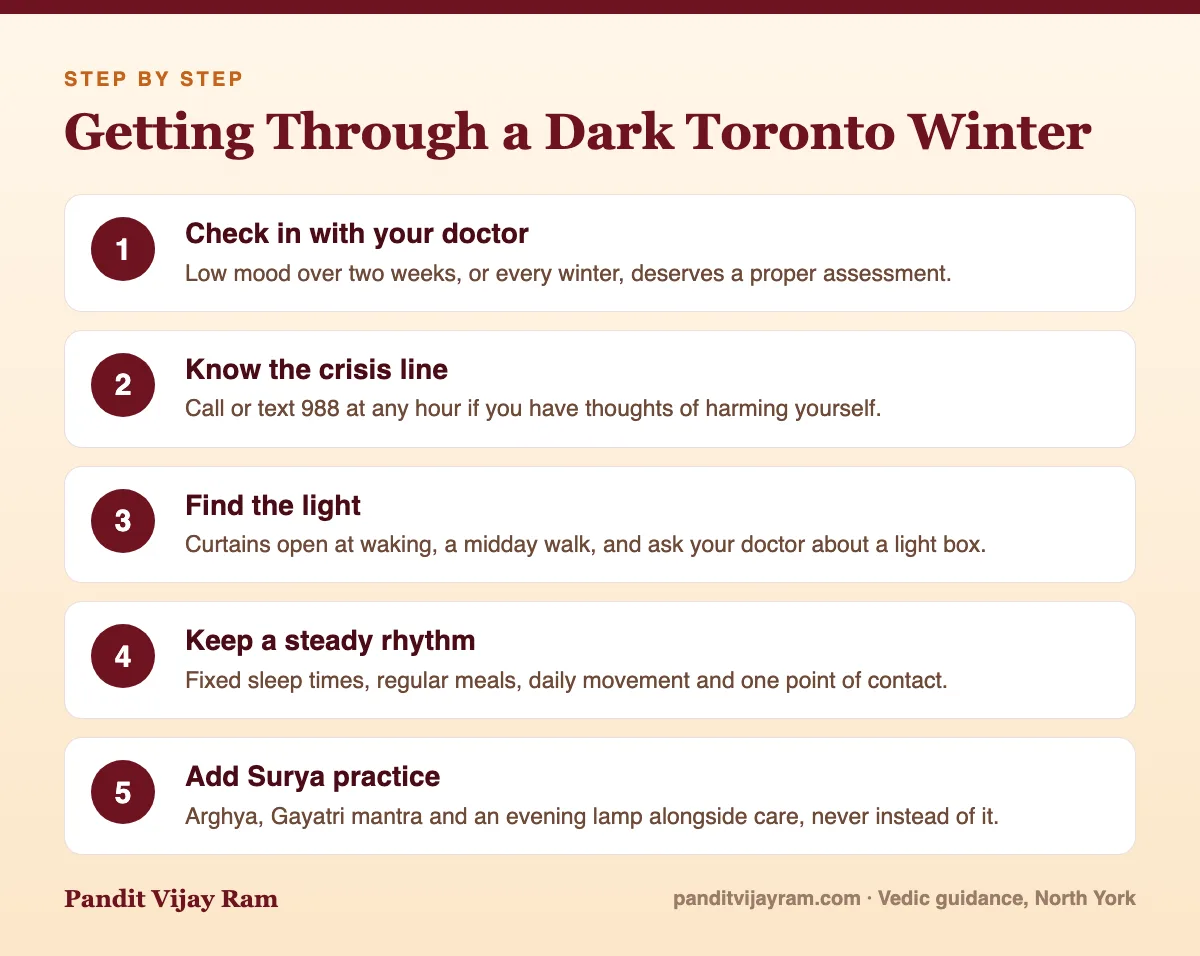
See your family doctor if low mood, poor sleep or loss of interest lasts more than two weeks, affects work or relationships, or keeps returning every winter. If you ever have thoughts of harming yourself, call or text 988 to reach Canada's Suicide Crisis Helpline, or call 911 in an emergency.
Many South-Asian, Caribbean and Latino families were raised to keep feelings private or to treat them only through prayer. I understand that. But a doctor's visit is not a lack of faith. It is care for the body God gave you.
Book an appointment if:
- The heaviness has lasted more than a couple of weeks.
- You are struggling to get to work, study or care for children.
- Sleep, appetite or weight have changed noticeably.
- You are drinking more, or using anything else to get through the evening.
- This pattern has happened in previous winters.
If you do not have a family doctor, a walk-in clinic or your local community health centre is a good start. Bring a short note of what you have noticed and since when.
In a crisis: if you have thoughts of suicide or of harming yourself, call or text 988 at any hour. If you are in immediate danger, call 911 or go to the nearest emergency department.
Our separate guide, negative energy or depression, explains how to talk with family members who insist the cause must be spiritual.
Does light therapy help with winter depression?
Light therapy, usually sitting near a bright light box for a set time each morning, is a recognised option for seasonal affective disorder. It should be discussed with your doctor first, especially if you have eye conditions, bipolar disorder or take medication that affects light sensitivity. Natural daylight outdoors also helps many people.
Light matters because our body clock takes its cues from the sun. When mornings stay dark, sleep and energy can drift. That is why doctors may suggest light therapy for SAD as part of a wider treatment plan, sometimes alongside counselling or medication.
Points to raise with your doctor:
- Whether a light box is suitable for you, and what brightness and duration they recommend.
- Any eye problems, skin conditions or medicines that react to light.
- Any history of bipolar disorder, since light can affect mood in different ways.
Do not use tanning beds as a substitute. They expose the skin to ultraviolet light and are not the same thing.
Simple daylight habits help almost everyone:
- Open curtains as soon as you wake and sit near the brightest window for breakfast.
- Take a walk outside around midday, when Toronto's winter light is strongest, even on cloudy days.
- Move your desk or prayer seat closer to a window.
Ask your doctor, too, about vitamin D rather than guessing at doses on your own. Questions about diet and supplements belong with a medical professional, not an astrologer.
What daily routine helps during dark Toronto winters?
A steady routine helps: waking and sleeping at fixed times, getting outdoor light early, moving your body daily, eating regular balanced meals, keeping social plans even when you feel flat, and limiting alcohol and late screens. Small, repeatable habits usually work better than big resolutions that collapse by January.
Winter tempts us to hibernate. A little rest is healthy, but drifting sleep times and cancelled plans often deepen low mood. Try building the day around a few anchors:
- Fixed wake time, even on weekends, with curtains open immediately.
- Light and movement in the morning, a short walk, stretching by the window or gentle exercise your doctor approves.
- Regular meals, with vegetables, protein and warm food, rather than grazing on sweets in the evening.
- One point of contact daily, a call to a friend, temple seva, a class or a walk with a neighbour.
- A wind-down hour before bed without phones, perhaps with a lamp and quiet prayer.
- Alcohol kept low, since it disrupts sleep and lowers mood the next day.
Indoor plants and bright, tidy living areas also make dark months feel lighter for many families. A tulsi by the window gives you a reason to tend something each morning; our guide to keeping tulsi alive through a Canadian winter explains how.
For a calmer night routine, see our mantra before sleep practice.
Which Vedic practices can support you through the winter months?
Practices centred on Surya, the sun, suit winter well: offering water at sunrise, chanting the Gayatri mantra or Aditya Hridayam, gentle Surya Namaskar if your doctor agrees, and lighting a lamp at dusk. They offer rhythm, meaning and a moment of light each day, but they do not replace medical treatment.
In Vedic tradition Surya is honoured as the giver of light and life, and many families already turn to him in the morning. In a Toronto winter, that habit takes on extra value because it pulls you towards the window and the daylight.
- Surya arghya. At sunrise, or as soon as you can see the sky, offer water from a copper or steel lota towards the sun, standing at a window or on a balcony if it is too cold outside.
- Gayatri mantra. Eleven or twenty-one repetitions in the morning give the day a gentle start. Steadiness matters more than number.
- Aditya Hridayam. This hymn to the sun, taught to Rama before battle, is a favourite for courage on hard days.
- Surya Namaskar. A few slow rounds can be a warm way to move. Check with your doctor first if you have heart, back, joint or blood pressure concerns, or are pregnant. Our guide to pranayama has further breath cautions.
- Evening lamp. A ghee diya at dusk marks the turn of the day with warmth instead of dread.
If you want a reading on whether a difficult period in your chart is adding to the weight you feel, Vijay Ram ji's health and wellbeing guidance offers spiritual support, always alongside your doctor's care.
The bottom line
The winter blues are common in Toronto, but low mood that lasts, deepens or returns every year deserves a visit to your family doctor, and 988 is there at any hour in a crisis. Light, a steady daily routine and regular contact with people form the practical foundation. Surya practices, mantra and an evening lamp can add rhythm and meaning alongside that care, never in place of it.
Key takeaways
- Winter blues are a mild seasonal dip; seasonal affective disorder is a form of depression a doctor should assess.
- See your family doctor if low mood lasts more than two weeks or affects daily life.
- Call or text 988 any time you have thoughts of harming yourself.
- Morning light, fixed sleep times, movement and social contact form the practical base.
- Surya arghya, Gayatri mantra and an evening lamp can support care but never replace it.