
Sankashti Chaturthi Vrat: Rules, Moonrise and Meaning
Every month, many Hindu families in the GTA keep a quiet fast for Ganesh and wait for the moon to appear above the rooftops before they eat. That is Sankashti Chaturthi, the vow of deliverance from difficulty. Devotees in North York often ask me two practical questions about it. Which day is it here, when the Indian calendar on the fridge says something else? And what time can we break the fast, when the moon seems to take hours on a cloudy Toronto night? In more than forty years of Vedic practice, I have found that most confusion comes from using times calculated for another city. This guide explains what the sankashti chaturthi vrat is, why Angarki Chaturthi is special, how to find the correct day and moonrise for your own location, how families usually do the evening puja, which fasting styles are common, and who should keep a gentler version or skip fasting entirely. Your health always comes before a vow.
What is Sankashti Chaturthi and why is it observed?
Sankashti means deliverance from troubles. The vrat falls on the chaturthi, the fourth lunar day, of the waning fortnight each month. Devotees fast and pray to Ganesh as Vighnaharta, asking that obstacles be removed. It differs from Vinayaka Chaturthi, which falls in the waxing fortnight and is not tied to moonrise.
There are two Ganesh chaturthis in each lunar month, and they are easy to confuse.
- Sankashti Chaturthi. The fourth day after the full moon, in the krishna paksha. The fast ends at moonrise. It is the more widely kept monthly fast.
- Vinayaka Chaturthi. The fourth day after the new moon, in the shukla paksha. Worship is usually at midday. The great Ganesh Chaturthi festival in Bhadrapada is the most important Vinayaka Chaturthi of the year.
Each month's Sankashti honours a different form of Ganesh, and many families read that month's vrat katha, a short story explaining the vow. A popular telling links the moon itself to the fast: Chandra once mocked Ganesh's appearance and was cursed, and when he repented, Ganesh softened the curse and allowed the moon to be honoured on this day. That is why the moon receives an offering before the fast is broken.
Regional names vary. In parts of North India the Magha month Sankashti is called Sakat Chauth or Tilkut Chauth, when mothers fast for their children's wellbeing and offer sesame and jaggery sweets. Maharashtrian families keep Sankashti with particular devotion, often visiting a Ganpati temple in the evening.
For a general Ganesh worship method you can use on any day, see our guide to Ganesh puja at home.
What is Angarki Sankashti Chaturthi?
Angarki or Angaraki Chaturthi is a Sankashti that falls on a Tuesday. Tuesday is ruled by Mars, called Angaraka, and tradition says Ganesh blessed Mars by linking this day to him. An Angarki Sankashti is considered especially auspicious, and many devotees who do not fast monthly choose to keep this one.
Angarki Chaturthi comes only a few times in a typical year, which partly explains the crowds at Ganpati temples on those Tuesdays. The Puranic account says Angaraka, Mars, worshipped Ganesh with great devotion. Pleased, Ganesh granted that any Sankashti falling on Tuesday would bear Angaraka's name and carry extra merit.
Families keep Angarki much like an ordinary Sankashti, with a few additions:
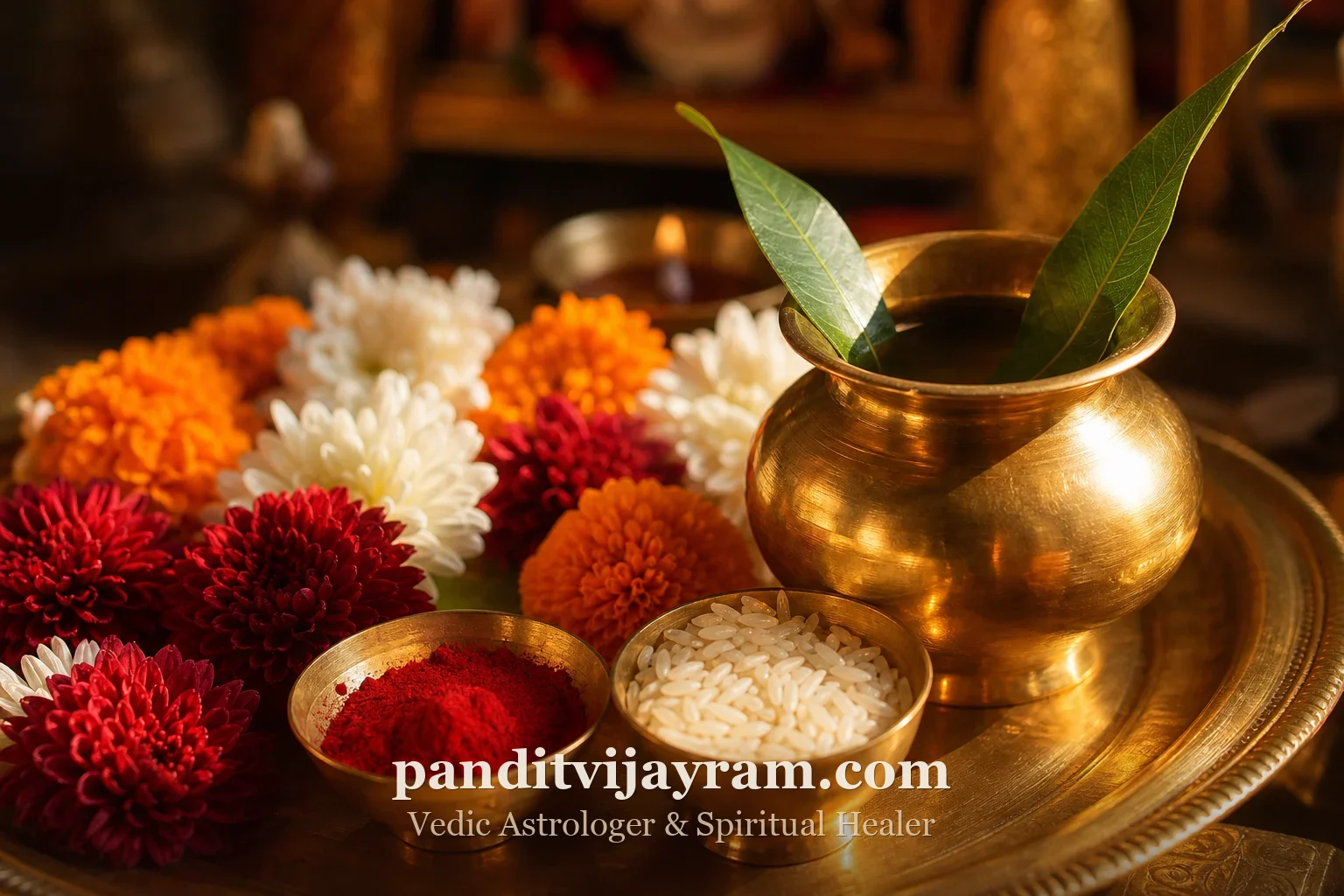
- Red offerings. Red flowers and red sandal paste, colours linked with Mars.
- More durva. Twenty-one bunches or blades, offered with Ganesh's names.
- A full recitation. The Ganapati Atharvashirsha or the Sankat Nashan Ganesh Stotra, which begins pranamya shirasa devam, is often read.
- Temple visit. Many GTA temples hold special evening abhishek and aarti; check your temple's own calendar.
People with a manglik concern or a running Mars dasha sometimes choose Angarki as a gentle remedy. That is a reasonable devotional choice, but a fast is never a substitute for sensible decisions or medical care.
For the meanings of the mantras most often chanted on this day, read our guide to Ganesh mantras and their uses. Our panchang timing guide explains how to spot Tuesday chaturthis ahead.
How do you find the Sankashti moonrise time for your own city?
Use a panchang or astronomy calculator set to your exact city, such as Toronto, Mississauga or Vancouver. Moonrise in Canada is completely different from moonrise in India, and the chaturthi tithi can even fall on a different calendar day. Note the local moonrise, then allow a few minutes for the moon to clear buildings or trees.
This is the most common mistake I see. A family follows an app or a printed calendar set for Mumbai or Delhi, breaks the fast at the wrong time, and feels the vow was spoiled. A few points clear it up.
- The tithi is calculated for a place. A lunar day begins and ends at a fixed astronomical moment, but which local date that moment falls on depends on your time zone. A Sankashti listed on one date in India can fall a day earlier in Toronto.
- The vrat day is set by moonrise. Traditional rules generally choose the day on which chaturthi is current at moonrise. Good Canadian panchangs apply this rule for your location.
- Moonrise is late. Four days after full moon, the moon usually rises well after dark, often late in the evening. Plan meals and medication around that.
- Look east. The waning moon rises in the eastern sky. In a dense neighbourhood or high-rise, it may be a while before it clears the skyline.
- Clouds and snow. If the sky is overcast, most families break the fast at the calculated moonrise time, facing east and offering arghya as though they could see it.
Choose one trusted panchang calculated for your location and stick to it. If you travel, recheck for the city you are in. Our guide to how online puja works also covers timing when a family member is abroad.
What are the rules of the Sankashti vrat?
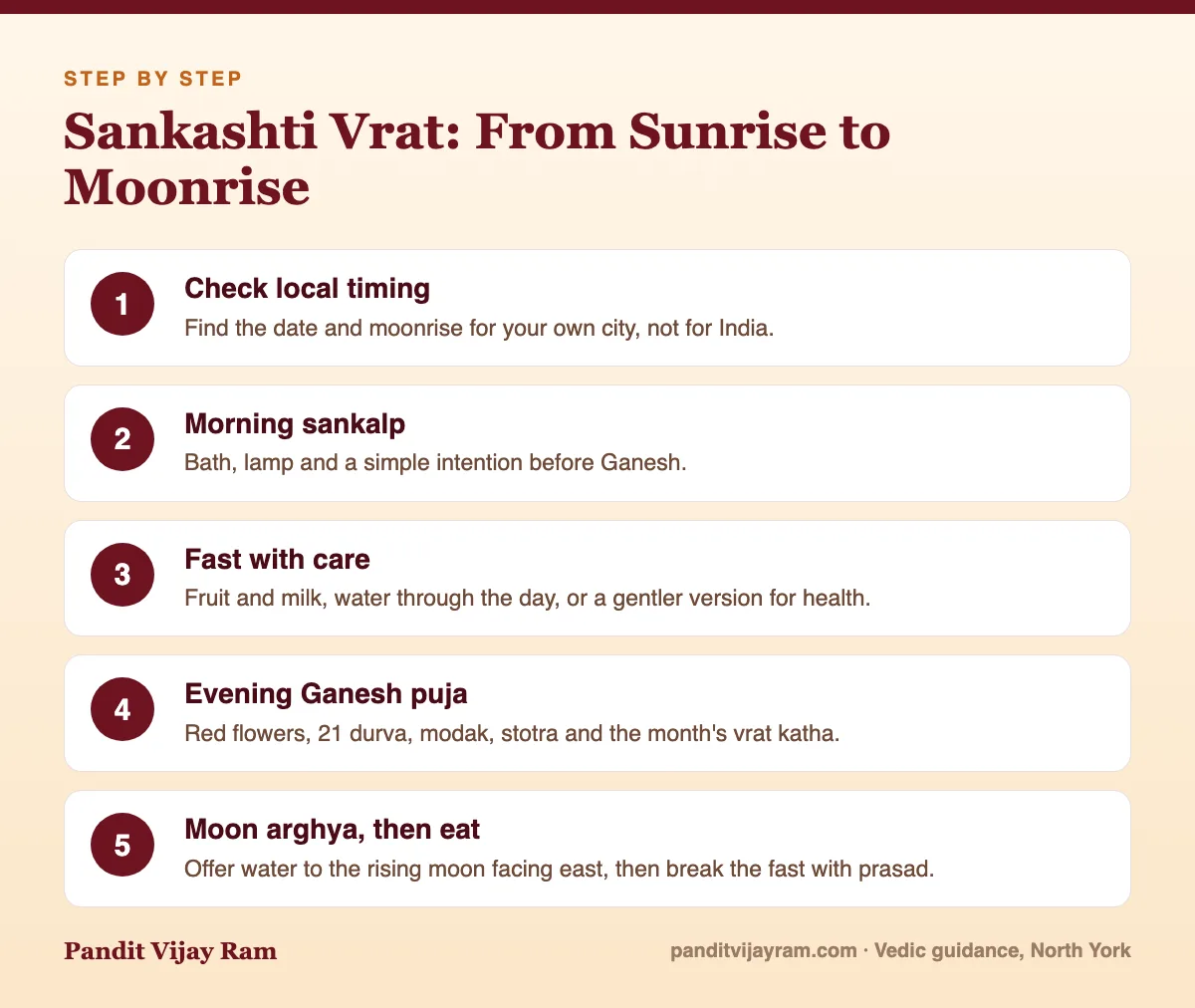
Common rules include bathing early, a sankalp in the morning, fasting through the day with either fruit and milk or, for some, no food, evening Ganesh puja with durva and modak, hearing the vrat katha, and breaking the fast after offering arghya to the moon. Grains and salt are usually avoided until moonrise.
Families keep Sankashti with different degrees of strictness. These are the usual elements, from simplest to strictest.
- Sankalp. After a morning bath, state your intention before Ganesh: your name and that you will keep the vow until moonrise.
- Fasting style. Phalahar, with fruit, milk, yoghurt, nuts, sabudana and potatoes, is most common. Some avoid regular salt and use sendha namak. A few keep a nirjala fast without water, which is not advised for most people.
- Evening puja. Light a lamp, offer red flowers, twenty-one durva blades, modak or til laddoo, and recite a Ganesh mantra or stotra.
- Katha. Read or listen to the month's vrat story.
- Chandra arghya. At moonrise, pour water mixed with a little milk, sandal paste and akshat from a small vessel toward the moon, and bow.
- Parana. Break the fast with prasad first, then a light sattvic meal.
On a cold Canadian winter night, offer arghya from a window or doorway rather than standing outside for long. Keep the evening lamp on a metal tray and snuff it before bed.
For a monthly Ganesh puja performed on your behalf, Vijay Ram ji's Ganesha puja service includes a sankalp in your family's name.
Who should not keep a strict Sankashti fast?
People with diabetes, low blood pressure, heart or kidney conditions, a history of eating disorders, pregnancy or breastfeeding, and anyone on regular medication should not keep a strict or waterless fast without medical advice. Children and older adults should eat normally. Devotion can be shown through prayer, a lighter fast or a single meal instead.
A Sankashti fast can be long. With a late-evening moonrise, some people go fifteen hours or more without a proper meal. That is a real strain for many bodies, and tradition never intended a vow to harm the person keeping it.
Speak to your family doctor or pharmacist first if you:
- Take insulin or other diabetes medicines, which can cause dangerous lows when you skip food.
- Take blood pressure, heart, thyroid or seizure medication on a schedule.
- Are pregnant, breastfeeding or trying to conceive.
- Have kidney disease, gout or a history of fainting.
- Have ever struggled with an eating disorder. Fasting can reawaken it.
Gentler ways to keep the vow:
- Eat a regular light breakfast and lunch, avoiding grains only, then a sattvic meal after moonrise.
- Fast only on Angarki Sankashti rather than every month.
- Offer seva instead: donate to a food bank on Sankashti day.
- Keep the puja and arghya fully, with no fast at all.
Drink water through the day unless a doctor has said otherwise. Avoid driving or operating machinery if you feel light-headed. Our wider guide to fasting as spiritual practice covers more cautions.
The bottom line
Sankashti Chaturthi is a monthly Ganesh vow kept on the fourth day of the waning moon and closed with an offering to the moon. Always find the day and the moonrise for your own city, not for India. Keep the puja with durva, modak and a stotra, and choose a fasting style that suits your body. When health is a concern, a lighter Sankashti chaturthi observance is just as sincere.
Key takeaways
- Sankashti falls on the krishna paksha chaturthi, four days after full moon.
- A Sankashti on a Tuesday is called Angarki and is considered especially auspicious.
- Check the tithi and moonrise for your own city, not an Indian calendar.
- The fast ends after arghya to the moon and a small serving of prasad.
- Diabetes, pregnancy, medication or eating-disorder history call for a gentler vow.