
Family Property Disputes: Spiritual Calm and Practical Mediation

Few things divide a family like a house that once held everyone together. A parent passes away, a will surprises someone, or a plot back home sits between three brothers who now live on two continents. A family property dispute brings grief, money and old childhood feelings into the same room, and people in North York and across the GTA often tell me it hurts more than any business quarrel. This guide explains why these disputes become so bitter, why a lawyer and a mediator should come first, how to hold a calmer family conversation, what the chart traditionally shows about property and conflict, and which prayers help people stay decent toward one another. I am not a lawyer, and nothing here is legal advice. Across more than forty years of sitting with families, I have seen that the relatives who protect the relationship during the dispute tend to recover from it, whatever the final division of property turns out to be.
Why do inheritance disputes tear families apart?
Inheritance disputes carry far more than money. They reopen childhood questions of fairness, who cared for the parents, who was favoured, and who stayed or left. Grief makes everyone raw. Unclear wills, verbal promises and property in two countries add confusion, and each sibling often believes they alone see the situation clearly.
When I listen to relatives in a property quarrel, the house is rarely the whole story. A daughter who drove her father to every appointment feels her care should count. A son abroad feels he is treated as an outsider. A younger brother remembers a promise made at the dinner table that never reached paper.
Common triggers I hear about:
- No will, or an old will. Circumstances changed but the document did not.
- Verbal promises. "Papa always said the house would be mine."
- Caregiving imbalance. One sibling gave years of care; others gave little.
- Ancestral land abroad. Property in India, Pakistan, Guyana or elsewhere, with relatives on the ground and heirs in Canada.
- A surviving parent. Children argue about a home where a widowed mother still lives.
- In-laws and spouses. Advice from husbands and wives can harden positions.
Naming these drivers helps, because it shows the dispute is about hurt and fairness as much as ownership. That is why practical and emotional repair must run side by side.
When caregiving is the sore point, the post on caregiver stress with elderly parents may help everyone understand what that sibling carried. Our family problem guidance describes how I sit with relatives together.

Should I see a lawyer or a mediator for a will dispute?
Yes, independent legal advice comes first, because property and estate law depends on the province or country, the documents and the facts. A lawyer explains your rights and risks. A trained family or estate mediator can then help relatives reach an agreement privately, which is often quicker, cheaper and kinder than going to court.
I always say this plainly: a pandit cannot tell you who owns a house. Only the law, the documents and, if necessary, a court can do that. Before anything spiritual, take these steps:
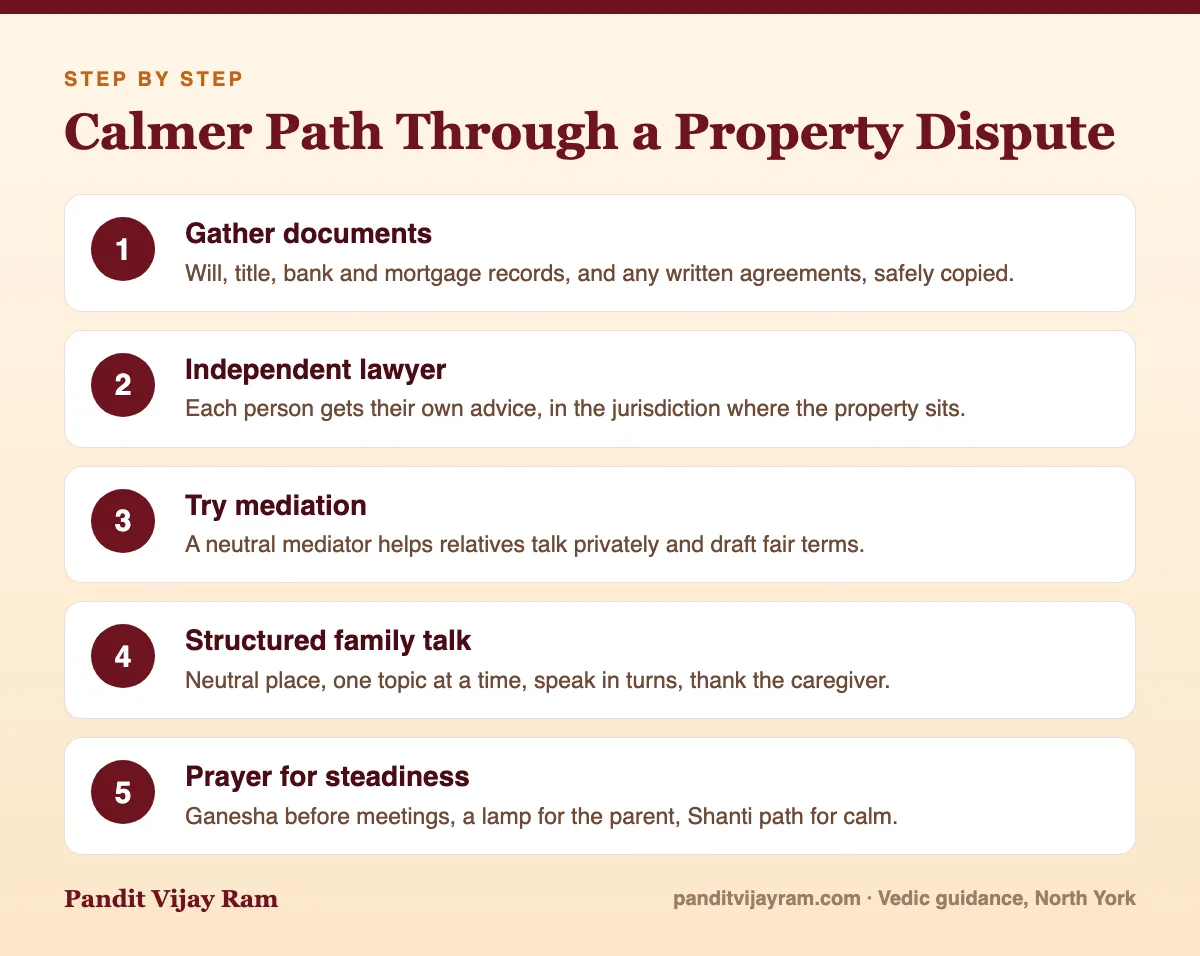
- Gather documents. The will, title papers, bank and mortgage records, and any written agreements. Keep copies safe.
- Get your own lawyer. Each party should have independent advice. Look for someone experienced in estates or real property in the right jurisdiction.
- For property abroad, consult a lawyer where the land is located, since that country's law and records apply.
- Ask about mediation. A neutral mediator helps relatives talk, explore options and draft terms. Your lawyer can advise when it fits.
- Avoid informal pressure. Do not sign papers handed over at a family gathering without legal review.
Mediation suits families because it keeps the conversation private and lets people speak about feelings as well as figures. Many disputes settle once someone neutral is in the room.
If a family business is part of the estate, the guide to business partnership disputes covers the extra layers. If someone is pressured, threatened or financially exploited, especially an older parent, contact police or an elder abuse support line without delay.
How do you talk to siblings about dividing property calmly?
Choose a neutral time and place, agree on a short agenda, and let each person speak without interruption. Separate feelings from figures, acknowledge each person's contribution, and avoid decisions on the day of a funeral or festival. If tempers rise, pause and return to it with a mediator rather than forcing a result.
Many families try to settle everything during the thirteen days after a death, when relatives are gathered. I gently advise against it. Grief makes people say things they cannot take back. A better approach:
- Wait for the rites to finish. Let mourning have its own time.
- Meet on neutral ground. A quiet room, not the disputed house if emotions run high there.
- One topic at a time. Personal belongings first, perhaps, then the house, then land abroad.
- Speak in turns. A simple rule: each person talks for a few minutes and others only listen.
- Say thank you out loud. Acknowledge the sibling who cared for parents, even if you disagree about money.
- Leave spouses out of the first talk. Their loyalty is natural, but it can widen the gap.
Some families find it helps to begin with a short prayer for the departed parent. It reminds everyone why they are there, and that the parent would not want their children estranged.
Where the fight has spilled into lasting bitterness between brothers and sisters, our post on repairing conflict between adult siblings goes deeper into boundaries and reconciliation.
What does astrology say about property disputes?
In Vedic astrology the fourth house describes home, land and fixed property, Mars is the general significator of land, and the sixth house shows disputes and litigation. Some astrologers watch the dashas linked to these houses during a quarrel. A chart can show themes and timing for patience, but it never decides who is legally right.
Families sometimes ask me to look at the chart when a property matter drags on. I am willing, with a clear understanding of what this can and cannot do.
Traditional points of reference:
- Fourth house and its lord. Home, mother, vehicles and immovable property.
- Mars. The karaka, or natural indicator, of land and also of siblings, which is why brothers and land quarrels are often read together.
- Sixth house. Opponents, debts and disputes.
- Eighth house. Inheritance and unearned wealth in many interpretations.
- Running dasha. A period connected to the fourth, sixth or eighth may coincide with the issue becoming active.
What I tell families is this: the chart can suggest a time to slow down, avoid hasty signatures and choose patience. It cannot predict a judge's decision or replace the documents. Any astrologer who promises a property outcome is overstepping.
I also refuse to treat a sibling as an enemy to be defeated by ritual. If someone fears a relative has used magic against them, the post on fears of black magic by relatives explains why accusation makes everything worse.
Which prayers help keep peace during a family property fight?
Prayers that steady the mind help most: Ganesha before meetings, the Shanti mantras for calm, remembrance of the departed parent through simple tarpan or a lamp, and Hanuman Chalisa for courage without anger. The aim is to stay fair and kind while the legal process runs, not to sway the outcome.
The spiritual work I suggest in property matters is aimed at your conduct, not at your relatives. Here are practices families find steadying:
- Ganesha before each meeting. A few minutes with Om Gam Ganapataye Namah before speaking with lawyers or relatives.
- Remember the parent. Light a lamp before their photograph and offer water. Ask for the wisdom they would want you to have.
- Shanti path. The closing peace chant Om Shanti Shanti Shanti recited together, if relatives are willing, lowers the temperature of a gathering.
- Hanuman Chalisa. For strength to hold a fair position without becoming bitter.
- Charity in the parent's name. Feeding people or giving to a cause they valued turns attention from what you might lose to what they gave.
A short daily routine for the whole household is set out in our guide to family peace prayers. These practices help you sleep, speak calmly and choose your words. They do not replace your lawyer, and they are not meant to bend anyone else's will.
If the strain is affecting sleep or health, please speak to your family doctor as well.
The bottom line
A family property dispute is rarely only about property; grief, fairness and old hurts drive much of it. Independent legal advice and a trained mediator should come first, with documents gathered and no hasty signatures. Calm, structured family talks and acknowledgement of each person's contribution protect relationships. Prayer can steady your mind and conduct through the process, but it cannot decide ownership.
Key takeaways
- Only the law and the documents can settle who owns property.
- Each relative should get independent legal advice before signing anything.
- Mediation keeps family disputes private and often less bitter.
- Avoid dividing property during mourning or at festivals.
- Prayer is for steadiness and fairness, never for defeating relatives.