
Sleep Paralysis or Jinn? What Science and Tradition Each Say

You wake in the dark, fully aware, yet your arms will not lift and your voice will not come. Something seems to sit on your chest or stand by the bed. Afterwards the question arrives: sleep paralysis or jinn? People in North York and across the GTA bring me this exact experience, often after years of keeping it to themselves out of embarrassment. I tell them first that they are not alone and not losing their mind. This guide explains what happens in the brain during an episode, why so many cultures describe a visitor at night, the sleep habits that make episodes less frequent, and the signs that mean a family doctor or sleep clinic should be involved. It also covers calm, traditional prayers from Hindu and Muslim homes for anyone who wants spiritual comfort as well. In more than forty years of practice I have learned that a frightened sleeper usually needs better rest and reassurance long before they need any ritual, and that both can sit side by side without conflict.
What is sleep paralysis and why does it happen?
Sleep paralysis happens when you become conscious while your body is still in the muscle relaxation of REM sleep, the stage when most vivid dreaming occurs. The brain is partly awake and partly dreaming, so you cannot move and dream imagery can spill into the room. An episode usually ends within seconds to a couple of minutes.
During REM sleep the brain deliberately relaxes almost every voluntary muscle so that we do not act out our dreams. Normally that switch turns off before we wake. In sleep paralysis the timing slips: awareness returns first, and the body follows a moment later.
Because the dreaming brain is still active, people often report:
- An intruder. A dark shape, a person at the foot of the bed or an outline in the doorway.
- Pressure on the chest. Breathing muscles still work, but the feeling of weight is strong and frightening.
- Sounds. Buzzing, footsteps, whispering or a rushing noise.
- A sense of being watched. Even with nothing visible, many describe an unmistakable presence.
Episodes tend to cluster when sleep is short or broken. Common triggers include shift work, jet lag, exam stress, a new baby, sleeping flat on your back, alcohol late at night and long stretches of anxiety. Some people also have them alongside other sleep conditions such as narcolepsy or sleep apnoea.
None of this makes the experience less real. The fear is genuine, and the body may wake with a pounding heart. Knowing the mechanism simply helps you ride an episode out instead of fighting it. A wider look at troubled nights is in dreams and what they may mean.

Why do so many cultures call sleep paralysis a jinn, ghost or old hag?
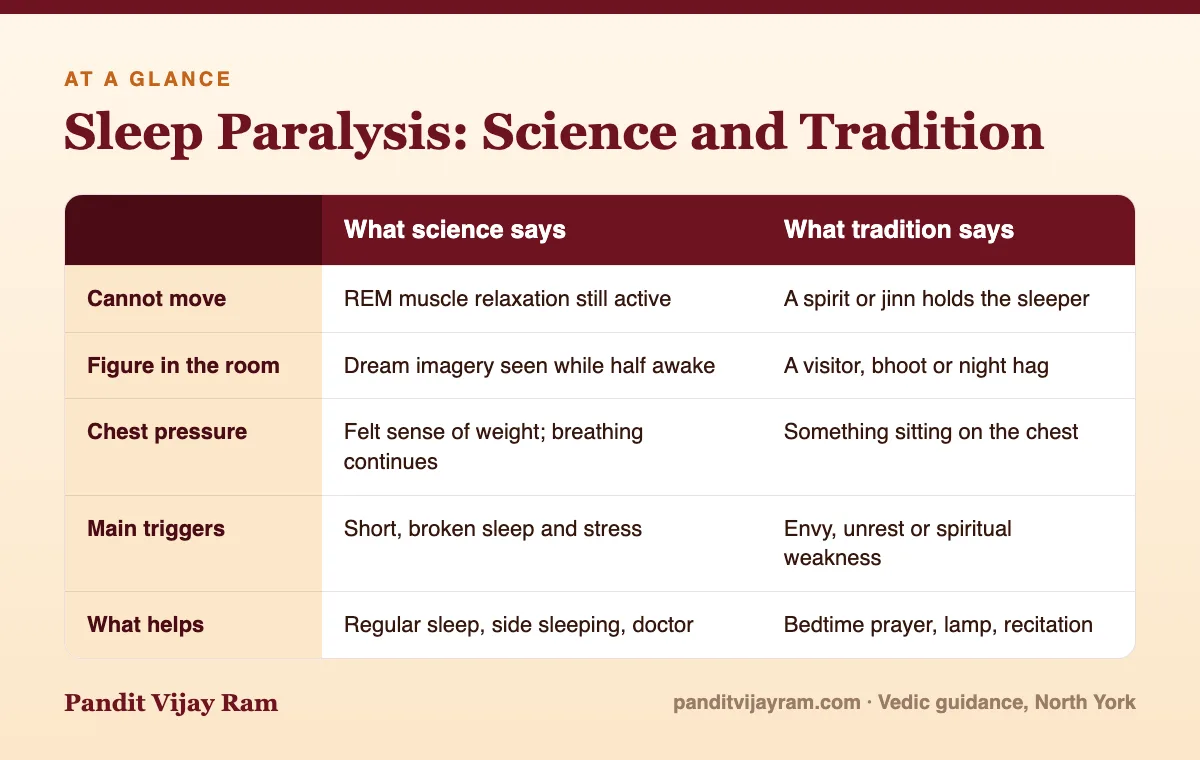
Because the experience is strikingly similar everywhere, almost every culture has a name for the night visitor. Newfoundland speaks of the old hag, Arabic-speaking families may say kabus or blame a jinn, and South Asian homes may speak of a bhoot or a pressing spirit. These are interpretations of one shared human experience.
When people across continents independently describe paralysis, a figure and pressure on the chest, it tells us something important: the brain produces a very consistent picture. Each culture then explains that picture through its own beliefs.
- Muslim households. Many families understand a night attack as a jinn or as harm from envy, and respond with Qur'anic recitation. The word kabus is often used for a nightmare that presses on the sleeper.
- South Asian Hindu and Sikh homes. Elders may describe a bhoot or an unhappy spirit sitting on the chest, and recommend the Hanuman Chalisa or a lamp in the bedroom.
- Caribbean and Latin American families. Some speak of a spirit riding the sleeper, or of an espíritu that needs prayer.
- Atlantic Canada and Britain. The phrase old hag survives from folk tradition.
I do not dismiss any of these traditions. Faith gives people language and comfort at a frightening moment. What I ask is that the explanation does not stop anyone from looking after their sleep and health. A jinn belief and a sleep doctor can coexist in the same household. If someone in your family is very worried about jinn specifically, the jinn removal guidance page explains how an assessment begins with ordinary causes, and ruqyah healing describes the Qur'anic approach with respect.
How do I stop sleep paralysis episodes from happening?
The most reliable prevention is steady, sufficient sleep. Keep regular sleep and wake times, aim for seven to nine hours as an adult, limit caffeine after midday and alcohol at night, and try sleeping on your side. Managing stress during the day matters too, because an anxious brain wakes more easily from REM.
Think of sleep paralysis as a sign that sleep is fragile. Strengthen the sleep and episodes usually fade. A practical routine looks like this:
- Fix your wake time. Get up at the same hour every day, including weekends. Bedtime then settles on its own.
- Protect the hours. Most adults need seven to nine hours. Shift workers should keep blackout curtains and a consistent sleep block.
- Change position. Many people notice that episodes happen mainly on their back. A pillow behind you can keep you on your side.
- Watch stimulants. Coffee, energy drinks and strong chai late in the day, plus alcohol or cannabis at night, all disturb REM.
- Wind down. Dim screens an hour before bed. A short prayer, slow breathing or a few verses read quietly can signal the end of the day. The routine in a mantra to clear the mind before sleep works well here.
- Keep a log. Note bedtime, wake time, caffeine and any episodes for two weeks. Patterns often appear quickly.
During an episode, resist the urge to thrash. Focus on moving one small part, such as a finger or your toes, or on slowing your breath. Many people find that silently repeating a familiar prayer or the name of God helps them stay calm until the body catches up.
When should I see a doctor about sleep paralysis?
See your family doctor if episodes happen often, if you dread going to sleep, or if you also have heavy daytime sleepiness, sudden muscle weakness when laughing or startled, loud snoring or pauses in breathing. These can point to narcolepsy or sleep apnoea, which a sleep clinic can test for and treat.
An occasional episode during a stressful month rarely needs medical care. Some patterns do, and I would rather someone sees a doctor and is reassured than worries alone for years.
Book an appointment with your family doctor if:
- episodes happen weekly or more, or are getting more frequent;
- you avoid sleep, sleep with the lights on or feel terrified at bedtime;
- you fall asleep unexpectedly during the day, at work or while driving;
- your knees buckle or your face goes slack when you laugh, are surprised or angry;
- a partner notices loud snoring, gasping or pauses in your breathing;
- you also have low mood, panic attacks or memories of trauma that come back at night.
The doctor may refer you for a sleep study, review medicines that affect sleep, or suggest cognitive behavioural therapy for insomnia, which has good evidence behind it. Telling them about your cultural interpretation is fine; a good clinician will listen without judgement.
Get urgent help if night-time experiences come with hearing voices during the day, confusion, or thoughts of harming yourself. Call or text 988 for the Suicide Crisis Helpline, or 911 in an emergency. The health and wellbeing page explains how spiritual support fits alongside medical care.
Which prayers help if I believe a jinn or spirit visits me at night?
Choose prayers from your own faith and use them as a calming bedtime habit rather than an emergency weapon. Muslim families often recite Ayat al-Kursi and the last three surahs before sleep; Hindu families may say the Hanuman Chalisa, the Gayatri mantra or light a small lamp. Sikh homes often recite Kirtan Sohila.
Spiritual practice at bedtime works best when it is gentle and regular. Its value is in settling the mind and reminding you that you are protected, which also happens to be good for sleep.
A simple Hindu routine
- Wash your hands, feet and face before bed.
- Light a ghee diya or a battery lamp in the prayer corner, never an open flame left burning beside the bed.
- Recite the Hanuman Chalisa once, or the Gayatri mantra eleven times, slowly.
- Keep the bedroom tidy and the mirror away from directly facing the bed if that reassures you.
Muslim and Sikh practice
Families often recite Ayat al-Kursi and the three protective surahs, blowing lightly over the hands and passing them over the body, as taught in their tradition. Sikh families commonly close the day with Kirtan Sohila. I always encourage people to follow the guidance of their own imam, granthi or elders on the details.
If episodes continue despite better sleep, medical review and steady prayer, a calm consultation can look at the wider picture, including stress at home and the birth chart. Further reading on related night-time fears is collected in the magic and entities guides, including shadow figures at night.
The bottom line
Sleep paralysis or jinn is a fair question, and both science and tradition have something to offer the person asking it. The episode itself is a timing slip between REM sleep and waking, made more likely by short, irregular or stressful sleep. Frequent episodes, daytime sleepiness or sudden weakness deserve a family doctor's attention. Bedtime prayer from your own faith can then add comfort without replacing good rest or medical care.
Key takeaways
- Sleep paralysis is the mind waking before the body leaves REM sleep.
- Seeing a figure or feeling chest pressure is a common part of an episode.
- Regular sleep times, side sleeping and less late caffeine reduce episodes.
- Frequent episodes or daytime sleep attacks should be checked by a doctor.
- A calm bedtime prayer can accompany, but not replace, good sleep care.