
Found a Lemon, Doll or Hair Bundle? What to Do With Suspicious Objects
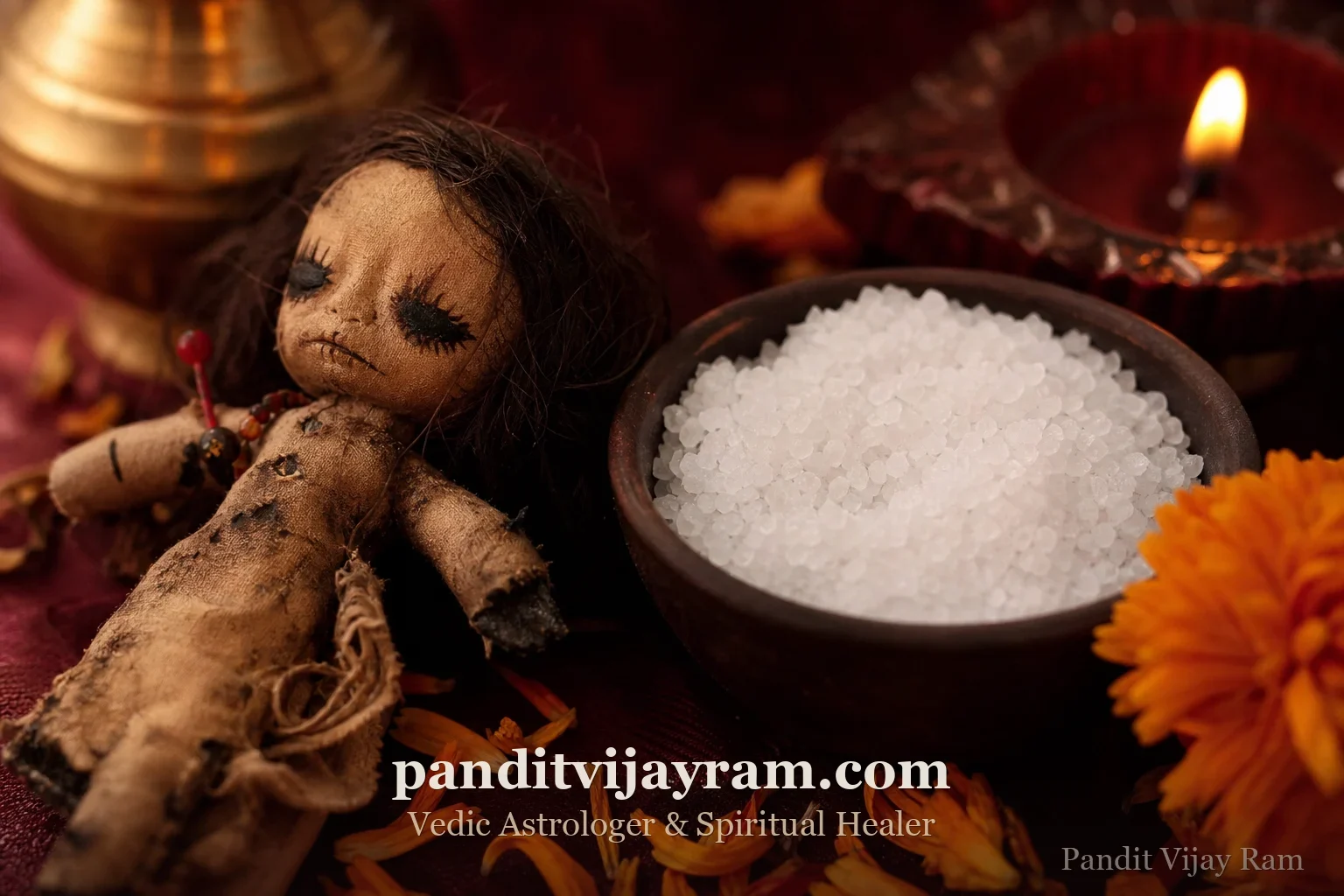
Opening your front door to find a cut lemon with vermilion, a cloth doll stuck with pins or a knot of hair tied in thread can make your heart race. Many cultures carry stories about such items, so the fear is understandable. When people in North York, Downsview or Scarborough call me about suspicious objects, the first thing I say is to slow down, because what you do in the next ten minutes matters more than what the object might mean. In this guide you will learn the ordinary explanations to consider first, the safe way to photograph, handle and dispose of an item, when to involve building security or the police, and the simple spiritual steps that bring peace back afterwards. You will also see why touching, burning or throwing an item at a neighbour's door only adds risk. I have advised families on this situation many times in more than forty years of practice, and in almost every case calm, practical action resolved far more than fear ever could.
What does it mean if I find a lemon, doll or hair bundle at my door?
Most often it means very little about you. A lemon or chillies may have fallen from someone's protective hanging, an offering may have been left at a nearby crossing, a child or prankster may be responsible, or it is simple litter. Only repeated, targeted items with threats deserve serious concern.
Before deciding that an object was aimed at you, consider the everyday explanations.
- Lemons and chillies. Many South Asian homes and shops hang a nimbu-mirchi at the door and replace it weekly. Old ones get dropped, kicked or blown along a hallway. The meaning of the hanging is explained in nimbu mirchi at the door.
- Offerings at intersections. In several traditions, a lemon, coconut, rice or flowers may be left at a crossroads or under a tree as part of a family's own nazar removal. They are not directed at whoever finds them.
- Caribbean, Latino and African-diaspora offerings. Candles, fruit, coins or small figures can be devotional, not hostile. The respectful overview in Obeah, jadu and Brujería traditions helps here.
- Hair. Hair travels on wind, clothing and shoes, and birds use it in nests.
- Dolls and pins. Children's crafts, lost toys and Halloween decorations turn up more often than anything sinister.
If an item is clearly placed, unusual for your area and arrives once, note it and move on. If items keep appearing at your specific door, carry written messages, or follow a quarrel, treat it as possible harassment, which is a practical matter first.

Is it dangerous to touch a black magic object?
The real dangers are practical, not mystical: needles and pins can puncture skin, unknown powders may be irritants or chemicals, and decaying food or animal remains carry germs. Use disposable gloves, avoid sniffing or touching your face, and never sweep up a large quantity of unknown powder. Spiritual worry can be addressed afterwards.
Folk belief often says that touching or stepping over a tona item passes its effect to you. I understand why people fear that, but I ask them to focus first on the risks that are certain.
- Sharp items. Dolls, lemons and cloth bundles may contain pins, nails or broken glass. Lift them with tongs or a dustpan, never bare fingers.
- Powders and liquids. Red sindoor and turmeric are common, but you cannot always tell. Do not blow on, sweep dry or taste anything. If there is a large amount of unknown white or grey powder, especially with a note, step away and call police.
- Food and remains. Rotting fruit, eggs, meat or a dead bird can carry bacteria. In Toronto, dead animals on public property can be reported to 311; on private property, wear gloves and double-bag them.
- Fire. Never burn an item indoors, on a balcony or in a condo hallway. Smoke alarms, fire codes and the risk to neighbours make it unsafe.
- Children and pets. Keep them away until the area is cleared and washed.
Once the item is safely handled, wash your hands with soap and water. Tradition adds a rinse with a little salt water or a sprinkle of Ganga jal, which many families find calming.
When should I call the police about objects left at my home?
Contact police when items come with a threatening note, keep appearing at your door, follow a dispute or a breakup, include anything that looks dangerous, or when someone has been seen trespassing. Leaving objects to intimidate someone can form part of harassment. Call 911 if you feel in immediate danger.
A single lemon in a hallway is not a police matter. A pattern can be. Use this rule of thumb:
- Once, no message, nothing hazardous: photograph it, dispose of it safely and carry on.
- Twice or more at your specific door: keep a dated log with photographs, check doorbell or building cameras, and tell your landlord, condo management or security.
- A note, your photo, your name, or anything threatening: do not dispose of it. Bag it carefully, keep it, and call your local police non-emergency line.
- After a breakup, divorce or family dispute: treat repeated items as possible intimidation, and include them in any report about other contact from that person.
- Hazardous powder, weapons or someone lurking: leave the area and call 911.
Avoid confronting a neighbour or relative you suspect, posting accusations online, or leaving something at their door in return. Those actions can escalate quickly and may put you on the wrong side of the law. If you think a family member is involved, the calmer approach in suspecting black magic by a relative may help.
Police deal with behaviour, not belief. Describe what happened, when, and how it affects your sense of safety. That is enough for a report.
How do I dispose of a suspicious object safely?
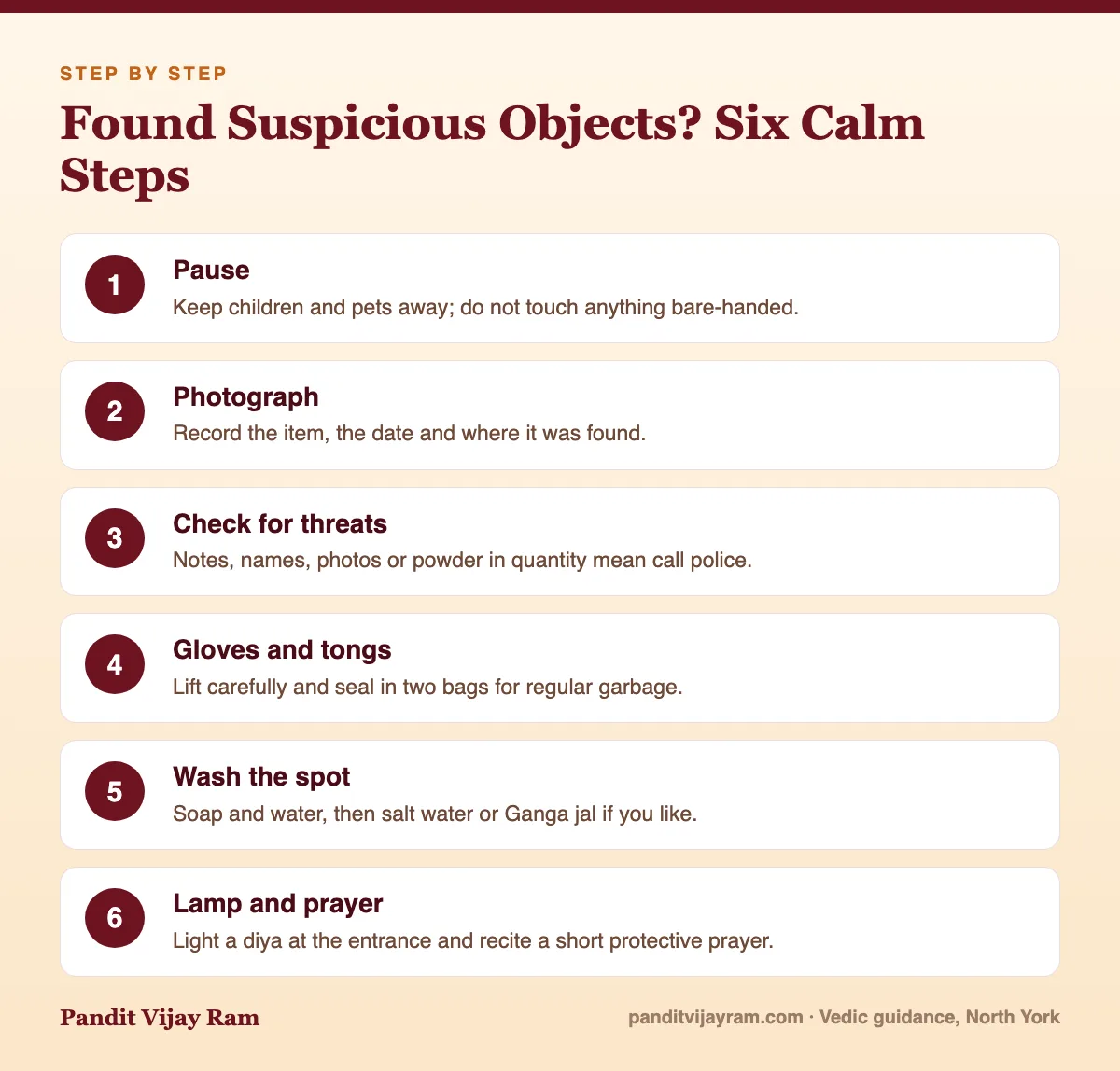
Photograph it in place, put on disposable gloves, lift it with tongs or a dustpan, seal it in two plastic bags and place it in your regular garbage. Wash the spot with soap and water, then salt water if you wish. Do not burn it, flush it or drop it into a river or lake.
Traditional advice in India often says to throw tona items into flowing water or leave them at a crossroads. In Canada, those options create litter, harm waterways and can alarm other people. A safe modern method respects both the tradition and the city you live in.
Some families prefer to sprinkle a little salt or Ganga jal over the bag before sealing it and recite a short prayer such as Om Namah Shivaya or the first lines of the Hanuman Chalisa. That is entirely fine. What matters is that the object leaves your home without injury and without upsetting anyone else.
If the item seems to be part of someone's devotional practice, for example a coconut and flowers beneath a tree in a park, it is more respectful to leave it alone than to remove it. Not every offering is meant for you, and disturbing a sincere prayer causes needless hurt.
Hair bundles, dolls and cloth knots do not need special untying or cutting. Cutting them open exposes you to any pins inside, and tradition does not require it. The step-by-step method below sets out the full sequence.
What spiritual steps should I take after finding a tona item?
Once the object is gone and the area washed, light a lamp at the entrance, recite a protective prayer such as the Hanuman Chalisa, and do a simple threshold cleansing. Keep your routine for a week. If unease persists or items keep coming, ask a practitioner for an assessment rather than performing harsh rituals yourself.
The spiritual part is meant to restore peace, not to fight an invisible opponent. A gentle sequence works well.
- Wash the threshold. Mop the doorstep and frame with water, a pinch of rock salt and a few drops of Ganga jal. The fuller custom is in main door cleansing and threshold rituals.
- Light a lamp. A ghee diya near the entrance at dusk is the classic sign of a protected home. In condos, a battery lamp is a sensible substitute.
- Recite. The Hanuman Chalisa once a day for seven days, or Om Dum Durgayei Namaha on a mala, keeps the mind steady.
- Offer charity. Give food or a donation on the following Tuesday or Saturday as a quiet act of protection.
- Watch, but do not hunt. Checking the hallway every hour feeds fear. Glance once in the morning and once at night.
If the household remains unsettled or the items continue, the black magic removal service starts with an assessment of ordinary causes and the birth chart. More reading is available in the magic and entities guides.
The bottom line
Suspicious objects at your door are usually fallen protective hangings, someone else's offering, a prank or litter, so start with calm and ordinary explanations. Handle any item with gloves and tongs, photograph it, double-bag it for regular garbage and wash the spot, without burning it or dropping it in water. Repeated items, notes or anything threatening are a police matter, not a reason to retaliate. Afterwards, a threshold wash, a lamp and steady prayer restore peace to the home.
Key takeaways
- Most items found near a door have ordinary explanations.
- Use gloves and tongs because pins, powders and decay are the real risks.
- Photograph, double-bag and place items in household garbage.
- Threatening notes or repeated targeting should be reported to police.
- A threshold wash, a lamp and prayer settle the home afterwards.