
Nazar on Plants and Pets: What Families Believe and What to Check First

A guest admires your money plant, saying it is the healthiest she has ever seen, and a week later the leaves are yellow. Or the tulsi that flourished all summer turns brown by December. In many South-Asian homes, the first explanation offered is nazar on plants, and the same worry often follows a beloved cat or dog who suddenly seems off. Families in North York, Scarborough and Brampton bring me these questions regularly, sometimes a little embarrassed to ask. They should not be. Plants and pets are part of the household, and caring about them is natural. This article explains what tradition believes, then walks through the ordinary checks that solve most cases: light, water, temperature, pests and, for animals, a prompt visit to the vet. It covers why tulsi struggles in a Canadian winter, and ends with gentle customs that are safe for plants and animals alike. In more than forty years of practice, I have found that a good look at the windowsill usually answers the question before any ritual is needed.
Can the evil eye really make a plant die?
Folk belief says yes: a plant that is much admired, especially one that grew unusually well, is thought to absorb nazar and wilt. Families often notice decline after guests praise it. In practice, nearly every case has a physical cause, and the timing with a compliment is usually coincidence, because people praise plants at their peak.
The belief makes emotional sense. A plant that is thriving is a visible sign of a happy, well-tended home. In tradition, anything that draws admiring attention, a baby, a new car, a full shop, can draw nazar too. Some families believe plants act as a shield, absorbing nazar that would otherwise fall on the household. When a plant suddenly dies, they say it took the blow for the family.
That interpretation is gentle, and I do not dismiss it. But I also point out three things:
- Plants are praised at their best. A plant at its peak is often about to flower, outgrow its pot or enter a rest period. Decline after praise is expected.
- Seasons change at the same time as visits. Diwali, Christmas and Eid gatherings fall in the darker months, when indoor plants in Canada struggle anyway.
- Guests bring changes. More heat, doors opening onto cold air, furniture moved, plants pushed away from windows to make room.
If your home feels heavy after many visitors, the gentle resets in cleansing your home after guests suit the space without suspecting anyone. For the plant itself, start with the checklist below.

Why is my plant dying suddenly?
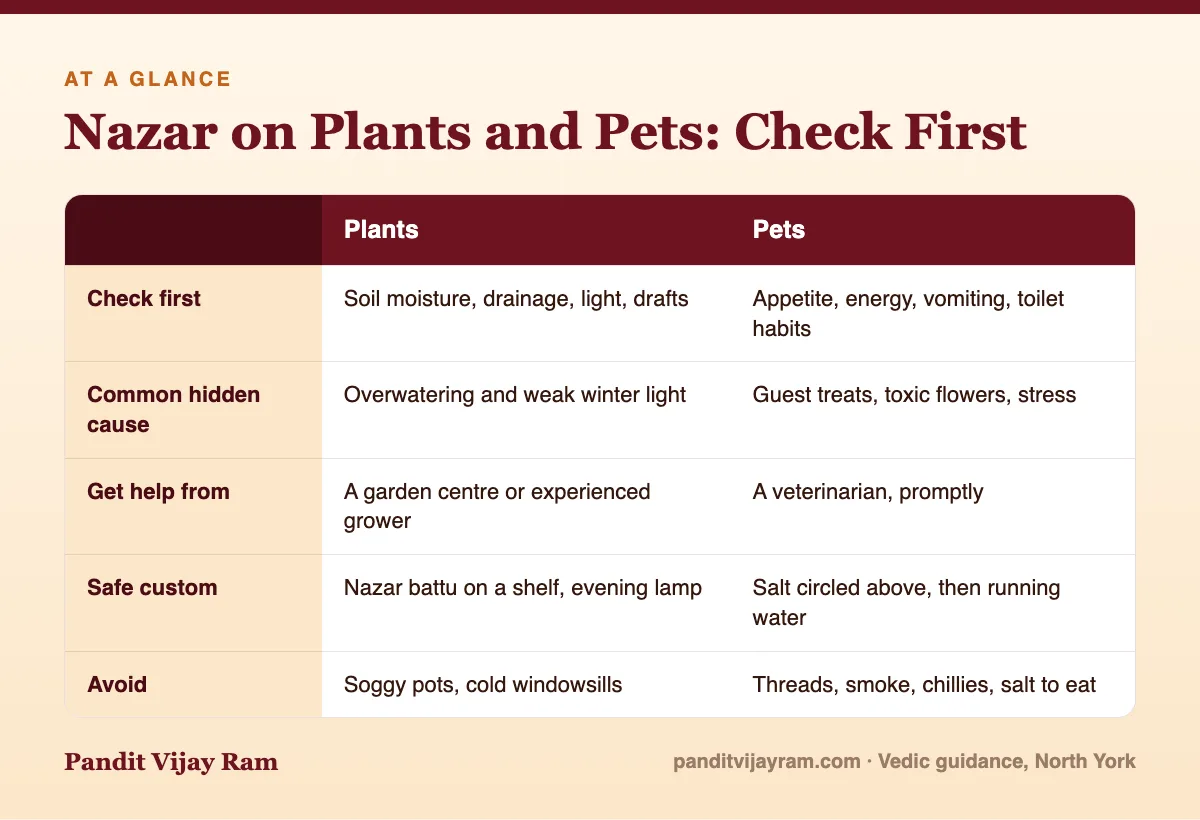
The most common causes of sudden plant decline indoors are overwatering, too little light, cold drafts, dry air from heating, pests such as spider mites or fungus gnats, and root problems from a pot without drainage. Moving a plant or repotting it can also cause shock. Check these before thinking of nazar.
Work through this list in order. It solves most cases within a few minutes of looking.
- Water. Push a finger into the soil. If it is wet two knuckles deep and the leaves are yellow or soft, the roots may be drowning. Overwatering kills more houseplants than anything else.
- Drainage. Is there a hole in the pot? Decorative pots without one hold water at the bottom and rot the roots.
- Light. In a GTA winter, daylight is short and weak. A plant that thrived in a sunny summer spot may starve by January. Move it closer to a south- or west-facing window, or add a grow light.
- Temperature. Cold glass, drafty doors and heating vents all stress plants. Keep leaves from touching windows.
- Dry air. Furnace heat dries leaves at the edges. Group plants together or use a tray of pebbles and water.
- Pests. Look under leaves for fine webs, white cottony spots, sticky residue or tiny flies around the soil.
- Recent change. Repotting, a new location or a gift plant arriving from a greenhouse can cause a few weeks of drooping.
If you have corrected all of these and a healthy plant still declines, then by all means add a gentle custom. Many people find that being careful about where plants sit also improves the feel of a room, a theme that runs through vastu consultation.
Why is my tulsi plant drying in winter?
Tulsi, or holy basil, is a tropical plant that dislikes cold, short days and dry indoor air, so it often struggles in a Canadian winter. It also naturally weakens after flowering heavily. Drying in winter is usually climate, not nazar. Warmth, bright light, careful watering and pinching off flower spikes help it last longer.
Tulsi holds a special place in Hindu homes. It is worshipped as a form of the goddess, watered each morning and honoured with a lamp at dusk. When it dries, families can feel it as a loss or a warning. It helps to know what this plant needs.
- Warmth. Tulsi is native to the Indian subcontinent. Cold below about ten degrees Celsius damages it. Bring it indoors well before the first frost and keep it away from cold windows at night.
- Light. It wants several hours of strong light a day. A grow light is often the difference between a plant that survives a GTA winter and one that does not.
- Water. Moist but never soggy. Morning water offerings are lovely; just pour a modest amount and let the pot drain.
- Flowers. The flower spikes, called manjari, are sacred, but a plant that flowers constantly puts its energy into seed and declines. Pinching some off keeps it leafy.
- Life span. Many tulsi plants live only a few years, even in ideal conditions. A plant ending its natural life is not a sign of trouble.
If your tulsi dies, tradition suggests returning it respectfully to the earth, in a garden bed or a pot of soil outdoors, rather than throwing it in the garbage. Then plant a new one with a short prayer. Some families keep seeds from the old plant for this purpose.
Can pets get nazar or the evil eye?
Many families believe so, especially when a pet that visitors admired falls ill soon after. But changes in a pet's eating, energy, behaviour or toilet habits are usually medical and can become serious quickly. Take any pet that seems unwell to a veterinarian first. Customs can follow once the animal has been checked.
Animals cannot tell us what is wrong, so families watch for changes, and a sudden change after a party can easily be read as nazar. Before that, consider what visitors can actually bring:
- Food. Guests sometimes slip treats to pets. Chocolate, grapes, raisins, onions, garlic and sweets with xylitol are dangerous for dogs.
- Plants and flowers. Lilies, often given as bouquets, are highly toxic to cats, even in small amounts.
- Stress. Noise, strangers and changes in routine can make cats hide and stop eating, and dogs pace or have stomach upsets.
- Open doors. Pets slip out during gatherings and can be injured or eat something outside.
See a vet promptly if a pet stops eating for more than a day, vomits repeatedly, has trouble breathing, cannot urinate, collapses, or seems in pain. For a cat that stops eating, earlier is better. Many GTA clinics have after-hours emergency services.
Once the vet has examined your pet, it is entirely reasonable to add a gentle protective custom if it brings you peace. Animals have always been part of Hindu household prayer, from the cow to the family dog, and wishing them well is an act of care.
How do you protect plants and pets from nazar safely?
Safe customs include a small nazar battu or evil-eye bead placed among the plants, a lamp lit near the tulsi at dusk, a few grains of salt circled over a pet and dropped in running water, and a blessing whenever someone praises them. Avoid anything a pet could chew or swallow, and any smoke near birds.
Here are customs families use, with the safety adjustments that matter in a home with animals.
- A nazar battu among the plants. A small black-faced charm or a blue evil-eye bead sitting on a shelf near the plants. Place it out of reach of curious cats. The symbols are compared in hamsa, nazar battu and evil-eye beads.
- The evening lamp. A diya beside the tulsi at dusk, on a stable tray, well away from pets' tails and paws. A battery light works in condos.
- Turmeric water for plants. A pinch of haldi in the watering can once in a while is a common custom and harmless to most plants in small amounts.
- Salt for pets. An elder circles a pinch of salt in a closed fist above the animal, then drops it into running water. Never let a pet eat the salt.
- Avoid for animals: chillies, camphor, incense or smoke near pets, especially birds, which have very sensitive lungs; threads or beads tied to collars or paws; lemons and chillies hung where dogs can reach them. More on that custom appears in the meaning of nimbu mirchi at the door.
If unease about the home goes beyond plants and pets, the nazar removal service looks at the household as a whole, and the evil eye and curses hub gathers related guides.
The bottom line
Nazar on plants and pets is a tender belief that shows how much families care for every living thing in the home. Most plant decline comes from water, light, cold and pests, and tulsi in particular struggles through a Canadian winter. Any unwell pet needs a vet first, and only then the gentle, animal-safe customs that bring peace of mind.
Key takeaways
- Plants are usually praised at their peak, so decline afterwards is often natural.
- Overwatering, low winter light, drafts and pests explain most sudden plant deaths.
- Tulsi is tropical and short-lived; cold and heavy flowering weaken it.
- An unwell pet needs a veterinarian before any nazar custom.
- Keep salt, chillies, smoke and threads away from animals.