
Nazar at Weddings: Protecting the Bride and Groom
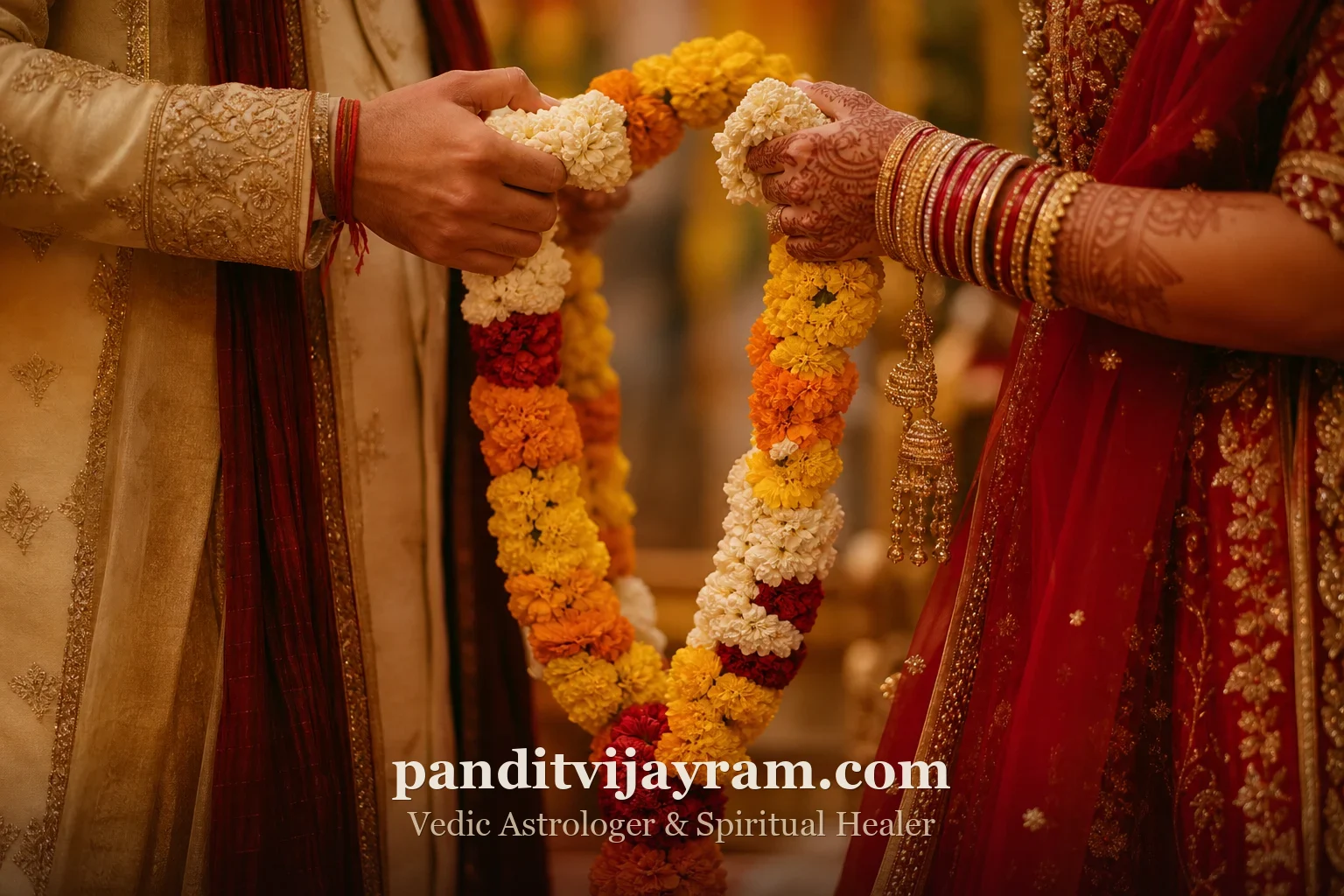
A wedding is the one day when everyone is looking at the same two people. That is exactly why so many families worry about nazar at weddings, and why a grandmother may slip a black dot behind the bride's ear while the photographer is busy. Families in North York, Brampton and Mississauga often ask me which customs actually matter, and which ones they can let go of when the schedule is already overflowing. This guide explains the main protective customs around the haldi, the baraat, the ceremony and the homecoming, what each one means, and how to keep them safe and simple at a GTA banquet hall or gurdwara. It also covers what to do if the bride or groom feels drained afterwards, and why ordinary exhaustion should be your first thought. In more than forty years of guiding families through weddings, I have found that the calmest couples are usually the ones whose elders kept one or two meaningful customs and dropped the panic.
Why are brides and grooms believed to attract nazar?
In South-Asian belief, nazar follows intense admiration, and a wedding gathers more admiring eyes in one room than almost any other event. The couple is dressed, decorated and photographed for hours. Tradition holds that this concentrated attention, even when completely loving, can unsettle them, so elders add small protective customs throughout the celebrations.
The idea is not that guests are hostile. Most nazar in folk belief is unintended. An aunt who says the bride looks like a film star means only good. The worry is the sheer volume of attention, layered over envy that a few people may quietly feel about the match, the jewellery or the venue.
Certain moments are traditionally treated as more exposed than others:
- The haldi or maiyan. Once turmeric paste has been applied, the bride or groom is said to glow, and many families keep them indoors until the wedding.
- The first public appearance. The groom setting out on the horse or in the car, and the bride's entry into the hall.
- The jaimala and pheras. Everyone is watching, and every phone is raised.
- The doli and homecoming. A tired couple arriving at a new home is often greeted with a last protective gesture.
None of this means something will go wrong. It means families have long used ritual to express care at moments when emotions run high. For a fuller picture of what people describe as nazar on a person, see signs of nazar on a person, and for the wider theme, the evil eye and curses hub.
What wedding customs protect the bride and groom from the evil eye?
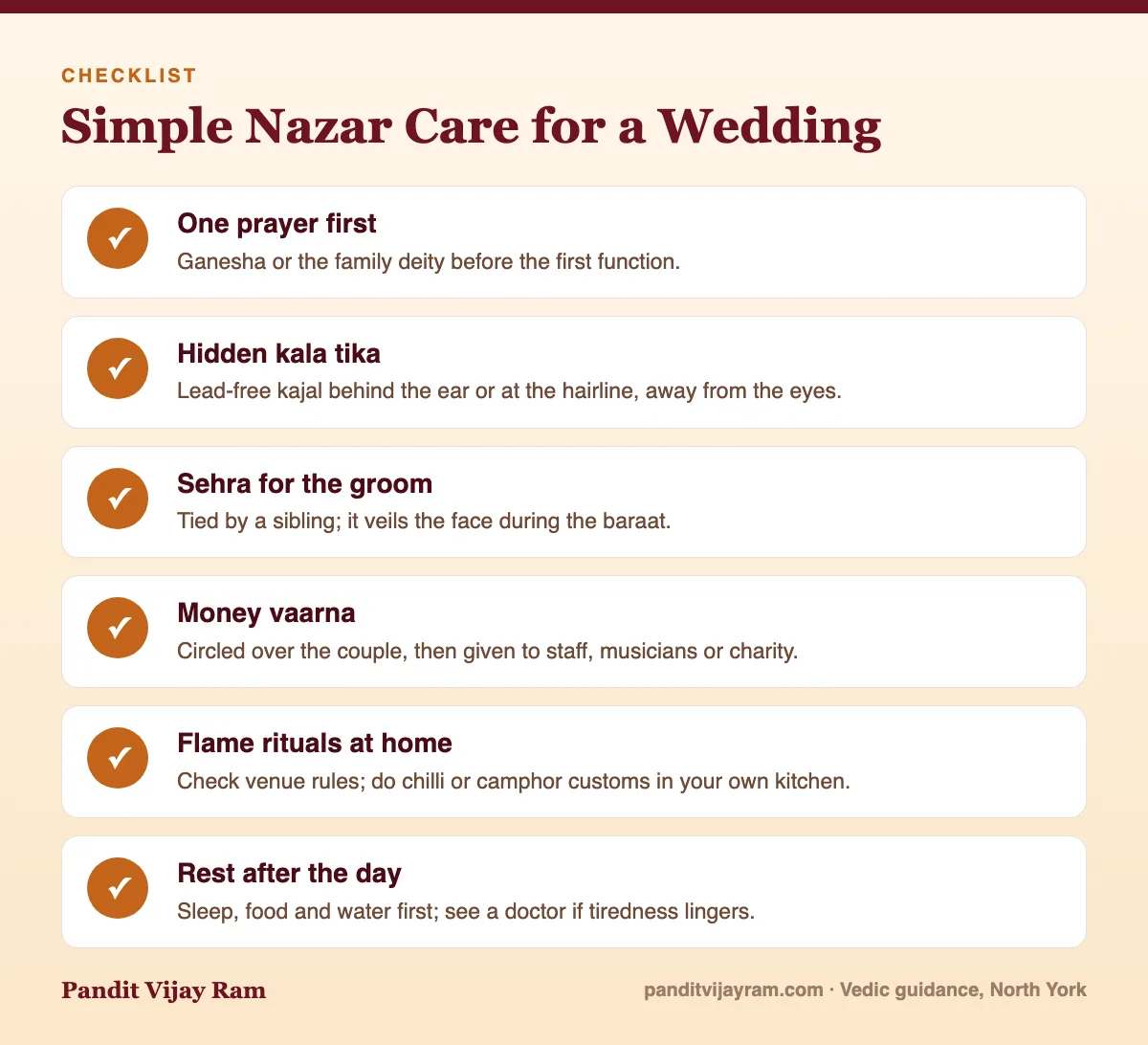
The most common customs are a kala tika behind the ear or under the hairline, the sehra veil for the groom, elders circling money over the couple and giving it away, and a vessel of water circled at the homecoming. Prayers to Ganesha before the events and a kalava thread on the wrist are also widespread.
Here is a simple map of who usually does what, so a busy family can choose without guessing.
- Kala tika. A tiny dot of kajal behind the left ear, on the sole of the foot or hidden at the hairline. It is placed out of sight so it does not spoil the makeup. Ask the makeup artist to leave a moment for it.
- The sehra. In Punjabi and many North Indian weddings, strings of flowers or pearls hang over the groom's face. Beyond beauty, families describe it as screening him from staring eyes. The sehra bandi is usually done by a sister or brother-in-law.
- Vaarna with money. Elders circle notes over the couple's heads and then give them to the dhol player, the staff or a charity. The money is never kept, because it is believed to carry away the nazar.
- Paani vaarna. When the bride arrives at her new home, the groom's mother circles a vessel of water over both heads and lifts it to drink, while the groom playfully stops her. It is affectionate as much as protective.
- Ganesha and the family deity. A short prayer before the first event asks for obstacles to be removed. A Ganesha puja is a natural place to begin.
Sikh, Gujarati, Tamil and Bengali families each have their own versions. Follow your own elders first. The black dot itself is covered in depth in the kala tika against nazar.
Can you do nazar utarna at a wedding venue in the GTA?
Yes, but adapt it. Most GTA banquet halls, hotels and gurdwaras restrict open flames and smoke, so chilli-burning or camphor at the venue is usually not allowed. Do any fire-based nazar utarna at home the evening before or after, and keep venue customs to money vaarna, water and quiet prayer.
Wedding venues around Toronto are busy, tightly scheduled spaces with sensitive smoke detectors and strict insurance rules. A smouldering dish of red chillies in a hotel ballroom can set off the alarm and empty the building. Before the day, ask the venue coordinator what is permitted, and tell the elders clearly so nobody is embarrassed.
A practical split that works for most families:
- At home, the night before. Salt and red chillies or mustard seeds circled around the bride or groom, then dropped onto a gas flame or a small steel bowl over the stove with the fan on. Keep children back and never leave the flame.
- At the venue. Money vaarna, a kala tika, a whispered prayer, a hand on the head. No flame, no smoke.
- At the gurdwara or temple. Follow the house rules. Gurdwaras in particular have their own protocol, and a quiet ardas or prayer is always welcome.
- At the homecoming. Paani vaarna, the rice kalash kicked over the threshold, and the aarti thali, with a battery tea light if you are in a condo.
If you want the home method explained step by step, the older guide on how to remove nazar at home covers it.
Why does the bride feel exhausted after the wedding, and is it nazar?
Most post-wedding exhaustion has ordinary causes: weeks of planning, little sleep, heavy outfits, skipped meals, dehydration, emotional goodbyes and sometimes travel. Families often call it nazar. A gentle nazar utarna does no harm, but rest, food and water come first, and any fever, fainting or lasting low mood needs a doctor.
Think about what a bride or groom has been through. Several functions in a row, many late nights, lehengas and sherwanis that weigh a lot, jewellery pressing on the skin, little proper food, a hall full of noise, and the emotional weight of leaving one home for another. Anyone would be drained.
Before reading it spiritually, check these:
- Sleep debt. Two or three nights of real sleep usually change everything.
- Food and fluids. Many brides barely eat on the day. Headaches and dizziness often follow.
- Skin reactions. Mehndi, haldi, cosmetics and metal can irritate. A rash is a skin issue, not a curse.
- Illness picked up at the events. Large gatherings spread colds and stomach bugs.
- Emotional letdown. After months of build-up, a flat or tearful week is common. It is worth talking about kindly.
If the tiredness lifts with rest, there is nothing more to chase. If a fever, fainting, vomiting or a low mood lingers beyond a week or two, see your family doctor. Crisis support is always available through 9-8-8. Once health is settled, a short nazar utarna by an elder, or a lamp and prayer, is a kind way to close the celebrations. The evil eye and nazar service is there if something still feels unsettled.
How much protection does a wedding really need?
Very little. One or two customs done lovingly by the people who matter to you are enough in tradition. Stacking rituals out of fear adds stress to an already demanding day and can make the couple feel targeted. Protection works best as a gesture of blessing, not a defence against imagined enemies among the guests.
I sometimes meet families who have been told to do ten separate rituals across the week, each with a cost and a warning. That is not tradition. That is pressure. A wedding is a sacrament and a celebration, and it should not be run like a security operation.
A sensible rule of thumb:
- Choose one prayer. Ganesha before the first event, or the family deity on the morning of the wedding.
- Choose one custom. The kala tika, the sehra or money vaarna, whichever your elders love most.
- Let the rest go. If an aunt arrives with an extra ritual, accept it graciously if it is safe, and decline politely if it involves fire at the venue or anything near the eyes.
Discretion helps more than any object. Couples who keep the jewellery list, the gift totals and the honeymoon plans private tend to attract less gossip, whatever you believe about nazar. The same instinct runs through nazar after sharing good news online.
If the match itself has caused tension between families, that is better handled through honest conversation, and sometimes through a reading of the couple's charts with the marriage guidance service, than through more protection.
The bottom line
Nazar at weddings is an old way of expressing care for two people at the most watched moment of their lives. Keep one prayer and one or two loving customs, and adapt any flame-based ritual to home rather than the venue. Put rest, food and medical care ahead of spiritual explanations when the couple feels drained. Above all, let protection feel like a blessing rather than a fear.
Key takeaways
- A wedding concentrates admiration, which is why families add nazar customs.
- The kala tika, sehra, money vaarna and paani vaarna are the most familiar protections.
- GTA venues usually ban open flames, so do chilli or camphor rituals at home.
- Post-wedding tiredness is almost always sleep, food and emotion, not the evil eye.
- One or two customs done with love are enough; more rituals add stress.