
Spiritual Cleansing Before an Interview, Wedding or Exam
The night before a big day, the mind rarely rests. You go over answers, check your clothes twice, and wonder whether you have done enough. Many families reach for a small ritual at this point, and people often ask me which one is right. Cleansing before an interview, an exam or a wedding does not need to be long or costly. Students in North York sometimes ask me for the strongest possible puja before an exam, and my first question is whether they have been sleeping. This guide gives a short, practical routine built around Ganesh, a morning snan and a few family customs, and adapts it for interviews, exams and weddings. It also covers the haldi ceremony, the curd and sugar given at the door, and the prayers that suit each occasion. In more than forty years of practice, I have found that rituals help most when they calm the mind and steady the hands, so that the preparation you have already done can show. You will also find honest guidance on when nerves need more than prayer.
Why do Hindus pray to Ganesh before starting something important?
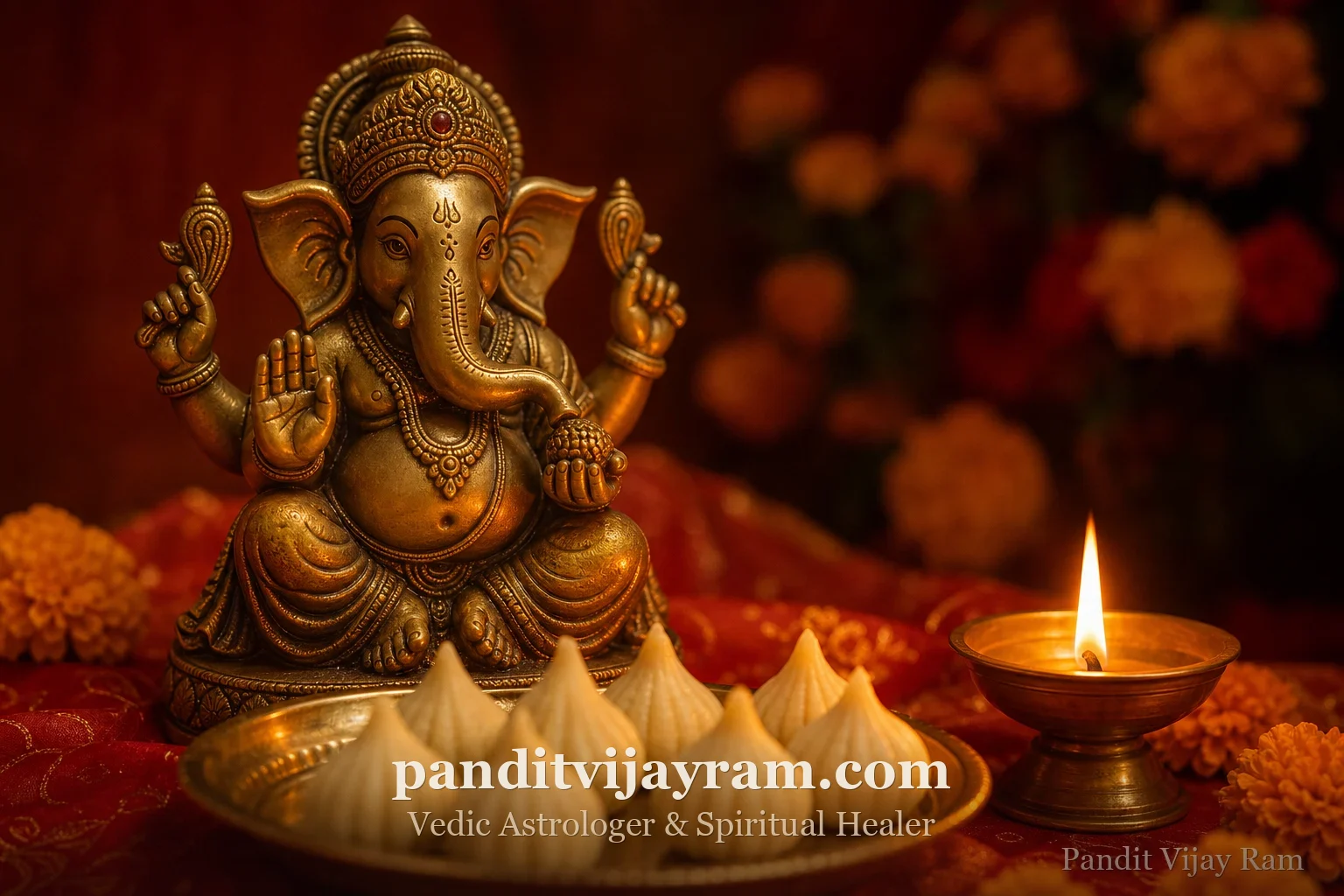
Ganesh is Vighnaharta, the remover of obstacles, and Hindu custom honours him first at the start of any puja, journey, business or ceremony. Praying to him before an interview, exam or wedding is a way of asking for a clear path and admitting humbly that results are not entirely in our hands.
Almost every Hindu ceremony opens with Ganesh. Wedding cards often carry his image. Shops in the GTA put his murti near the entrance. Students write Shri Ganeshaya Namah at the top of a notebook. All of these say the same thing: before I begin, I ask for the obstacles to be cleared.
Two mantras are used most often:
- Om Gam Ganapataye Namah. A short seed mantra, easy to repeat eleven, twenty-one or one hundred and eight times.
- Vakratunda Mahakaya Suryakoti Samaprabha, Nirvighnam kuru me deva sarva karyeshu sarvada. This verse asks Ganesh, radiant as millions of suns, to keep all your work free of obstacles.
Ganesh is also linked with wisdom and good judgement, which suits an interview or exam. His large ears are said to remind us to listen more than we speak, which is useful advice for any panel.
For families who want a fuller ceremony before a major new start, such as a business opening or a move, a full Ganesha puja and havan is the traditional choice. For an interview or exam, a short home prayer is enough. Our guide to the best day for spiritual cleansing explains which weekdays and lunar days are favoured, though for a fixed interview date the day is simply the day.
What is a simple cleansing ritual before a job interview?
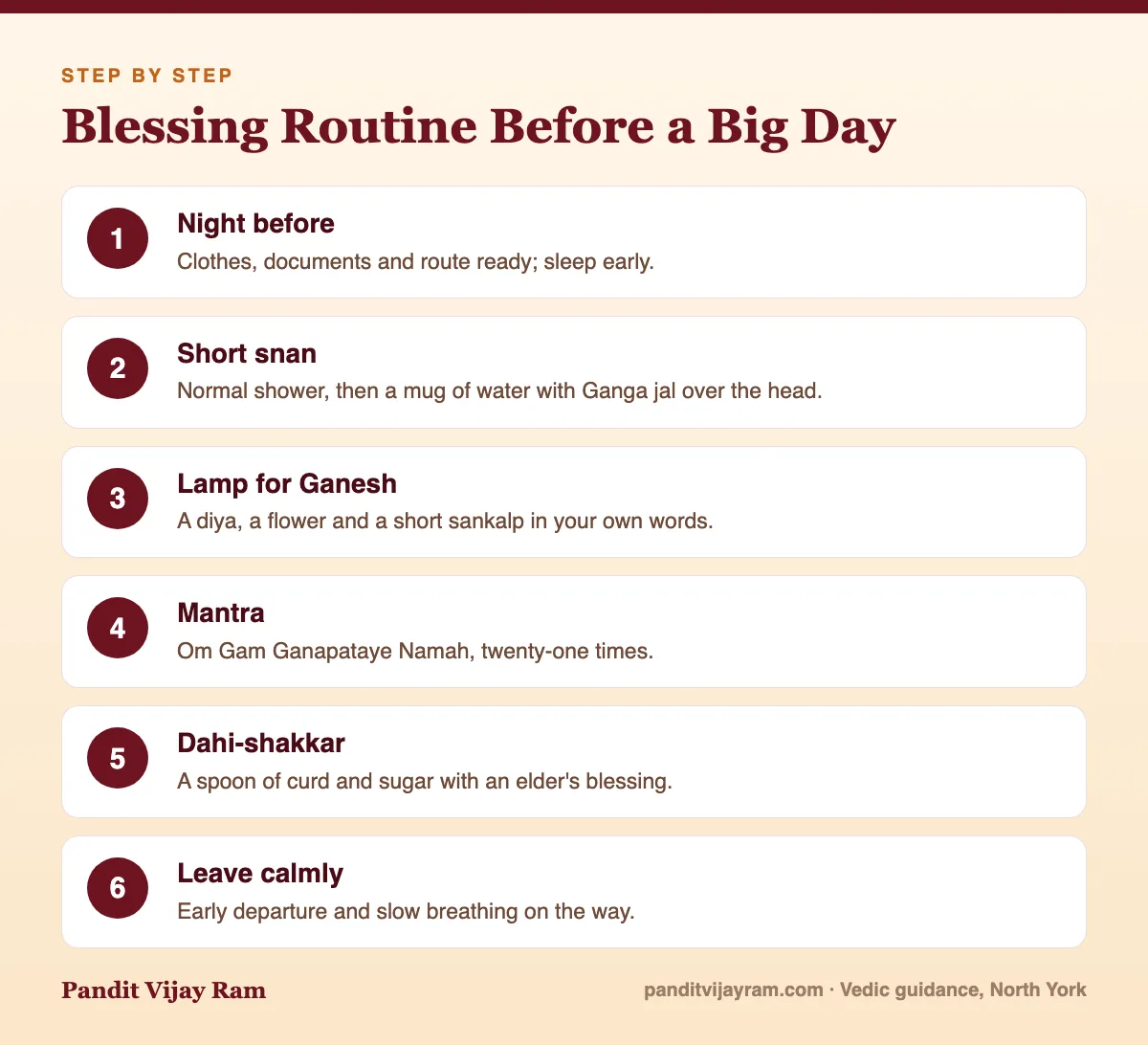
The evening before, set out your clothes and documents and sleep early. In the morning, take a short bath with a few drops of Ganga jal, light a lamp, chant Om Gam Ganapataye Namah twenty-one times, take a spoon of curd with sugar, touch an elder's feet if possible, and leave on time.
This routine takes about fifteen minutes on the day and fits a weekday morning.
The night before
- Iron your clothes and pack your documents. Clutter on the morning of an interview drains focus more than any unseen force.
- Check your route. On the TTC or the highways, allow for delays.
- Light a lamp briefly, offer a sweet to Ganesh, and say what you are asking for in simple words.
- Sleep early. Rest is the most important part of the cleansing.
The morning
- Short snan. Shower as usual, then pour a mug of water with a few drops of Ganga jal over your head while repeating Ganesh's name.
- Lamp and mantra. Light a diya and chant Om Gam Ganapataye Namah twenty-one times. If you are anxious, add a few rounds of slow breathing from our pranayama guide.
- Dahi-shakkar. In many North Indian homes, a mother or elder gives a spoon of curd with sugar at the door for a sweet result. It is a lovely custom and costs nothing.
- Blessing. Touch an elder's feet or ask for their blessing by phone.
- Leave calmly. Some families step out with the right foot first. Above all, leave early enough not to rush.
If your career has stalled through many interviews, a chart review through our business and career guidance can look at timing alongside practical advice on applications.
What cleansing rituals are done before a Hindu wedding?
Pre-wedding cleansing usually includes a Ganesh puja to begin the ceremonies, the haldi ceremony where turmeric paste is applied to the bride and groom, a ritual bath afterwards, and often mehndi and a protective thread on the wrist. Exact customs differ between Punjabi, Gujarati, Tamil, Bengali and other communities.
A wedding has more steps than an interview, and families carry them out over several days. The cleansing elements most families share are:
- Ganesh sthapana. The first ritual of the wedding, inviting Ganesh to protect all that follows. Many families also do a griha shanti puja at home.
- Haldi or pithi. Turmeric paste mixed with gram flour, rose water and sometimes sandalwood is applied by relatives. It is meant to bless, protect against nazar and give the skin a glow. A bath follows.
- Mehndi. Henna on hands and feet, considered auspicious and cooling.
- Kankan or kalava. A protective thread is tied on the wrist, often with a small turmeric root or betel nut.
Practical cautions: do a patch test of the haldi mixture a week before, especially for anyone with sensitive skin. Turmeric stains clothes, grout and white tiles, so lay down old sheets. Black henna, sold in some stalls, can contain chemicals that cause serious skin reactions; natural henna is safer. Our neem and turmeric bath guide has more on patch tests and staining.
A wedding also brings stress, family politics and very little sleep. A short quiet prayer for the couple each morning, away from the noise, often helps more than adding yet another ceremony.
Is there a ritual before an exam that actually helps?
A short prayer to Ganesh and Saraswati, a calm breakfast and a few minutes of slow breathing are traditional and sensible before an exam. They settle nerves so you can recall what you studied. They do not add knowledge, so steady revision and sleep in the weeks before matter most of all.
Exam mornings work best with a routine that is calm, short and the same every time. A good pattern is:
- Wake at your usual time; do not stay up late cramming.
- Wash, then chant the Ganesh mantra and the Saraswati verse Ya Kundendu Tushara Hara Dhavala, or simply Om Aim Saraswatyai Namah eleven times.
- Eat a light breakfast with water.
- Do two minutes of slow breathing before leaving.
- Arrive early, and avoid last-minute group panic outside the exam hall.
That is enough. Long rituals the morning of an exam can actually increase anxiety, because they add one more task to get exactly right.
For longer support during a school or university year, including the study-desk direction and the Saraswati vandana, our article on Saraswati remedies for students goes into detail.
Parents can help most by keeping the home quiet, cooking simple food and avoiding pressure in the last days. If a student is panicking, not sleeping, or talking about failure in a frightening way, speak with the school counsellor or a family doctor. Exam stress is common, and support is available.
Will a good luck ritual work if I have not prepared?
No ritual replaces preparation. Prayer can calm the mind, lift confidence and help you bring out what you already know. It cannot write your answers, impress a panel on your behalf, or fix a wedding plan that was never organised. Prepare first, then pray, and accept the outcome with grace.
The Bhagavad Gita gives the clearest guidance here. We have a right to our action, not to its fruits. In plain terms, you do your part fully, offer it to God, and then let go of the result. That is the spirit behind every pre-event prayer.
A simple decision rule helps people keep balance:
- Most of your effort goes into preparation: research the company, revise the syllabus, rehearse the vows, confirm the caterer.
- A small, steady share goes into prayer and calm: the lamp, the mantra, the bath, the elders' blessing.
- None goes into fear that something unseen will spoil the day.
If you notice yourself adding more and more rituals while the preparation stays undone, that is anxiety speaking, not faith. Pause and do one practical task first.
Nerves are normal. Shaking hands, a racing heart and a dry mouth before an interview or exam are the body's ordinary stress response. If anxiety stops you from attending, or panic attacks happen often, please see your family doctor. Support for performance anxiety works well alongside prayer.
For a gentle set of daily practices that build calm over time rather than on a single morning, visit the cleansing and protection hub.
The bottom line
Cleansing before an interview, exam or wedding works best as a short, calm routine: a morning snan, a lamp, a Ganesh mantra and an elder's blessing. Weddings add haldi, mehndi and the protective thread, each with simple skin and staining cautions. Exams benefit from Ganesh and Saraswati prayers and, above all, sleep and revision. Prepare first, pray second, and let go of fear.
Key takeaways
- Ganesh is honoured first because he is the remover of obstacles.
- An interview routine needs only a short bath, lamp, mantra and a calm departure.
- Pre-wedding haldi blesses the couple; patch-test it and protect clothes and tiles.
- Exam mornings should be short and familiar, with Saraswati and Ganesh prayers.
- Ritual supports preparation and calm; it never replaces them.