
Rudraksha and Tulsi Mala for Protection: How to Wear and Cleanse Them

People often buy a mala at a temple shop, bring it home, and then feel anxious. Is it real? Did I wear it wrong? Can I sleep in it? Rudraksha for protection is one of the oldest wearable practices in Hindu life, yet it has gathered a surprising number of fearful rules. Clients in North York regularly ask me to sort fact from rumour, and this guide does exactly that. You will learn how rudraksha and tulsi beads differ, how to choose a genuine one without paying for myths, and a simple home method for energising it with mantra. It also covers how to clean each material without cracking or rotting it, which rules come from scripture and family custom, and which ones you can relax. In more than forty years of practice, I have seen many people stop wearing a perfectly good mala because someone frightened them about a minor rule. A mala is a companion for japa and remembrance. It works best when it is worn with steady devotion, not with worry about every movement.
What is a rudraksha, and why is it worn for protection?
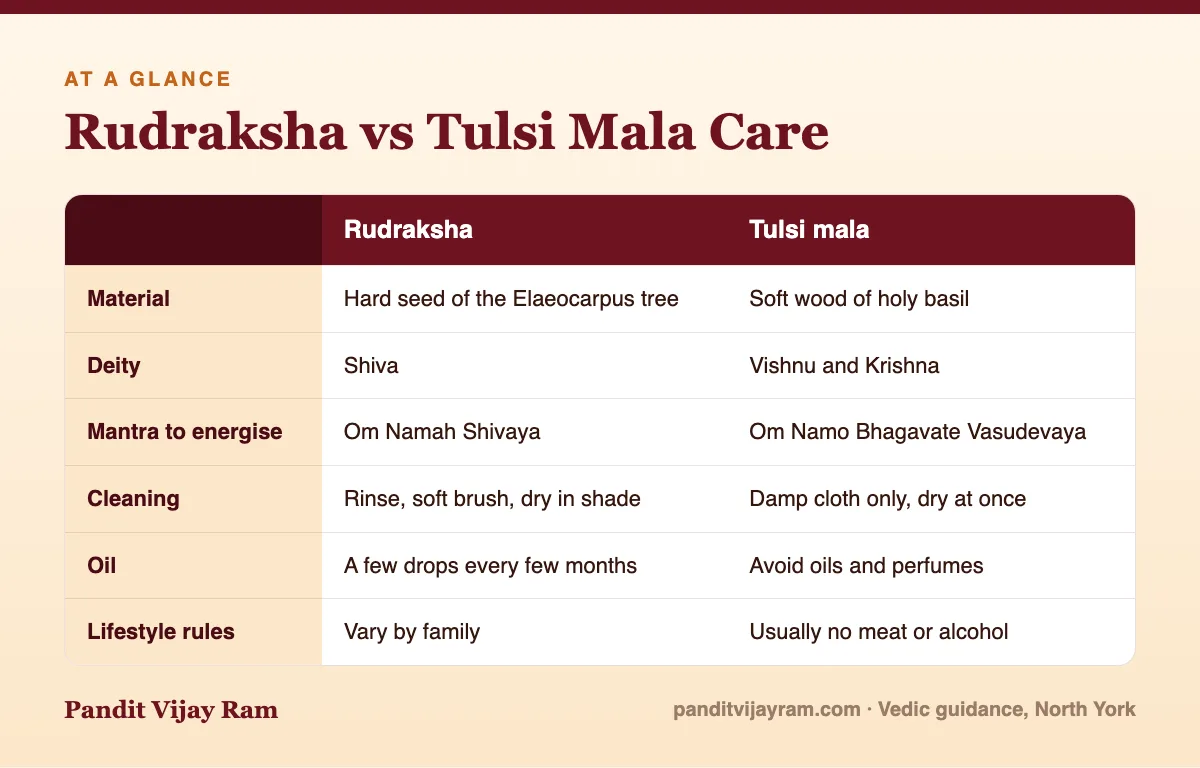
A rudraksha is the seed of the Elaeocarpus ganitrus tree, found in the Himalayan foothills and Southeast Asia. Its name means the eye of Rudra, a form of Shiva. Devotees wear it as a sign of Shiva's shelter and use it to count mantra repetitions, a practice called japa.
Each bead has natural grooves called mukhi, or faces. Most beads sold are five-mukhi, which is linked with Kalagni Rudra and considered suitable for almost anyone. Beads with one, eleven or fourteen faces are rare and often carry dramatic claims and very high prices. A plain five-mukhi mala serves the purpose of daily japa perfectly well.
Protection here means something specific. In Shaiva tradition, wearing a rudraksha is a way of placing yourself under Shiva's care and keeping your prayer close. It reminds you to chant, to stay steady, and to avoid harmful company. It is not a shield that stops illness, accidents or another person's choices.
Tulsi mala comes from the wood of holy basil, sacred to Vishnu and Krishna. Vaishnavas wear a small strand called a kanthi around the neck and use a 108-bead tulsi mala for japa of the Hare Krishna or Vishnu mantras.
Some people prefer a written taweez or kavach to a bead. Others combine the mala with a red protective thread, which is explained in our guide to the kalava or mauli thread.

How can you tell if a rudraksha is real?
Look for natural, irregular grooves running from top to bottom, a hole that was not drilled through a carved seam, and a slightly uneven surface. The popular water and copper coin tests are unreliable. Buy from a temple or known seller who will explain the bead's origin and does not use fear or urgency.
Fake beads are common. They may be carved from wood or a lesser seed, made from resin, or have extra grooves cut to raise the mukhi count. A few practical checks help:
- Grooves. Real mukhi lines are natural and run pole to pole. Carved lines look too sharp or uneven in depth.
- Joints. Two beads glued together to look like a rare form will show a seam under a magnifying glass.
- Weight and feel. Resin beads often feel light and too smooth.
- Price. An extremely rare bead offered cheaply, or a common bead offered at a huge price, are both warning signs.
Two myths deserve a mention. The water test, where a real bead is said to sink, is not reliable, because many genuine dry beads float and some fakes sink. The copper coin test, where a bead is said to spin between coins, depends on the hand holding it.
Indonesian beads are usually smaller and Nepali beads larger; both are genuine.
Real tulsi wood has a fine grain; painted or plastic beads look uniform and glossy.
Gemstones and beads are sometimes recommended from a birth chart. If you want that kind of guidance, a gemstone and numerology consultation can explain whether a specific mukhi is suggested for you, or whether a plain mala is enough.
How do you energise a rudraksha or tulsi mala at home?
Wash the mala gently in clean water with a few drops of Ganga jal, dry it, then offer it before an image of Shiva or Vishnu on a Monday or Thursday morning. Chant Om Namah Shivaya for rudraksha or Om Namo Bhagavate Vasudevaya for tulsi, 108 times, then wear it.
This is a simple home version of prana pratishtha, inviting the divine into an object. A temple priest may do a longer form.
- Choose a morning. Monday suits rudraksha, linked with Shiva. Thursday or Ekadashi suits tulsi, linked with Vishnu. Any clean, calm morning also works.
- Bathe and light a lamp. Sit before your mandir after bathing, with a diya and a little incense if smoke is allowed in your home.
- Wash the beads. Rinse the mala in clean water with a few drops of Ganga jal. Pat it dry with a soft cloth. Some families briefly dip rudraksha in raw milk, but rinse it well afterwards so it does not smell or attract mould.
- Offer it. Place the mala on a small plate before the deity with a flower, a little sandalwood paste and a few grains of rice.
- Chant. Use the mala itself to count 108 repetitions of the deity's mantra. Start at the bead next to the larger sumeru bead and do not cross it; turn the mala around to begin a second round.
- Wear it. Touch the mala to your forehead and put it on.
You do not need to re-energise the mala unless it has been away from you for a long time, or you simply wish to renew your intention.
How do you clean a rudraksha mala versus a tulsi mala?
Rudraksha is a hard seed that likes occasional oil: brush it gently with water, dry it fully, and rub in a few drops of sandalwood or plain oil every few months. Tulsi is soft wood that dislikes soaking: wipe it with a damp cloth, dry it at once, and keep it away from oils and perfumes.
Treating tulsi like rudraksha is the most common care mistake.
- Rudraksha, routine care. Every few weeks, rinse in lukewarm water and use a soft toothbrush to clear dust from the grooves. Dry in shade, not on a heater.
- Rudraksha, oiling. Every two or three months, rub in a few drops of sandalwood oil or a light plain oil, leave it overnight, and wipe away the excess. This prevents cracking in dry Canadian winters.
- Tulsi, routine care. Wipe with a barely damp cloth and dry straight away. Do not soak, because the wood can swell, split or rot.
- Tulsi, what to avoid. Oils, perfume, sweat-heavy workouts, and long showers while wearing it.
- Both. No soap, bleach, alcohol or jewellery cleaner. Remove before swimming in chlorinated pools or hot tubs.
The thread. Malas are often strung on red or yellow cotton or silk. Check the thread regularly and restring when it frays, before it breaks. If a mala does break, gather the beads calmly; it is not a bad omen, just worn thread.
For silver caps or chains, follow the same care as other jewellery. Our guide to cleansing jewellery and objects explains which methods suit which metals.
What are the rules for wearing rudraksha, and can I sleep or shower with it?
Traditional guidance asks you to wear rudraksha with respect, keep it clean, and remove it during cremations and, for many families, during intimacy. Sleeping or showering in it is a personal choice; many remove it to protect the thread. Rules about meat, alcohol and menstruation vary widely between families and teachers.
Here is a practical way to sort the rules people worry about most.
Widely kept:
- Treat the mala with respect. Do not toss it on the floor or into a pocket with keys.
- Keep your japa mala personal. Many traditions discourage lending it.
- Remove it when attending a cremation, and wash before putting it back on.
Family custom, so follow your own elders:
- Removing it at night. Many people do so simply to stop the thread wearing out.
- Removing it in the bathroom or shower. Practical reasons such as soap and water damage matter more here than ritual ones.
- Removing it during menstruation. Some teachers say this is unnecessary; others follow a family rule.
Stricter for tulsi: Vaishnava practice usually asks tulsi wearers to avoid meat, alcohol and intoxicants. If you cannot keep that, wear rudraksha instead or keep the tulsi mala in the mandir for japa only.
Safety rule: babies and toddlers should not wear necklaces or loose beads, because of choking and strangling risks. A thread on a wrist, watched closely, or a mala kept near the cradle is safer.
An accidental slip does not cancel a mala's meaning. Rinse it, pray briefly and carry on.
Can a rudraksha protect you from black magic or illness?
A rudraksha supports devotion and a steady mind, which many people find protective. It does not treat illness, prevent accidents, or undo serious harm on its own. For health concerns, see your doctor. For a real worry about black magic or negative energy, an honest consultation should come before any purchase.
Some sellers promise that particular beads will lower blood pressure or block every kind of black magic. A trustworthy practitioner does not make such claims. Tradition speaks of the mala as a support for japa, remembrance of God, and good conduct.
A sensible order of steps when someone feels under attack is:
- Check ordinary causes, including sleep, health, money stress and conflict at home.
- Begin simple daily practice, such as a lamp and a mantra, with or without a mala.
- If the worry stays, seek a consultation that looks at the chart and the home calmly.
- Use a mala or kavach as part of the aftercare, not as the whole answer.
After a removal ritual, protective items have their place, and our article on protection after spell removal explains how kavach and mala work together. For a wider set of protective routines, see the cleansing and protection hub.
If anxiety or low mood is behind the wish for protection, please speak with your family doctor too. A mala can sit beside that care, never in place of it.
The bottom line
Rudraksha for protection and tulsi mala are wearable supports for prayer, not medical remedies or magic shields. Choose a genuine bead from a trustworthy source, energise it at home with mantra, and care for each material in its own way. Keep the widely shared rules, follow your family on the rest, and never let a minor slip frighten you. For health or serious spiritual worries, seek proper help alongside the mala.
Key takeaways
- Rudraksha is a natural seed linked with Shiva; tulsi mala is holy basil wood linked with Vishnu.
- Five-mukhi rudraksha suits almost anyone; rare beads need careful buying.
- Energise a mala with water, an offering and 108 repetitions of the deity's mantra.
- Oil rudraksha occasionally, but never soak or oil tulsi beads.
- Babies should not wear necklaces or loose beads because of choking risk.