
Home Cleansing After a Hard Season: Illness, Loss or Conflict

Some seasons leave a mark on a home. A long illness, a hospital stay, a bereavement or months of arguing can make familiar rooms feel tired and heavy, even after the worst has passed. Many families want a home cleansing after illness or conflict, not because they fear something sinister, but because they want the house to feel like theirs again. Clients from North York, Don Mills and Etobicoke often describe it as wanting to open the windows on a new chapter. This guide offers a calm, practical sequence: what to clean physically, how to mark the end of the hard time with a simple Vedic ritual, and how to rebuild small daily habits that keep the house light. It is written for the recovery stage, after medical care is in place and the immediate crisis is over. In more than forty years of practice, I have found that the most healing part of this work is often the decision itself to begin again, together, in the rooms you share.
Should you cleanse your house after someone has been sick?
Yes, but in the right order. First follow any cleaning advice from the doctor or public health, especially after an infection. Wash bedding and towels hot, disinfect high-touch surfaces and air the rooms. Spiritual cleansing comes afterward as a way of marking recovery, not as a replacement for hygiene or treatment.
Physical cleaning protects the people still living there. Health Canada and Ontario public-health pages give clear guidance on cleaning after common infections, and your doctor can tell you about anything specific to the illness. Follow that first.
A sensible physical reset looks like this:
- Wash sheets, pillowcases and towels from the sickroom on the hottest setting the fabric allows.
- Wipe door handles, light switches, taps and remote controls.
- Empty and wash bins, and remove old medicine packaging and tissues.
- Open windows for at least an hour, and run bathroom and kitchen fans.
- Return unused prescription medicines to a pharmacy rather than throwing them away.
Once that is done, the household often feels ready for something more. In Hindu homes, the sickroom is sometimes the first place a lamp is lit after recovery. Some families sprinkle water with a few tulsi leaves along the bed and doorway. Others simply open the curtains and let morning sunlight in, which Vedic thought honours as Surya's own cleansing.
If the illness ended in a death, the customs are different and more structured. Our guide to cleansing the home after a death in the family covers sutak and shuddhi with care. The full set of household methods is collected on the cleansing and protection hub.
How do I reset the energy in my home after a long conflict?
Begin with a conversation, not a ritual. Once the people involved have agreed to start over, clear out reminders of the conflict, rearrange the main shared room, and hold a short family prayer together. Lighting one lamp as a household is a strong symbol that the home is choosing peace.
After months of tension, the house holds habits as much as memories. People avoid certain rooms, eat at different times and sit in fixed corners. A cleansing works best when it also changes those patterns.
Practical steps that help:
- Agree on the fresh start. A ritual done by one person while others are still angry tends to feel hollow. A short family conversation first gives it meaning.
- Remove reminders. Papers from a dispute, a broken item, or a chair where arguments always happened can be put away or moved.
- Rearrange the living room. Move the sofa, open a new seating angle, or add a plant. Small physical shifts signal a new pattern.
- Hold a joint prayer. Everyone stands together before the home altar. One lamp is lit. The Om Sahana Vavatu mantra, a prayer for harmony between people, is chanted three times.
- Share a meal. Cooking together that evening seals the moment more than any ritual object can.
If arguments keep returning, look at practical sources such as money stress, overcrowding or caring duties. Family counselling is often the most useful step, and a ritual can sit alongside it. The family problem guidance page explains how chart insight and counselling-style conversation can help. For the immediate hours after a single fight, see the short reset after an argument guide.
What is a simple ritual to mark a fresh start at home?
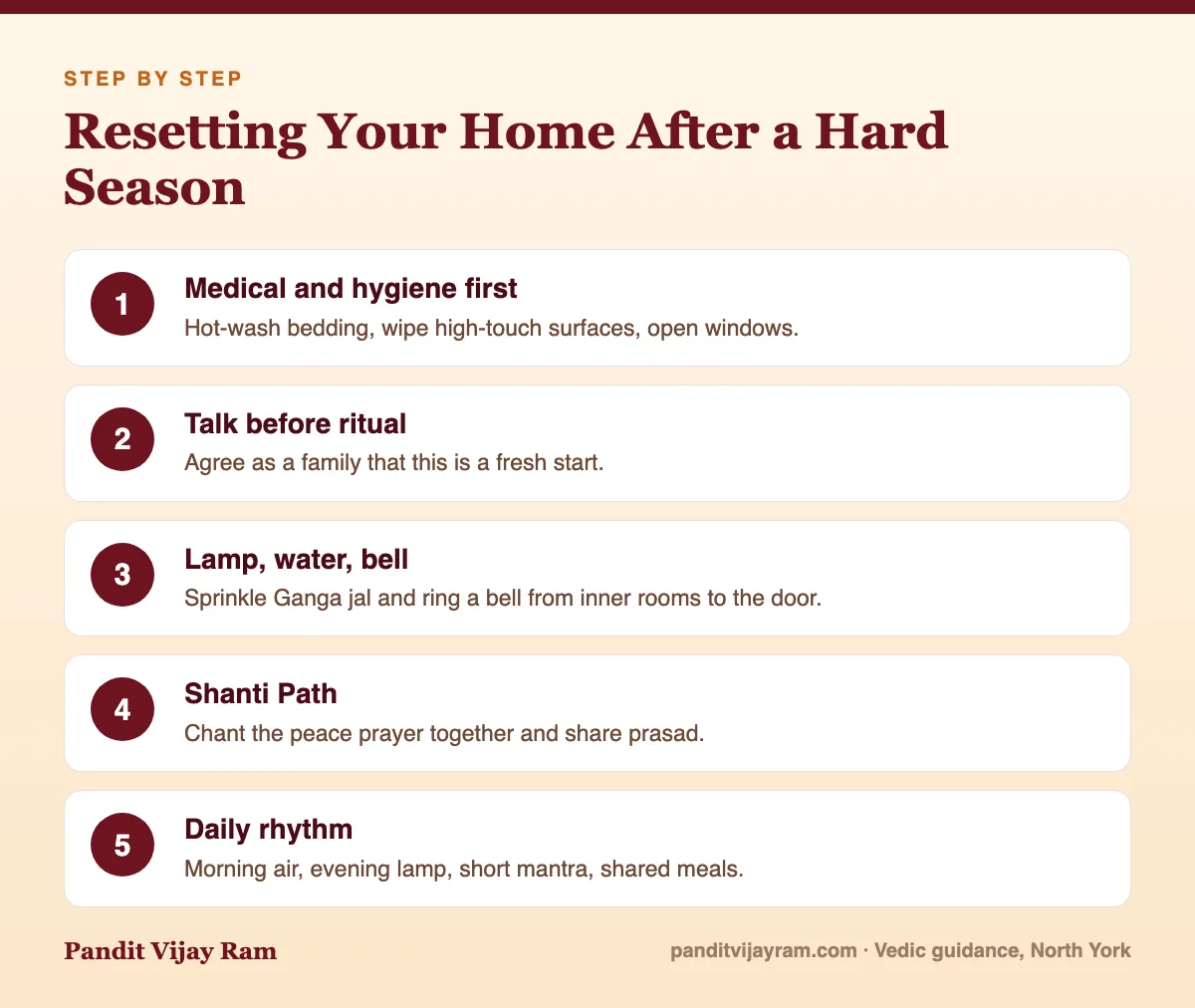
A simple fresh-start ritual uses a ghee lamp, Ganga jal, a bell and the Shanti Path. Walk from the innermost room to the main door, sprinkling water and ringing the bell, then return to the altar and chant for peace. The whole sequence takes around twenty minutes and needs no priest.
This ritual is meant to be gentle. It suits a family that is tired and does not want a long ceremony. Choose a calm morning, ideally after a bath.
What you need:
- A small ghee lamp, or a sesame-oil diya
- A bowl of clean water with a few drops of Ganga jal and a tulsi or mango leaf
- A small bell
- A few flowers and some sweet offering, such as jaggery or fruit
Light the lamp at the home altar and say a short prayer of thanks for getting through the hard time. Then carry the water and bell to the room that held the most difficulty, often a sickroom or a bedroom. Sprinkle water in each corner, ring the bell, and move slowly toward the main door. Leave the door open briefly as you finish.
Return to the altar and chant the Shanti Path, the peace invocation that ends with Om Shanti, Shanti, Shanti. The three shantis are traditionally understood as peace in the body, in the surroundings and in the mind. Offer the sweet, and share it with everyone in the house.
A fuller option is a small havan, which our guide to havan for spiritual cleansing describes. For many families, though, the lamp, water and peace prayer are enough.
Can cleansing the house help someone recover?
Cleansing cannot treat illness, speed medical recovery or replace care from doctors and nurses. What it can offer is a calmer setting, a sense that the household has turned a corner, and a shared moment of prayer. Treatment decisions should stay with the medical team at all times.
I want to be very clear on this, because families in distress are vulnerable to promises. No lamp, mantra or salt will cure an infection, a heart condition, cancer or depression. Anyone who tells you that a ritual can do the work of medicine, or that you should stop treatment, is putting your loved one at risk.
What a gentle reset can reasonably support:
- A tidier, fresher room, which many patients find more restful.
- A clear moment for the family to acknowledge how hard the season was.
- Prayer and mantra, which comfort many people of faith.
- A return to routine, such as daily lamp lighting, that brings structure back.
Recovery also takes an emotional toll on caregivers. Exhaustion, irritability and low mood often show up weeks after the crisis ends. If you or anyone in the house is struggling, see your family doctor. In a crisis, call or text 9-8-8 to reach the Suicide Crisis Helpline any time.
For guidance that pairs chart insight with sensible health boundaries, the health and wellbeing service page describes how I approach these cases. I will always ask about the medical side first.
How do you keep a home feeling light after a difficult time?
Small daily habits matter more than one big ritual. Light a lamp each evening, open windows every morning, keep the entrance clear, play or chant a mantra for a few minutes, and eat together when you can. These routines rebuild a sense of normal life and make heaviness less likely to settle.
After the reset, aim for a rhythm the household can actually keep. Here is a light weekly plan many families find manageable:
- Daily: morning windows open for ten minutes, an evening ghee lamp at dusk, and a short Gayatri or Hanuman Chalisa recitation.
- Twice a week: a quick declutter of the entrance and kitchen counter.
- Weekly: mop the floors with water and a pinch of rock salt where the flooring allows, and change the flowers at the altar.
- Monthly: one family meal with a short prayer before eating.
Pay attention to warning signs that the heaviness is something else. Persistent damp smells may mean mould. Flickering lights or buzzing outlets need an electrician. Ongoing low mood, poor sleep or withdrawal in a family member deserve a doctor's visit. These ordinary causes are common after a long illness, when maintenance and self-care both slip.
If a few months pass and the house still feels wrong despite good habits, a fuller assessment can help. The negative energy removal service explains how I look at the home, the chart and the household's routine together before suggesting any deeper work.
The bottom line
Home cleansing after illness, loss or conflict works best as a gentle reset that follows medical care and physical cleaning, never one that replaces them. A short ritual with a lamp, water, a bell and the Shanti Path marks the turning point, and a family conversation gives it meaning. Lasting lightness comes from small daily routines rather than a single ceremony. If low mood or exhaustion continue, the next step is a family doctor, not another ritual.
Key takeaways
- Follow medical and public-health cleaning advice before any spiritual cleansing.
- After conflict, agree on a fresh start before holding a ritual.
- A lamp, Ganga jal, a bell and the Shanti Path make a simple reset.
- No ritual can treat illness or replace medical care.
- Daily habits keep a home light more reliably than one big ceremony.