
Heartbreak in South Asian Families: Talking About It at Home

There is a particular kind of heartbreak South Asian young adults know well. The relationship was real, sometimes years long, but your parents never knew. When it ended, you could not cry at the dinner table or explain why you stopped eating. You smiled at a cousin's engagement and went back to your room to fall apart. In North York and across the GTA, I meet many people living exactly this, and parents who sense something is wrong but do not know how to ask. This guide is for both sides. It covers why breakups are so hard to discuss in desi homes, how to grieve a relationship no one knew about, whether and how to tell your parents, what to do if they react with anger or rush you toward a rishta, and where to find support that respects your culture. In more than forty years of working with families, I have seen that honest, gentle conversations heal more than they harm, as long as they happen at the right pace and with safety in mind.
Why is heartbreak so hard to talk about in South Asian families?
Heartbreak is hard to discuss in many South Asian homes because dating is often hidden, marriage is seen as a family matter, and there is fear of gossip, often summed up as "log kya kahenge". Emotional struggles may also carry stigma, so young people grieve silently rather than risk disappointing their parents.
Many families who have settled in Canada hold two sets of expectations at once. Children grow up with Canadian friends and freedoms, while home life may still treat romance as something that happens after a match is agreed by the family. The result is a large, quiet world of relationships that parents do not see.
Several pressures make a breakup harder to share:
- Secrecy. If parents did not know about the relationship, a breakup means revealing two things at once.
- Izzat and reputation. Concern for the family's standing in the community can make parents react to what others will think before they react to their child's pain.
- Marriage-centred hopes. Some parents see every relationship through the lens of marriage, so its end may feel to them like a failure or a scandal.
- Mental-health stigma. Sadness may be brushed off as weakness, or explained as nazar or bad luck instead of grief.
- Gender expectations. Daughters may fear stricter rules; sons may feel they are not allowed to cry.
None of this means South Asian parents do not love their children. Often it means they were never shown how to talk about heartbreak themselves. Naming these pressures is the first step toward softening them.

How do you grieve a relationship your parents never knew about?
Grieving a hidden relationship means finding a few places where your loss can be seen. Confide in one trusted person, such as a friend, sibling or counsellor, mark the ending privately, keep up sleep and meals, and allow yourself to grieve fully even if the relationship was never public.
Grief that cannot be shown openly is sometimes called disenfranchised grief. Because no one around you knows, there are no casseroles, no hugs, no permission to take a day off. That makes it heavier, not lighter.
Some ways to carry it:
- Tell one safe person. A close friend, a sibling, a trusted cousin or a counsellor. One witness can make a huge difference.
- Make a private ritual. Light a lamp, write a letter you will not send, or offer a short prayer in your own words to mark the ending.
- Protect the basics. Eat regular meals, keep a bedtime, get outside every day. Grief hits harder on an empty stomach and broken sleep.
- Watch the double life. Hiding pain all day is exhausting. Give yourself some time each day where you do not have to perform being fine.
- Avoid new secrets. Lying to cover your mood can grow into a heavy pattern. You do not have to tell everything, but you can say, "I'm going through something hard and I'll talk about it when I'm ready."
If siblings or friends begin taking sides or spreading the story, see when friends and family take sides after a breakup for ways to set limits.
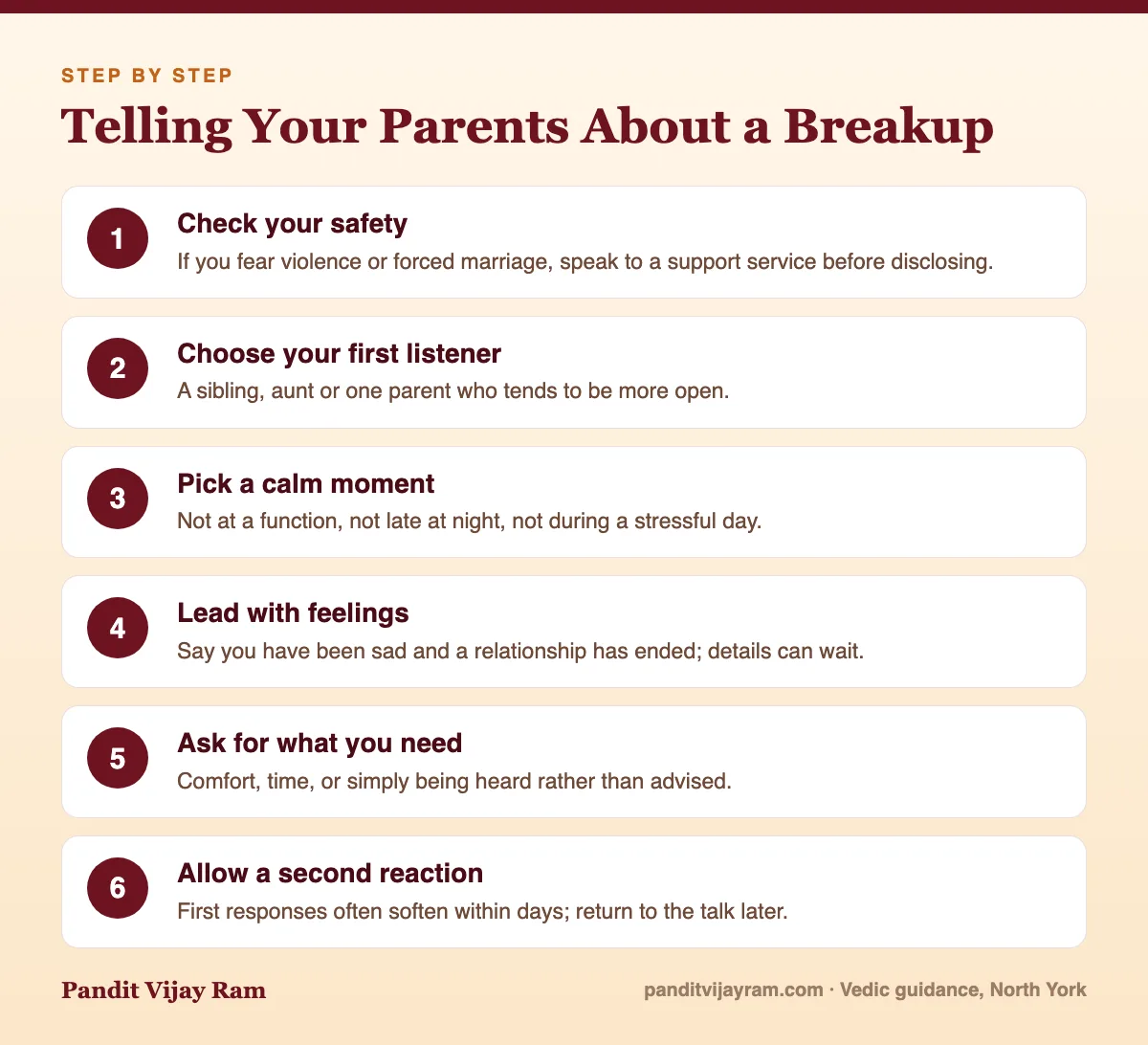
Should I tell my parents about my breakup, and how?
Tell your parents when it is safe, when you feel steady enough, and when hiding it is costing you more than sharing would. Start with the most understanding family member, choose a calm moment, share only what you are comfortable with, and say clearly what kind of support you need.
Use this decision rule before you speak:
- Is it safe? If you fear violence, being forced into marriage or being cut off from school or money, do not disclose yet. Talk to a counsellor or support service first.
- Are you steady enough? Speaking in the first raw days can turn into an argument. A few weeks of distance often helps.
- Is the secret costing you? If hiding your sadness is affecting your health, work or studies, sharing may bring relief.
If the answers point to yes, try this plan:
- Choose your first listener. Often a sibling, an aunt or one parent is more open. They can help you prepare.
- Pick a calm moment. Not at a family function, not late at night, not when someone is already stressed.
- Lead with your feelings. For example: "I've been very sad lately. I was in a relationship that has ended, and I didn't know how to tell you."
- Share only what you choose. Names, details and the reasons it ended can stay private.
- Ask for what you need. "I don't need advice right now, I just need you to know."
- Expect a first reaction, then a second. Shock often softens within days.
For families who later want to talk about a future relationship, how to convince parents for a love marriage offers a calm approach.
What if my family reacts with anger, shame or rishta pressure?
If your family reacts badly, stay calm, step away rather than escalate, and return to the conversation later with a trusted elder or counsellor. Ask for time before any marriage introductions. If there are threats, violence or pressure to marry against your will, contact police or a support service immediately.
Parents may react with anger, tears, blame or silence. Some move quickly to arranging a match, believing it will help you move on or protect the family's reputation. Here is how to hold your ground gently:
- Name their feeling. "I know this is a shock and you're worried." It often lowers the temperature.
- Ask for time. "I'm not ready to meet anyone. I'd like a few months to recover." A clear, kind request is harder to dismiss than a slammed door.
- Bring in a bridge. A respected elder, a family friend or a counsellor can help both sides hear each other.
- Separate guilt from responsibility. Loving someone and losing them is not a disgrace to your family.
Where the pressure involves parents who broke up the relationship themselves, the dynamics are explored in getting an ex back when family disapproved.
Some situations move beyond family disagreement. Being threatened, hit, locked in, having your phone or documents taken, or being pressured to marry someone against your will are serious. Forced marriage is a crime in Canada. Call 911 if you are in danger, and see domestic violence help in the GTA for confidential services and safety planning. Spiritual guidance never comes before your safety.
Where can South Asian families find support for heartbreak?
Support can come from a family doctor, culturally aware counsellors, community mental-health organisations, trusted faith leaders and friends. Canada's 988 line takes calls and texts at any hour for anyone thinking about suicide. Spiritual guidance can sit alongside these, offering prayer and a calm space for both young people and parents.
Different kinds of help suit different needs:
- Your family doctor is the first stop if sadness lasts for weeks, sleep or appetite collapse, or you feel hopeless. They can refer you to counselling.
- Culturally aware counselling. Many people find it easier to open up to someone who understands family expectations, joint households and community pressure. Organisations in the GTA that offer this are listed in mental health support for South Asian families.
- Crisis support. In Canada, call or text 988 at any hour if you are thinking of suicide. In danger, call 911.
- Faith and community. A temple, gurdwara, mosque or church can offer prayer, seva and belonging without asking for details.
- Family conversations with a guide. When parents and children cannot talk alone, a neutral third person helps.
Vijay Ram ji offers that kind of calm third space. A family problem consultation can help parents and adult children talk without blame, and a love problem consultation supports the person who is heartbroken with prayer and practical steps. Both respect each person's choices and privacy.
For parents reading this: if your child tells you about a breakup, the most healing words are often the simplest. "Thank you for telling me. I'm here."
The bottom line
Heartbreak South Asian young people carry is often hidden, shaped by secret relationships, fear of gossip and pressure toward marriage. Grieving starts with one safe person and private ways to mark the loss, and telling parents works best when it is safe, calm and limited to what you choose to share. If family reactions turn into threats or forced marriage pressure, safety and police come first. Doctors, culturally aware counsellors, 988, faith communities and spiritual guidance can all help a family move through heartbreak together.
Key takeaways
- Many South Asian young adults grieve relationships their families never knew about.
- One safe confidant and a private ritual help carry hidden grief.
- Tell parents when it is safe and you feel steady, sharing only what you choose.
- Ask for time before rishta introductions; forced marriage is a crime in Canada.
- Family doctors, culturally aware counsellors, 988 and faith communities all offer support.