
Black Magic Through Food: Signs, Myths and What Is Realistic

Few fears unsettle a family like the thought that something harmful was hidden in a meal. Once the idea takes hold, every dinner invitation feels risky and every upset stomach looks like evidence. Worry about black magic through food reaches me often from households in North York, Brampton and Mississauga, usually after a visit, a wedding or a quarrel with someone who cooked for them. I take that worry seriously, and I also take the body seriously. This article explains what the khilaya pilaya belief actually says, lays out the ordinary medical causes that should be ruled out first, and separates common myths from what tradition really teaches. You will also find simple mealtime prayers from Hindu, Sikh and Muslim homes that families have used for generations, and clear guidance on when a symptom needs a doctor or a concern about tampering needs the police. In more than forty years of practice, I have found that most food fears ease once people understand their own digestion and reclaim the comfort of a blessed meal.
What does black magic through food mean?
It is the belief that a practitioner can charge food or drink with harmful intent, so that eating it affects the person's mind, health or relationships. South Asian folk speech calls it khilaya pilaya, and some Muslim traditions speak of eaten sihr. It is a belief, not a diagnosis.
The phrase khilaya pilaya simply means "fed and given to drink". In folk telling, someone recites over sweets, tea or a cooked dish, or mixes in an item, and the person who eats it later changes in mood, appetite or affection. Similar ideas appear in many cultures, and the Islamic tradition has its own vocabulary of sihr and its remedies, described respectfully on the witchcraft and sihr removal page.
Classical Vedic texts say far more about purity of food than about poisoning by spell. The concern is mostly with anna shuddhi: food cooked with a calm mind, offered to God first and eaten with gratitude. A meal cooked in anger was thought to carry that mood, which is an ethical teaching about care, not a recipe for harm.
So when someone asks me whether a particular laddoo could have been "done", I first separate three possibilities:
- The food itself made you ill, through spoilage, contamination or an ingredient your body does not tolerate.
- The situation made you anxious, so your stomach reacted to stress rather than to the dish.
- A spiritual concern remains after both have been looked at honestly.
Only the third is my area, and it is the least common. The broader picture of how jadu is understood is covered in what black magic is in the Vedic view.

What are the signs of black magic through food, and what else could cause them?
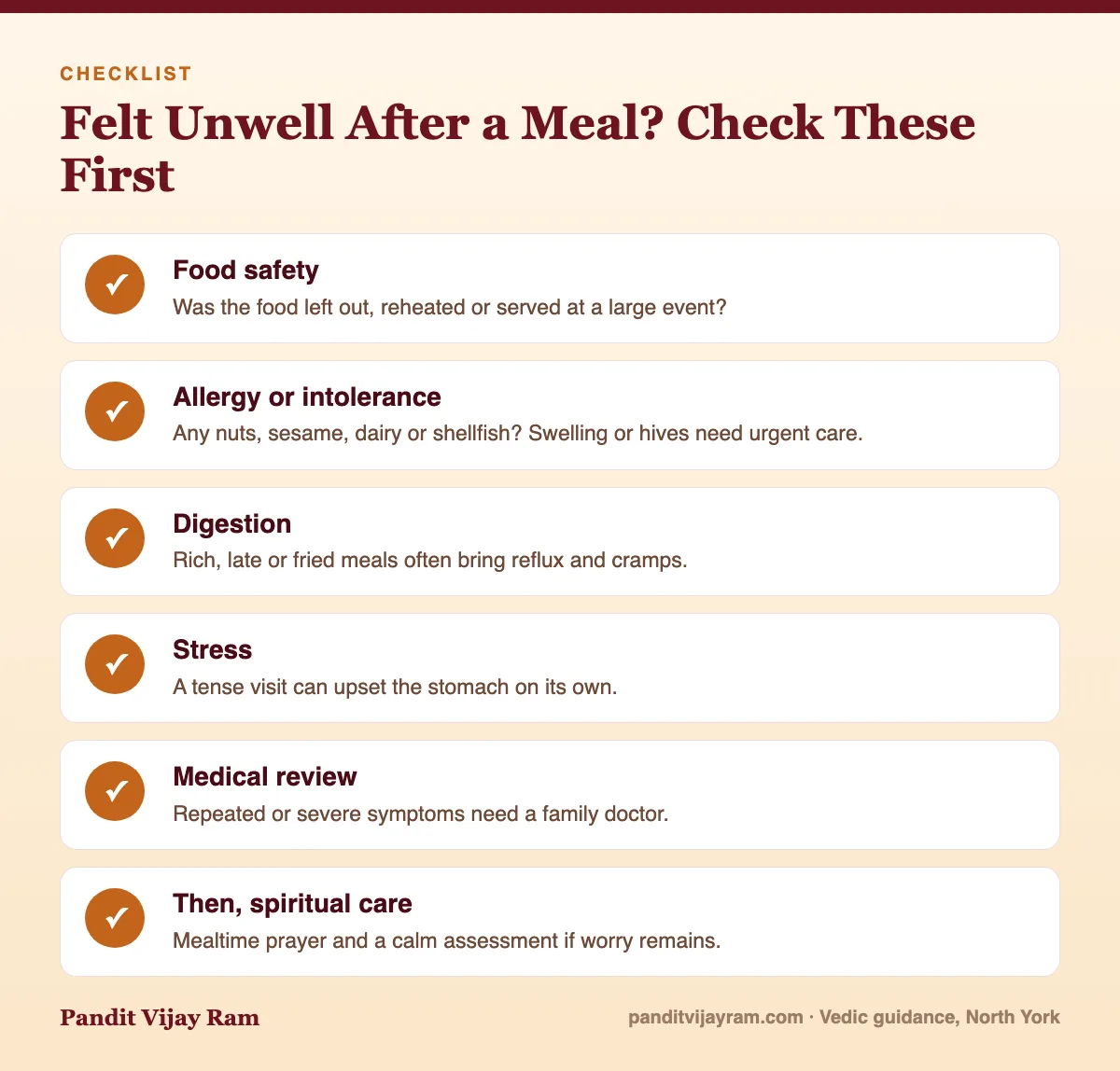
People commonly report nausea, stomach cramps, sudden dislike of a person, loss of appetite or strange tastes after eating somewhere. Each of these has frequent medical or emotional explanations, including food poisoning, allergies, reflux, gallbladder trouble, medication side effects and anxiety. A doctor should look at physical symptoms first.
Here is how I walk through the usual complaints with a family before saying anything about jadu.
- Vomiting or diarrhoea a few hours to a couple of days after a meal. This is the classic pattern of foodborne illness, especially after buffets, reheated rice, dairy sweets left out, or catered food at large events.
- Itching, swelling, hives or breathing trouble. These point to an allergy, often nuts, sesame, shellfish or milk. Breathing difficulty is an emergency: call 911.
- Burning in the chest or a sour taste. Reflux is common after rich, fried or late meals.
- Pain under the right ribs after fatty food. Gallbladder problems need a doctor, not a ritual.
- A strange metallic taste. Some medicines, dental problems and pregnancy can cause it.
- Sudden coldness towards a person. Relationships shift for many reasons, and a meal is rarely the turning point.
- Fear of eating anywhere outside home. This can be health anxiety, and it deserves care in its own right.
If symptoms are repeated, severe or unexplained, see your family doctor or a walk-in clinic. Bring a note of what you ate and when. If a medical cause is found, treating it is the respectful and sensible path, and prayer can sit alongside it. If tests are clear and the worry persists, the article comparing kala jadu, nazar and graha dosh helps sort out what kind of spiritual concern, if any, is in play.
Which beliefs about food black magic are myths?
Several popular claims do not hold up: that one bite seals a fate, that a hair or seed in food proves a spell, that you must refuse every relative's cooking, or that only an expensive ritual can undo it. Tradition actually emphasises gratitude, prayer and ordinary hygiene.
Fear spreads fastest through stories retold at gatherings. These are the ones I hear most, and what I say in reply.
- "One bite and it can never be undone." No tradition I know treats any harm as beyond prayer. Hindu, Sikh and Muslim devotional life all assume that sincere prayer and right living can lift a burden.
- "Finding a hair or an odd seed proves it." Hair falls into food in every kitchen in the world. Seeds, whole spices and burnt bits are normal.
- "Black food colour or a bitter taste is a sign." Ingredients like nigella, burnt sugar, kokum or bitter gourd explain these.
- "You must never eat at your in-laws' home." Refusing food in South Asian culture is a deep insult, and cutting off family on a suspicion causes real harm.
- "Only a costly ritual can remove it." Price has nothing to do with sincerity. Be cautious of anyone who links your fear to a large fee.
- "Vomiting after a cleansing proves the spell came out." Some healers give drinks that make people sick. That is a reason to stop, not a sign of success.
If the suspicion is aimed at a family member, the post on suspecting black magic by a relative offers ways to protect yourself without accusations that can split a family.
How can I protect myself from black magic through food?
Traditional protection is gentle and built into the meal itself: a short prayer before eating, offering the first portion to God, sprinkling water around the plate, and eating with gratitude. Ordinary food safety matters just as much. Neither requires refusing hospitality or treating hosts with suspicion.
Most families already carry protective habits at the table without thinking of them that way. Here is a simple routine drawn from several traditions.
- Pause before the first bite. Many Hindu homes recite the verse from the Bhagavad Gita beginning Brahmarpanam Brahma havir, which offers the act of eating to the divine. A short "Om" or the name of your Ishta Devata also serves.
- Offer first. Placing a small portion before the home mandir as naivedya turns the meal into prasad.
- Circle the plate. In South Indian custom, a little water is sprinkled around the leaf or plate with a quiet prayer, an old practice of parisheshana.
- Honour your own tradition. Muslim families say Bismillah before eating. Sikh families remember Waheguru, and langar is eaten as a shared blessing.
- Keep ordinary food safety. Refrigerate leftovers promptly, reheat thoroughly, and tell hosts about allergies.
- Notice your body, not every crumb. If you feel unwell, rest, drink water and seek medical advice if it persists.
For lingering unease after a difficult visit, a home routine like the one in dealing with negative energy from someone's jealousy can restore calm without confrontation.
When should I see a doctor or call the police about food?
See a doctor for any vomiting that will not stop, blood in vomit or stool, high fever, dehydration, or symptoms in children, older adults or pregnant women. Call 911 for breathing trouble or collapse. If you believe someone deliberately tampered with food, keep the item and contact police.
Spiritual concern should never delay medical care. Use this decision rule.
- Call 911 now for swelling of the lips or throat, difficulty breathing, fainting, chest pain or confusion.
- See a doctor today for repeated vomiting, blood, signs of dehydration, severe abdominal pain, or any illness in an infant, older person or pregnant woman.
- Book a family doctor visit for symptoms that come and go over weeks, unexplained weight loss, or a fear of eating that is shrinking your life.
- Contact your local poison centre if you think a harmful substance, medicine or chemical was swallowed.
Deliberately adding anything harmful to someone's food is a crime, not a matter for a healer to resolve. If you have real grounds to believe that happened, keep the container, do not confront the person, and call your local police non-emergency line, or 911 if someone is in danger.
If medical checks are clear and you still feel unsettled, a calm assessment through the black magic removal service can include prayer, a birth-chart check and a home cleansing. More reading sits in the magic and entities section. If anxiety about food or illness persists, a family doctor can also connect you with counselling.
The bottom line
Black magic through food is a long-standing folk fear, but nausea, pain and odd tastes after a meal are far more often explained by food poisoning, allergy, reflux or anxiety. Many popular claims, such as one bite sealing a fate, are myths that tradition itself does not support. Gentle mealtime prayer, offering food first and sound food safety give real protection without insulting hosts. Any serious symptom calls for a doctor, and suspected tampering calls for police.
Key takeaways
- Khilaya pilaya is a folk belief, not a medical diagnosis.
- Food poisoning, allergies and reflux explain most symptoms after a meal.
- A hair, seed or bitter taste in food proves nothing spiritual.
- A short prayer before eating is the traditional form of protection.
- Suspected deliberate tampering is a matter for the police.